The Visual Systems Group, Cincinnati Children's Hospital, Cincinnati, OH 45229, USA
Center for Chronobiology, Abrahamson Pediatric Eye Institute, Division of Pediatric Ophthalmology, Cincinnati Children's Hospital, Cincinnati, OH 45229, USA.
Development. 2020 Dec 7;147(23):dev196535. doi: 10.1242/dev.196535.
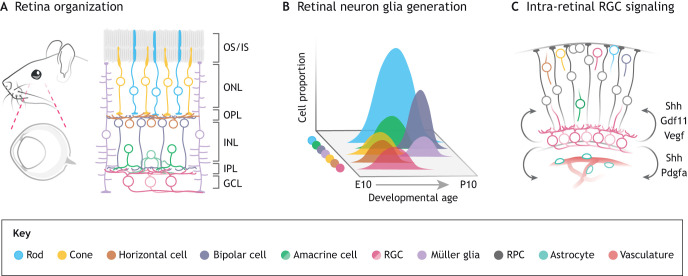
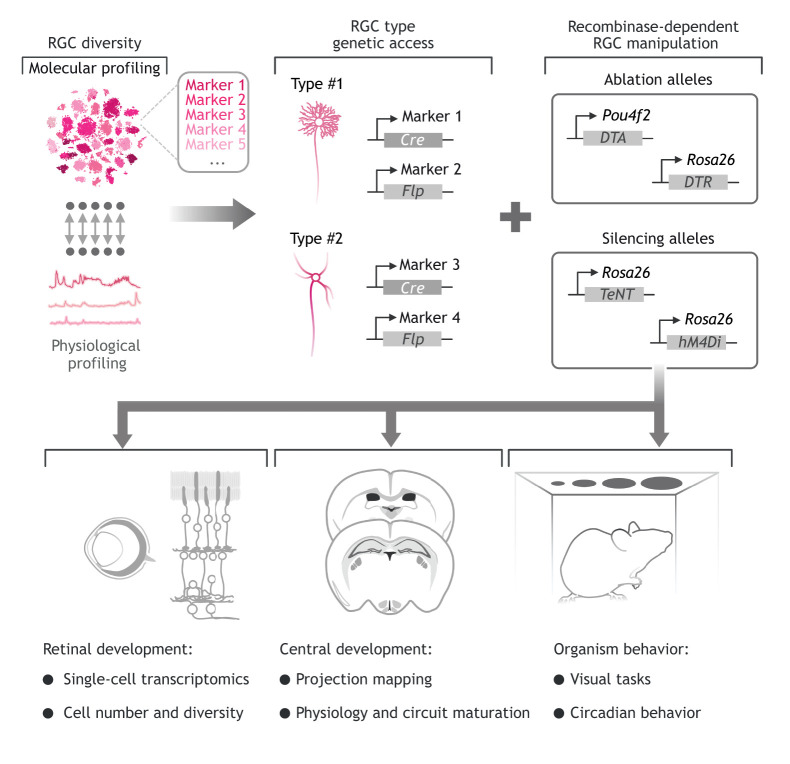
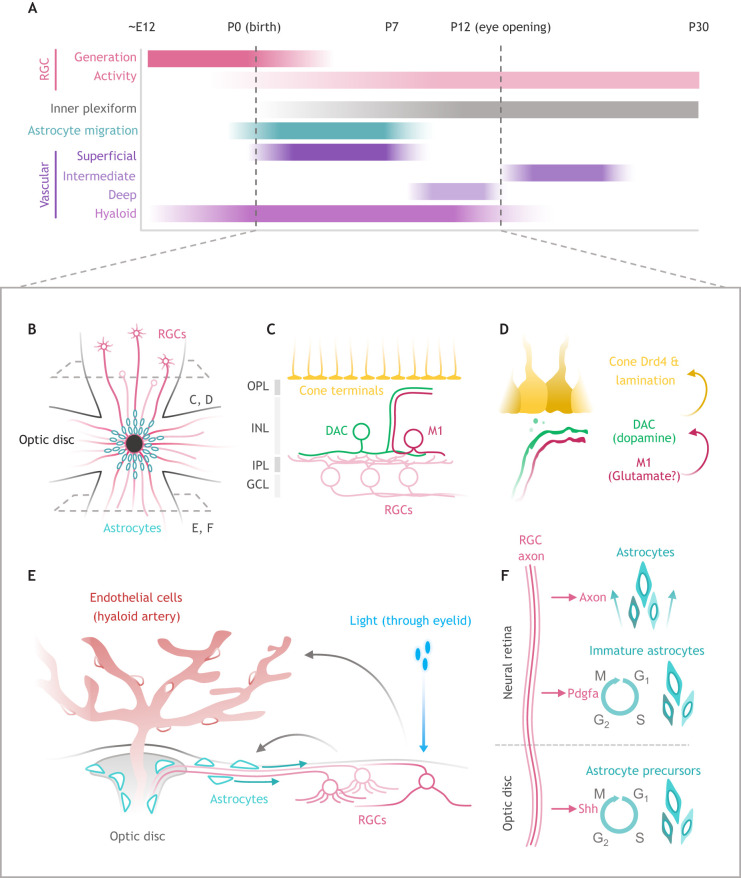
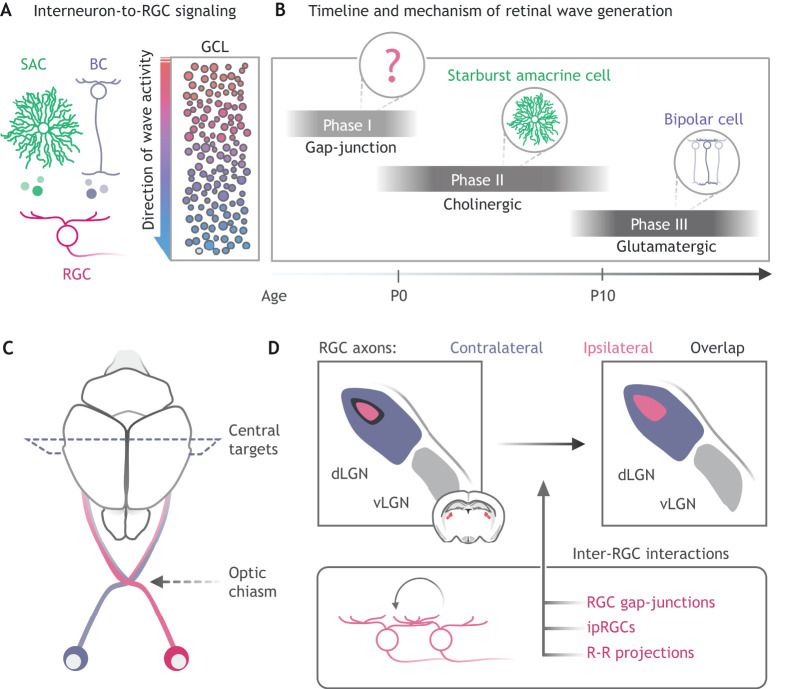
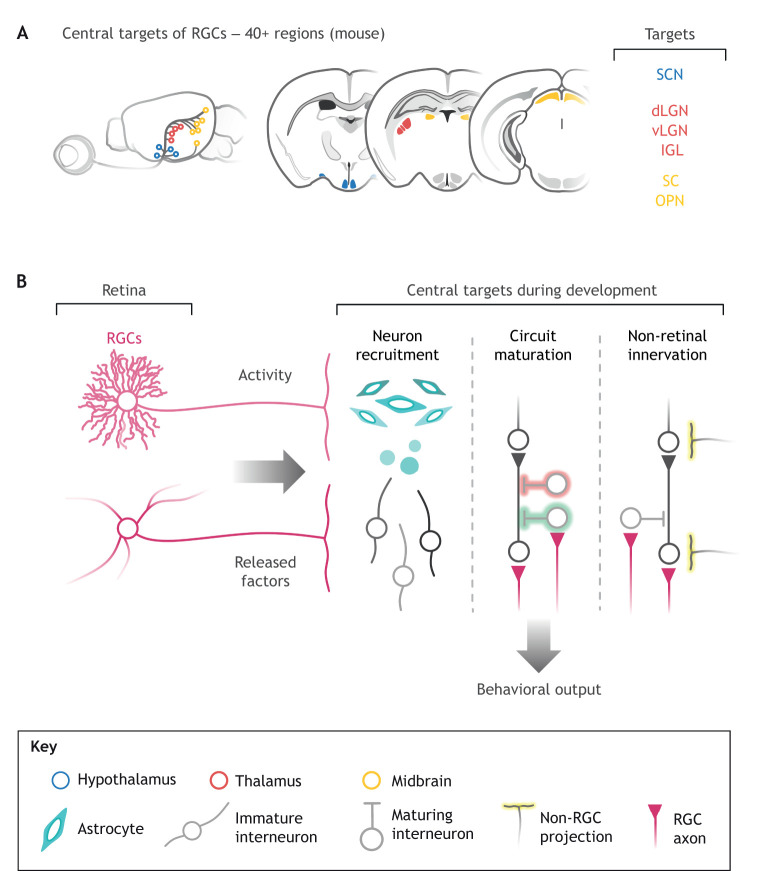
Retinal ganglion cells (RGCs) serve as a crucial communication channel from the retina to the brain. In the adult, these cells receive input from defined sets of presynaptic partners and communicate with postsynaptic brain regions to convey features of the visual scene. However, in the developing visual system, RGC interactions extend beyond their synaptic partners such that they guide development before the onset of vision. In this Review, we summarize our current understanding of how interactions between RGCs and their environment influence cellular targeting, migration and circuit maturation during visual system development. We describe the roles of RGC subclasses in shaping unique developmental responses within the retina and at central targets. Finally, we highlight the utility of RNA sequencing and genetic tools in uncovering RGC type-specific roles during the development of the visual system.
视网膜神经节细胞 (RGC) 是视网膜向大脑传递信息的重要通道。在成年动物中,这些细胞接收特定的突触前伙伴的输入,并与突触后脑区进行通讯,以传递视觉场景的特征。然而,在发育中的视觉系统中,RGC 的相互作用超出了其突触伙伴的范围,从而在视觉出现之前指导其发育。在这篇综述中,我们总结了目前对于 RGC 与环境之间的相互作用如何影响视觉系统发育过程中细胞定位、迁移和回路成熟的理解。我们描述了 RGC 亚类在塑造视网膜和中枢靶区独特发育反应中的作用。最后,我们强调了 RNA 测序和遗传工具在揭示视觉系统发育过程中 RGC 特定类型作用方面的应用。