Bio-Self-Regulating Science Laboratory, Obihiro University of Agriculture and Veterinary Medicine, Inada, Obihiro, 080-8555, Japan.
Hakuju Institute for Health Science, Tokyo, Japan.
Sci Rep. 2020 Dec 7;10(1):20930. doi: 10.1038/s41598-020-76106-1.
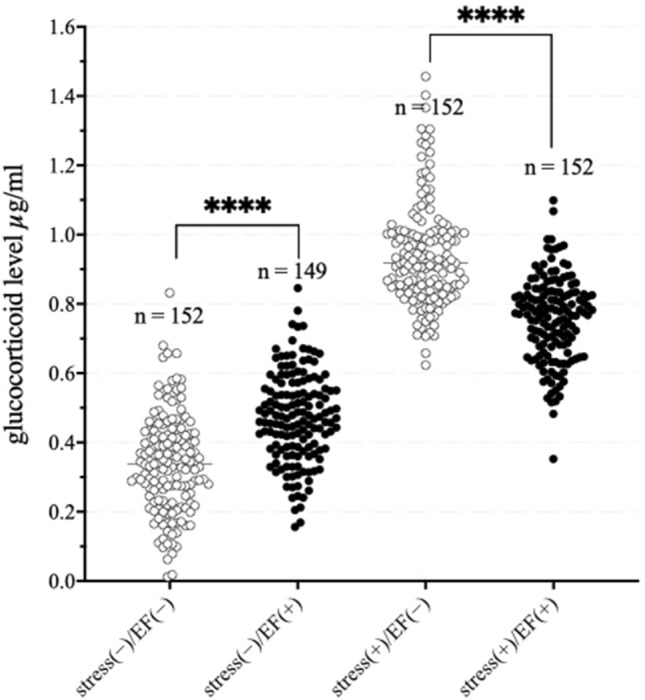
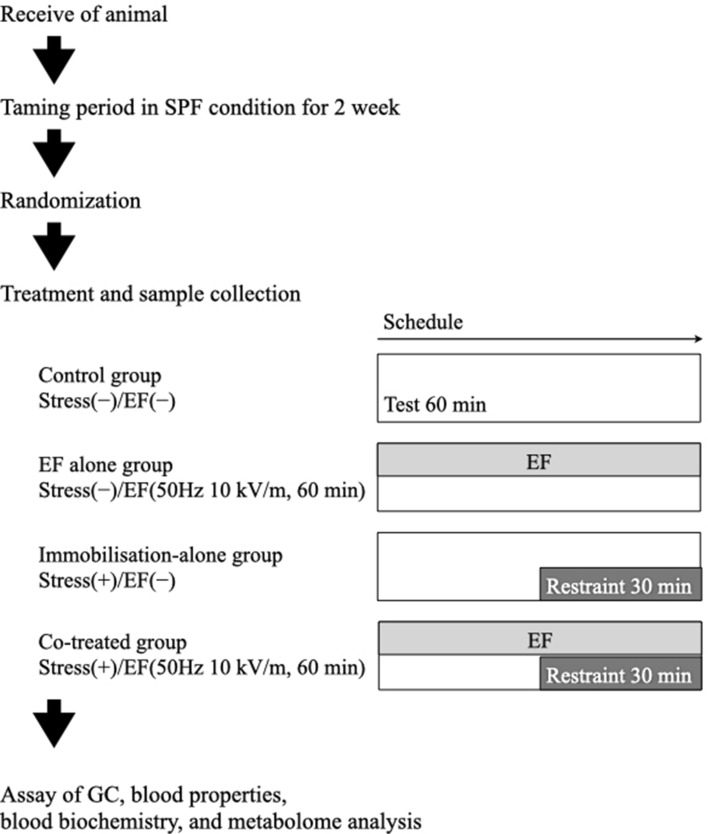
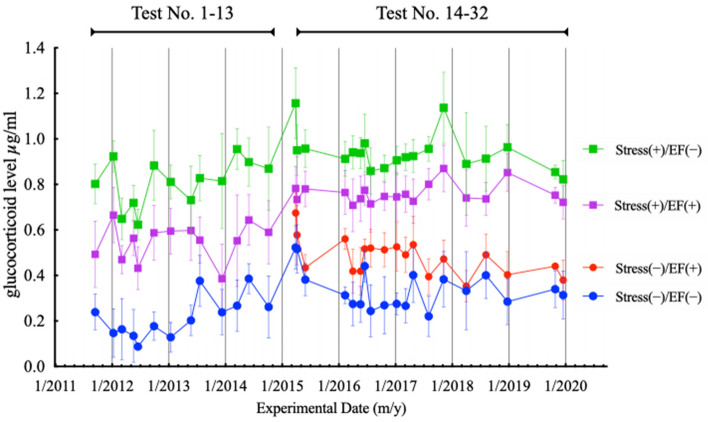
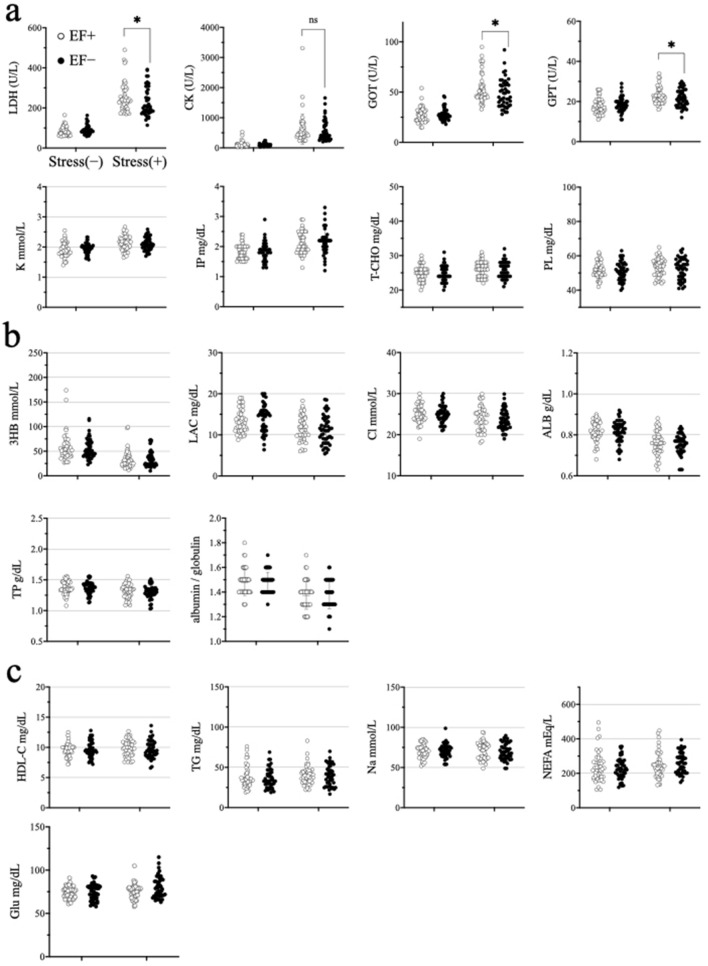
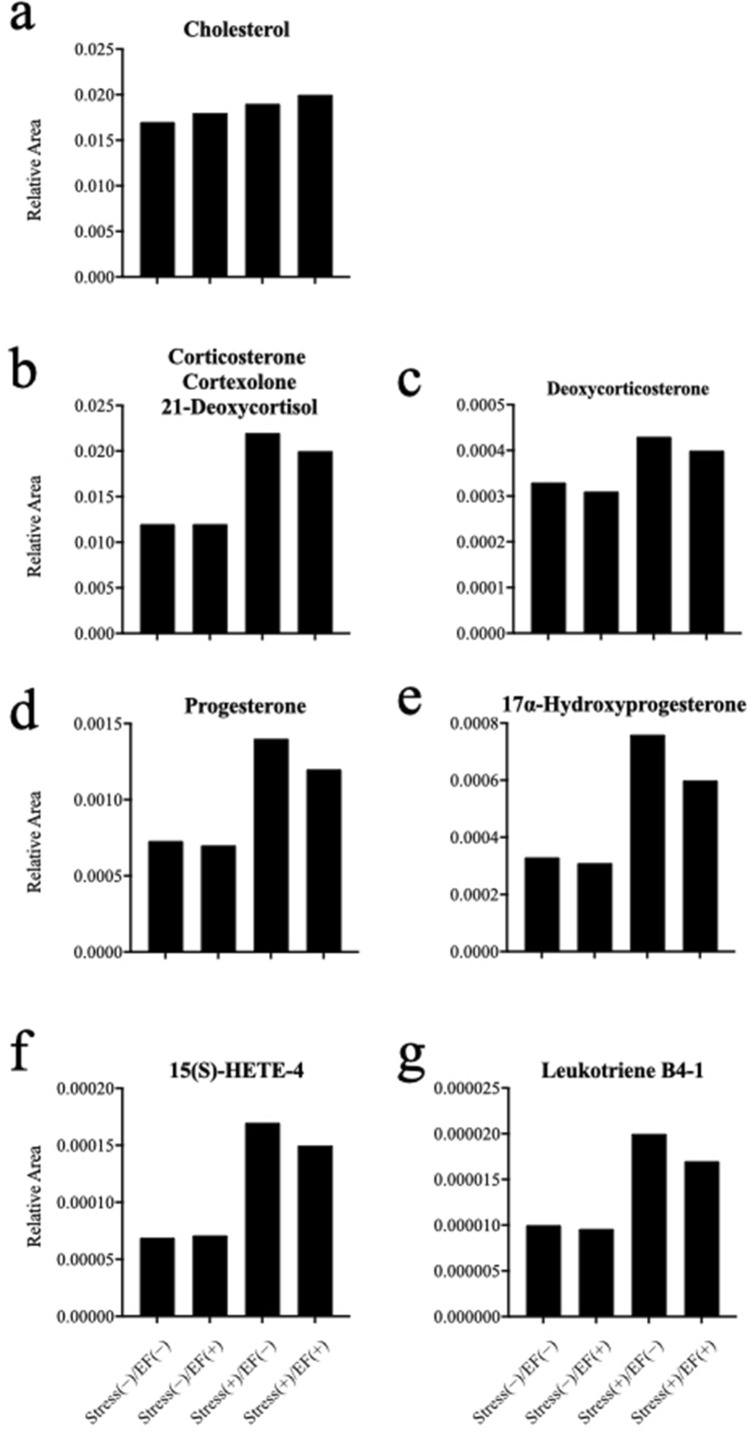
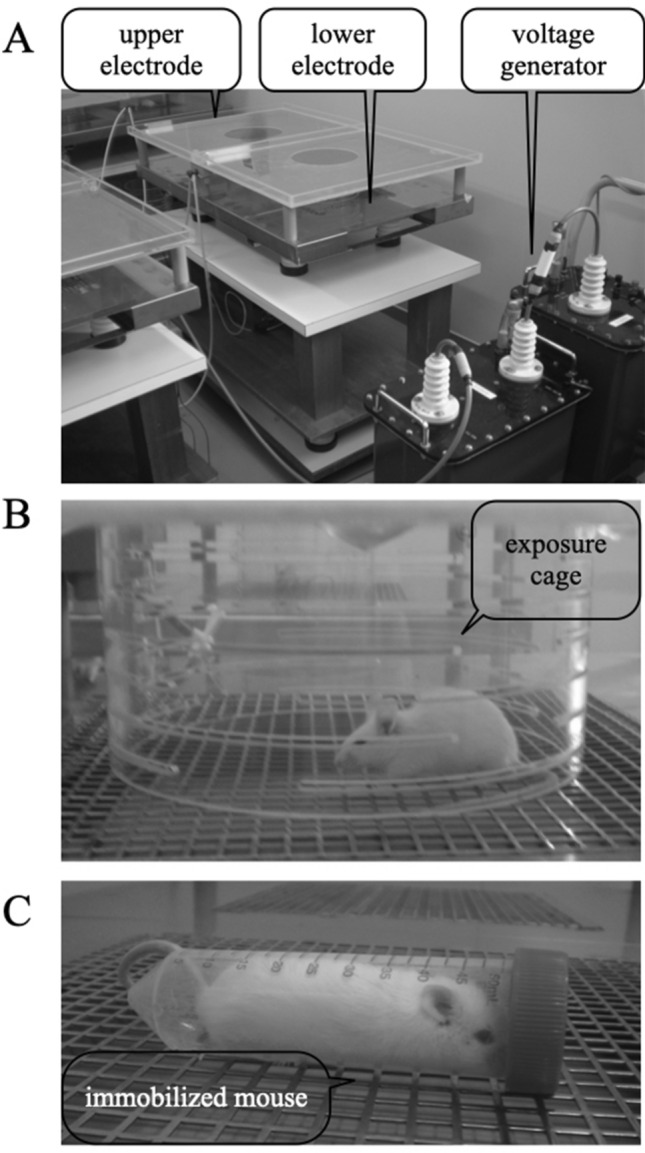
Although extremely low-frequency electric fields (ELF-EF) have been utilised for therapeutic purposes, the biological effect and the underlying mechanism of ELF-EF have not been elucidated. Here, we developed a mouse model of immobilisation-induced increase in glucocorticoid (GC) to evaluate the effect of ELF-EF. Mice were exposed to 50-Hz 10 kV/m EF via a parallel plate electrode and immobilised as needed. The ELF-EF suppressed the immobilisation-induced increase in blood GC level. Here, the results of 32 tests using the model were pooled and analysed. The suppressive effect of ELF-EF on immobilisation-induced increase in GC was reproduced, and the GC level was slightly higher in the ELF-EF-treated mice than in the sham-controlled mice, a novel observation. The immobilisation-induced increase in lactate dehydrogenase, glutamic oxaloacetic transaminase, and glutamic pyruvic transaminase, markers of tissue damage, was suppressed by co-treatment with EF in the biochemical tests using the same plasma sample. In the metabolome analysis, the changes in corticosterones, leukotrienes, and hydroxyeicosatetraenoic acids, markers of inflammation, showed a pattern similar to that of the plasma GC level. Thus, ELF-EF suppresses the stress response that causes an increase in the GC level and slightly promotes GC production in the absence of stress. Moreover, the suppressive effect of ELF-EF on induced stress response might be involved in stress-induced tissue damage or inflammation in immobilised mice. Overall, the model and the data help explore the biological effect of ELF-EF and explain the stress-relieving effect of EF. They would be useful in determining the medical applications of EF in humans and animals.
虽然极低频电磁场 (ELF-EF) 已被用于治疗目的,但 ELF-EF 的生物学效应和潜在机制尚未阐明。在这里,我们开发了一种用于评估 ELF-EF 效应的固定诱导糖皮质激素 (GC) 增加的小鼠模型。通过平行板电极使小鼠暴露于 50-Hz 10 kV/m EF,并根据需要进行固定。ELF-EF 抑制了固定诱导的血液 GC 水平升高。在这里,使用该模型进行了 32 次测试的结果被汇总和分析。ELF-EF 对固定诱导的 GC 增加的抑制作用得到了重现,并且在 ELF-EF 处理的小鼠中 GC 水平略高于假对照小鼠,这是一个新的观察结果。在使用相同血浆样本进行的生化测试中,EF 的共同处理抑制了固定诱导的乳酸脱氢酶、谷草转氨酶和谷丙转氨酶升高,这些标志物表明组织损伤。在代谢组学分析中,炎症标志物皮质甾酮、白三烯和羟二十碳四烯酸的变化模式与血浆 GC 水平相似。因此,ELF-EF 抑制导致 GC 水平升高的应激反应,并在没有应激的情况下轻微促进 GC 的产生。此外,ELF-EF 对诱导应激反应的抑制作用可能与固定小鼠中的应激诱导组织损伤或炎症有关。总的来说,该模型和数据有助于探索 ELF-EF 的生物学效应,并解释 EF 的缓解应激作用。它们将有助于确定 EF 在人类和动物中的医学应用。