Department of Pathology, Faculty of Medicine, Dalhousie University, Halifax, NS, Canada.
Department of Pharmacology, Faculty of Medicine, Dalhousie University, Halifax, NS, Canada.
Sci Rep. 2020 Dec 7;10(1):21391. doi: 10.1038/s41598-020-78369-0.
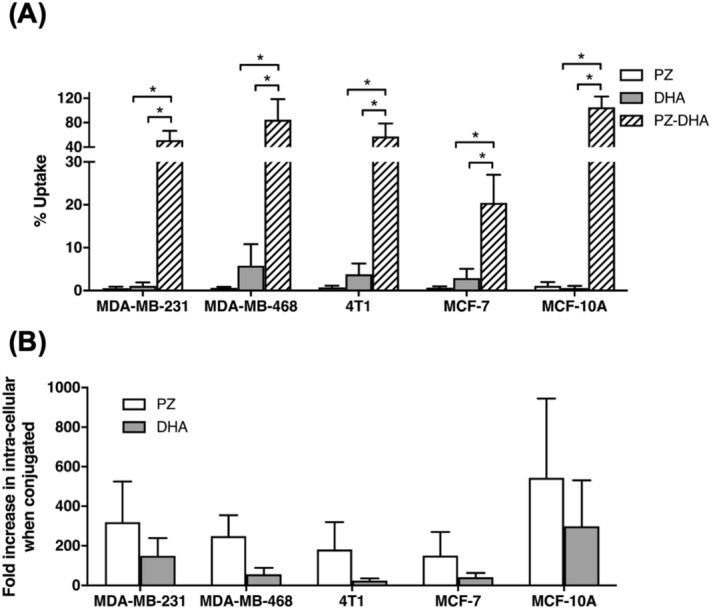
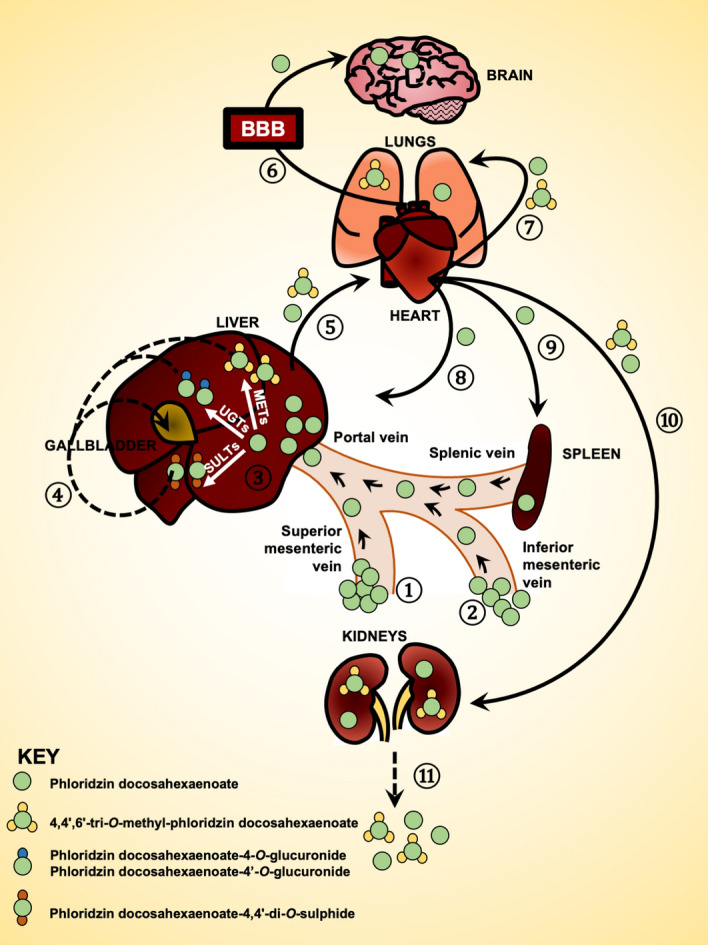
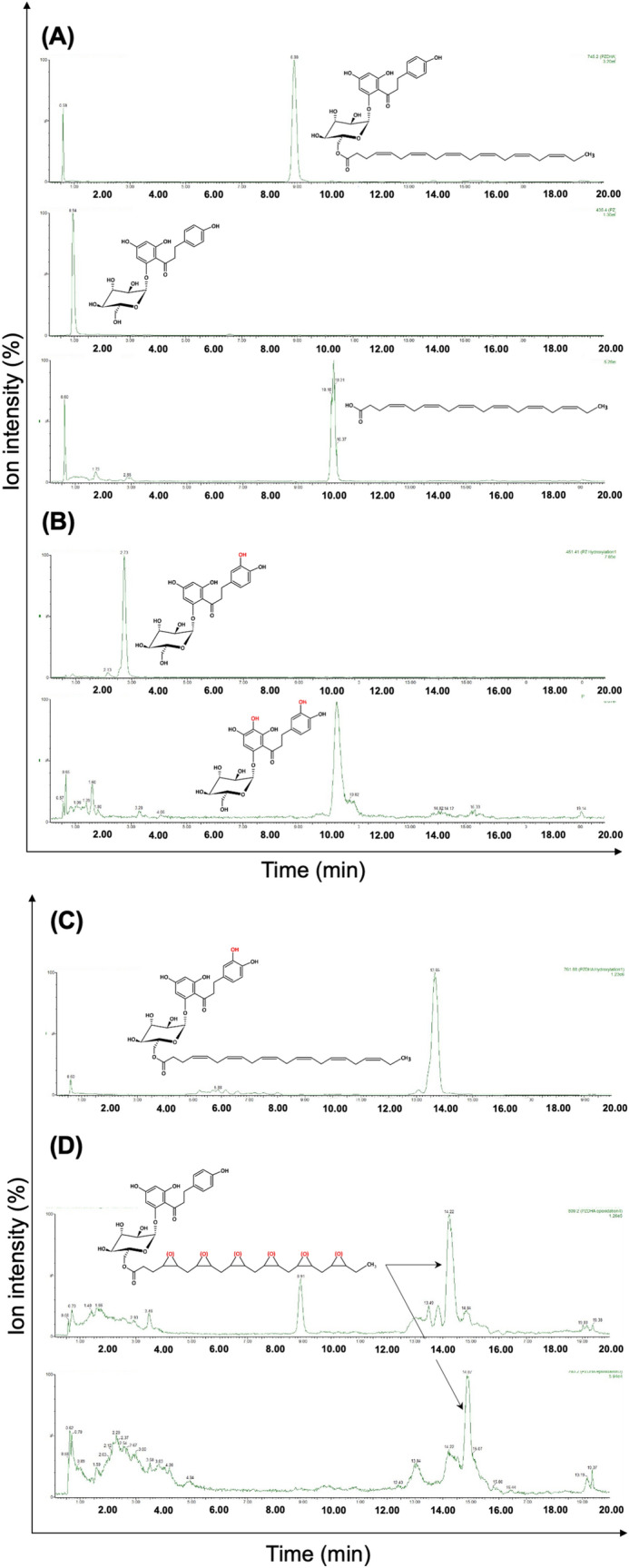
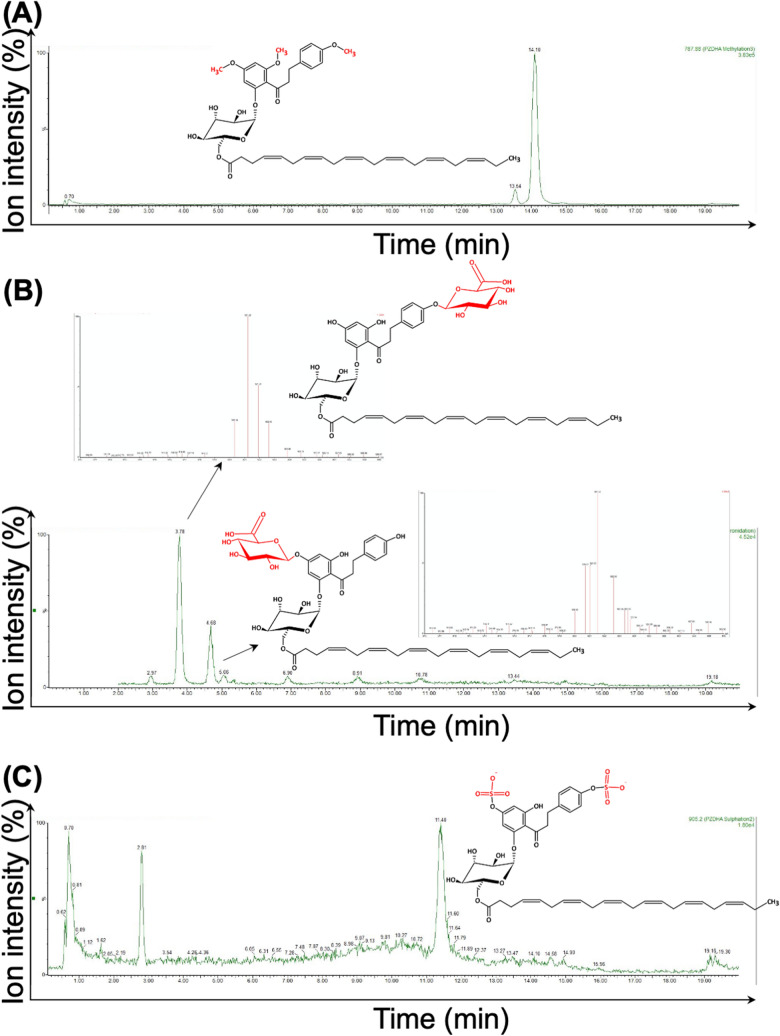
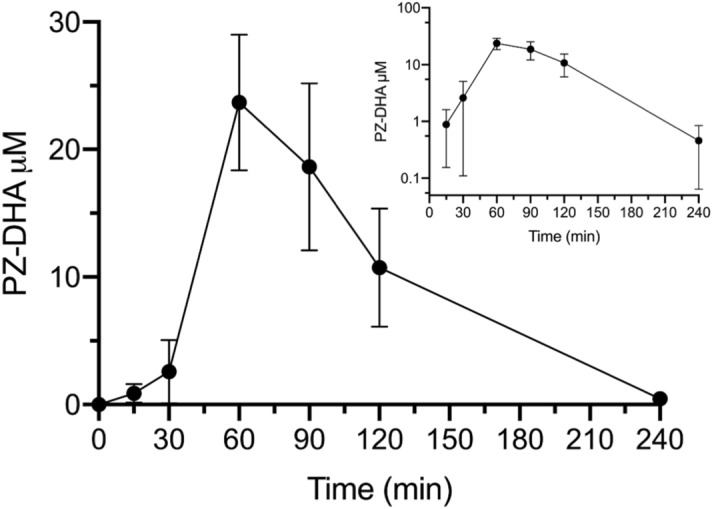
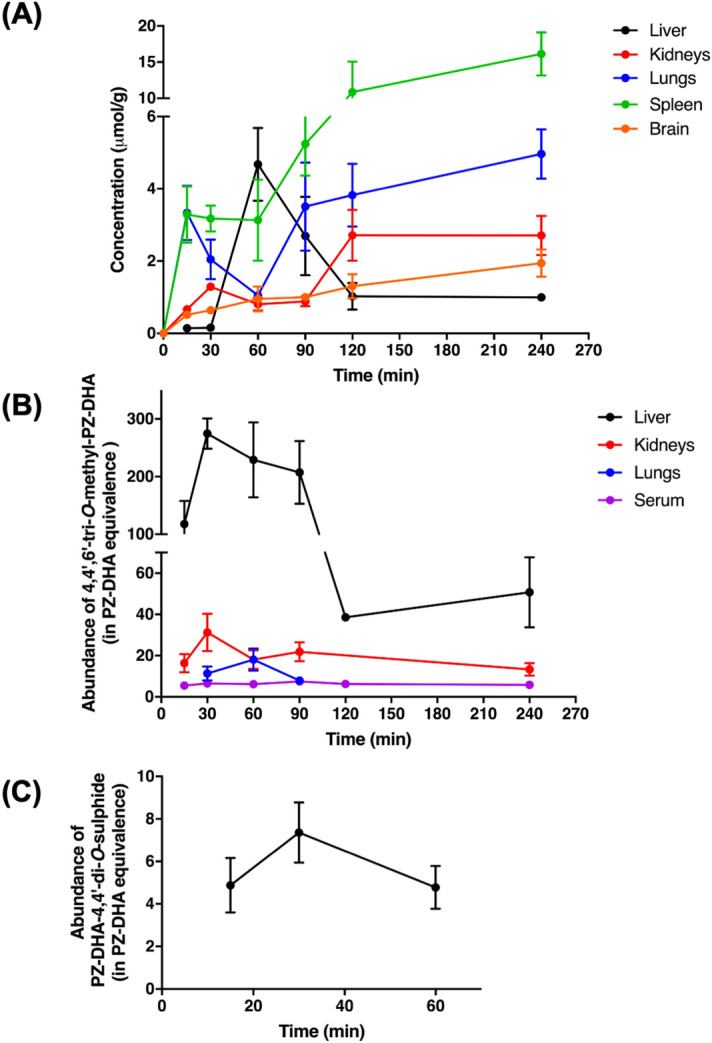
Flavonoids are known to undergo phase II metabolism and produce metabolites with similar or stronger biological effects compared to the parent flavonoids. However, the limited cellular uptake and bioavailability restrict their clinical use. We synthesized phloridzin docosahexaenoate (PZ-DHA), a novel fatty acid ester of polyphenol, through an acylation reaction with the aim of increasing the cellular availability and stability of the parent biomolecules, phloridzin (PZ) and docosahexaenoic acid (DHA). Here, we report metabolites and pharmacokinetic parameters of PZ-DHA, determined using ultra-high-performance liquid chromatography-electrospray ionization tandem mass spectrometry. PZ-DHA was taken-up by human (MDA-MB-231, MDA-MB-468, and MCF-7) and mouse (4T1) mammary carcinoma and human non-malignant mammary epithelial cells (MCF-10A) in cellular uptake assays. Our results suggested that the acylation improves the cellular uptake of PZ and stability of DHA within cells. In mouse hepatic microsomal assays, two major glucuronides of PZ-DHA, PZ-DHA-4-O-glucuronide and PZ-DHA-4'-O-glucuronide (MW = 923.02 g/mol), were detected. One tri-methylated- (4,4',6'-O-trimethyl-PZ-DHA) (MW = 788.88 g/mol) and one di-sulphated- (PZ-DHA-4,4'-O-disulphide) PZ-DHA metabolite (MW = 906.20 g/mol) were also identified. Intraperitoneal injections of PZ-DHA (100 mg/kg) into Balb/c female mice was rapidly absorbed with a serum C and T of 23.7 µM and 60 min, respectively, and rapidly eliminated (t = 28.7 min). PZ-DHA and its metabolites are readily distributed throughout the body (V = 57 mL) into many organs. We identified in vitro and in vivo metabolites of PZ-DHA, which could be tested for potential use to treat diseases such as cancer in multiple organ systems.
类黄酮已知会进行 II 期代谢,并产生与母体类黄酮具有相似或更强生物效应的代谢物。然而,细胞摄取和生物利用度有限限制了它们的临床应用。我们通过酰化反应合成了根皮苷二十二碳六烯酸酯(PZ-DHA),这是一种多酚的新型脂肪酸酯,旨在增加母体生物分子根皮苷(PZ)和二十二碳六烯酸(DHA)的细胞可用性和稳定性。在这里,我们报告了使用超高效液相色谱-电喷雾串联质谱法测定的 PZ-DHA 的代谢物和药代动力学参数。在细胞摄取实验中,PZ-DHA 被人(MDA-MB-231、MDA-MB-468 和 MCF-7)和小鼠(4T1)乳腺癌以及人非恶性乳腺上皮细胞(MCF-10A)摄取。我们的结果表明,酰化作用提高了 PZ 的细胞摄取和细胞内 DHA 的稳定性。在小鼠肝微粒体测定中,检测到 PZ-DHA 的两种主要葡萄糖醛酸苷,PZ-DHA-4-O-葡萄糖醛酸苷和 PZ-DHA-4'-O-葡萄糖醛酸苷(MW=923.02g/mol)。还鉴定了一种三甲基化-(4,4',6'-O-三甲基-PZ-DHA)(MW=788.88g/mol)和一种二硫酸化-PZ-DHA 代谢物(PZ-DHA-4,4'-O-二硫化物)(MW=906.20g/mol)。将 PZ-DHA(100mg/kg)腹腔注射到 Balb/c 雌性小鼠中,血清 C 和 T 分别迅速吸收,分别为 23.7µM 和 60min,迅速消除(t=28.7min)。PZ-DHA 及其代谢物可迅速分布于全身(V=57mL),分布于多个器官。我们鉴定了 PZ-DHA 的体外和体内代谢物,可用于治疗多种器官系统的疾病,如癌症。