Center of Life Sciences, Skolkovo Institute of Science and Technology, Moscow, Russian Federation.
Genomics of Adaptive Immunity Department, Shemyakin-Ovchinnikov Institute of Bioorganic Chemistry, Russian Academy of Sciences, Moscow, Russian Federation.
Elife. 2020 Dec 8;9:e57063. doi: 10.7554/eLife.57063.
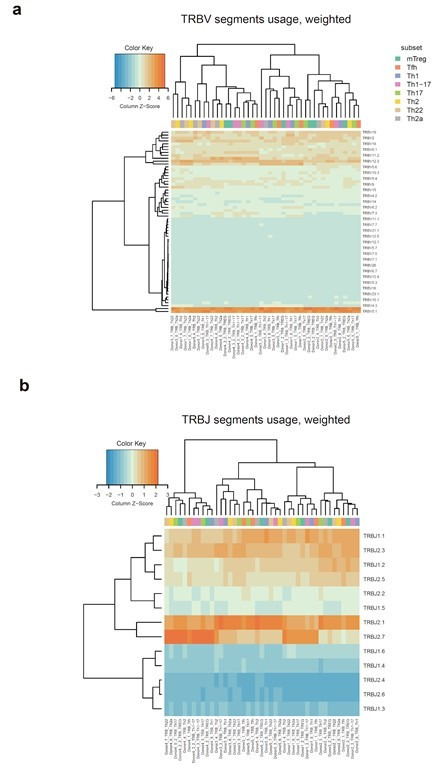
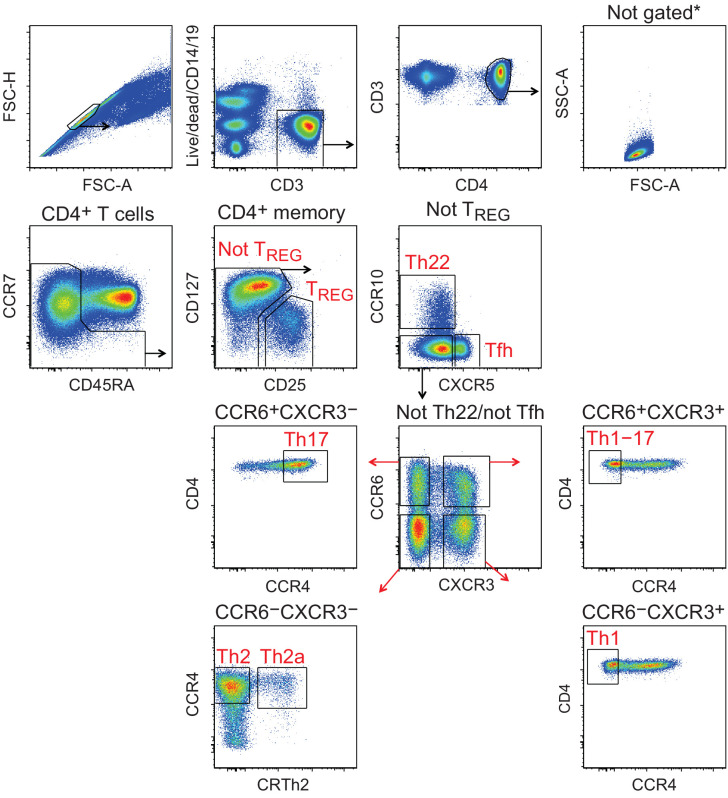
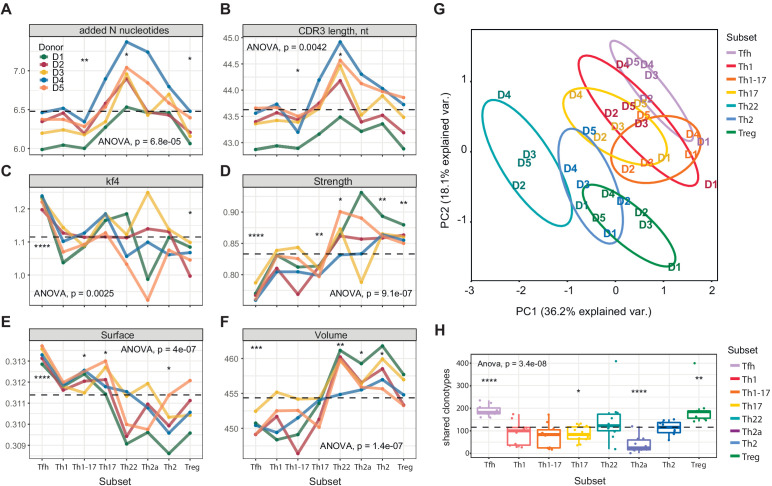
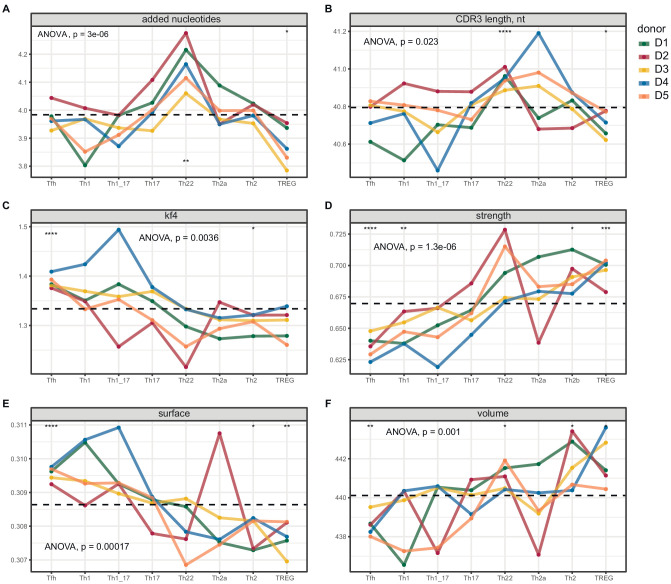
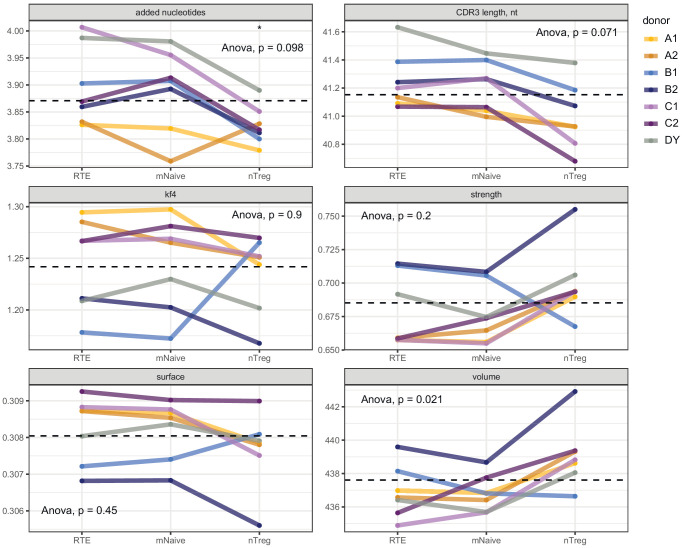
The organizational integrity of the adaptive immune system is determined by functionally discrete subsets of CD4 T cells, but it has remained unclear to what extent lineage choice is influenced by clonotypically expressed T-cell receptors (TCRs). To address this issue, we used a high-throughput approach to profile the αβ TCR repertoires of human naive and effector/memory CD4 T-cell subsets, irrespective of antigen specificity. Highly conserved physicochemical and recombinatorial features were encoded on a subset-specific basis in the effector/memory compartment. Clonal tracking further identified forbidden and permitted transition pathways, mapping effector/memory subsets related by interconversion or ontogeny. Public sequences were largely confined to particular effector/memory subsets, including regulatory T cells (Tregs), which also displayed hardwired repertoire features in the naive compartment. Accordingly, these cumulative repertoire portraits establish a link between clonotype fate decisions in the complex world of CD4 T cells and the intrinsic properties of somatically rearranged TCRs.
适应性免疫系统的组织完整性由功能不同的 CD4 T 细胞亚群决定,但 T 细胞受体(TCR)的克隆型表达在多大程度上影响谱系选择仍不清楚。为了解决这个问题,我们使用高通量方法来描绘人类幼稚和效应/记忆 CD4 T 细胞亚群的 αβ TCR 库,而不考虑抗原特异性。在效应/记忆区室中,基于亚群特异性编码了高度保守的物理化学和重组特征。克隆跟踪进一步确定了禁止和允许的转换途径,通过相互转化或个体发生来映射相关的效应/记忆亚群。公共序列主要局限于特定的效应/记忆亚群,包括调节性 T 细胞(Tregs),它们在幼稚区室中也显示出固定的库特征。因此,这些累积的库特征图谱在 CD4 T 细胞的复杂世界中建立了克隆型命运决定与体细胞重排 TCR 内在特性之间的联系。