Paris Brain Institute, Hôpital Pitié-Salpêtrière, Inserm U 1127, CNRS UMR, Sorbonne Université, Paris, France.
Division of Neurobiology, Institute for Biology, Freie Universität Berlin, Berlin, Germany.
PLoS Biol. 2020 Dec 8;18(12):e3000703. doi: 10.1371/journal.pbio.3000703. eCollection 2020 Dec.
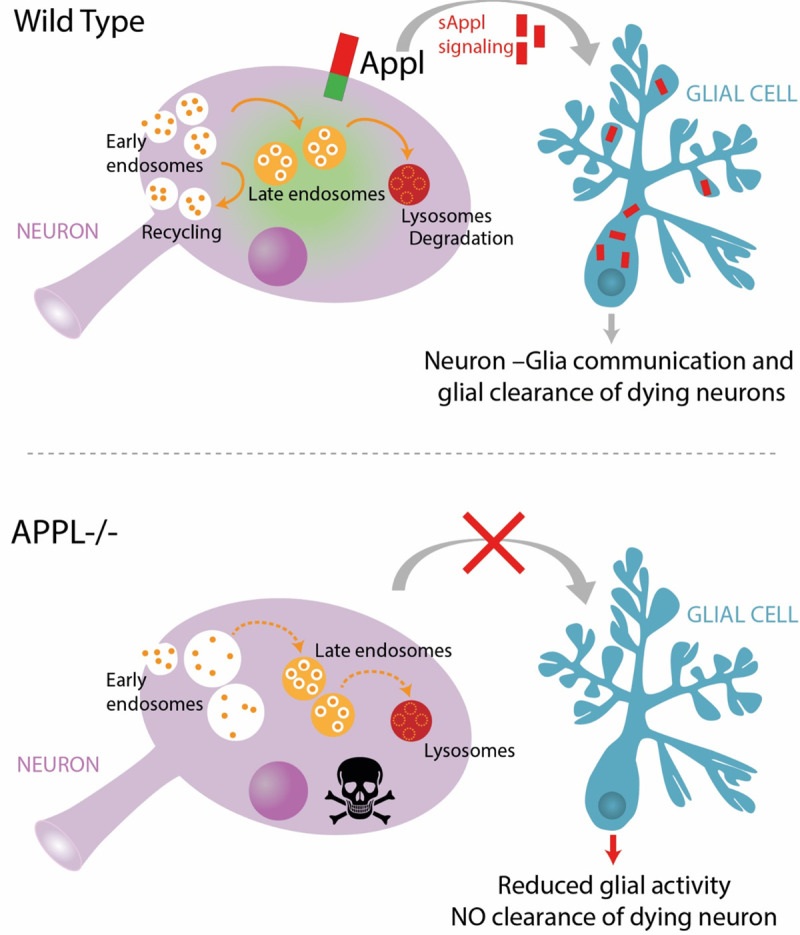
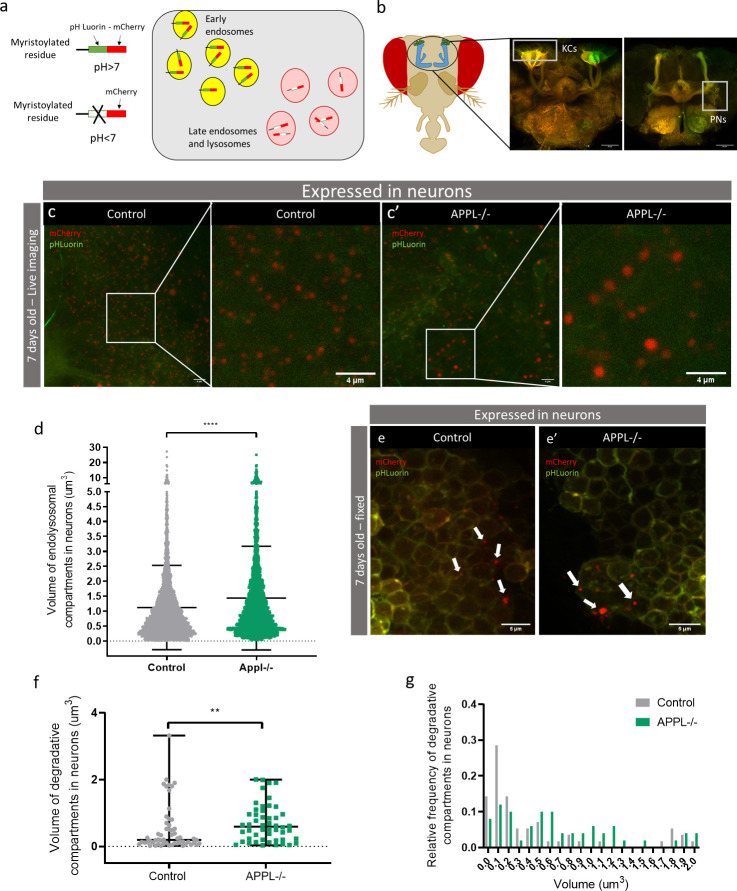
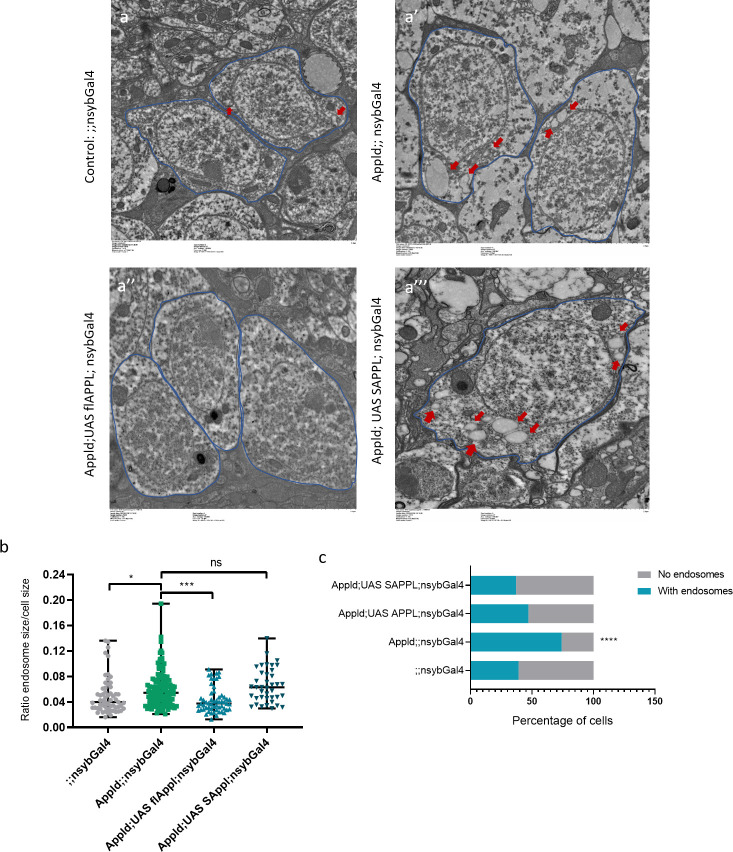
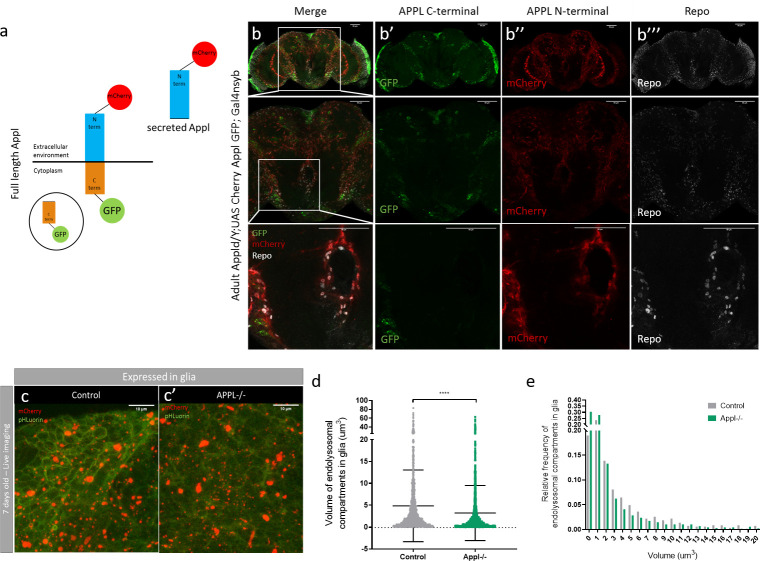
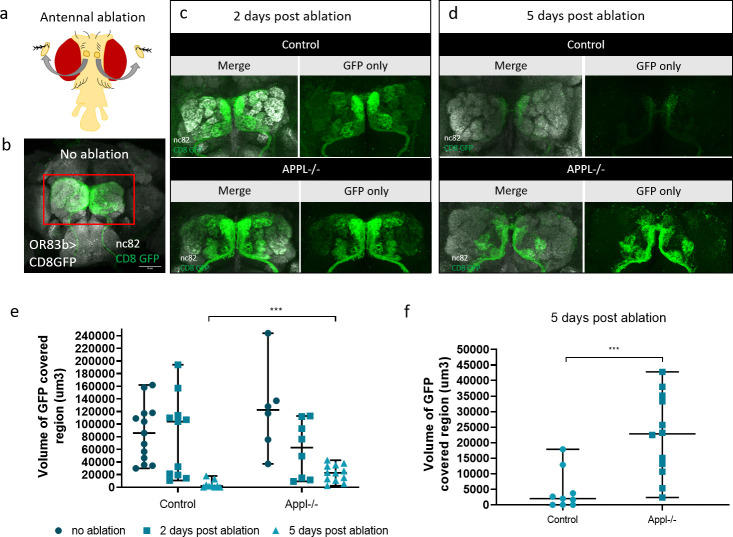
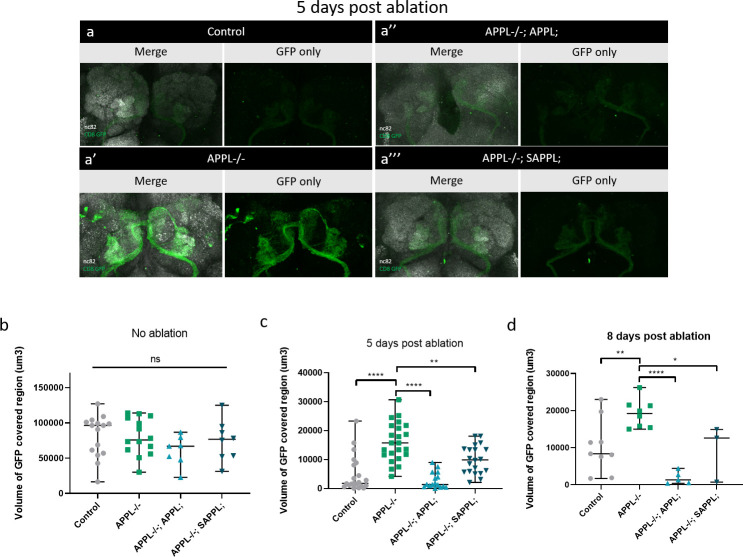
The amyloid precursor protein (APP) is a structurally and functionally conserved transmembrane protein whose physiological role in adult brain function and health is still unclear. Because mutations in APP cause familial Alzheimer's disease (fAD), most research focuses on this aspect of APP biology. We investigated the physiological function of APP in the adult brain using the fruit fly Drosophila melanogaster, which harbors a single APP homologue called APP Like (APPL). Previous studies have provided evidence for the implication of APPL in neuronal wiring and axonal growth through the Wnt signaling pathway during development. However, like APP, APPL continues to be expressed in all neurons of the adult brain where its functions and their molecular and cellular underpinnings are unknown. We report that APPL loss of function (LOF) results in the dysregulation of endolysosomal function in neurons, with a notable enlargement of early endosomal compartments followed by neuronal cell death and the accumulation of dead neurons in the brain during a critical period at a young age. These defects can be rescued by reduction in the levels of the early endosomal regulator Rab5, indicating a causal role of endosomal function for cell death. Finally, we show that the secreted extracellular domain of APPL interacts with glia and regulates the size of their endosomes, the expression of the Draper engulfment receptor, and the clearance of neuronal debris in an axotomy model. We propose that APP proteins represent a novel family of neuroglial signaling factors required for adult brain homeostasis.
淀粉样前体蛋白 (APP) 是一种结构和功能上保守的跨膜蛋白,其在成年大脑功能和健康中的生理作用尚不清楚。由于 APP 中的突变会导致家族性阿尔茨海默病 (fAD),因此大多数研究都集中在 APP 生物学的这一方面。我们使用果蝇 Drosophila melanogaster 研究了 APP 在成年大脑中的生理功能,果蝇中存在一种称为 APP Like (APPL) 的 APP 同源物。先前的研究已经提供了证据,表明 APPL 通过 Wnt 信号通路在发育过程中参与神经元连接和轴突生长。然而,与 APP 一样,APPL 在成年大脑的所有神经元中持续表达,其功能及其分子和细胞基础尚不清楚。我们报告称,APPL 功能丧失 (LOF) 会导致神经元内溶酶体功能失调,早期内体区室明显增大,随后神经元死亡,并且在年轻时的关键时期大脑中积累了死亡的神经元。这些缺陷可以通过降低早期内体调节剂 Rab5 的水平来挽救,这表明内体功能对细胞死亡起着因果作用。最后,我们表明 APPL 的分泌细胞外结构域与神经胶质相互作用,调节它们的内体大小、Draper 吞噬受体的表达以及轴突切断模型中神经元碎片的清除。我们提出,APP 蛋白代表了一类新的神经胶质信号因子,是成年大脑内稳态所必需的。