The School of Nursing, the University of Texas at Austin, Austin, TX, USA; Austin Geriatric Specialists, Austin, TX, USA.
Austin Geriatric Specialists, Austin, TX, USA; Dell Medical School, the University of Texas at Austin, Austin, TX, USA.
J Am Med Dir Assoc. 2021 Jan;22(1):209-214. doi: 10.1016/j.jamda.2020.11.011. Epub 2020 Nov 19.
Describe the care preference changes among nursing home residents receiving proactive Advance Care Planning (ACP) conversations from health care practitioners during the COVID-19 pandemic.
Retrospective chart review.
Nursing home residents (n = 963) or their surrogate decision makers had at least 1 ACP conversation with a primary health care practitioner between April 1, 2020, and May 30, 2020, and made decisions of any changes in code status and hospitalization preferences.
Health care practitioners conducted ACP conversations proactively with residents or their surrogate decision makers at 15 nursing homes in a metropolitan area of the southwestern United States between April 1, 2020, and May 30, 2020. ACP conversations reviewed code status and goals of care including Do Not Hospitalize (DNH) care preference. Resident age, gender, code status, and DNH choice before and after the ACP conversations were documented. Descriptive data analyses identified significant changes in resident care preferences before and after ACP conversations.
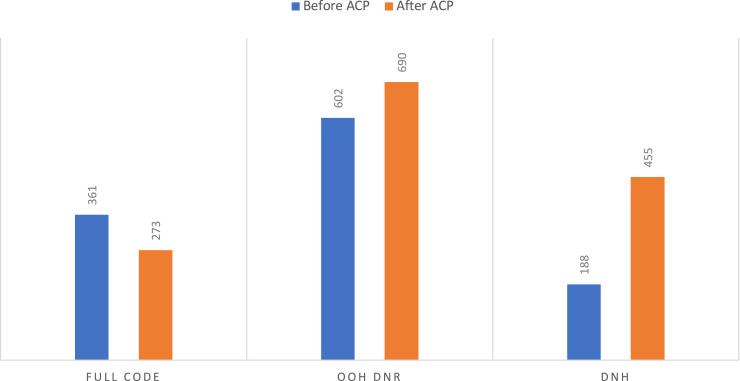
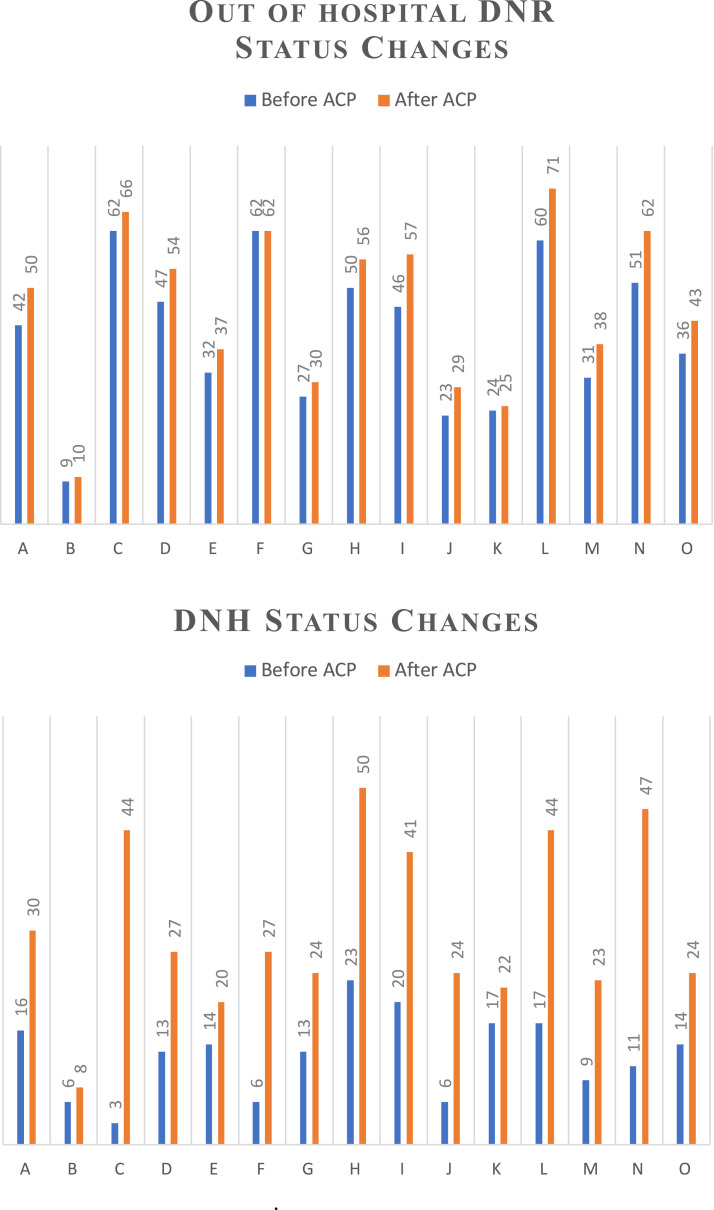
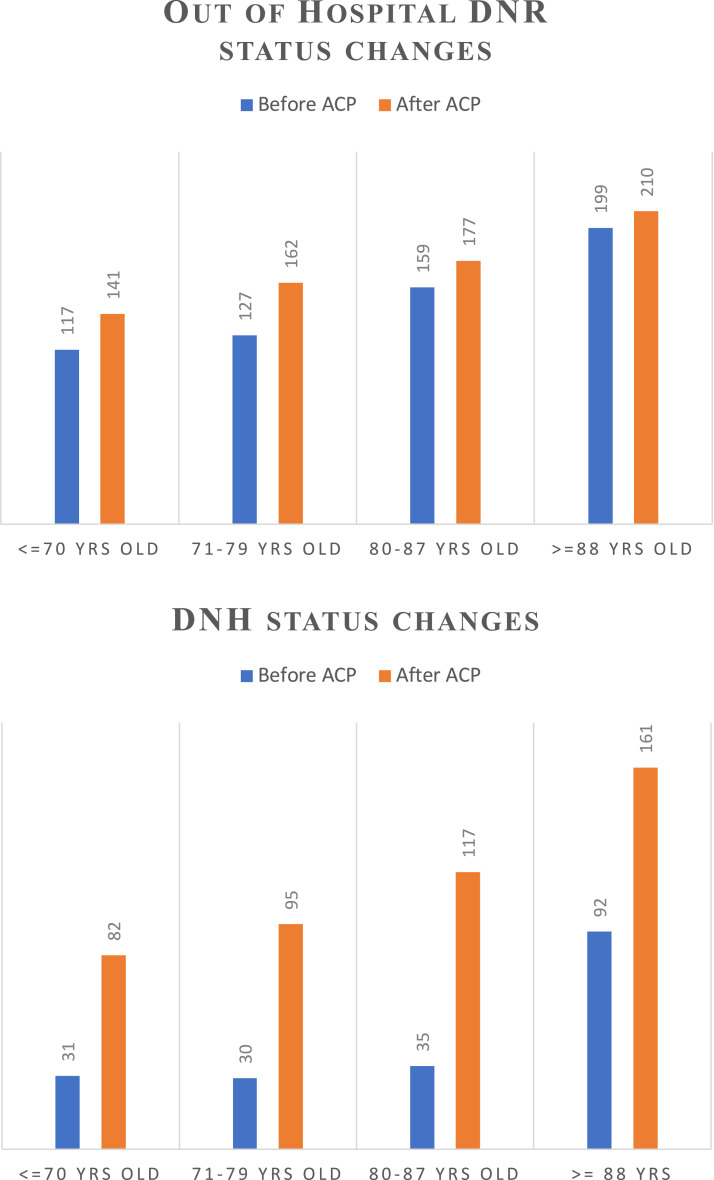
Before the most recent ACP discussion, 361 residents were full code status and the rest were Out of Hospital Do Not Resuscitate (DNR). Of the individuals with Out of Hospital DNR, 188 residents also chose DNH. After the ACP conversation, 88 residents opted to change from full code status to Out of Hospital DNR, thereby increasing the percentage of residents with Out of Hospital DNR from 63% to 72%. Almost half of the residents decided to keep or change to the DNH care option after the ACP conversation.
Proactive ACP conversations during COVID-19 increased DNH from less than a quarter to almost half among the nursing home residents. Out of Hospital DNR increased by 9%. It is important for all health care practitioners to proactively review ACP with nursing home residents and their surrogate decision makers during a pandemic, thereby ensuring care consistent with personal goals of care and avoiding unnecessary hospitalizations.
描述在 COVID-19 大流行期间,接受医疗保健从业者主动进行的预先护理计划(ACP)对话的养老院居民的护理偏好变化。
回顾性图表审查。
养老院居民(n=963)或其替代决策人在 2020 年 4 月 1 日至 5 月 30 日期间至少与初级保健医生进行了 1 次 ACP 对话,并对任何更改身份和住院偏好做出了决定。
医疗保健从业者于 2020 年 4 月 1 日至 5 月 30 日期间在美国西南部大都市地区的 15 家养老院主动与居民或其替代决策人进行 ACP 对话。ACP 对话审查了身份和护理目标,包括不住院(DNH)护理偏好。记录了 ACP 对话前后居民的年龄、性别、身份和 DNH 选择。描述性数据分析确定了 ACP 对话前后居民护理偏好的显著变化。
在最近一次 ACP 讨论之前,361 名居民为全代码状态,其余为院外不复苏(DNR)。在院外 DNR 的人群中,有 188 名居民也选择了 DNH。在 ACP 对话后,88 名居民选择从全代码状态更改为院外 DNR,从而将院外 DNR 居民的百分比从 63%增加到 72%。近一半的居民在 ACP 对话后决定保留或更改为 DNH 护理选项。
在 COVID-19 期间进行的主动 ACP 对话使养老院居民的 DNH 从不到四分之一增加到几乎一半。院外 DNR 增加了 9%。在大流行期间,所有医疗保健从业者都应主动与养老院居民及其替代决策人一起审查 ACP,从而确保护理符合个人护理目标,并避免不必要的住院治疗。