Center for Nanomedicine, Department of Ophthalmology, Wilmer Eye Institute Johns Hopkins University School of Medicine, Baltimore, MD 21231, USA; Department of Chemical and Biomolecular Engineering, Johns Hopkins University, Baltimore, MD, 21218, USA.
Center for Nanomedicine, Department of Ophthalmology, Wilmer Eye Institute Johns Hopkins University School of Medicine, Baltimore, MD 21231, USA.
J Control Release. 2021 Jan 10;329:434-444. doi: 10.1016/j.jconrel.2020.12.003. Epub 2020 Dec 5.
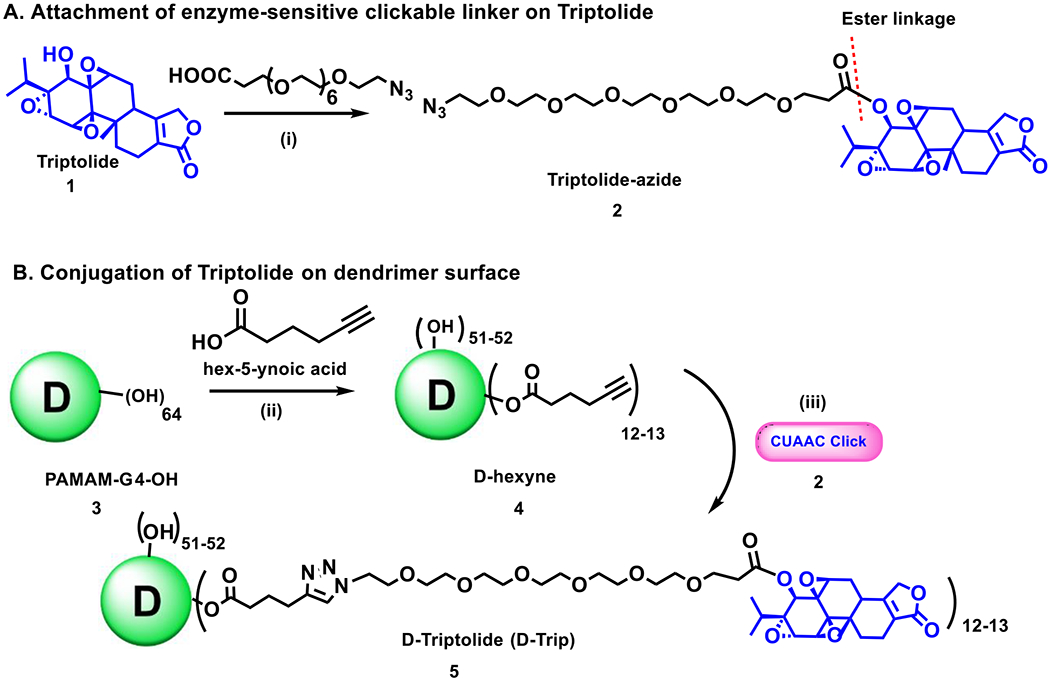
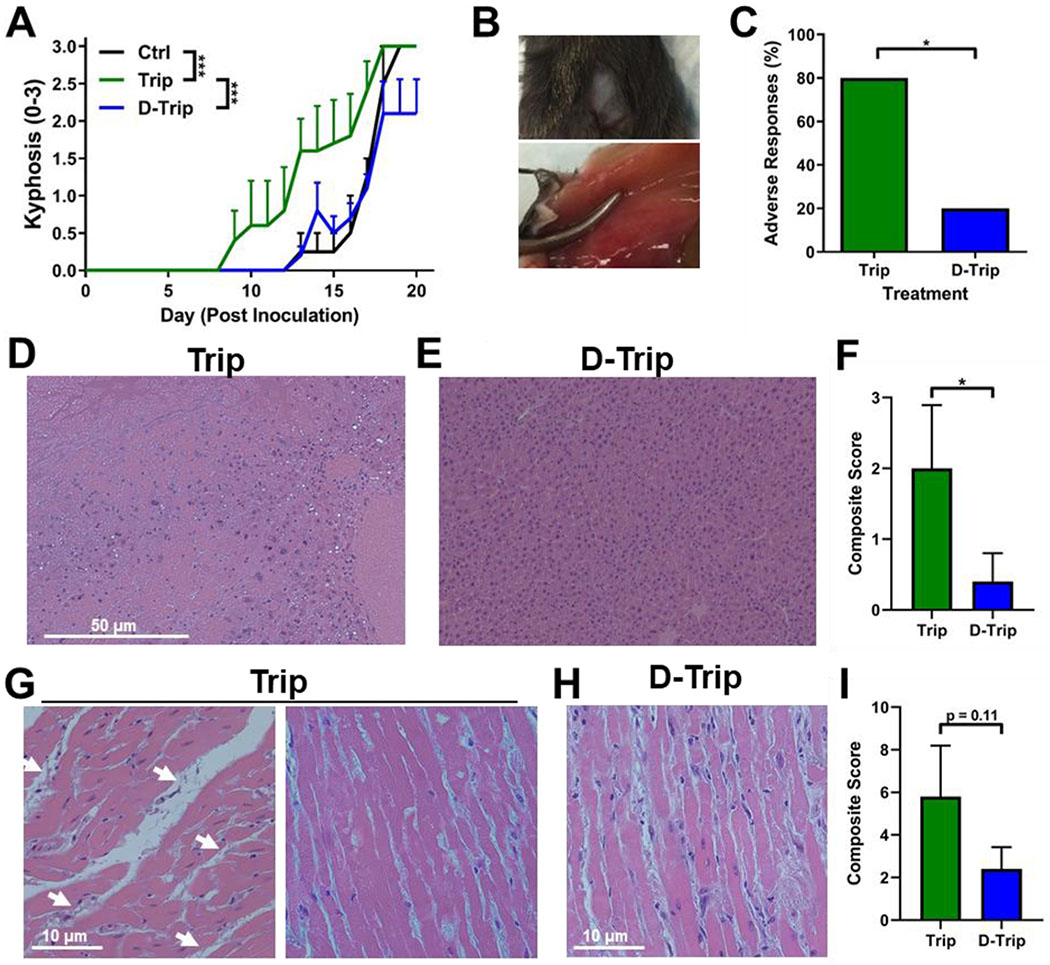
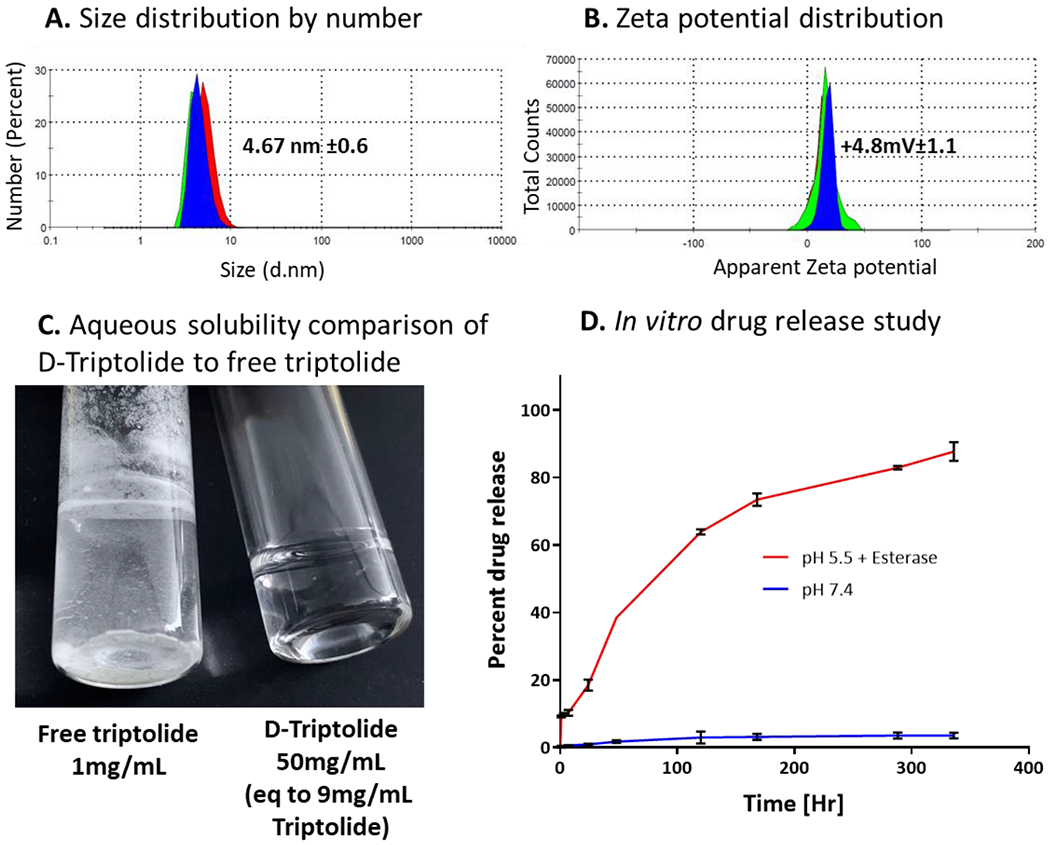
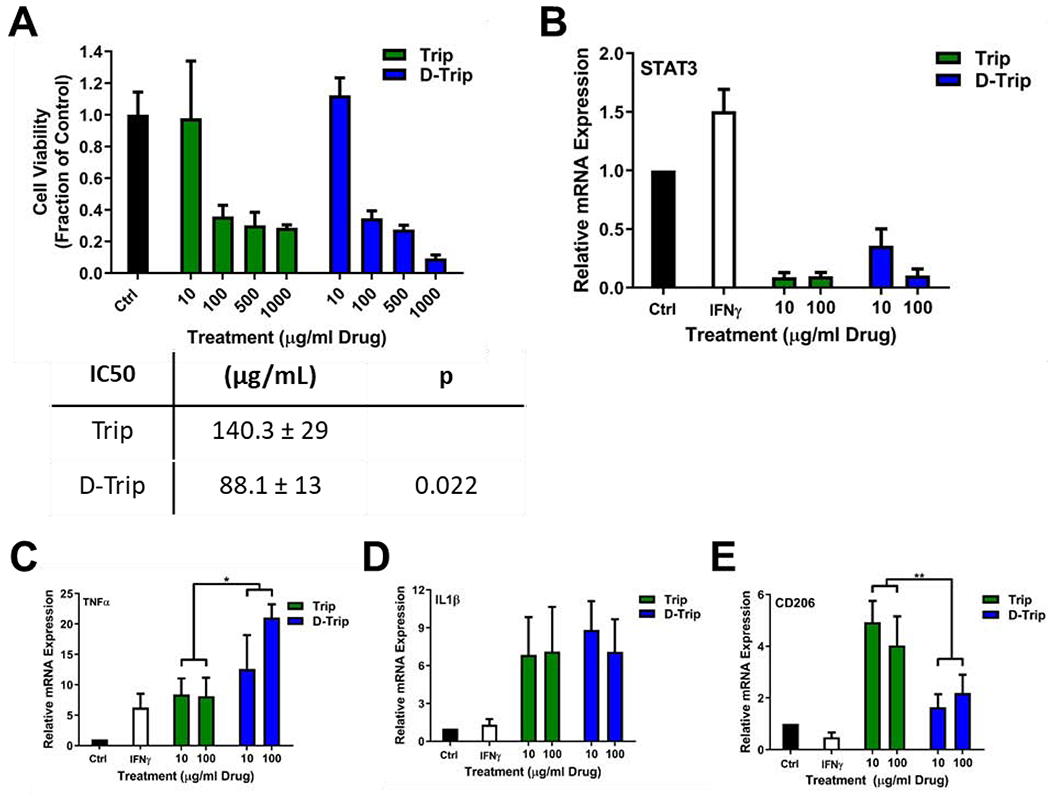
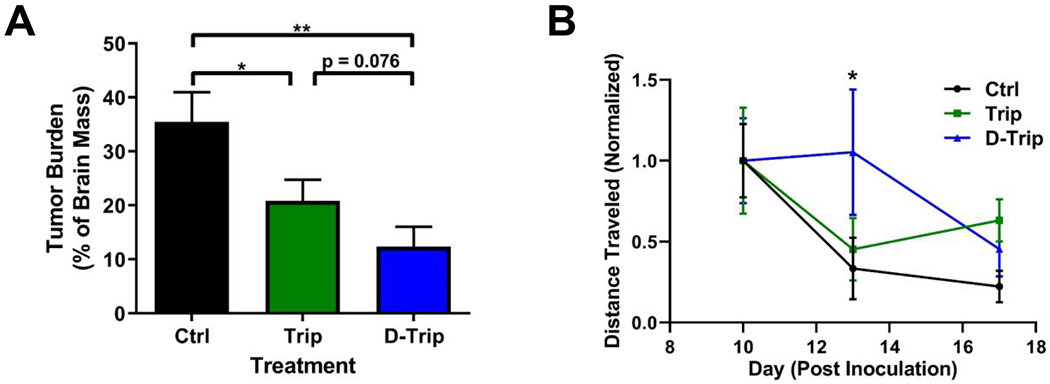
Novel delivery strategies are necessary to effectively address glioblastoma without systemic toxicities. Triptolide is a therapy derived from the thunder god vine that has shown potent anti-proliferative and immunosuppressive properties but exhibits significant adverse systemic effects. Dendrimer-based nanomedicines have shown great potential for clinical translation of systemic therapies targeting neuroinflammation and brain tumors. Here we present a novel dendrimer-triptolide conjugate that specifically targets tumor-associated macrophages (TAMs) in glioblastoma from systemic administration and exhibits triggered release under intracellular and intratumor conditions. This targeted delivery improves phenotype switching of TAMs from pro- towards anti-tumor expression in vitro. In an orthotopic model of glioblastoma, dendrimer-triptolide achieved significantly improved amelioration of tumor burden compared to free triptolide. Notably, the triggered release mechanism of dendrimer-mediated triptolide delivery significantly reduced triptolide-associated hepatic and cardiac toxicities. These results demonstrate that dendrimers are a promising targeted delivery platform to achieve effective glioblastoma treatment by improving efficacy while reducing systemic toxicities.
需要新的给药策略来有效治疗胶质母细胞瘤,而不产生全身毒性。雷公藤红素是一种从雷公藤中提取的治疗方法,具有很强的抗增殖和免疫抑制作用,但表现出显著的全身不良反应。基于树突状的纳米药物在针对神经炎症和脑肿瘤的全身治疗的临床转化方面显示出巨大的潜力。在这里,我们提出了一种新型的树突状-雷公藤红素缀合物,它可以从全身给药的方式特异性靶向胶质母细胞瘤中的肿瘤相关巨噬细胞(TAMs),并在细胞内和肿瘤内条件下触发释放。这种靶向递药可改善 TAMs 的表型转换,使其从促肿瘤表达向抗肿瘤表达转变。在胶质母细胞瘤的原位模型中,与游离雷公藤红素相比,树突状-雷公藤红素显著改善了肿瘤负担。值得注意的是,树突状介导的雷公藤红素递药的触发释放机制显著降低了雷公藤红素相关的肝毒性和心脏毒性。这些结果表明,树突状分子是一种很有前途的靶向递药平台,可以通过提高疗效同时降低全身毒性来实现有效的胶质母细胞瘤治疗。