Liaw Kevin, Reddy Rajsekhar, Sharma Anjali, Li Jiangyu, Chang Michelle, Sharma Rishi, Salazar Sebastian, Kannan Sujatha, Kannan Rangaramanujam M
Department of Chemical and Biomolecular Engineering Johns Hopkins University Baltimore Maryland USA.
Center for Nanomedicine, Department of Ophthalmology Johns Hopkins Medicine Baltimore Maryland USA.
Bioeng Transl Med. 2020 Dec 11;6(2):e10205. doi: 10.1002/btm2.10205. eCollection 2021 May.
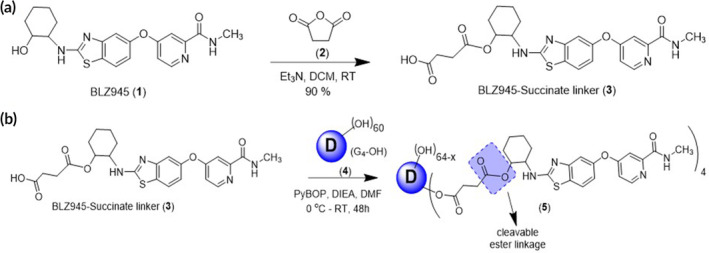
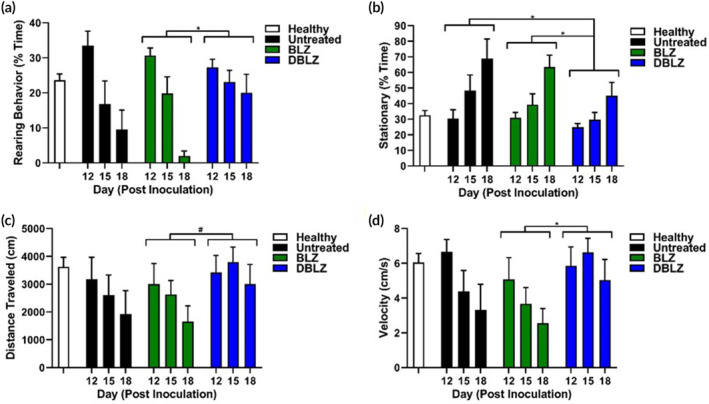
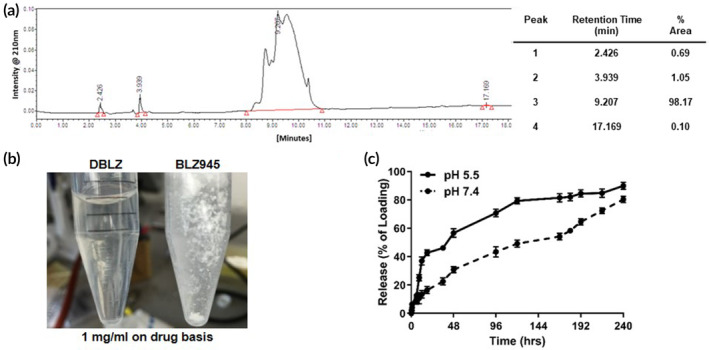
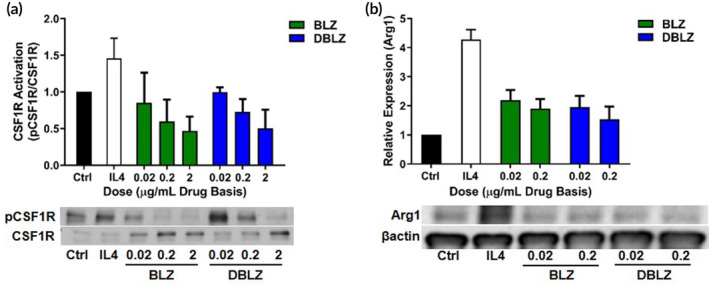
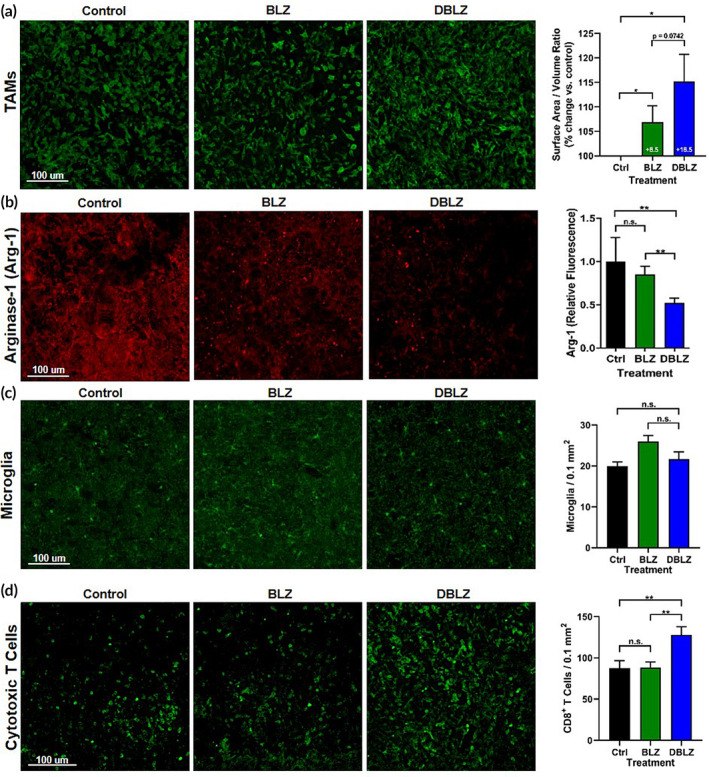
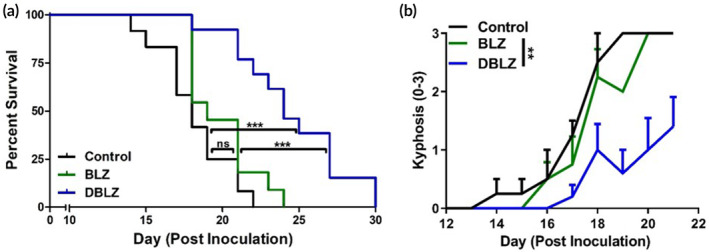
Glioblastoma is the most common and aggressive form of primary brain cancer, with median survival of 16-20 months and a 5-year survival rates of <5%. Recent advances in immunotherapies have shown that addressing the tumor immune profile by targeting the colony-stimulating factor 1 (CSF-1) signaling pathway of tumor-associated macrophages (TAMs) has the potential to improve glioblastoma therapy. However, such therapies have shown limited successes in clinical translation partially due to lack of specific cell targeting in solid tumors and systemic toxicity. In this study, we present a novel hydroxyl dendrimer-mediated immunotherapy to deliver CSF-1R inhibitor BLZ945 (D-BLZ) from systemic administration selectively to TAMs in glioblastoma brain tumors to repolarize the tumor immune environment in a localized manner. We show that conjugation of BLZ945 to dendrimers enables sustained release in intracellular and intratumor conditions. We demonstrate that a single systemic dose of D-BLZ targeted to TAMs decreases pro-tumor expression in TAMs and promotes cytotoxic T cell infiltration, resulting in prolonged survival and ameliorated disease burden compared to free BLZ945. Our results demonstrate that dendrimer-drug conjugates can facilitate specific, localized manipulation of tumor immune responses from systemic administration by delivering immunotherapies selectively to TAMs, thereby improving therapeutic efficacy while reducing off-target effects.
胶质母细胞瘤是原发性脑癌中最常见且侵袭性最强的类型,中位生存期为16 - 20个月,5年生存率低于5%。免疫疗法的最新进展表明,通过靶向肿瘤相关巨噬细胞(TAM)的集落刺激因子1(CSF - 1)信号通路来改善胶质母细胞瘤的治疗具有潜力。然而,由于实体瘤中缺乏特异性细胞靶向以及全身毒性,此类疗法在临床转化方面的成效有限。在本研究中,我们提出了一种新型的羟基树枝状大分子介导的免疫疗法,通过全身给药将CSF - 1R抑制剂BLZ945(D - BLZ)选择性地递送至胶质母细胞瘤脑肿瘤中的TAM,以局部方式重塑肿瘤免疫环境。我们发现将BLZ945与树枝状大分子偶联能够在细胞内和肿瘤内条件下实现持续释放。我们证明,单次全身给药靶向TAM的D - BLZ可降低TAM中促肿瘤因子的表达,并促进细胞毒性T细胞浸润,与游离的BLZ945相比,可延长生存期并减轻疾病负担。我们的结果表明,树枝状大分子 - 药物偶联物可通过将免疫疗法选择性地递送至TAM,促进从全身给药对肿瘤免疫反应进行特异性、局部性的调控,从而提高治疗效果,同时减少脱靶效应。