Bosco Lara, Nardelli Martina, Tavella Luciana
Dipartimento di Scienze Agrarie, Forestali e Alimentari (DISAFA), University of Torino, Largo P. Braccini 2, I-10095 Grugliasco, TO, Italy.
Insects. 2020 Dec 6;11(12):866. doi: 10.3390/insects11120866.
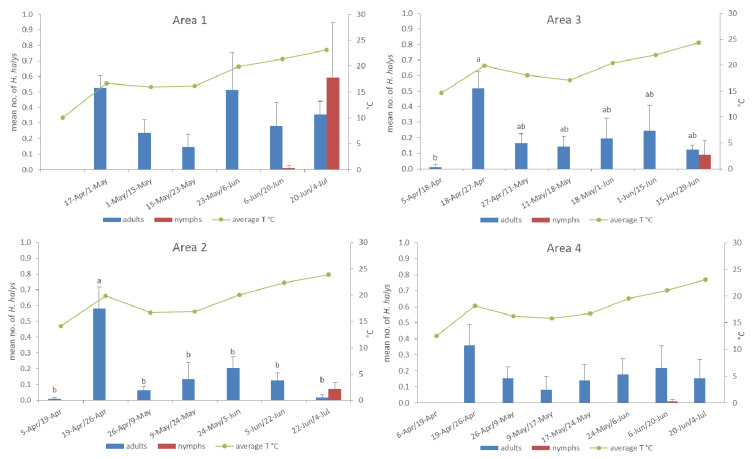
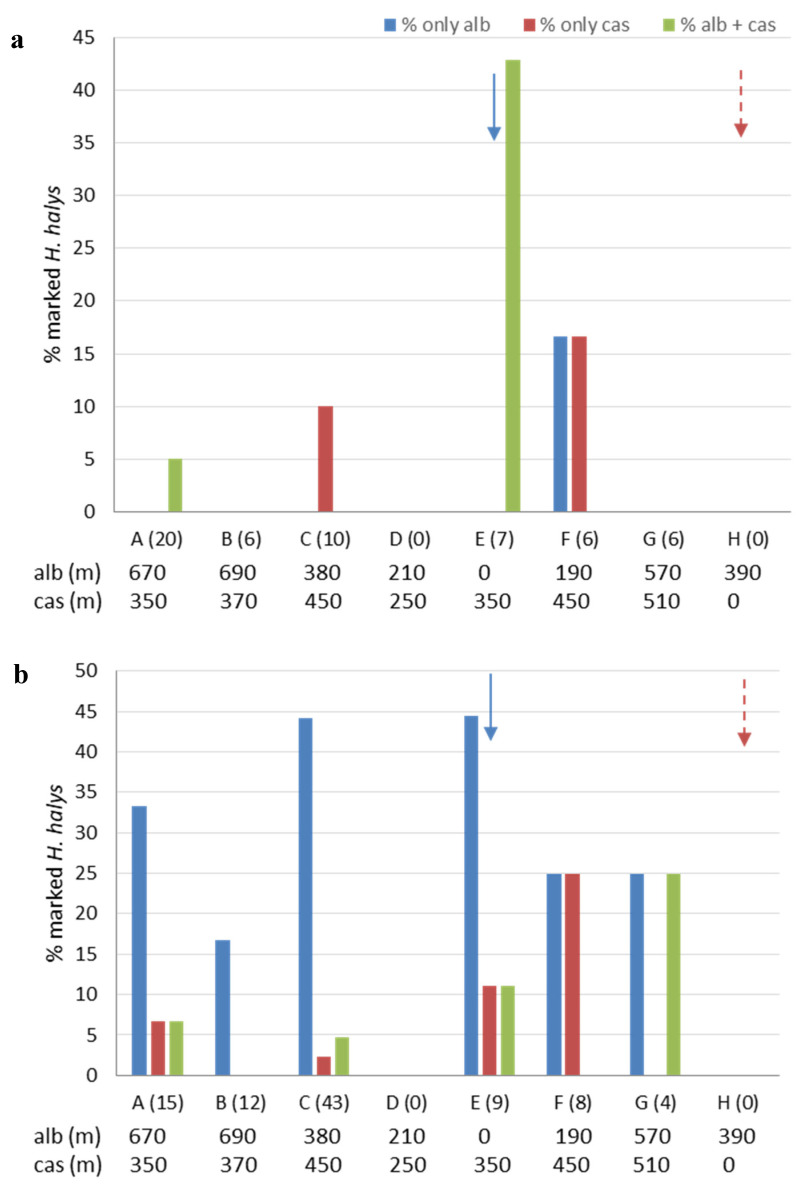
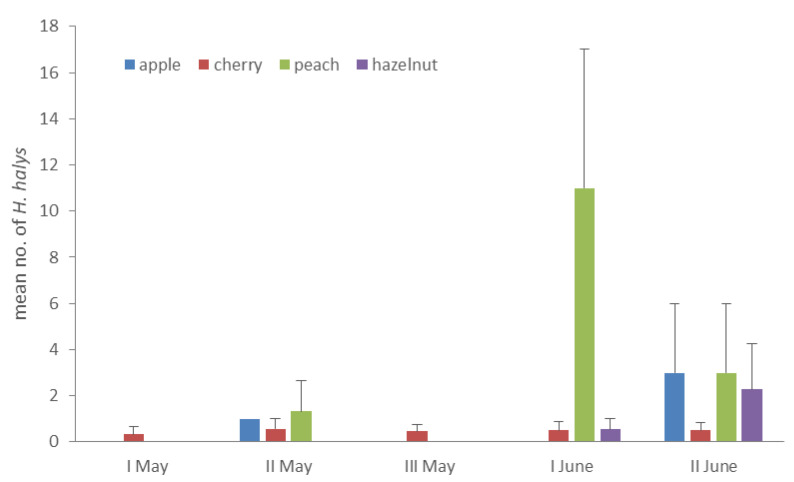
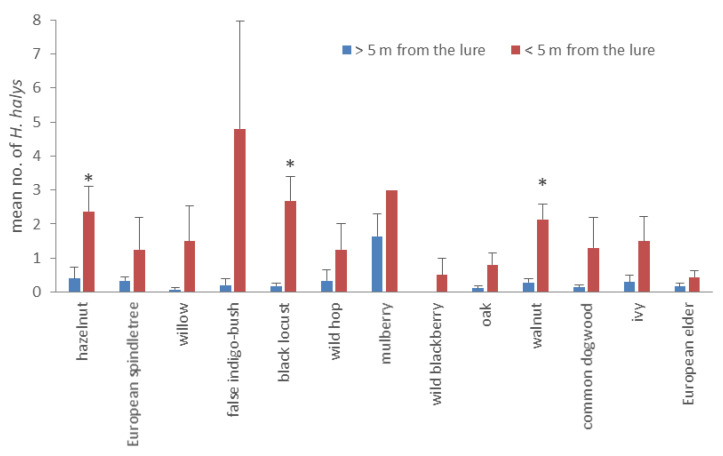
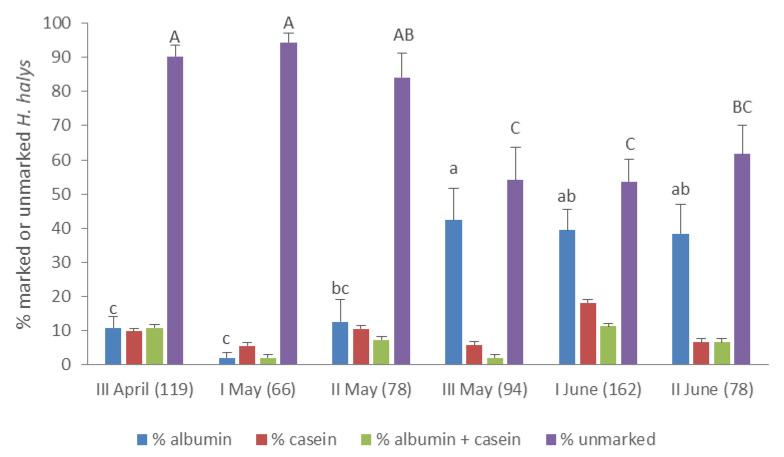
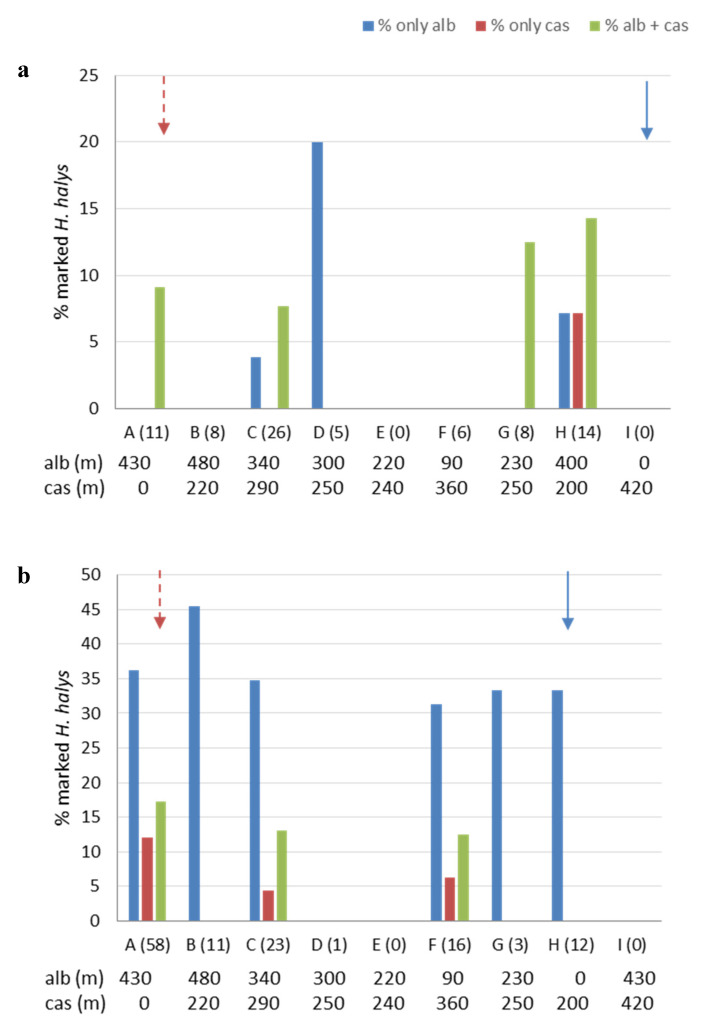
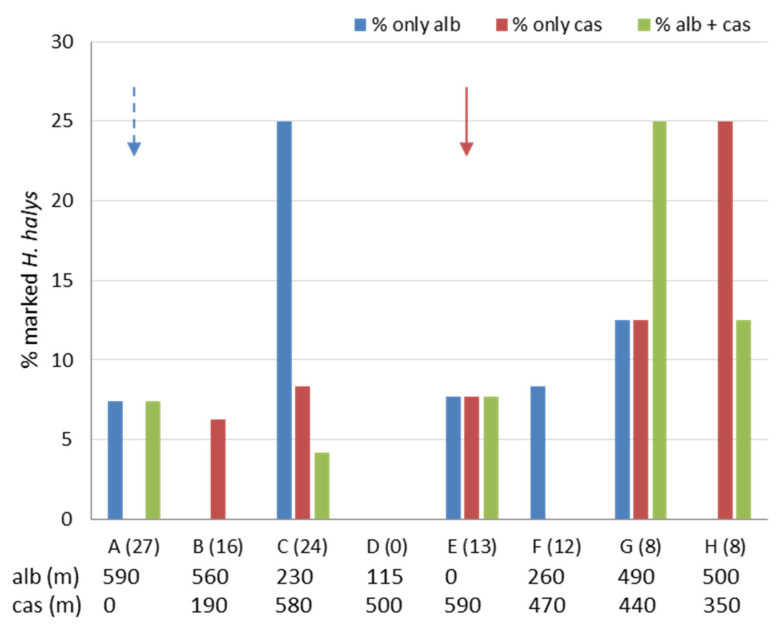
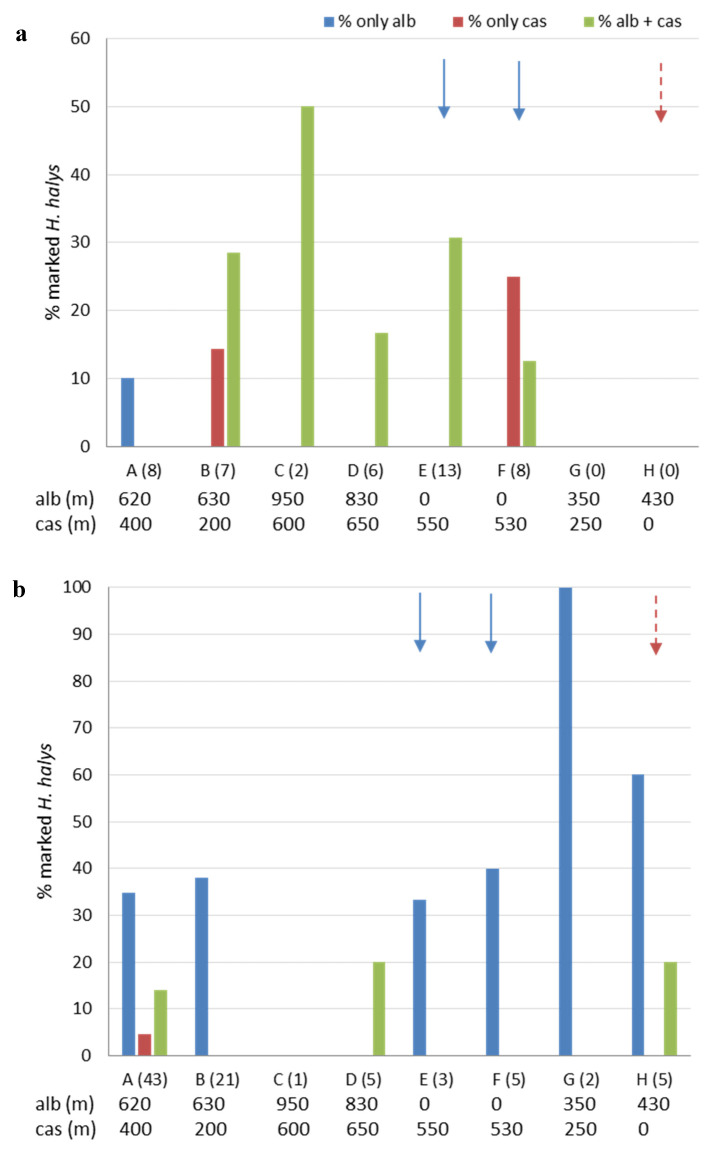
Following its first detection in North Italy in 2012, has become a serious threat in many crops, including hazelnut. The present study aimed at investigating dispersal capacity and behavior in relation to host plants of overwintered adults of before the colonization of hazelnut crop. Research was carried out in four polyculture areas (from 14 to 50 ha) in north-western Italy in 2018, by using (i) pheromone-baited traps, (ii) visual inspection and beating sheet sampling, and (iii) immunomarking-capture technique. The relative abundance of was similar between and within the study areas, and the early attractiveness of lures to adults after overwintering was confirmed; the host plants near a pheromone trap (less than 5 m) hosted higher numbers of than the same plant species far away. Hybrid plane, European spindletree, walnut, oak, and European elder were the first plants on which adult bugs were observed to feed. By immunomarking-capture technique, showed both short- and long-range dispersal from overwintering sites and/or early host plants to wild and crop plants. Marked adults were found in all zones of each area, irrespective of the distance from the protein treatment. Therefore, movement patterns depend on the ecosystem features, and plant host distribution and availability. This knowledge together with the interaction between pheromone and early host plants might contribute to the management of post-overwintering adults.
自2012年在意大利北部首次被发现以来,它已对包括榛子在内的许多作物构成严重威胁。本研究旨在调查在榛子作物定植之前,越冬成虫与寄主植物相关的扩散能力和行为。2018年在意大利西北部的四个混作区(面积从14公顷到50公顷)开展了研究,采用了(i)性诱捕器、(ii)目视检查和拍打法采样以及(iii)免疫标记捕获技术。在各研究区域之间及内部,该虫的相对丰度相似,且证实了诱捕器对越冬后成虫的早期吸引力;性诱捕器附近(小于5米)的寄主植物上的该虫数量高于远处相同植物种类上的数量。杂交悬铃木、欧洲卫矛、核桃、橡树和接骨木是观察到成虫取食的首批植物。通过免疫标记捕获技术,该虫表现出从越冬地点和/或早期寄主植物向野生植物和作物的短距离和长距离扩散。在每个区域的所有地带都发现了有标记的成虫,与距蛋白质处理点的距离无关。因此,该虫的移动模式取决于生态系统特征以及植物寄主的分布和可利用性。这些知识以及性信息素与早期寄主植物之间的相互作用可能有助于对越冬后成虫的管理。