Institute for Clinical and Molecular Virology, Friedrich-Alexander University of Erlangen-Nürnberg (FAU), Schlossgarten 4, 91054 Erlangen, Germany.
Institute of Microbiology, Bundeswehr, Neuherbergstraße 11, 80937 München, Germany.
Viruses. 2020 Dec 5;12(12):1394. doi: 10.3390/v12121394.
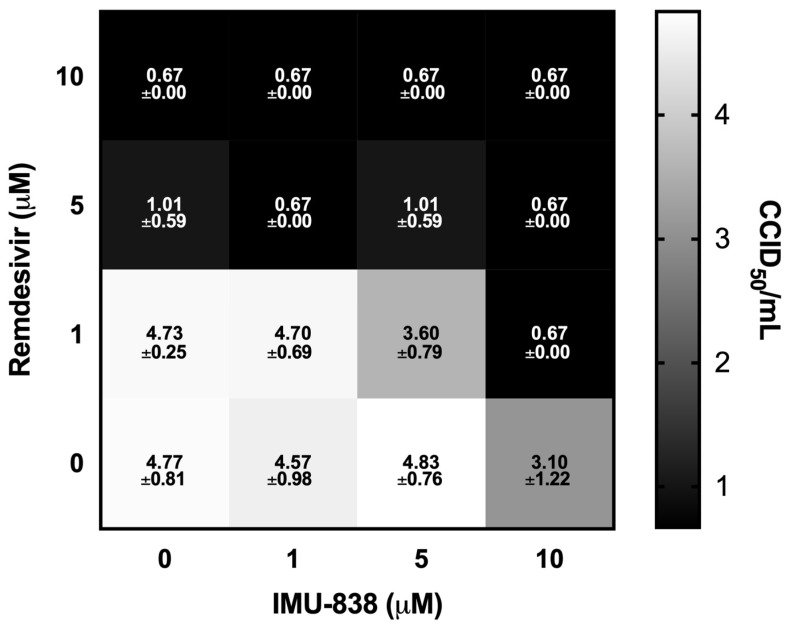
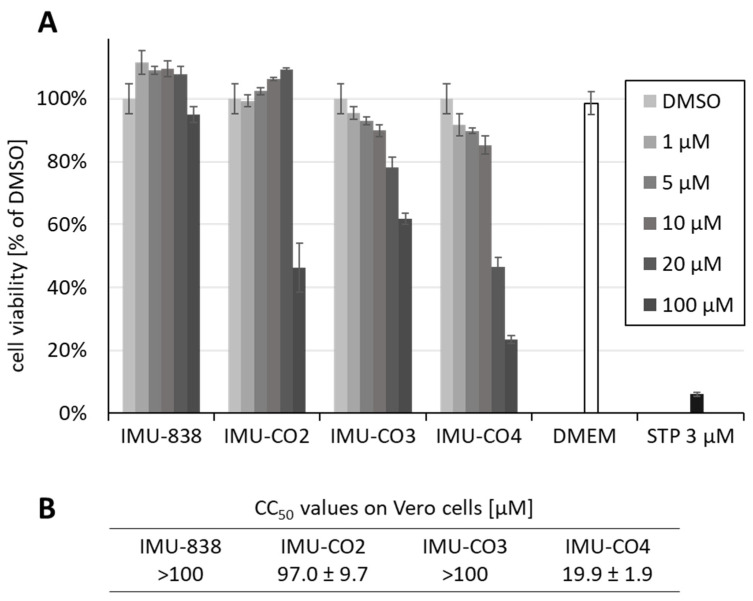
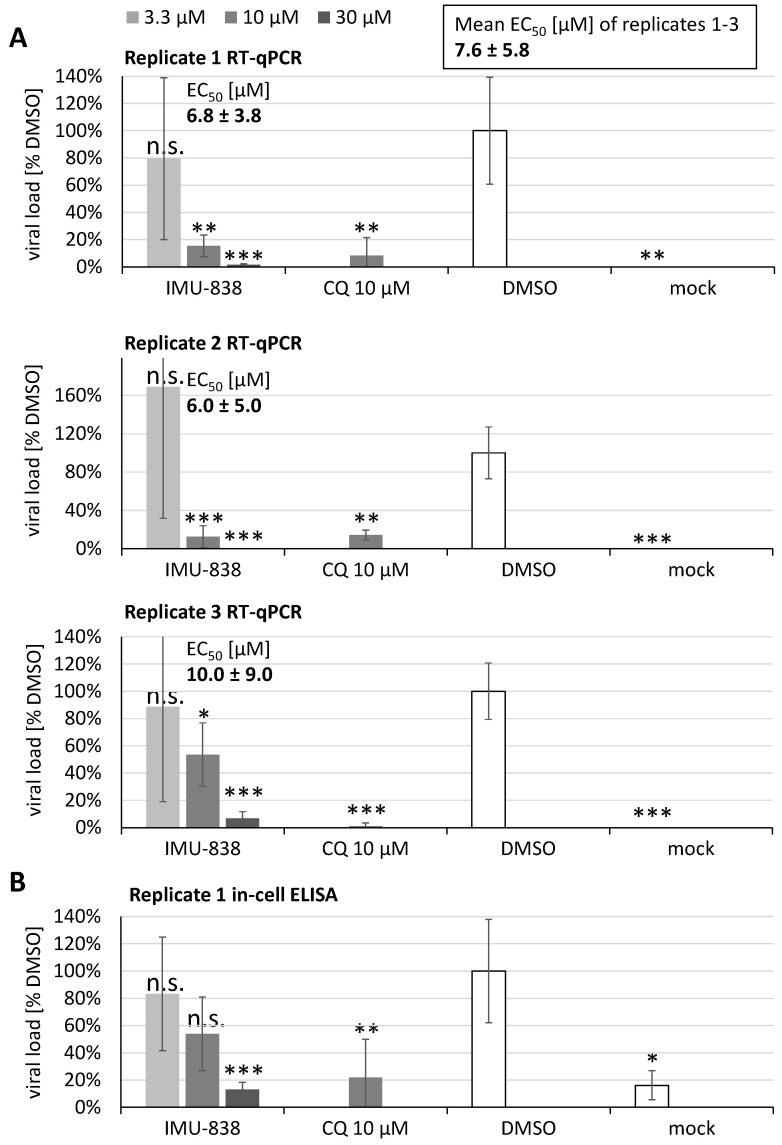
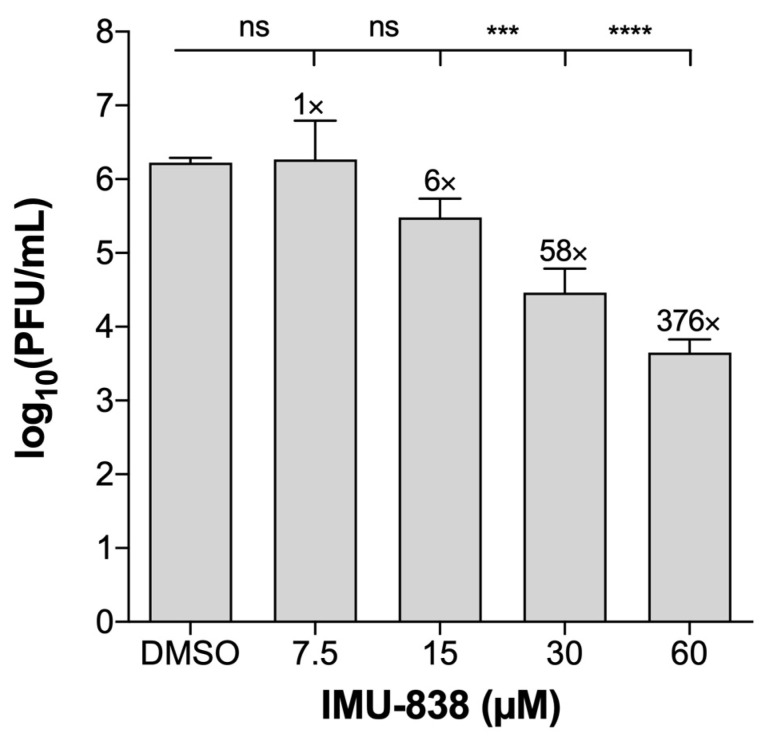
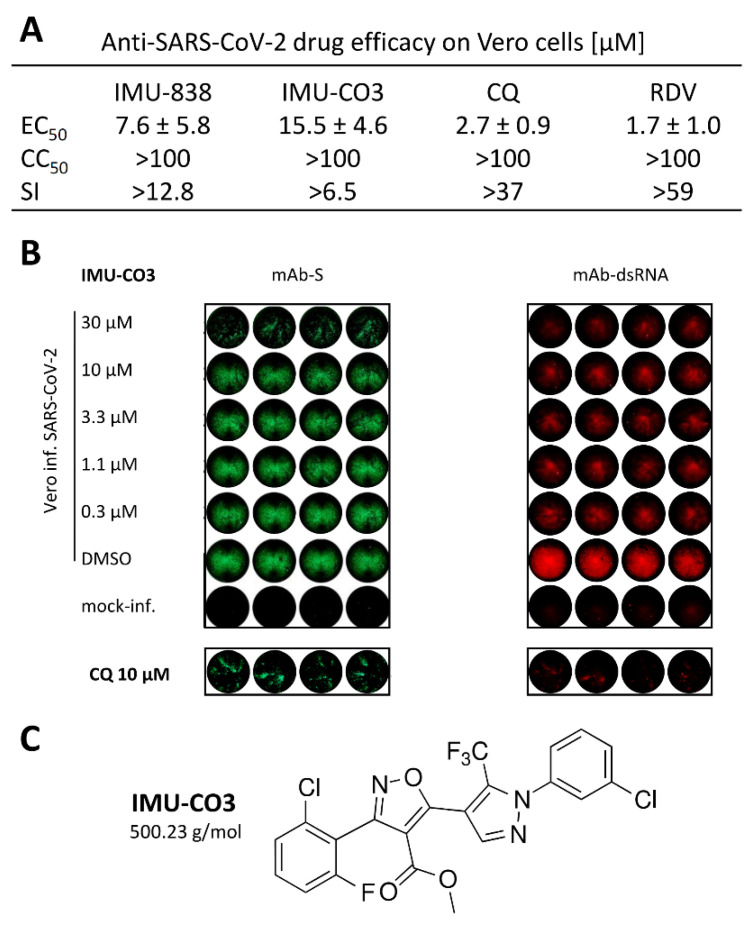
The ongoing pandemic spread of the severe acute respiratory syndrome coronavirus type 2 (SARS-CoV-2) demands skillful strategies for novel drug development, drug repurposing and cotreatments, in particular focusing on existing candidates of host-directed antivirals (HDAs). The developmental drug IMU-838, currently being investigated in a phase 2b trial in patients suffering from autoimmune diseases, represents an inhibitor of human dihydroorotate dehydrogenase (DHODH) with a recently proven antiviral activity in vitro and in vivo. Here, we established an analysis system for assessing the antiviral potency of IMU-838 and DHODH-directed back-up drugs in cultured cell-based infection models. By the use of SARS-CoV-2-specific immunofluorescence, Western blot, in-cell ELISA, viral yield reduction and RT-qPCR methods, we demonstrated the following: (i) IMU-838 and back-ups show anti-SARS-CoV-2 activity at several levels of viral replication, i.e., protein production, double-strand RNA synthesis, and release of infectious virus; (ii) antiviral efficacy in Vero cells was demonstrated in a micromolar range (IMU-838 half-maximal effective concentration, EC of 7.6 ± 5.8 µM); (iii) anti-SARS-CoV-2 activity was distinct from cytotoxic effects (half-cytotoxic concentration, CC >100 µM); (iv) the drug in vitro potency was confirmed using several Vero lineages and human cells; (v) combination with remdesivir showed enhanced anti-SARS-CoV-2 activity; (vi) vidofludimus, the active determinant of IMU-838, exerted a broad-spectrum activity against a selection of major human pathogenic viruses. These findings strongly suggest that developmental DHODH inhibitors represent promising candidates for use as anti-SARS-CoV-2 therapeutics.
持续的严重急性呼吸系统综合征冠状病毒 2 型(SARS-CoV-2)大流行要求熟练的策略来开发新的药物、药物再利用和联合治疗,特别是要关注现有的宿主定向抗病毒药物(HDAs)候选药物。目前正在对患有自身免疫性疾病的患者进行 2b 期临床试验的研发药物 IMU-838 是一种人二氢乳清酸脱氢酶(DHODH)抑制剂,在体外和体内均具有已证明的抗病毒活性。在这里,我们建立了一个分析系统,用于评估 IMU-838 和 DHODH 靶向后备药物在基于细胞培养的感染模型中的抗病毒效力。通过使用 SARS-CoV-2 特异性免疫荧光、Western blot、细胞内 ELISA、病毒产量减少和 RT-qPCR 方法,我们证明了以下几点:(i)IMU-838 和后备药物在病毒复制的几个水平上均具有抗 SARS-CoV-2 活性,即蛋白产生、双链 RNA 合成和传染性病毒的释放;(ii)在毫摩尔范围内证明了在 Vero 细胞中的抗病毒功效(IMU-838 半最大有效浓度,EC 为 7.6±5.8μM);(iii)抗 SARS-CoV-2 活性与细胞毒性作用不同(半细胞毒性浓度,CC>100μM);(iv)使用几种 Vero 系和人类细胞证实了药物的体外效力;(v)与瑞德西韦联合使用显示出增强的抗 SARS-CoV-2 活性;(vi)IMU-838 的活性成分 vidofludimus 对一系列主要的人类致病病毒具有广谱活性。这些发现强烈表明,正在开发的 DHODH 抑制剂是作为抗 SARS-CoV-2 治疗药物的有前途的候选药物。