Tolossa Tadesse, Fekadu Ginenus, Mengist Belayneh, Mulisa Diriba, Fetensa Getahun, Bekele Daniel
Department of Public Health, Institute of Health Science, Wollega University, Nekemte, Ethiopia.
Department of Pharmacy, Institute of Health Science, Wollega University, P.O Box 395, Nekemte, Ethiopia.
Arch Public Health. 2020 Nov 10;78(1):114. doi: 10.1186/s13690-020-00499-8.
As compared to other regions of the world, Sub Saharan Africa (SSA) is the region with the highest neonatal mortality and is the region showing the least progress in the reduction of newborn death. Despite better progress made in reducing neonatal mortality, Ethiopia contributes the highest rate of neonatal death in Africa. In Ethiopia, findings from few studies were inconsistent and there is a need to systematically pool existing data to determine the impact of antenatal care on neonatal mortality among mother-neonate pairs in Ethiopia.
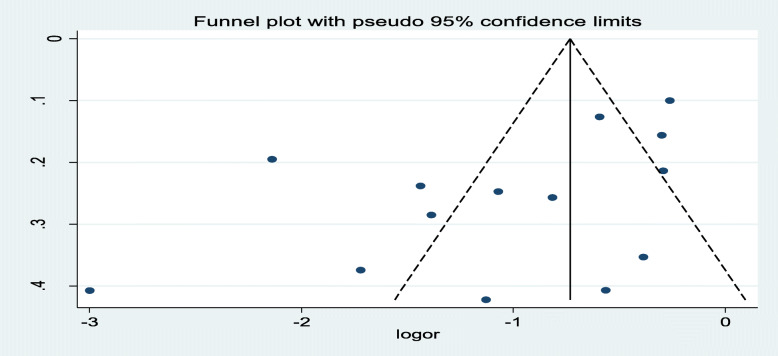
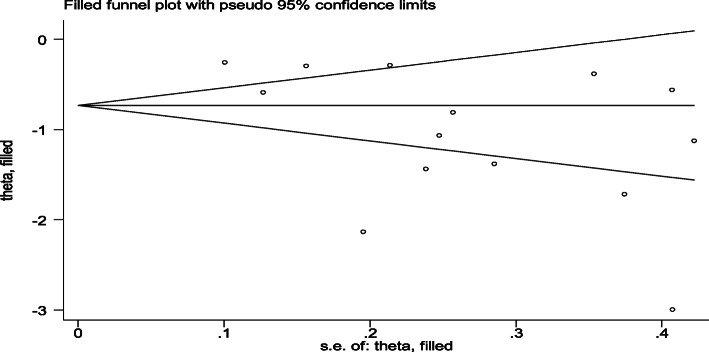
Published articles from various electronic databases such as Medline, Hinari, Pub Med, Cochrane library, the Web of Science, and Google Scholar were accessed. Also, unpublished studies from library catalogs were identified. All observational studies that were conducted on the association between antenatal care follow-up and neonatal mortality among neonates in Ethiopia were included. Data were extracted on the Microsoft Excel spreadsheet and analyzed using STATA 14.1 version. A random-effects model was used to estimate the pooled estimate with a 95% confidence interval (CI). Forest plots were used to visualize the presence of heterogeneity and estimate the pooled impact on antenatal care on neonatal mortality. The presence of publication bias was assessed by funnel plots and Egger's statistical tests.
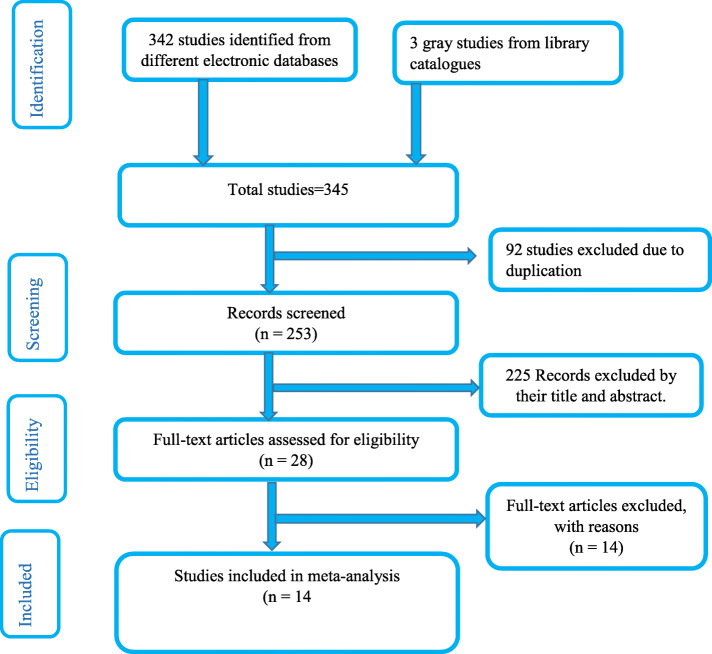
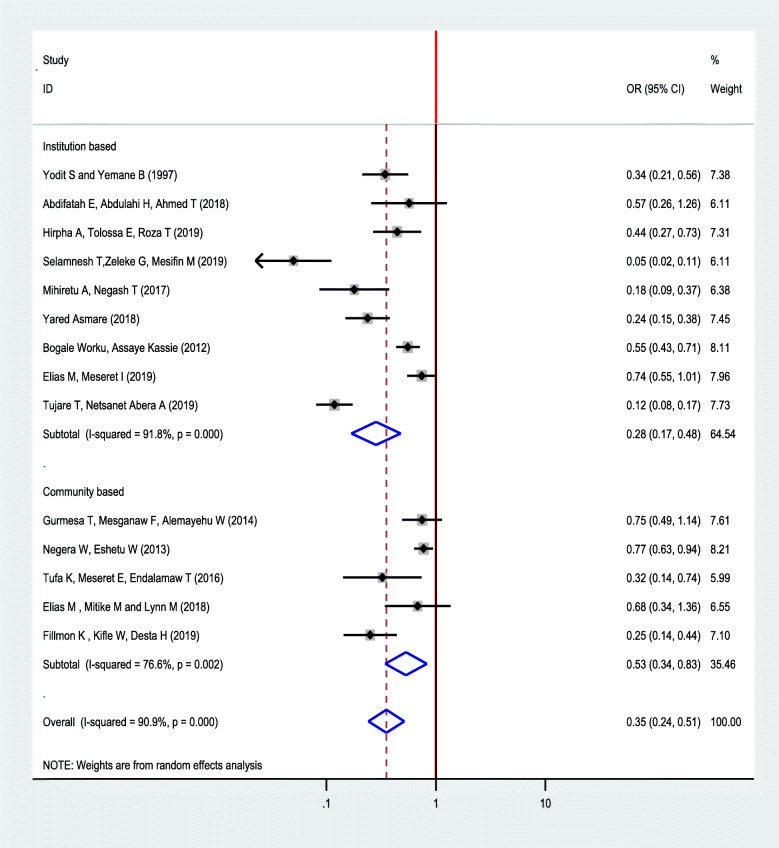
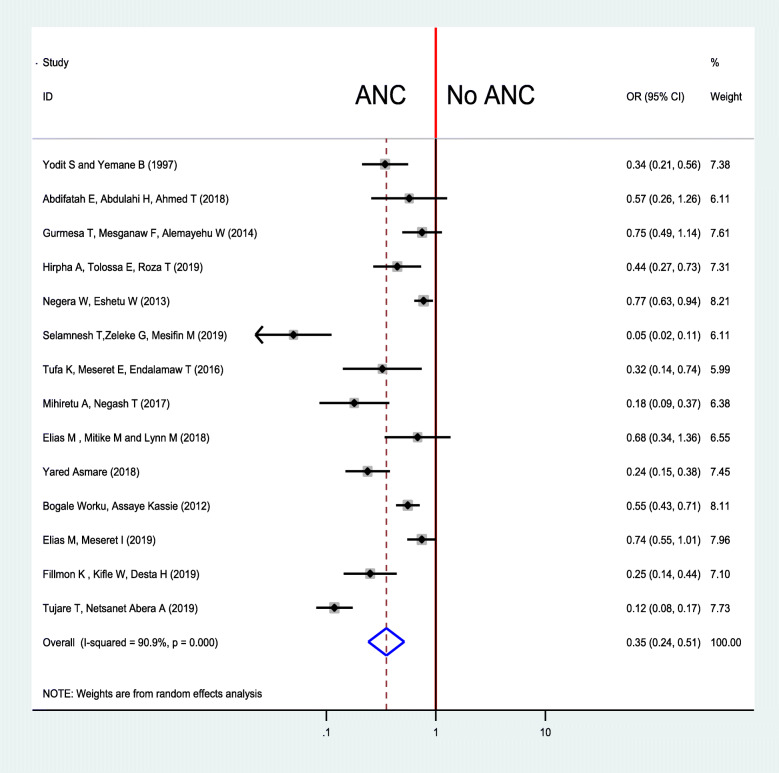
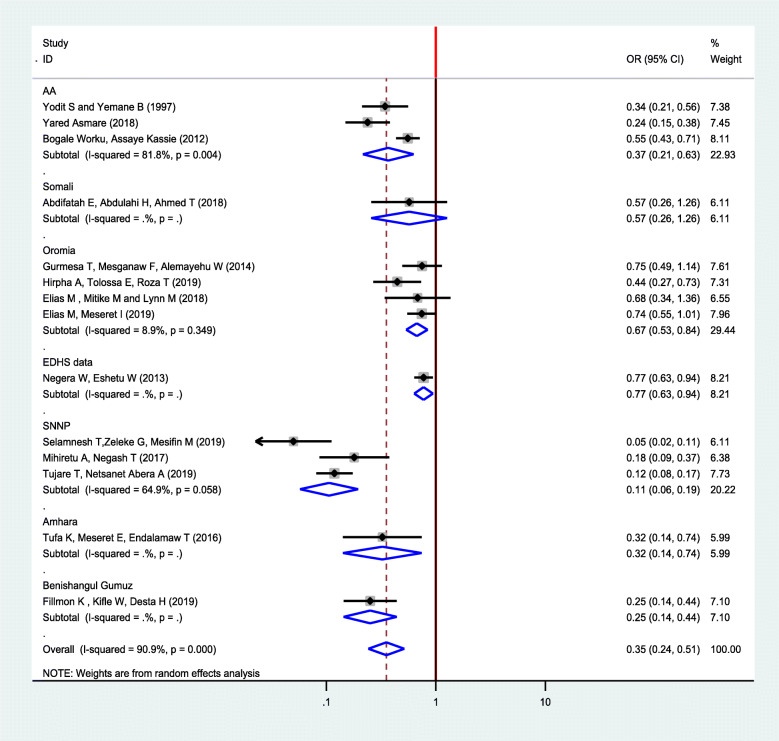
Initially, a total of 345 studies were accessed. Finally, 28 full-text studies were reviewed and fourteen studies fulfilled inclusion criteria and included in the final meta-analysis. The overall pooled estimate indicates the odds of neonatal death among neonates from women with antenatal care were 65% lower than those neonates from women who had no antenatal care follow-up (OR: 0.35, 95% CI: 0.24, 0.51).
In this systematic review and meta-analysis, lack of ANC follow-up increase the probability of neonatal mortality as compared to having ANC follow-up. Thus, we will recommend for more coverages of appropriate antenatal care where risk groups can best be identified and managed.
与世界其他地区相比,撒哈拉以南非洲(SSA)是新生儿死亡率最高的地区,也是在降低新生儿死亡方面进展最小的地区。尽管在降低新生儿死亡率方面取得了较好进展,但埃塞俄比亚的新生儿死亡率在非洲仍居首位。在埃塞俄比亚,少数研究的结果并不一致,因此有必要系统地汇总现有数据,以确定产前护理对埃塞俄比亚母婴对新生儿死亡率的影响。
检索了各种电子数据库(如Medline、Hinari、Pub Med、Cochrane图书馆、科学网和谷歌学术)上发表的文章。此外,还从图书馆目录中识别了未发表的研究。纳入了所有关于埃塞俄比亚新生儿产前护理随访与新生儿死亡率之间关联的观察性研究。数据提取到Microsoft Excel电子表格中,并使用STATA 14.1版本进行分析。采用随机效应模型估计合并估计值及其95%置信区间(CI)。森林图用于直观显示异质性的存在,并估计产前护理对新生儿死亡率的合并影响。通过漏斗图和Egger统计检验评估发表偏倚的存在。
最初,共检索到345项研究。最后,对28项全文研究进行了审查,其中14项研究符合纳入标准并纳入最终的荟萃分析。总体合并估计表明,接受产前护理的女性所生新生儿的死亡几率比未接受产前护理随访的女性所生新生儿低65%(OR:0.35,95%CI:0.24,0.51)。
在这项系统评价和荟萃分析中,与接受产前护理随访相比,缺乏产前护理随访会增加新生儿死亡的概率。因此,我们建议扩大适当产前护理的覆盖范围,以便能够最好地识别和管理风险群体。