Mengesha Teshale, Embiale Tsegasew, Melese Dawit, Gemeda Natnael Dechasa, Hailu Mickiale, Mohamed Aminu, Guta Alemu, Geneti Yomilan, Yigezu Muluken, Amera Tewodros Getnet
Department of Pediatrics and Child Health Nursing, College of Medicine and Health Sciences, Dire Dawa University, Dire Dawa, Ethiopia.
Dire Dawa University, College of Medicine and Health Sciences, Department of Midwifery, Dire Dawa, Ethiopia.
PLoS One. 2025 Aug 1;20(8):e0327766. doi: 10.1371/journal.pone.0327766. eCollection 2025.
Preterm birth is a major clinical problem, affecting 15 million births every year worldwide. It is the largest cause of death in children under the age of five. Even though different studies have been done regarding the incidence of preterm neonatal death in some parts of Ethiopia, there is a paucity of evidence, especially in the eastern part. Therefore, this study aimed to assess the incidence and predictors of preterm neonatal mortality at public hospitals in eastern Ethiopia from May 1, 2022, to March 30, 2023.
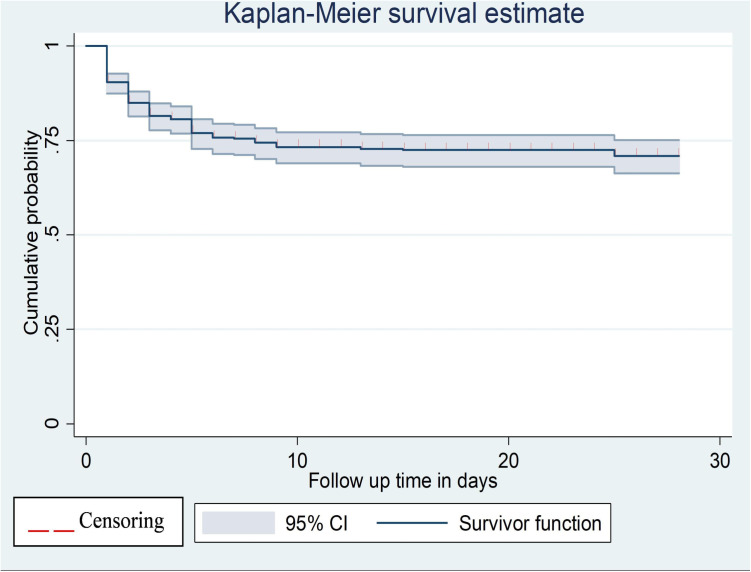
An institution-based prospective follow-up study was conducted at public health institutions from May 1, 2022, to March 30, 2023. A structured, pretested, and interviewer-administered questionnaire and checklist were used to collect the data. The data were entered into EpiData version 4.6 and then exported to STATA version 14 for analysis. Kaplan-Meier was used to estimate survival time. A log-rank test was used to compare survival curves between different categories of the explanatory variables. Descriptive analysis, bivariable, and multivariable Cox Proportional Hazards regression analysis were performed. The level of significance was declared at a p-value of <0.05.
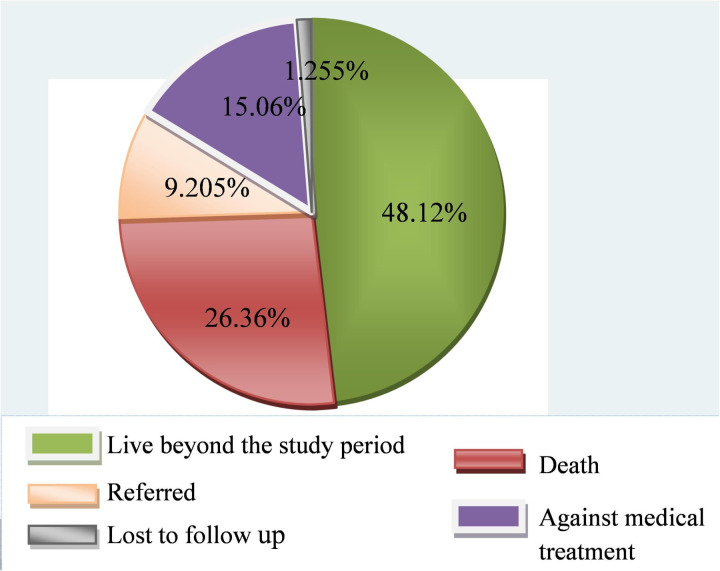
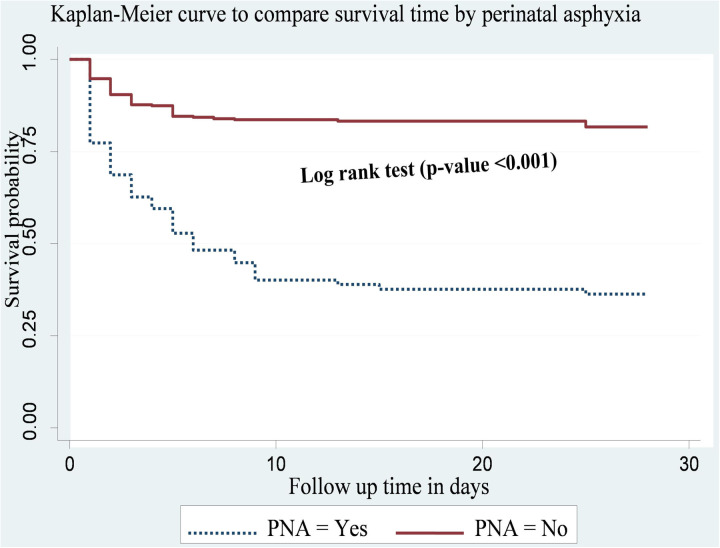
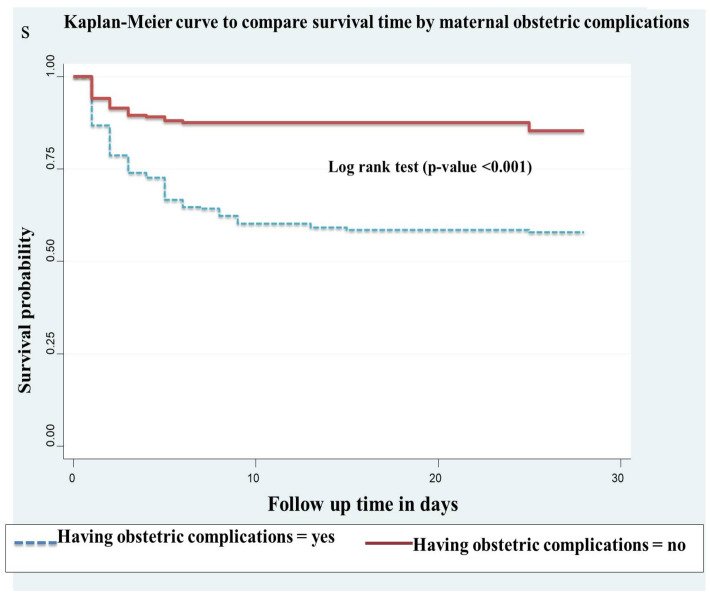
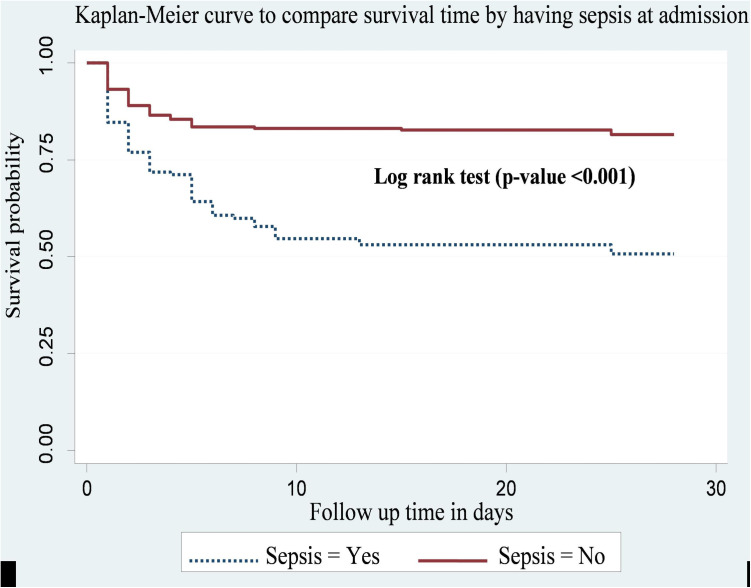
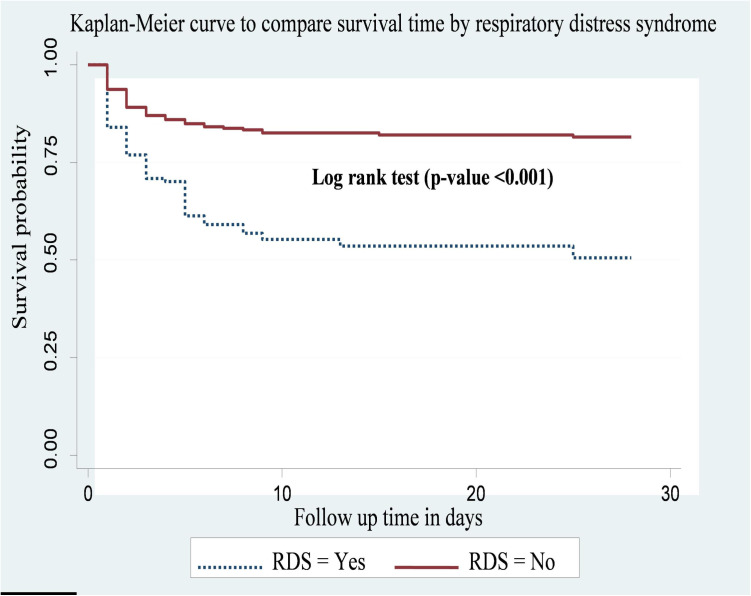
The overall incidence rate of death was 17.03 (14.3, 20.28) per 1000 person-day observations. Mothers' obstetric complications (AHR: 2.27, 95% CI: (1.46, 3.54)), not crying at birth (AHR: 1.83, 95% CI: (1.09, 2.31)), not immediately initiating breastfeeding (HR: 1.59, 95% CI: (1.10, 2.31)), having sepsis (HR: 1.85, 95% CI: (1.26, 2.72)), having respiratory distress syndrome (HR: 1.98, 95% CI: (1.36, 2.90)), having perinatal asphyxia (HR: 3.1, 95% CI: (2.13, 4.51)), and an APGAR score of less than seven (HR: 2.16, 95% CI: (1.47, 3.16)) were significant predictors of preterm neonatal death.
This study found the high incidence rate of preterm neonatal mortality, primarily driven by preventable and manageable conditions. Strengthening early identification and timely intervention for the risk factors is critical to improving survival outcomes among preterm neonates.
早产是一个主要的临床问题,全球每年有1500万例分娩受到影响。它是五岁以下儿童死亡的最大原因。尽管在埃塞俄比亚的一些地区已经针对早产新生儿死亡的发生率开展了不同的研究,但证据仍然不足,尤其是在东部地区。因此,本研究旨在评估2022年5月1日至2023年3月30日期间埃塞俄比亚东部公立医院早产新生儿死亡率及其预测因素。
于2022年5月1日至2023年3月30日在公共卫生机构开展了一项基于机构的前瞻性随访研究。使用一份经过预测试的结构化访谈式问卷和检查表来收集数据。数据录入EpiData 4.6版本,然后导出到STATA 14版本进行分析。采用Kaplan-Meier法估计生存时间。使用对数秩检验比较不同类别解释变量之间的生存曲线。进行了描述性分析、双变量和多变量Cox比例风险回归分析。显著性水平设定为p值<0.05。
每1000人日观察的总体死亡率为17.03(14.3,20.28)。母亲的产科并发症(调整后风险比:2.27,95%置信区间:(1.46,3.54))、出生时不哭(调整后风险比:1.83,95%置信区间:(1.09,2.31))、未立即开始母乳喂养(风险比:1.59,95%置信区间:(1.10,2.31))、患有败血症(风险比:1.85,95%置信区间:(1.26,2.72))、患有呼吸窘迫综合征(风险比:1.98,95%置信区间:(1.36,2.90))、患有围产期窒息(风险比:3.1,95%置信区间:(2.13,4.51))以及阿氏评分低于7分(风险比:2.16,95%置信区间:(1.47,3.16))是早产新生儿死亡的显著预测因素。
本研究发现早产新生儿死亡率较高,主要由可预防和可管理的情况所致。加强对危险因素的早期识别和及时干预对于改善早产新生儿的生存结局至关重要。