Newcastle upon Tyne Hospitals NHS Foundation Trust, Newcastle upon Tyne, UK.
Patrick G. Johnston Centre for Cancer Research, Queen's University Belfast, Belfast, UK.
Br J Cancer. 2020 Dec;123(Suppl 1):28-35. doi: 10.1038/s41416-020-01072-4.
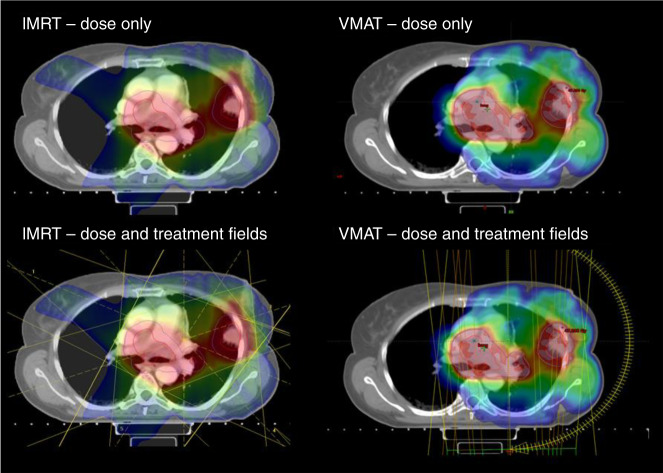
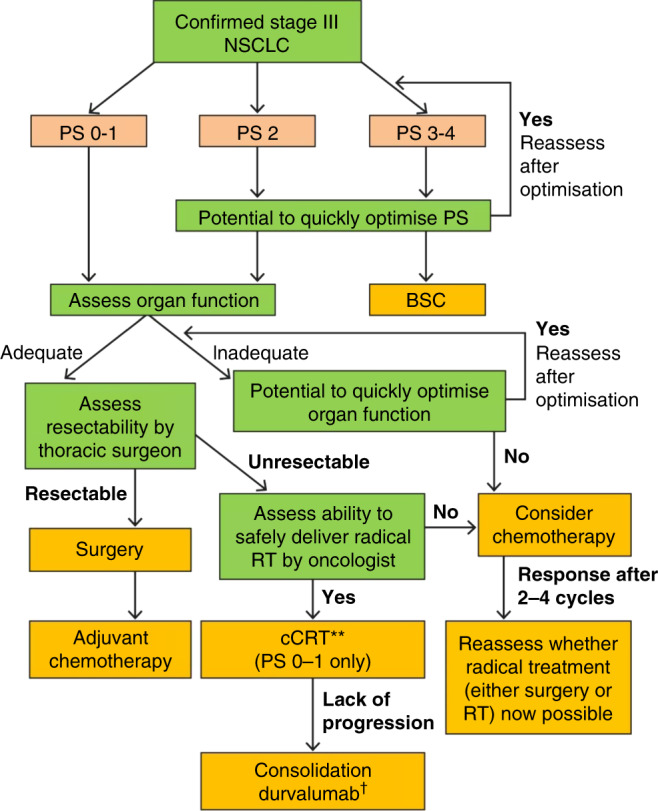
The type of patients with stage III non-small-cell lung cancer (NSCLC) selected for concurrent chemoradiotherapy (cCRT) varies between and within countries, with higher-volume centres treating patients with more co-morbidities and higher-stage disease. However, in spite of these disease characteristics, these patients have improved overall survival, suggesting that there are additional approaches that should be optimised and potentially standardised. This paper aims to review the current knowledge and best practices surrounding treatment for patients eligible for cCRT. Initially, this includes timely acquisition of the full diagnostic workup for the multidisciplinary team to comprehensively assess a patient for treatment, as well as imaging scans, patient history, lung function and genetic tests. Such information can provide prognostic information on how a patient will tolerate their cCRT regimen, and to perhaps limit the use of additional supportive care, such as steroids, which could impact on further treatments, such as immunotherapy. Furthermore, knowledge of the safety profile of individual double-platinum chemotherapy regimens and the technological advances in radiotherapy could aid in optimising patients for cCRT treatment, improving its efficacy whilst minimising its toxicities. Finally, providing patients with preparatory and ongoing support with input from dieticians, palliative care professionals, respiratory and care-of-the-elderly physicians during treatment may also help in more effective treatment delivery, allowing patients to achieve the maximum potential from their treatments.
III 期非小细胞肺癌(NSCLC)患者选择同期放化疗(cCRT)的类型在国家之间和国家内部存在差异,大容量中心治疗合并症更多和疾病分期更高的患者。然而,尽管存在这些疾病特征,这些患者的总生存得到了改善,这表明应该优化和潜在标准化其他方法。本文旨在回顾适合 cCRT 的患者治疗的当前知识和最佳实践。最初,这包括及时为多学科团队获取全面评估患者治疗的完整诊断工作,以及影像学扫描、患者病史、肺功能和基因检测。这些信息可以提供关于患者对 cCRT 方案的耐受性的预后信息,并可能限制使用额外的支持性护理,如类固醇,这可能会影响进一步的治疗,如免疫治疗。此外,了解个体双铂化疗方案的安全性概况和放射治疗的技术进步可以帮助优化患者接受 cCRT 治疗,提高其疗效,同时最大限度地减少其毒性。最后,在治疗期间,营养师、姑息治疗专业人员、呼吸和老年医学医生为患者提供预备和持续支持,也可能有助于更有效地进行治疗,使患者从治疗中获得最大潜力。