Department of Neurology, Amsterdam UMC, Vrije Universiteit Amsterdam, MS Center Amsterdam, Amsterdam Neuroscience, Amsterdam, The Netherlands.
Department of Anatomy & Neurosciences, Amsterdam UMC, Vrije Universiteit Amsterdam, MS Center Amsterdam, Amsterdam Neuroscience, Amsterdam, The Netherlands.
Mult Scler. 2021 Oct;27(11):1727-1737. doi: 10.1177/1352458520977160. Epub 2020 Dec 9.
Cognitive decline remains difficult to predict as structural brain damage cannot fully explain the extensive heterogeneity found between MS patients.
To investigate whether functional brain network organization measured with magnetoencephalography (MEG) predicts cognitive decline in MS patients after 5 years and to explore its value beyond structural pathology.
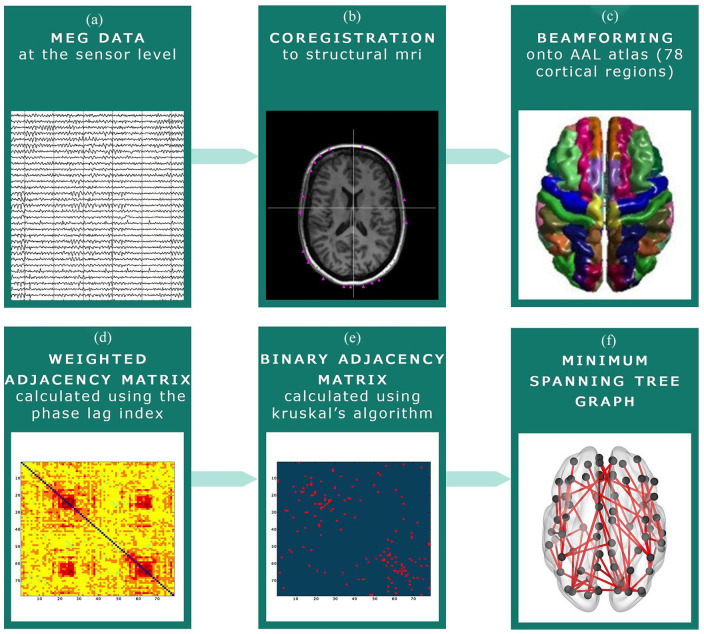
Resting-state MEG recordings, structural MRI, and neuropsychological assessments were analyzed of 146 MS patients, and 100 patients had a 5-year follow-up neuropsychological assessment. Network properties of the minimum spanning tree (i.e. backbone of the functional brain network) indicating network integration and overload were related to baseline and longitudinal cognition, correcting for structural damage.
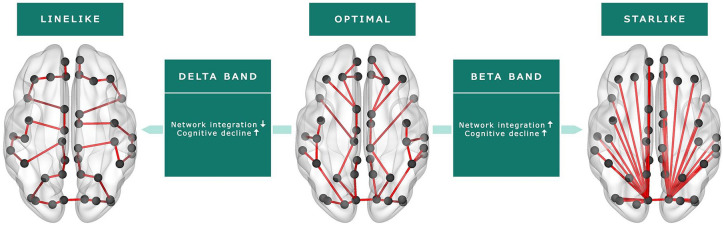
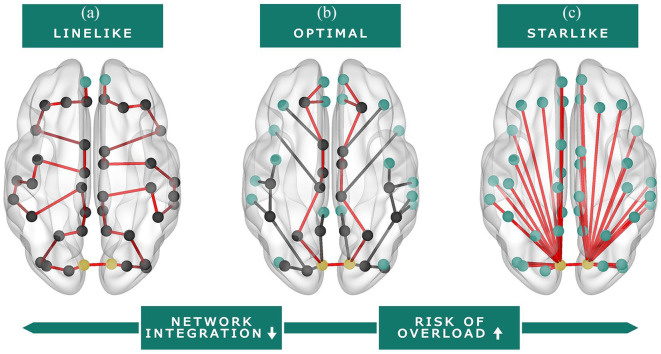
A more integrated beta band network (i.e. smaller diameter) and a less integrated delta band network (i.e. lower leaf fraction) predicted cognitive decline after 5 years (), independent of structural damage. Cross-sectional analyses showed that a less integrated network (e.g. lower tree hierarchy) related to worse cognition, independent of frequency band.
The level of functional brain network integration was an independent predictive marker of cognitive decline, in addition to the severity of structural damage. This work thereby indicates the promise of MEG-derived network measures in predicting disease progression in MS.
认知能力下降仍然难以预测,因为结构脑损伤无法完全解释多发性硬化症患者之间存在的广泛异质性。
研究使用脑磁图(MEG)测量的功能脑网络组织是否可以预测多发性硬化症患者 5 年后的认知能力下降,并探讨其在结构病理学之外的价值。
对 146 名多发性硬化症患者进行静息态 MEG 记录、结构 MRI 和神经心理学评估,其中 100 名患者进行了 5 年的神经心理学随访评估。最小生成树(即功能脑网络的主干)的网络特性表明网络整合和过载,与基线和纵向认知相关,同时校正结构损伤。
β 波段网络(即较小的直径)更整合,δ 波段网络(即较低的叶分数)更不整合,与 5 年后的认知能力下降相关(),独立于结构损伤。横断面分析表明,网络整合度较低(例如,层次结构较低)与认知能力较差有关,与频带无关。
功能脑网络整合水平是认知能力下降的独立预测指标,除了结构损伤的严重程度。这项工作表明,MEG 衍生的网络测量有望预测多发性硬化症的疾病进展。