Institute of Experimental Psychology, Heinrich Heine University Düsseldorf, Universitätsstraße 1, 40225, Düsseldorf, Germany.
Cogn Affect Behav Neurosci. 2021 Feb;21(1):156-171. doi: 10.3758/s13415-020-00857-7. Epub 2020 Dec 9.
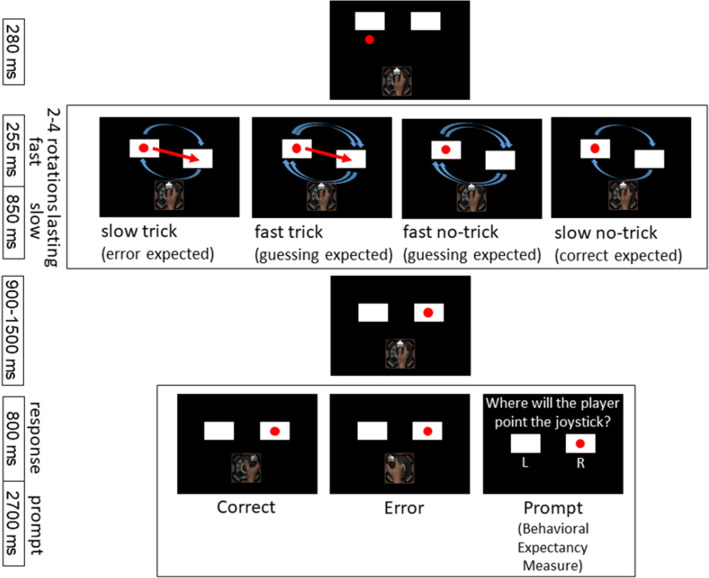
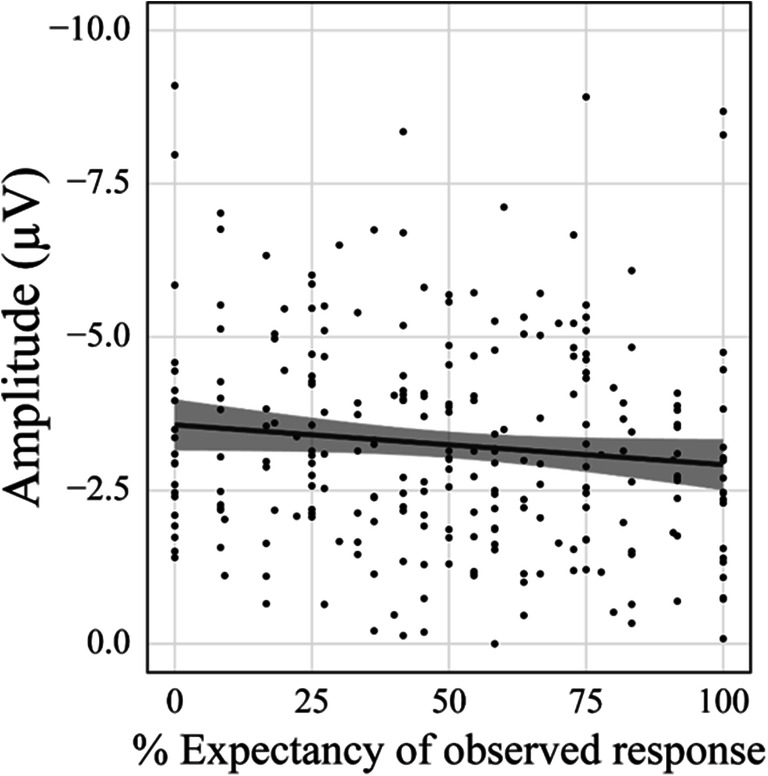
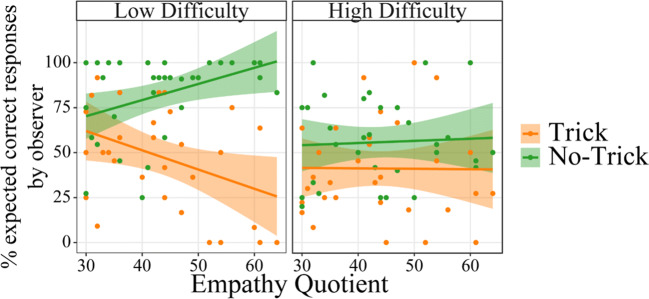
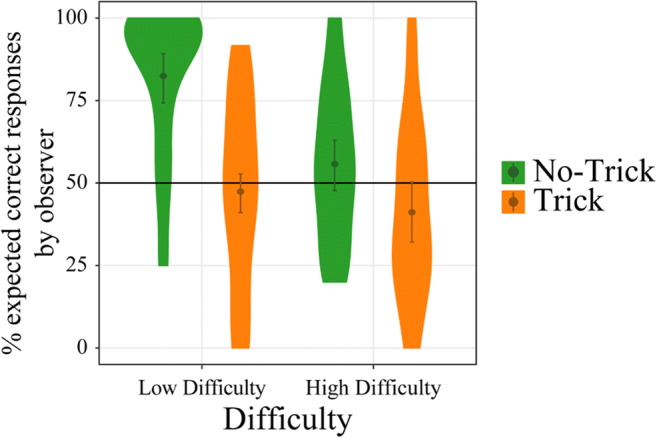
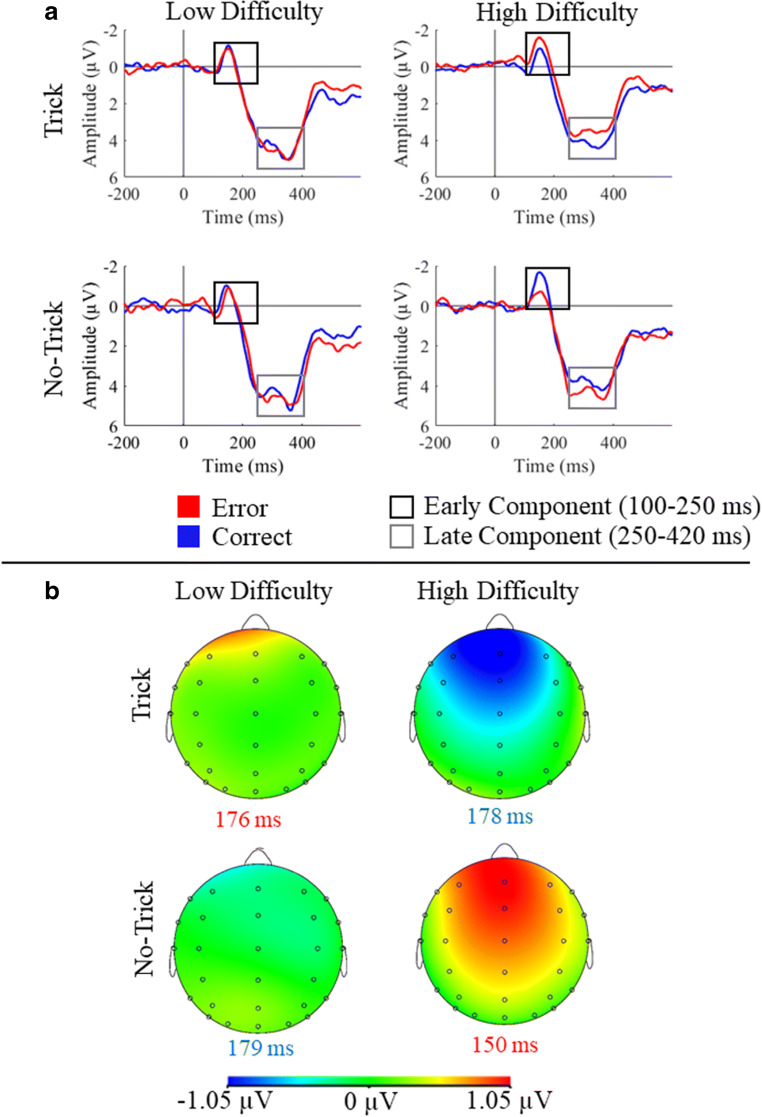
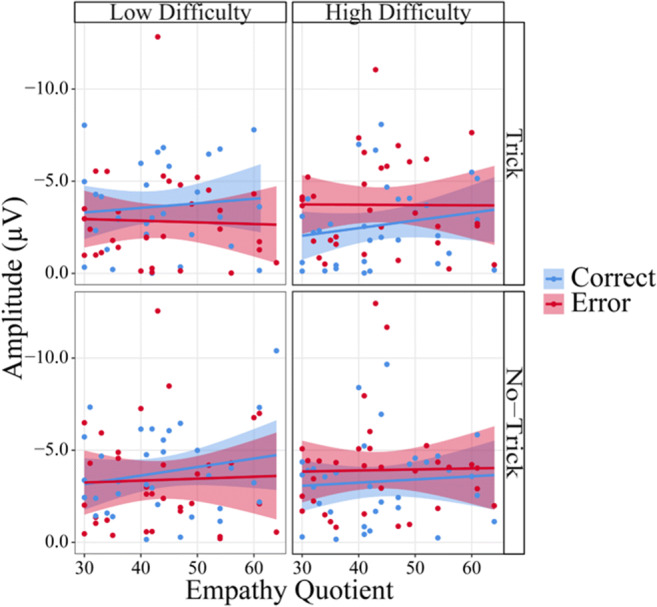
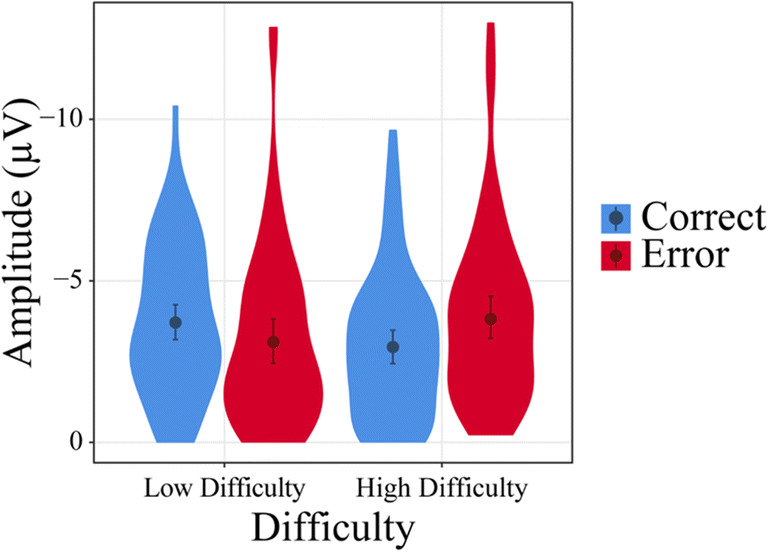
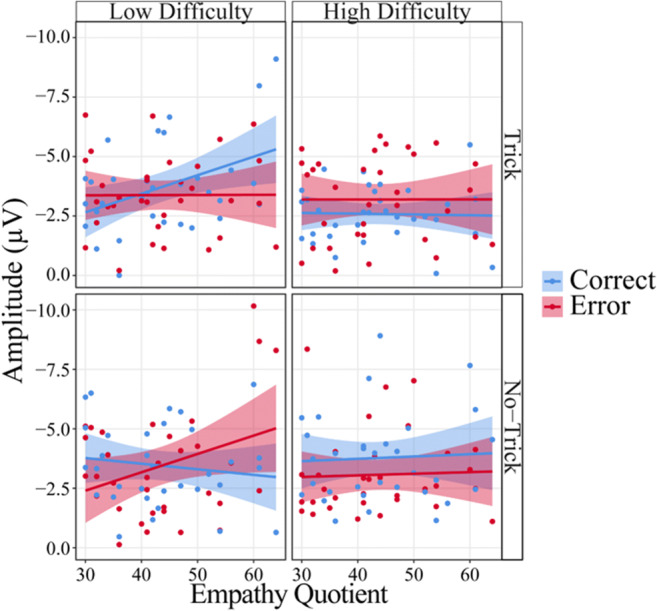
Recent evidence suggests that the processing of observed actions may reflect an action prediction error, with more pronounced mediofrontal negative event-related potentials (ERPs) for unexpected actions. This evidence comes from an application of a false-belief task, where unexpected correct responses elicited high ERP amplitudes. An alternative interpretation is that the ERP component reflects vicarious error processing, as objectively correct responses were errors from the observed person's perspective. In this study, we aimed to disentangle the two possibilities by adding the factor task difficulty, which varied expectations without affecting the definition of (vicarious) errors, and to explore the role of empathy in action observation. We found that the relationship between empathy and event-related potentials (ERPs) mirrored the relationship between empathy and behavioral expectancy measures. Only in the easy task condition did higher empathy lead to stronger expectancy of correct responses in the true-belief and of errors in the false-belief condition. A compatible pattern was found for an early ERP component (150-200 ms) after the observed response, with a larger negativity for error than correct responses in the true-belief and the reverse pattern in the false-belief condition, but only in highly empathic participants. We conclude that empathy facilitates the formation of expectations regarding the actions of others. These expectations then modulate the processing of observed actions, as indicated by the ERPs in the present study.
最近的证据表明,观察到的动作的加工可能反映了动作预测错误,对于意外的动作,中前额负事件相关电位(ERP)更为明显。这一证据来自于错误信念任务的应用,其中意外的正确反应引起了高的 ERP 幅度。另一种解释是,ERP 成分反映了替代性错误加工,因为从观察到的人的角度来看,客观上正确的反应是错误的。在这项研究中,我们旨在通过添加任务难度因素来区分这两种可能性,该因素不影响(替代性)错误的定义,但会改变预期,从而探索同理心在动作观察中的作用。我们发现,同理心与事件相关电位(ERP)之间的关系反映了同理心与行为预期测量之间的关系。只有在简单任务条件下,更高的同理心才会导致对真实信念中正确反应的更高期望,以及对错误信念中错误反应的更高期望。在观察到反应后的 150-200 毫秒,出现了一个早期的 ERP 成分,与真实信念中的错误反应相比,该成分的负性更强,而在错误信念条件下则出现相反的模式,但只有在高度同理心的参与者中才会出现这种模式。我们得出结论,同理心有助于形成对他人动作的期望。这些期望然后调节了所观察到的动作的处理,这在本研究中的 ERP 中得到了体现。