Wang Lijun, Tang Dandan, Zhao Yuanfang, Hitchman Glenn, Wu Shanshan, Tan Jinfeng, Chen Antao
Key Laboratory of Cognition and Personality of Ministry of Education, Faculty of Psychology, Southwest University, Chongqing 400715, China.
Sci Rep. 2015 Mar 3;5:8708. doi: 10.1038/srep08708.
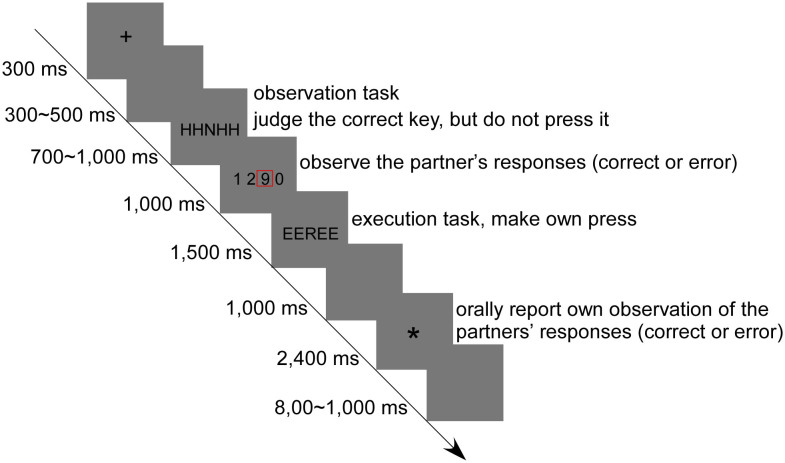
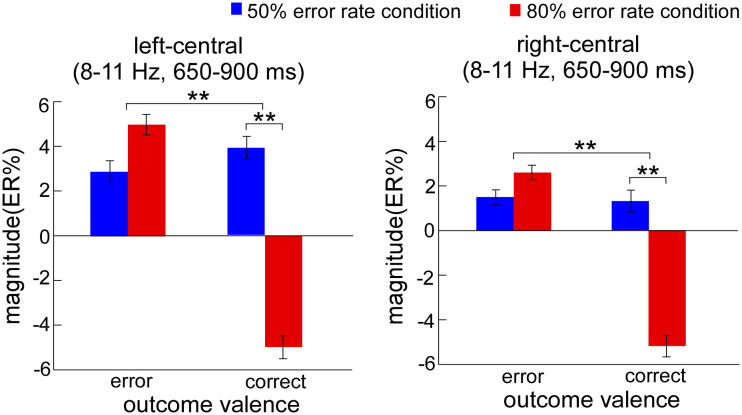
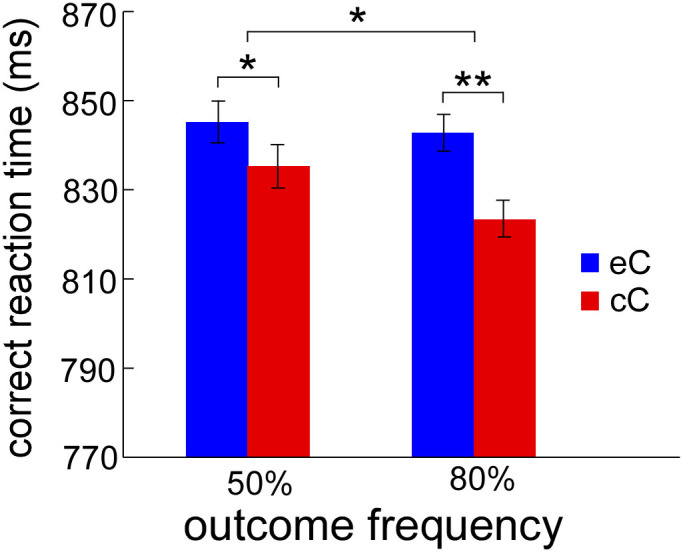
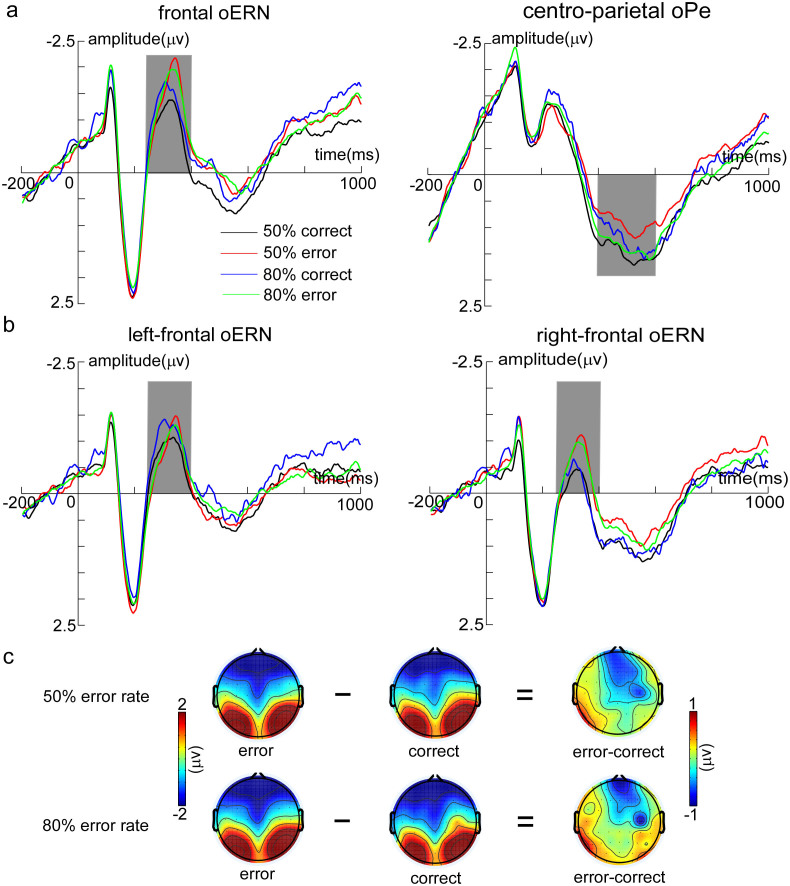
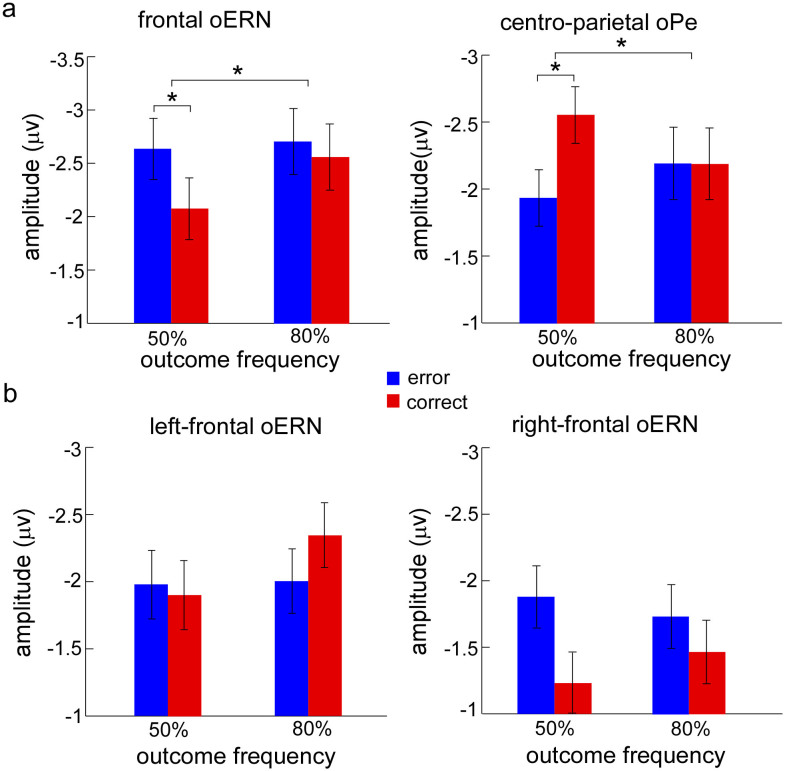
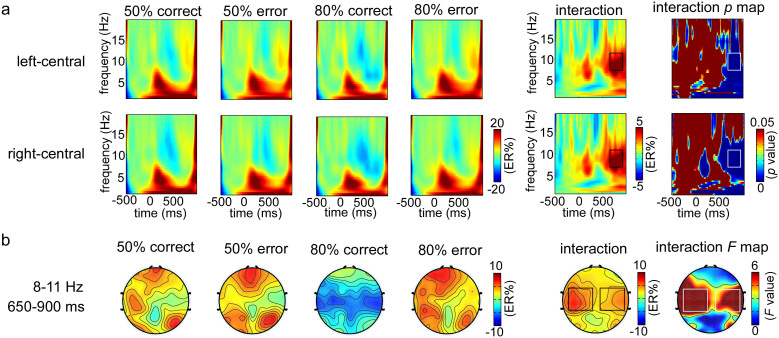
Post-error slowing (PES) reflects efficient outcome monitoring, manifested as slower reaction time after errors. Cognitive control account assumes that PES depends on error information, whereas orienting account posits that it depends on error frequency. This raises the question how the outcome valence and outcome frequency separably influence the generation of PES. To address this issue, we varied the probability of observation errors (50/50 and 20/80, correct/error) the "partner" committed by employing an observation-execution task and investigated the corresponding behavioral and neural effects. On each trial, participants first viewed the outcome of a flanker-run that was supposedly performed by a 'partner', and then performed a flanker-run themselves afterwards. We observed PES in the two error rate conditions. However, electroencephalographic data suggested error-related potentials (oERN and oPe) and rhythmic oscillation associated with attentional process (alpha band) were respectively sensitive to outcome valence and outcome frequency. Importantly, oERN amplitude was positively correlated with PES. Taken together, these findings support the assumption of the cognitive control account, suggesting that outcome valence and outcome frequency are both involved in PES. Moreover, the generation of PES is indexed by oERN, whereas the modulation of PES size could be reflected on the alpha band.
错误后反应减慢(PES)反映了有效的结果监测,表现为错误后反应时间变慢。认知控制理论认为PES取决于错误信息,而定向理论则认为它取决于错误频率。这就提出了一个问题,即结果效价和结果频率如何分别影响PES的产生。为了解决这个问题,我们通过采用观察-执行任务改变了“搭档”出现观察错误的概率(50/50和20/80,正确/错误),并研究了相应的行为和神经效应。在每次试验中,参与者首先观看一个侧翼任务的结果,该任务假定由一个“搭档”执行,然后自己再执行一个侧翼任务。我们在两种错误率条件下都观察到了PES。然而,脑电图数据表明与错误相关的电位(oERN和oPe)以及与注意力过程相关的节律振荡(α波段)分别对结果效价和结果频率敏感。重要的是,oERN振幅与PES呈正相关。综上所述,这些发现支持了认知控制理论的假设,表明结果效价和结果频率都参与了PES的产生。此外,PES的产生以oERN为指标,而PES大小的调节可以在α波段上得到反映。