Institute of Clinical Molecular Biology, Kiel University and University Medical Center Schleswig-Holstein, 24105 Kiel, Germany.
Institute of Clinical Molecular Biology, Kiel University and University Medical Center Schleswig-Holstein, 24105 Kiel, Germany; Department of Internal Medicine I, University Medical Center Schleswig-Holstein, 24105 Kiel, Germany.
Immunity. 2020 Dec 15;53(6):1296-1314.e9. doi: 10.1016/j.immuni.2020.11.017. Epub 2020 Nov 26.
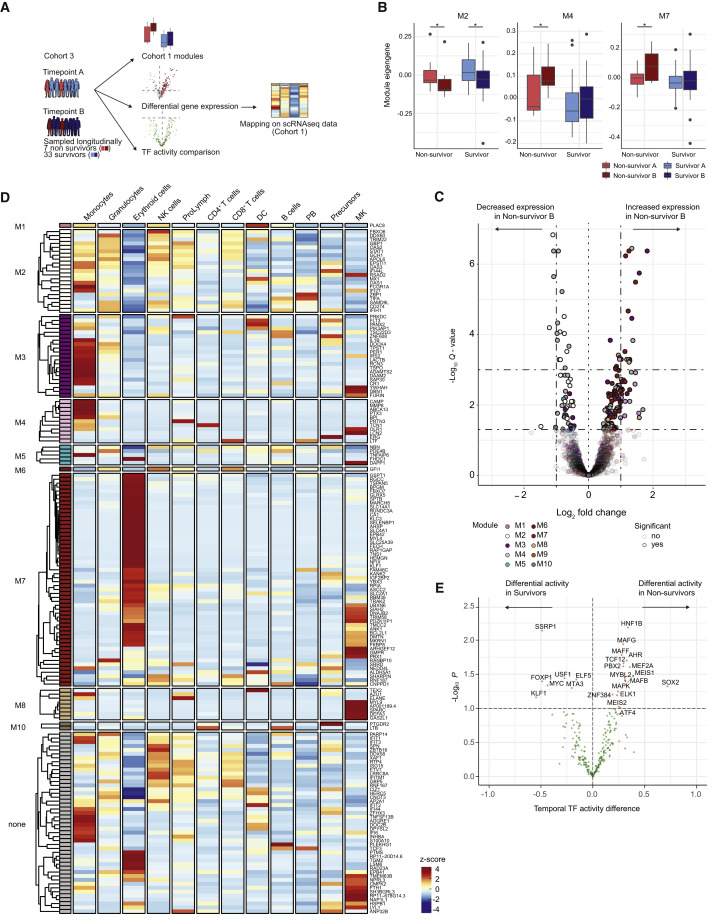
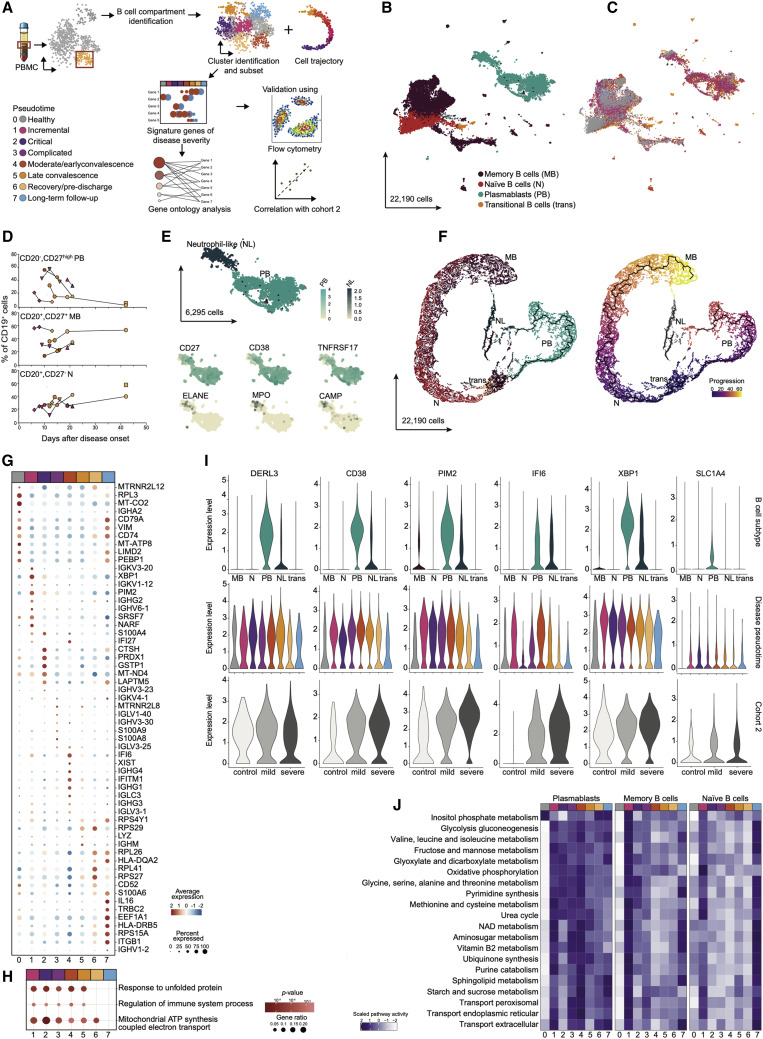
Temporal resolution of cellular features associated with a severe COVID-19 disease trajectory is needed for understanding skewed immune responses and defining predictors of outcome. Here, we performed a longitudinal multi-omics study using a two-center cohort of 14 patients. We analyzed the bulk transcriptome, bulk DNA methylome, and single-cell transcriptome (>358,000 cells, including BCR profiles) of peripheral blood samples harvested from up to 5 time points. Validation was performed in two independent cohorts of COVID-19 patients. Severe COVID-19 was characterized by an increase of proliferating, metabolically hyperactive plasmablasts. Coinciding with critical illness, we also identified an expansion of interferon-activated circulating megakaryocytes and increased erythropoiesis with features of hypoxic signaling. Megakaryocyte- and erythroid-cell-derived co-expression modules were predictive of fatal disease outcome. The study demonstrates broad cellular effects of SARS-CoV-2 infection beyond adaptive immune cells and provides an entry point toward developing biomarkers and targeted treatments of patients with COVID-19.
需要了解与严重 COVID-19 疾病轨迹相关的细胞特征的时间分辨率,以了解偏倚的免疫反应并确定预后预测因子。在这里,我们使用来自两个中心的 14 名患者的队列进行了纵向多组学研究。我们分析了外周血样本的批量转录组、批量 DNA 甲基化组和单细胞转录组(包括 BCR 谱),这些样本最多可采集 5 个时间点。在两个独立的 COVID-19 患者队列中进行了验证。严重 COVID-19 的特征是增殖、代谢活性过高的浆母细胞增加。与危重病同时,我们还发现干扰素激活的循环巨核细胞扩张,以及具有缺氧信号特征的红细胞生成增加。巨核细胞和红细胞衍生的共表达模块可预测致命疾病的结局。该研究表明,SARS-CoV-2 感染的细胞效应广泛,不仅局限于适应性免疫细胞,并为开发 COVID-19 患者的生物标志物和靶向治疗提供了切入点。