School of Biology and Ecology, University of Maine, Orono, ME, USA.
Graduate School of Biomedical Science and Engineering, University of Maine, Orono, ME, USA.
Mol Med. 2020 Dec 9;26(1):126. doi: 10.1186/s10020-020-00254-3.
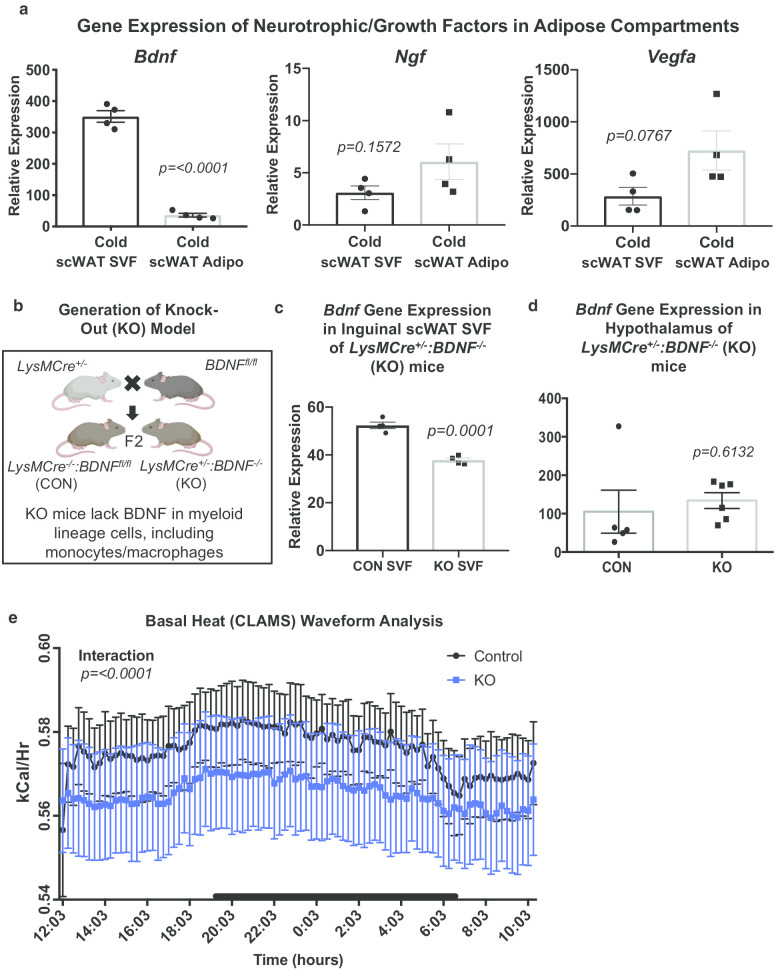
Innervation of adipose tissue is essential for the proper function of this critical metabolic organ. Numerous surgical and chemical denervation studies have demonstrated how maintenance of brain-adipose communication through both sympathetic efferent and sensory afferent nerves helps regulate adipocyte size, cell number, lipolysis, and 'browning' of white adipose tissue. Neurotrophic factors are growth factors that promote neuron survival, regeneration, and plasticity, including neurite outgrowth and synapse formation. Peripheral immune cells have been shown to be a source of neurotrophic factors in humans and mice. Although a number of immune cells reside in the adipose stromal vascular fraction (SVF), it has remained unclear what roles they play in adipose innervation. We previously demonstrated that adipose SVF secretes brain derived neurotrophic factor (BDNF).
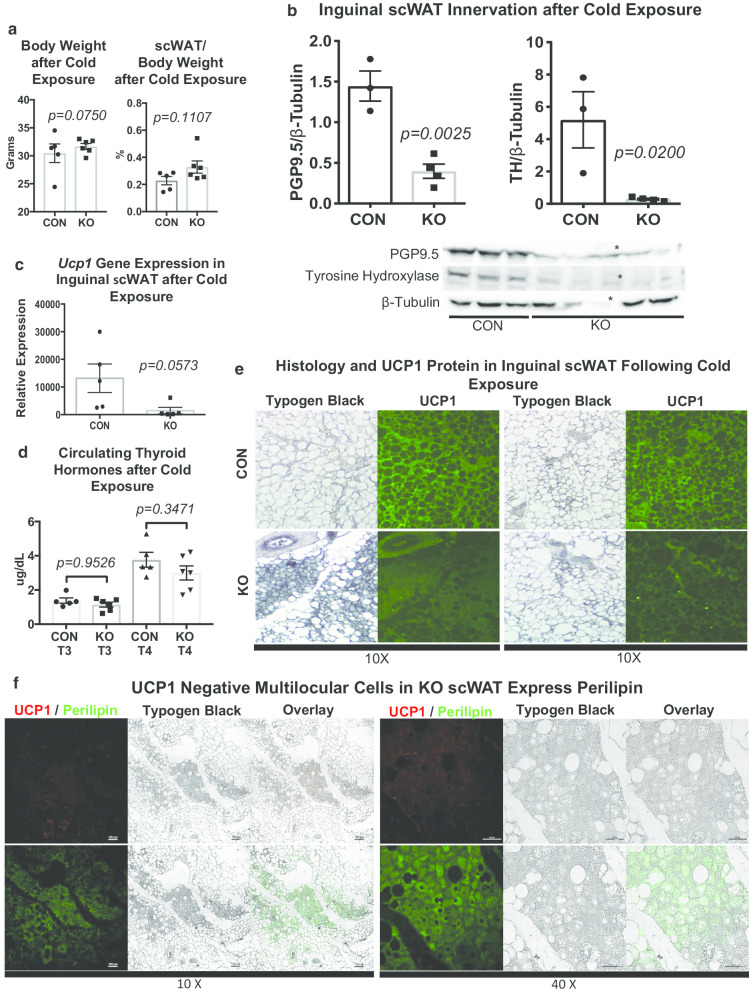
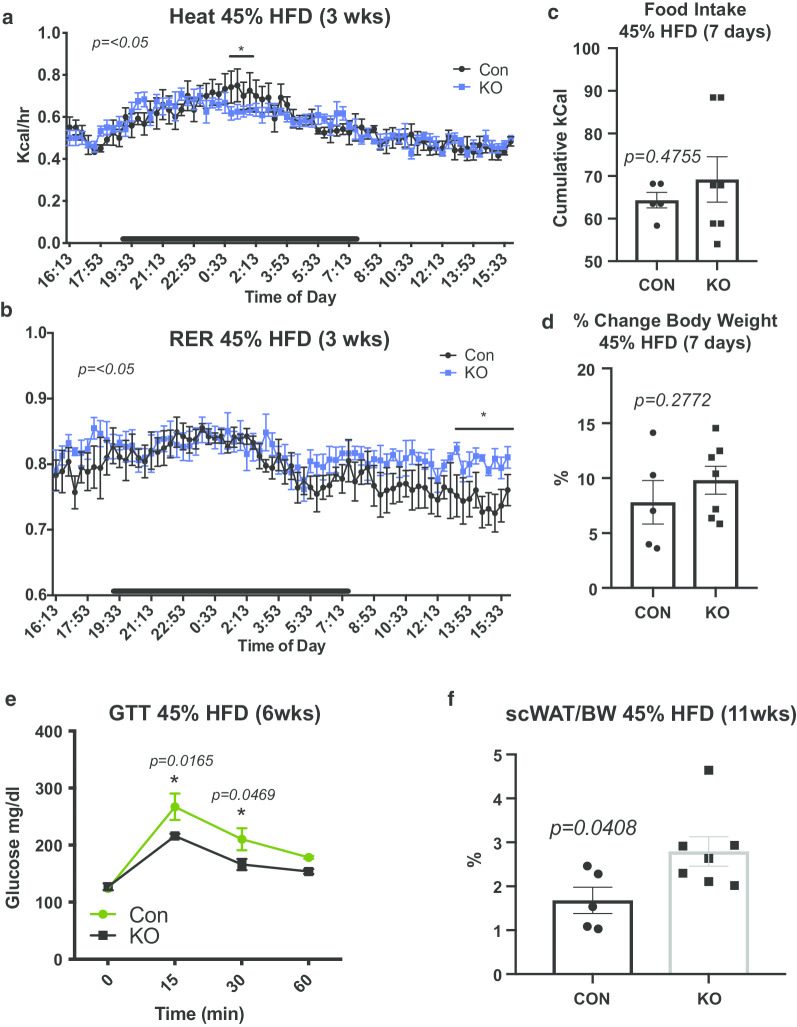
We now show that deletion of this neurotrophic factor from the myeloid lineage of immune cells led to a 'genetic denervation' of inguinal subcutaneous white adipose tissue (scWAT), thereby causing decreased energy expenditure, increased adipose mass, and a blunted UCP1 response to cold stimulation.
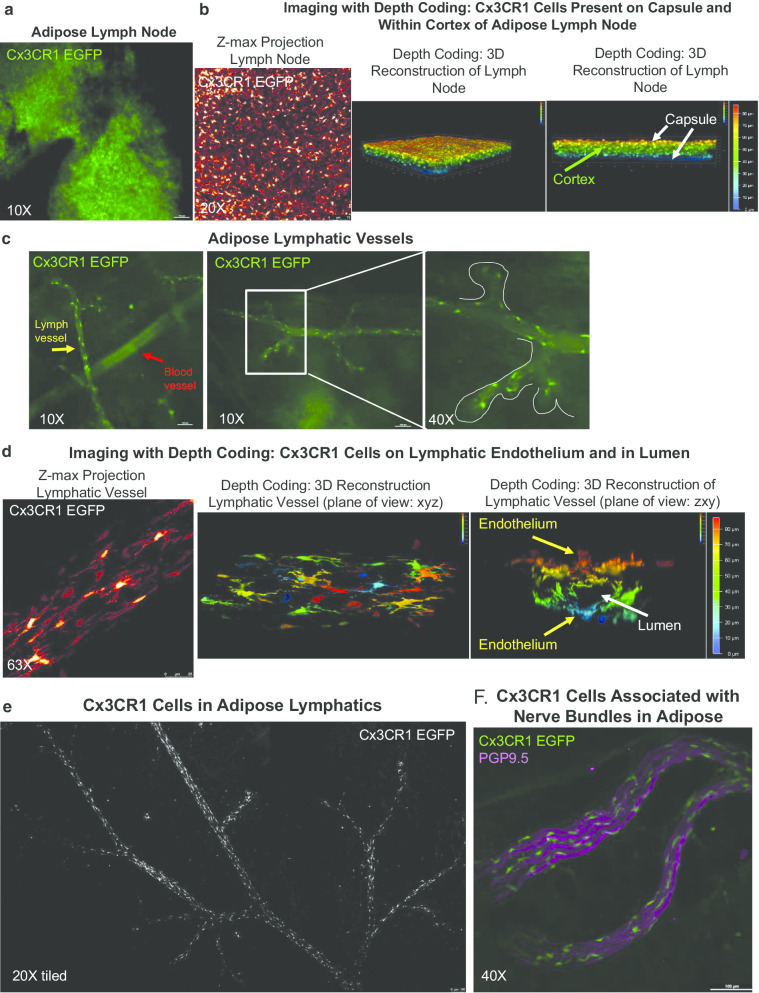
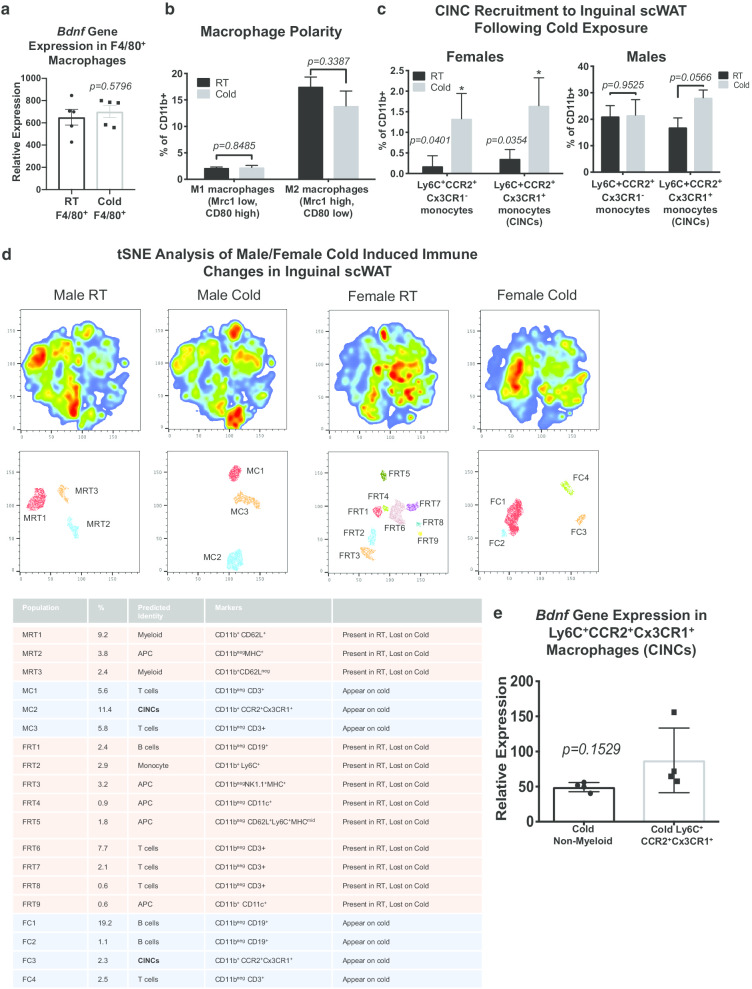
We and others have previously shown that noradrenergic stimulation via cold exposure increases adipose innervation in the inguinal depot. Here we have identified a subset of myeloid cells that home to scWAT upon cold exposure and are Ly6C CCR2 Cx3CR1 monocytes/macrophages that express noradrenergic receptors and BDNF. This subset of myeloid lineage cells also clearly interacted with peripheral nerves in the scWAT and were therefore considered neuroimmune cells.
We propose that these myeloid lineage, cold induced neuroimmune cells (CINCs) are key players in maintaining adipose innervation as well as promoting adipose nerve remodeling under noradrenergic stimulation, such as cold exposure.
脂肪组织的神经支配对于这个关键代谢器官的正常功能至关重要。许多外科和化学去神经研究表明,通过交感传出和感觉传入神经维持大脑-脂肪的通讯,有助于调节脂肪细胞大小、细胞数量、脂肪分解和白色脂肪组织的“褐变”。神经营养因子是促进神经元存活、再生和可塑性的生长因子,包括轴突生长和突触形成。已经表明,外周免疫细胞是人类和小鼠神经营养因子的来源。尽管有许多免疫细胞存在于脂肪基质血管部分(SVF)中,但它们在脂肪神经支配中扮演什么角色仍不清楚。我们之前证明,脂肪 SVF 分泌脑源性神经营养因子(BDNF)。
我们现在表明,免疫细胞髓系谱系中这种神经营养因子的缺失导致腹股沟皮下白色脂肪组织(scWAT)的“遗传去神经支配”,从而导致能量消耗减少、脂肪质量增加和对冷刺激的 UCP1 反应迟钝。
我们和其他人之前已经表明,通过寒冷暴露刺激去甲肾上腺素能增加腹股沟储存库中的脂肪神经支配。在这里,我们已经确定了一组在寒冷暴露时归巢到 scWAT 的髓样细胞,它们是 Ly6C CCR2 Cx3CR1 单核细胞/巨噬细胞,表达去甲肾上腺素能受体和 BDNF。这群髓样细胞谱系细胞也明显与 scWAT 中的外周神经相互作用,因此被认为是神经免疫细胞。
我们提出,这些髓样细胞谱系、冷诱导的神经免疫细胞(CINCs)是维持脂肪神经支配以及促进去甲肾上腺素能刺激下(如寒冷暴露)脂肪神经重塑的关键因素。