Department of Gene Therapy, Ulm University, 89081, Ulm, Germany.
Department of Protein Evolution, Max Planck Institute for Developmental Biology, Max-Planck-Ring 5, 72076, Tübingen, Germany.
BMC Evol Biol. 2020 Dec 9;20(1):162. doi: 10.1186/s12862-020-01705-5.
The huntingtin-associated protein 40 (HAP40) abundantly interacts with huntingtin (HTT), the protein that is altered in Huntington's disease (HD). Therefore, we analysed the evolution of HAP40 and its interaction with HTT.
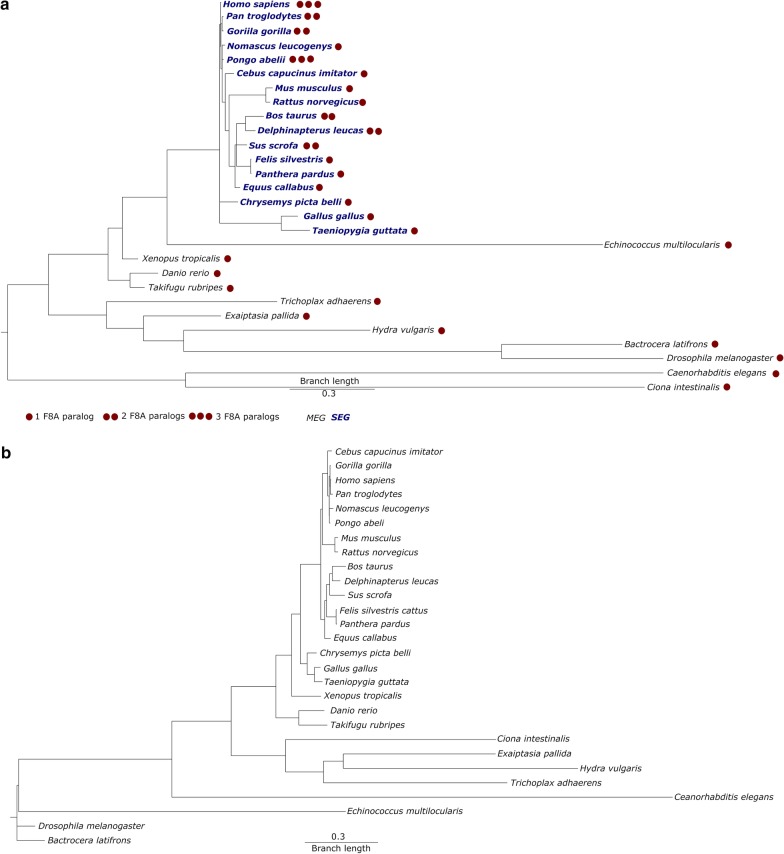
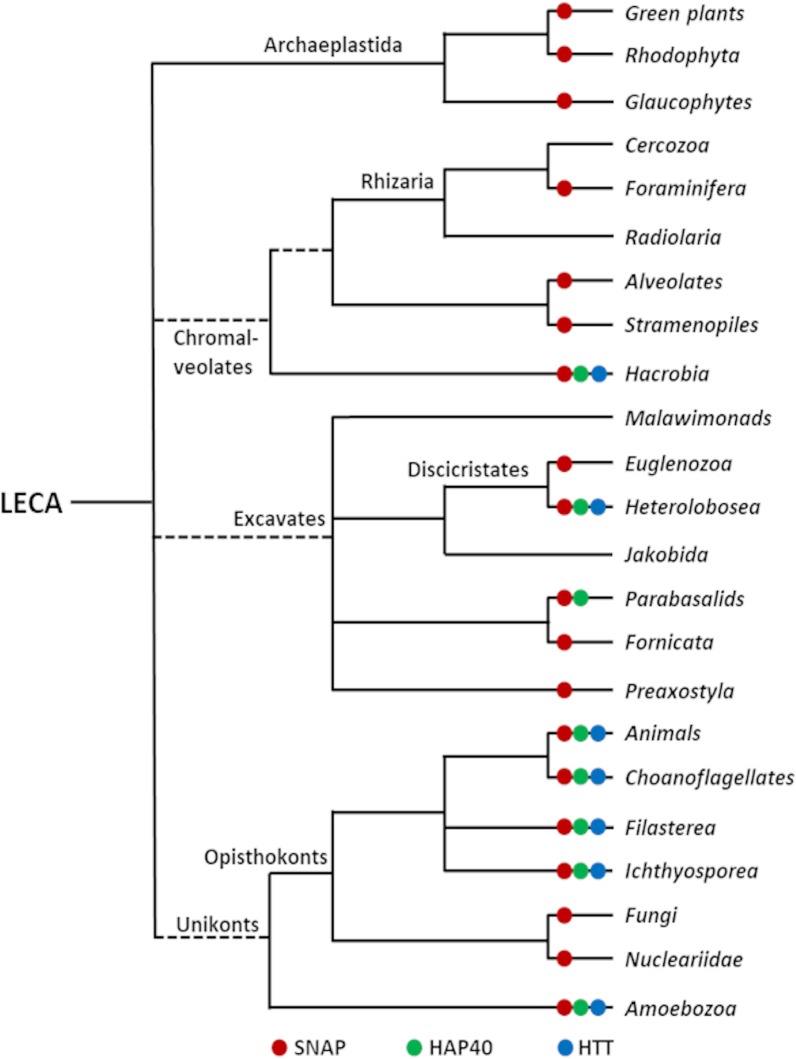
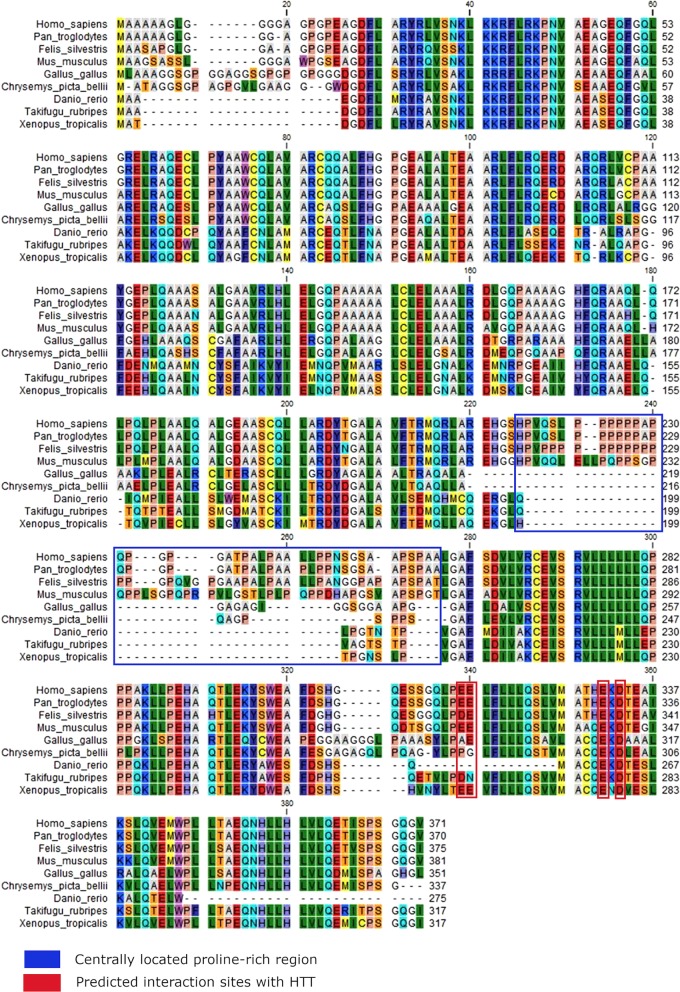
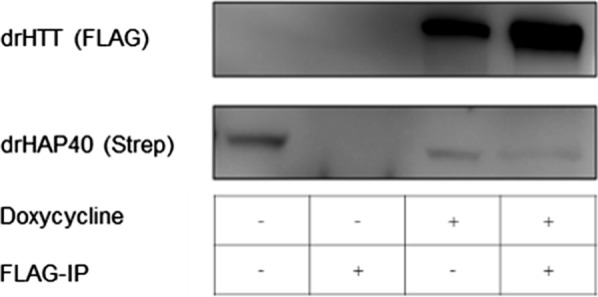
We found that in amniotes HAP40 is encoded by a single-exon gene, whereas in all other organisms it is expressed from multi-exon genes. HAP40 co-occurs with HTT in unikonts, including filastereans such as Capsaspora owczarzaki and the amoebozoan Dictyostelium discoideum, but both proteins are absent from fungi. Outside unikonts, a few species, such as the free-living amoeboflagellate Naegleria gruberi, contain putative HTT and HAP40 orthologs. Biochemically we show that the interaction between HTT and HAP40 extends to fish, and bioinformatic analyses provide evidence for evolutionary conservation of this interaction. The closest homologue of HAP40 in current protein databases is the family of soluble N-ethylmaleimide-sensitive factor attachment proteins (SNAPs).
Our results indicate that the transition from a multi-exon to a single-exon gene appears to have taken place by retroposition during the divergence of amphibians and amniotes, followed by the loss of the parental multi-exon gene. Furthermore, it appears that the two proteins probably originated at the root of eukaryotes. Conservation of the interaction between HAP40 and HTT and their likely coevolution strongly indicate functional importance of this interaction.
亨廷顿蛋白相关蛋白 40(HAP40)与亨廷顿蛋白(HTT)大量相互作用,HTT 在亨廷顿病(HD)中发生改变。因此,我们分析了 HAP40 的进化及其与 HTT 的相互作用。
我们发现,在羊膜动物中,HAP40 由一个单外显子基因编码,而在所有其他生物体中,它由多外显子基因表达。HAP40 与 HTT 在单系生物中共同存在,包括 Capsaspora owczarzaki 等纤毛动物和变形虫 Dictyostelium discoideum,但真菌中两者均不存在。在单系生物之外,少数物种,如自由生活的阿米巴 Naegleria gruberi,含有推定的 HTT 和 HAP40 同源物。从生化角度来看,我们证明了 HTT 和 HAP40 之间的相互作用扩展到鱼类,并且生物信息学分析为这种相互作用的进化保守性提供了证据。当前蛋白质数据库中 HAP40 的最接近同源物是可溶性 N-乙基马来酰亚胺敏感因子附着蛋白(SNAPs)家族。
我们的研究结果表明,从多外显子到单外显子基因的转变似乎是在两栖动物和羊膜动物分化过程中通过反转录发生的,随后失去了亲本的多外显子基因。此外,这两种蛋白质可能起源于真核生物的根部。HAP40 和 HTT 之间相互作用的保守性及其可能的共同进化强烈表明这种相互作用具有重要的功能意义。