Department of Cell and Molecular Biology, Grand Valley State University, Allendale, MI, 49401, USA.
Department of Cellular and Molecular Medicine, University of Arizona Cancer Center, University of Arizona, Tucson, AZ, 85724, USA.
BMC Cancer. 2020 Dec 9;20(1):1211. doi: 10.1186/s12885-020-07675-7.
Tetraspanin CD82 is a tumor metastasis suppressor that is known to down regulate in various metastatic cancers. However, the exact mechanism by which CD82 prevents cancer metastasis is unclear. This study aims to identify genes that are regulated by CD82 in human prostate cell lines.
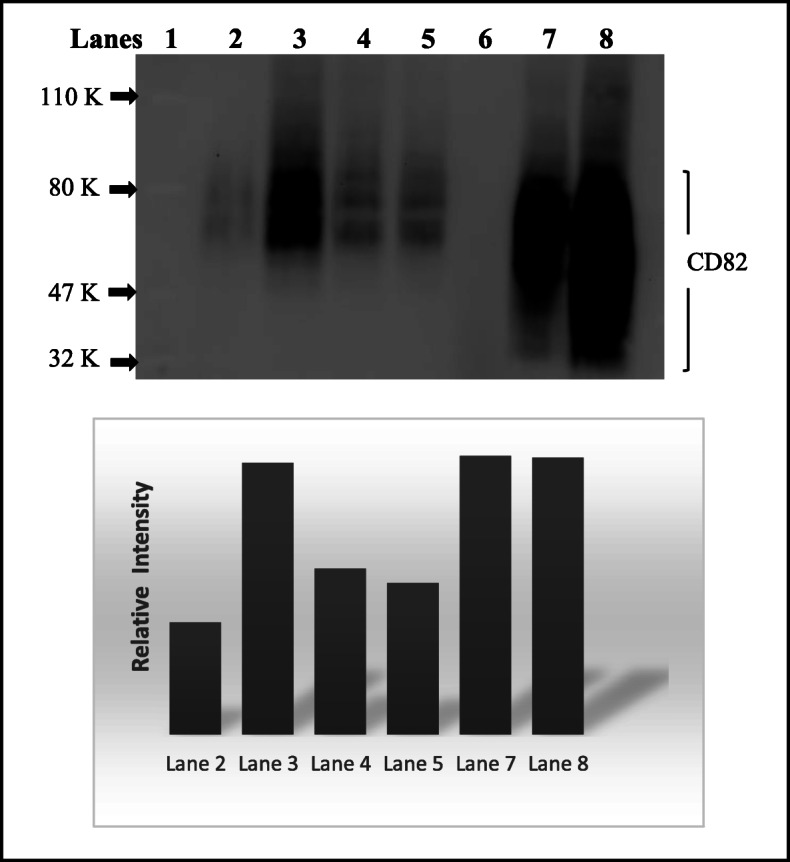
We used whole human genome microarray to obtain gene expression profiles in a normal prostate epithelial cell line that expressed CD82 (PrEC-31) and a metastatic prostate cell line that does not express CD82 (PC3). Then, siRNA silencing was used to knock down CD82 expression in PrEC-31 while CD82 was re-expressed in PC3 to acquire differentially-expressed genes in the respective cell line.
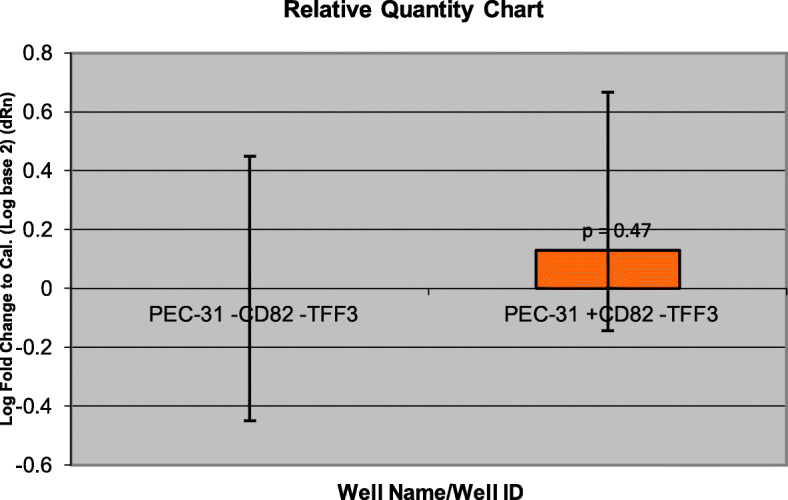
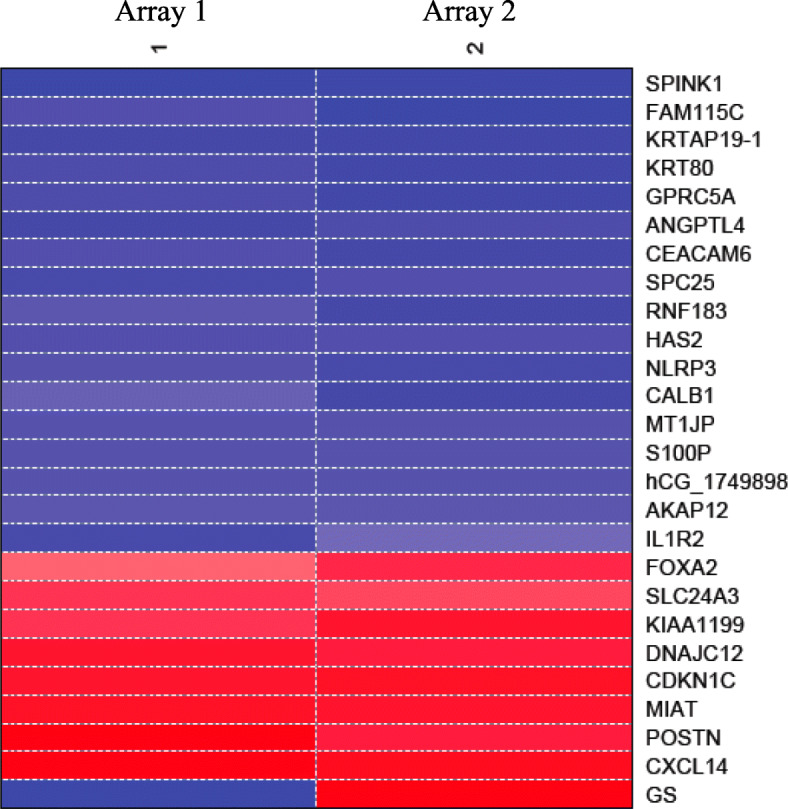
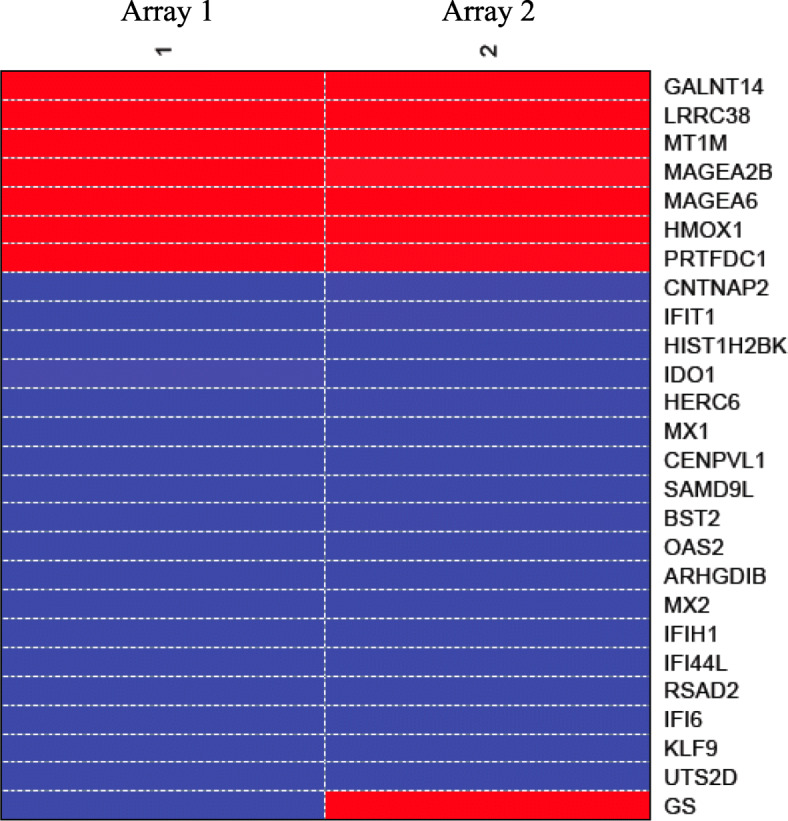
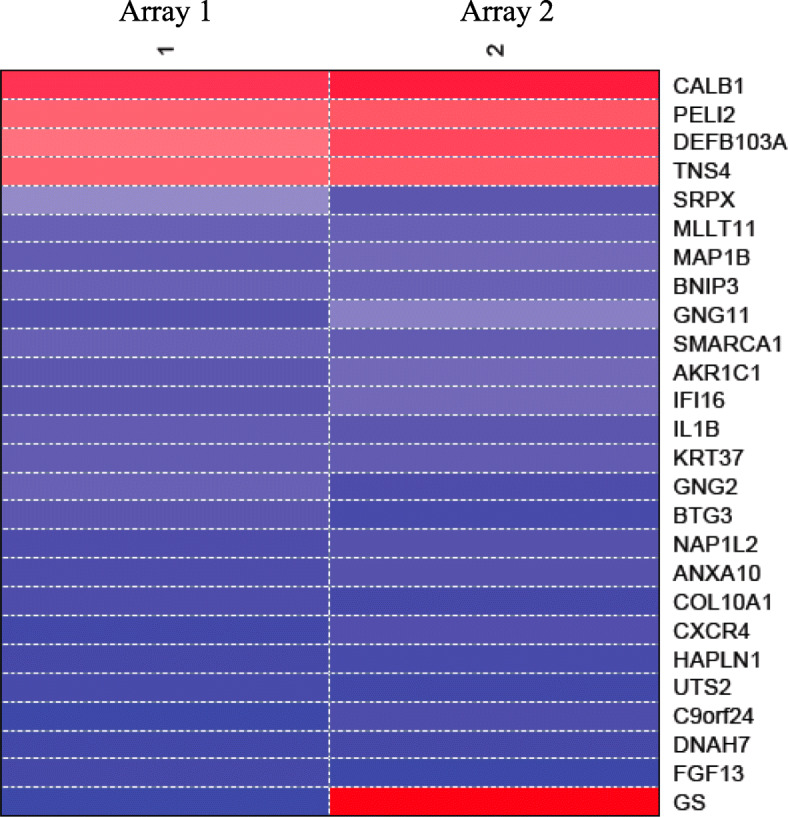
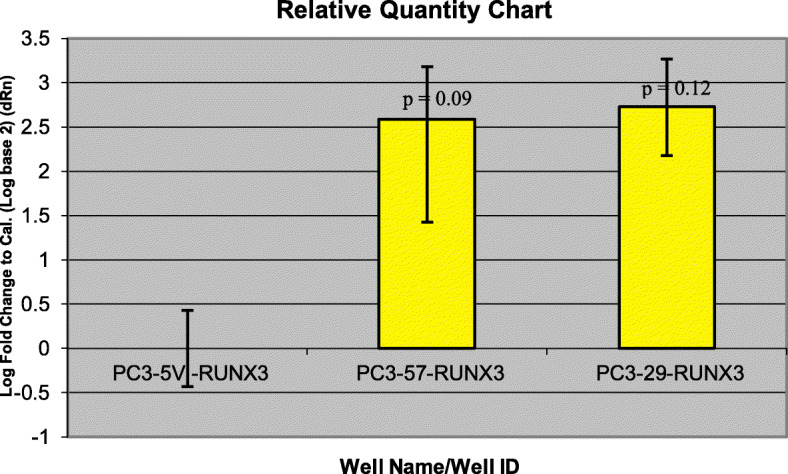
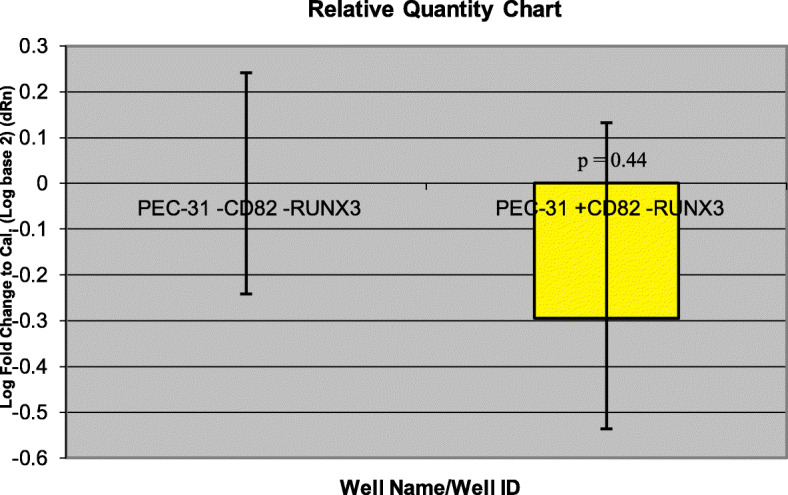
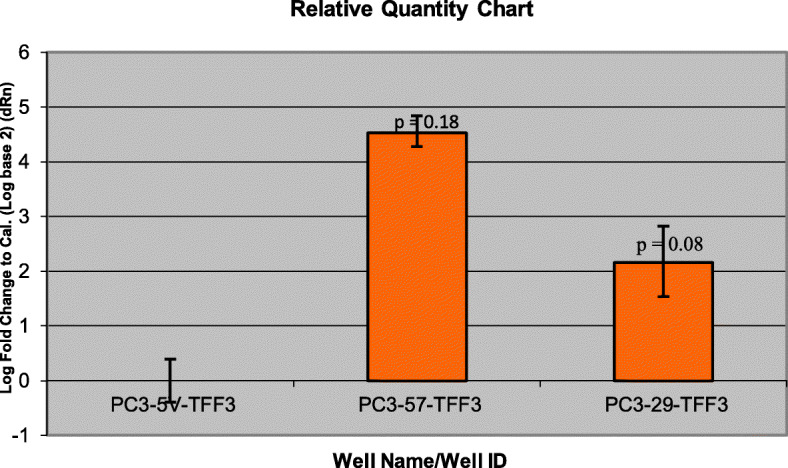
Differentially-expressed genes with a P < 0.05 were identified in 3 data sets: PrEC-31 (+CD82) vs PrEC-31(-CD82), PC3-57 (+CD82) vs. PC3-5 V (-CD82), and PC3-29 (+CD82) vs. PC3-5 V (-CD82). Top 25 gene lists did not show overlap within the data sets, except (CALB1) the calcium binding protein calbindin 1 which was significantly up-regulated (2.8 log fold change) in PrEC-31 and PC3-29 cells that expressed CD82. Other most significantly up-regulated genes included serine peptidase inhibitor kazal type 1 (SPINK1) and polypeptide N-acetyl galactosaminyl transferase 14 (GALNT14) and most down-regulated genes included C-X-C motif chemokine ligand 14 (CXCL14), urotensin 2 (UTS2D), and fibroblast growth factor 13 (FGF13). Pathways related with cell proliferation and angiogenesis, migration and invasion, cell death, cell cycle, signal transduction, and metabolism were highly enriched in cells that lack CD82 expression. Expression of two mutually inclusive genes in top 100 gene lists of all data sets, runt-related transcription factor (RUNX3) and trefoil factor 3 (TFF3), could be validated with qRT-PCR.
Identification of genes and pathways regulated by CD82 in this study may provide additional insights into the role that CD82 plays in prostate tumor progression and metastasis, as well as identify potential targets for therapeutic intervention.
四跨膜蛋白 CD82 是一种肿瘤转移抑制因子,已知在各种转移性癌症中下调。然而,CD82 阻止癌症转移的确切机制尚不清楚。本研究旨在鉴定人前列腺细胞系中由 CD82 调节的基因。
我们使用全基因组微阵列获得表达 CD82(PrEC-31)的正常前列腺上皮细胞系和不表达 CD82(PC3)的转移性前列腺细胞系的基因表达谱。然后,用 siRNA 沉默在 PrEC-31 中敲低 CD82 表达,同时在 PC3 中重新表达 CD82,以获得各自细胞系中差异表达的基因。
在 3 个数据集(PrEC-31(+CD82)与 PrEC-31(-CD82)、PC3-57(+CD82)与 PC3-5V(-CD82)和 PC3-29(+CD82)与 PC3-5V(-CD82))中鉴定出差异表达基因,P 值均小于 0.05。在数据集之间,除钙结合蛋白钙结合蛋白 1(CALB1)外,前 25 个基因列表没有重叠,CALB1 在表达 CD82 的 PrEC-31 和 PC3-29 细胞中显著上调(2.8 对数倍变化)。其他上调最显著的基因包括丝氨酸蛋白酶抑制剂 Kazal 型 1(SPINK1)和多肽 N-乙酰半乳糖胺转移酶 14(GALNT14),下调最显著的基因包括 C-X-C 基序趋化因子配体 14(CXCL14)、尿促素 2(UTS2D)和成纤维细胞生长因子 13(FGF13)。与细胞增殖和血管生成、迁移和侵袭、细胞死亡、细胞周期、信号转导和代谢相关的途径在缺乏 CD82 表达的细胞中高度富集。在所有数据集的前 100 个基因列表中,有两个相互包含的基因(RUNX3 和 TFF3)的表达可以通过 qRT-PCR 验证。
本研究鉴定出由 CD82 调节的基因和途径,可能为 CD82 在前列腺肿瘤进展和转移中的作用提供更多的见解,并为治疗干预提供潜在的靶点。