Jirak Peter, Wernly Bernhard, Lichtenauer Michael, Franz Marcus, Knost Thorben, Abusamrah Thaer, Kelm Malte, Bimpong-Buta Nana-Yaw, Jung Christian
Clinic of Internal Medicine II, Department of Cardiology, Paracelsus Medical University of Salzburg, Salzburg, Austria.
Department of Internal Medicine I, Jena University Hospital, Friedrich Schiller University Jena, Jena, Germany.
NPJ Microgravity. 2020 Nov 2;6(1):31. doi: 10.1038/s41526-020-00121-9.
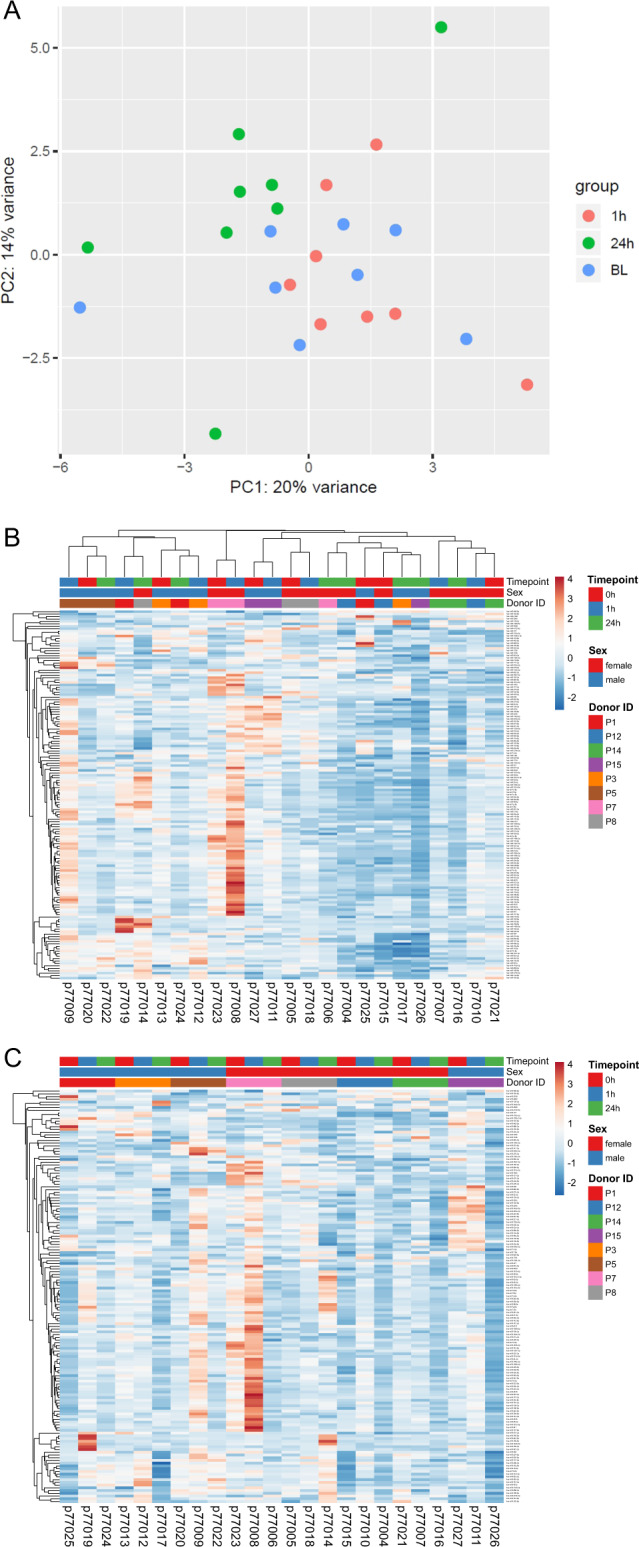
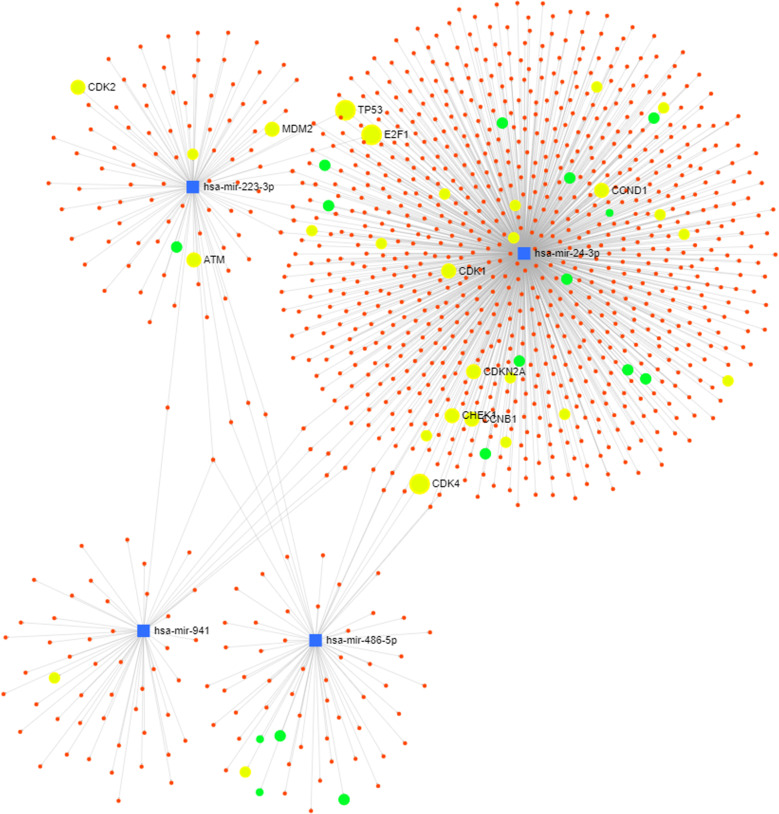
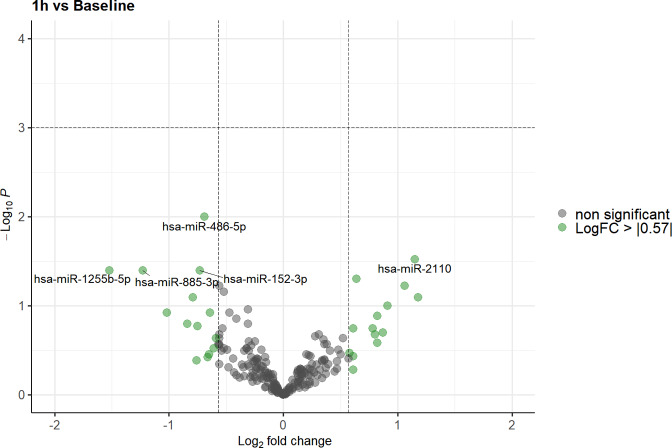
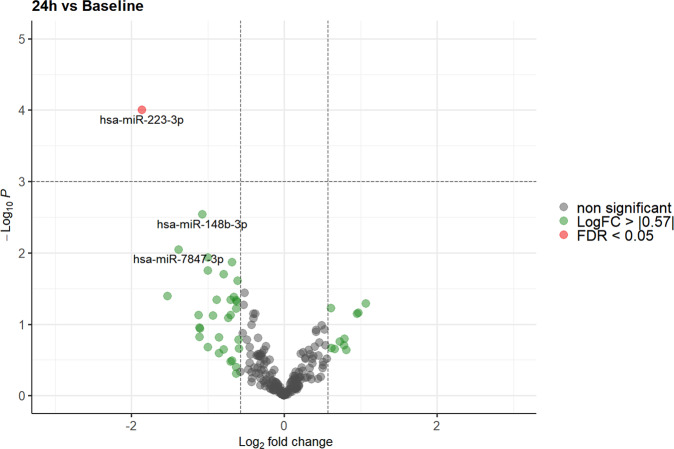
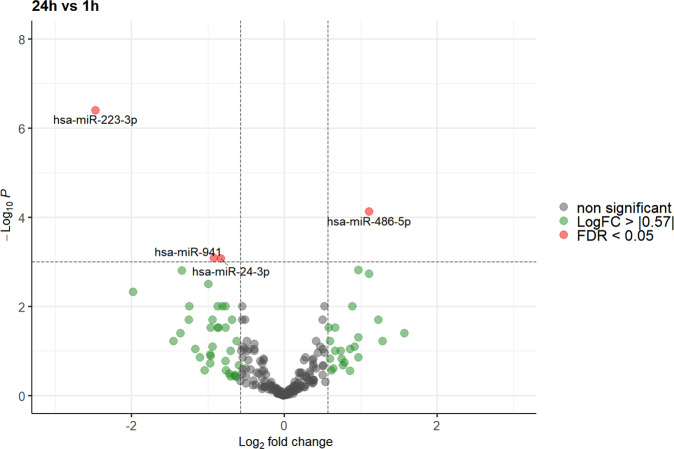
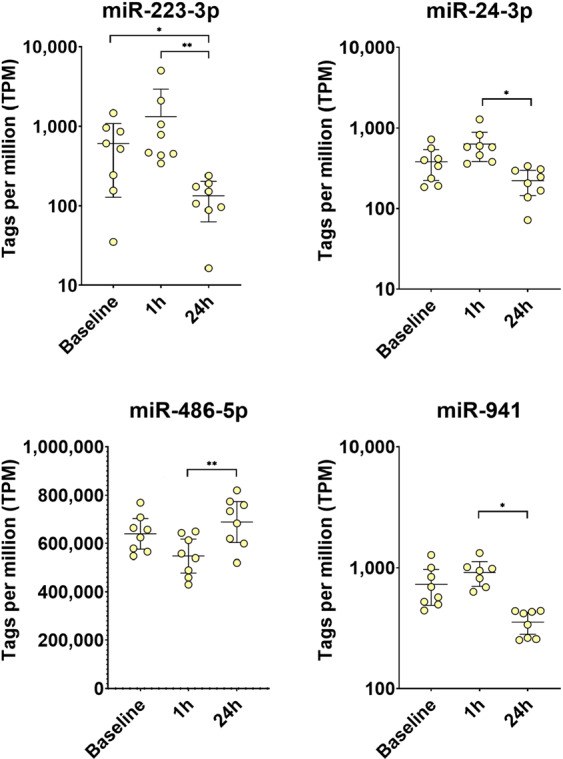
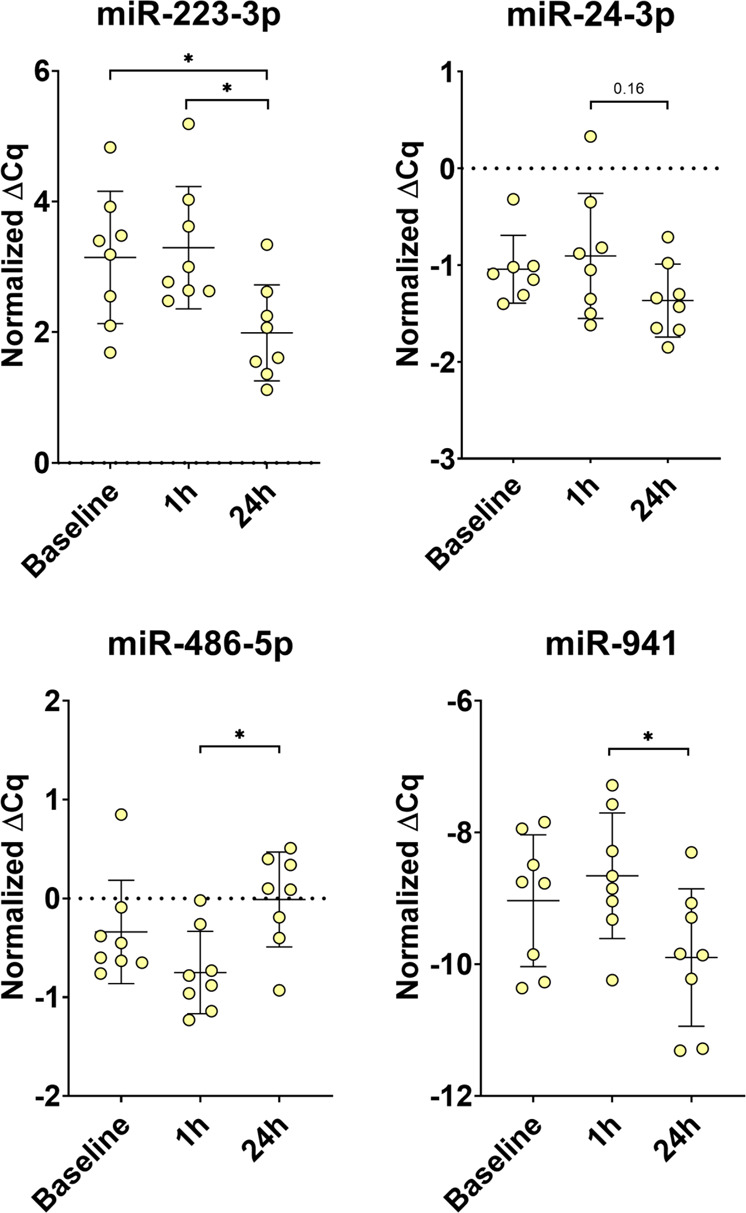
Understanding physiologic reactions to weightlessness is an indispensable requirement for safe human space missions. This study aims to analyse changes in the expression of circulating miRNAs following exposure to gravitational changes. Eight healthy volunteers (age: 24.5 years, male: 4, female: 4) were included. Each subject underwent 31 short-term phases of weightlessness and hypergravity induced by parabolic flight as a spaceflight analogue. At baseline, 1 and 24 h after parabolic flight, venous blood was withdrawn. Analysis of circulating miRNAs in serum was conducted by means of next generation sequencing. In total, 213 miRNAs were robustly detected (TPM > 5) by small RNA sequencing in all 24 samples. Four miRNAs evidenced a significant change in expression after adjusting for multiple testing. Only miR-223-3p showed a consistent significant decrease 24 h after parabolic flight compared to baseline values and values at 1 h after parabolic flight. miR-941 and miR-24-3p showed a significant decrease 24 h after parabolic flight compared to 1 h after parabolic flight but not to baseline values. miR-486-5p showed a significant increase 24 h after parabolic flight compared to 1 h after parabolic flight but not to baseline values. A target network analysis identified genes of the p53 signaling pathway and the cell cycle highly enriched among the targets of the four microRNAs. Our findings suggest cellular adaption to gravitational changes at the post-transcriptional level. Based on our results, we suggest a change in cell cycle regulation as potential explanation for adaptational changes observed in space missions.
了解失重状态下的生理反应是人类安全进行太空任务的一项必不可少的要求。本研究旨在分析暴露于重力变化后循环miRNA表达的变化。研究纳入了8名健康志愿者(年龄:24.5岁,男性4名,女性4名)。每位受试者都经历了31个由抛物线飞行诱导的短期失重和超重阶段,抛物线飞行作为太空飞行的模拟。在基线、抛物线飞行后1小时和24小时采集静脉血。通过下一代测序对血清中的循环miRNA进行分析。通过小RNA测序在所有24个样本中总共稳健地检测到213种miRNA(TPM>5)。在进行多重检验校正后,有4种miRNA的表达出现了显著变化。与基线值以及抛物线飞行后1小时的值相比,只有miR-223-3p在抛物线飞行后24小时显示出持续显著下降。与抛物线飞行后1小时的值相比,miR-941和miR-24-3p在抛物线飞行后24小时显示出显著下降,但与基线值相比无显著差异。与抛物线飞行后1小时的值相比,miR-486-5p在抛物线飞行后24小时显示出显著增加,但与基线值相比无显著差异。一项靶标网络分析确定,p53信号通路和细胞周期的基因在这四种microRNA的靶标中高度富集。我们的研究结果表明,细胞在转录后水平对重力变化具有适应性。基于我们的结果,我们认为细胞周期调控的变化可能是太空任务中观察到的适应性变化的潜在解释。