Kersting Markus, Olejnik Mateusz, Rosenkranz Nina, Loza Kateryna, Breisch Marina, Rostek Alexander, Westphal Götz, Bünger Jürgen, Ziegler Nadine, Ludwig Alfred, Köller Manfred, Sengstock Christina, Epple Matthias
BG University Hospital Bergmannsheil, Surgical Research, Ruhr University Bochum, Bochum, Germany.
Inorganic Chemistry and Center for Nanointegration Duisburg-Essen (CeNIDE), University of Duisburg-Essen, Essen, Germany.
Sci Rep. 2020 Dec 9;10(1):21591. doi: 10.1038/s41598-020-78550-5.
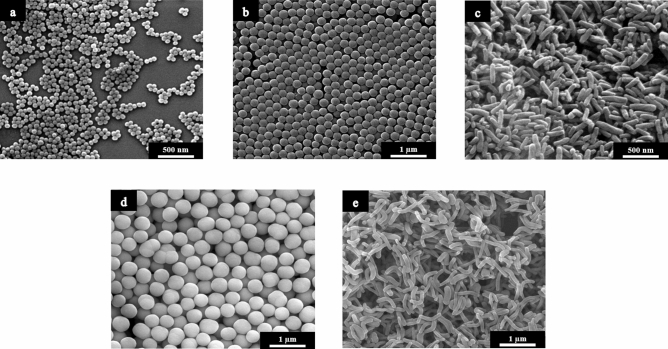
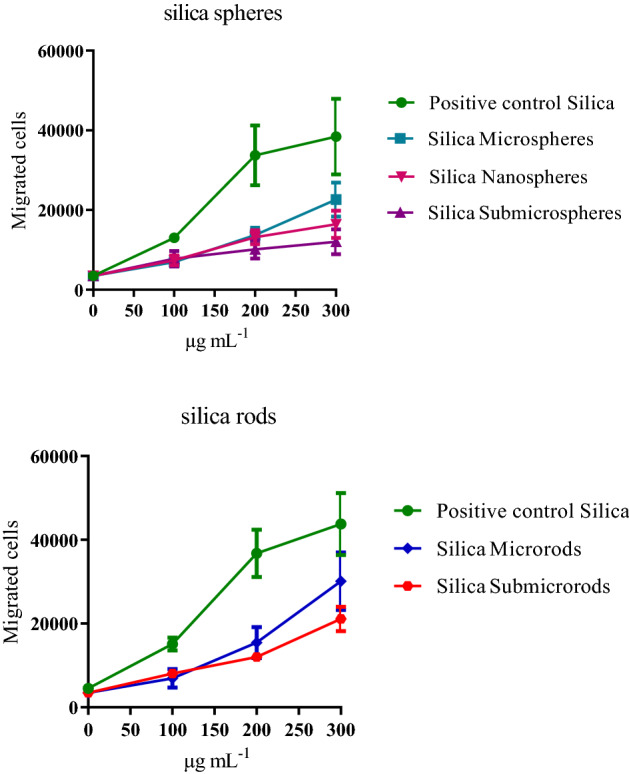
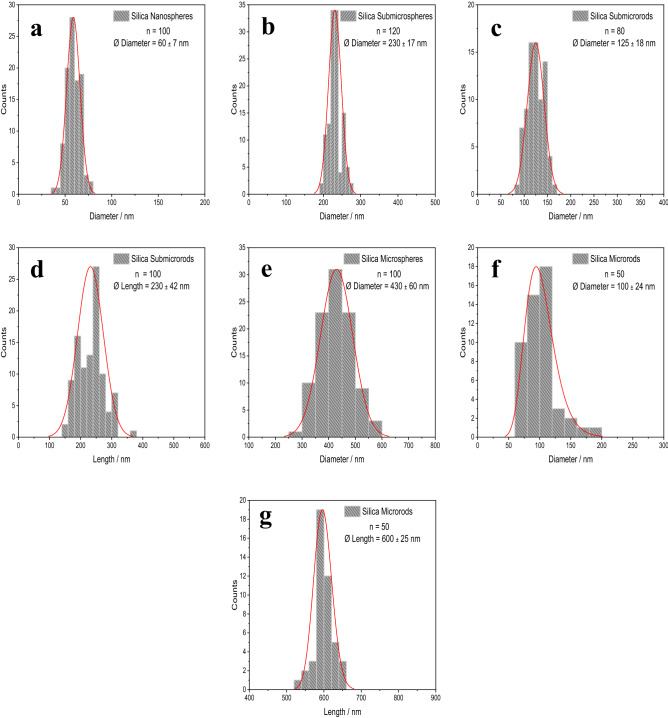
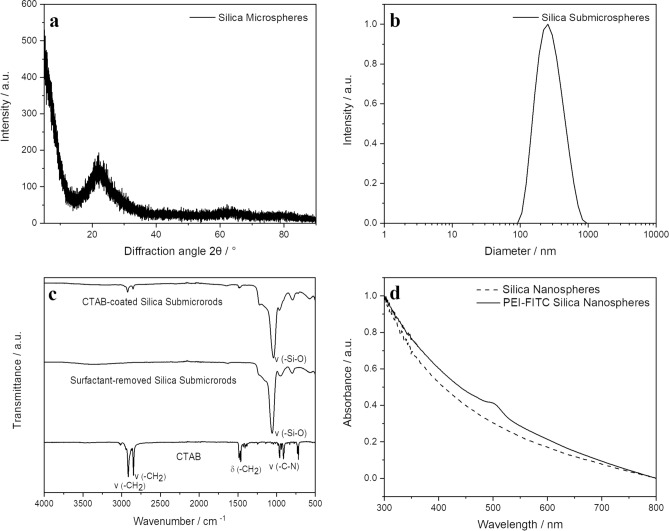
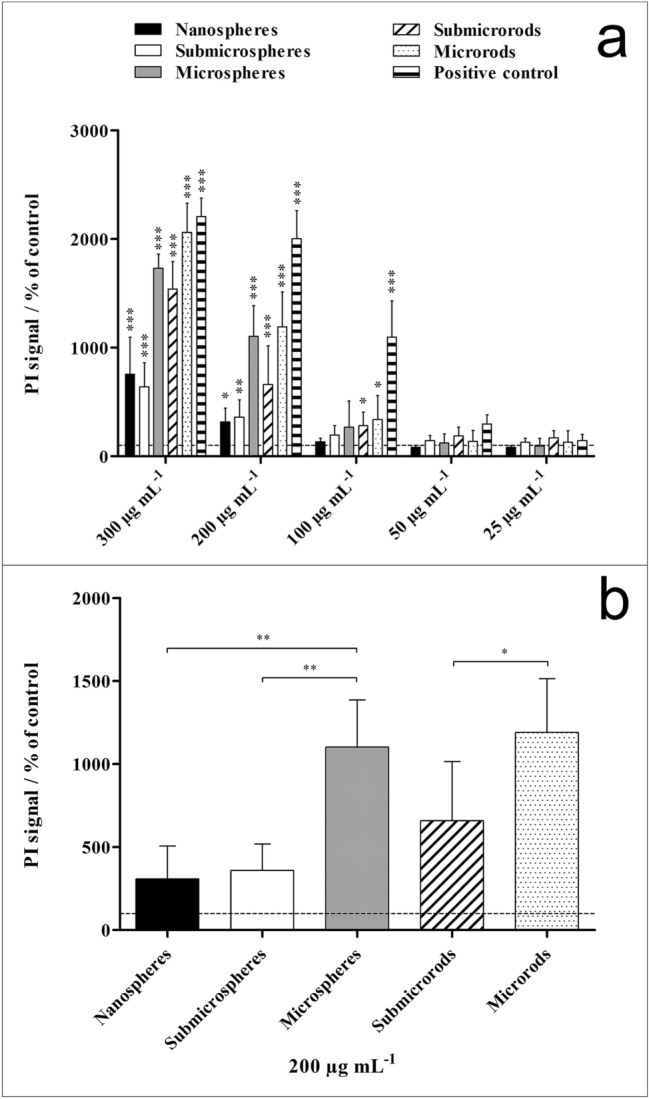
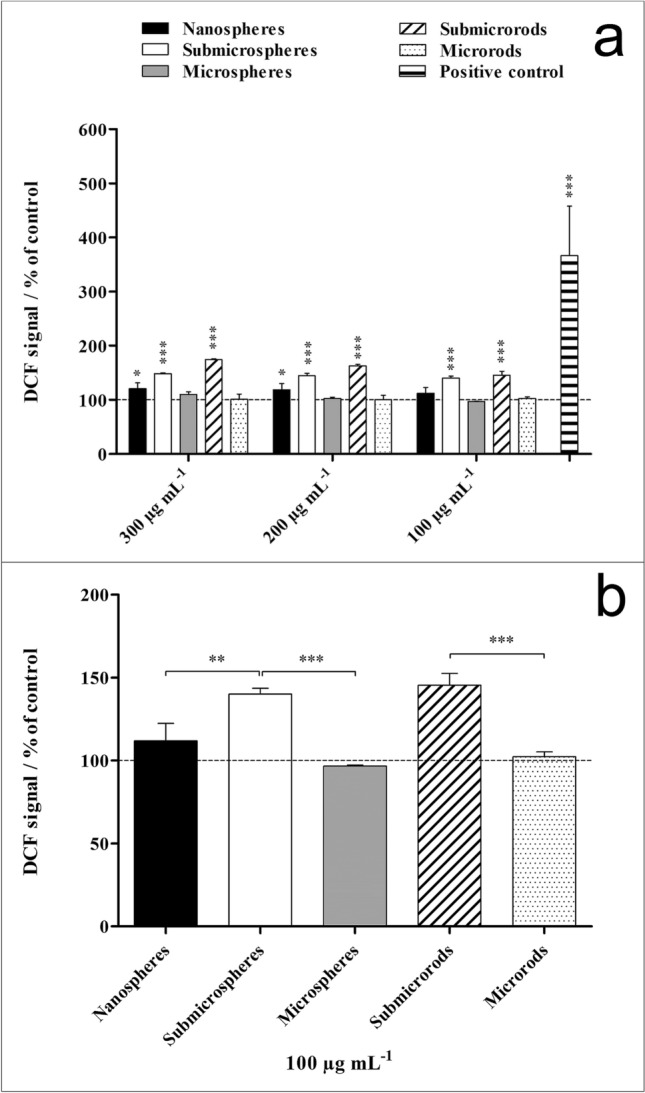
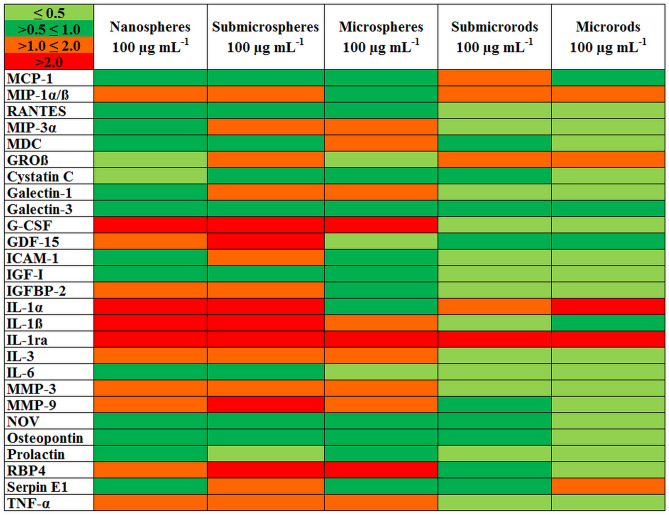
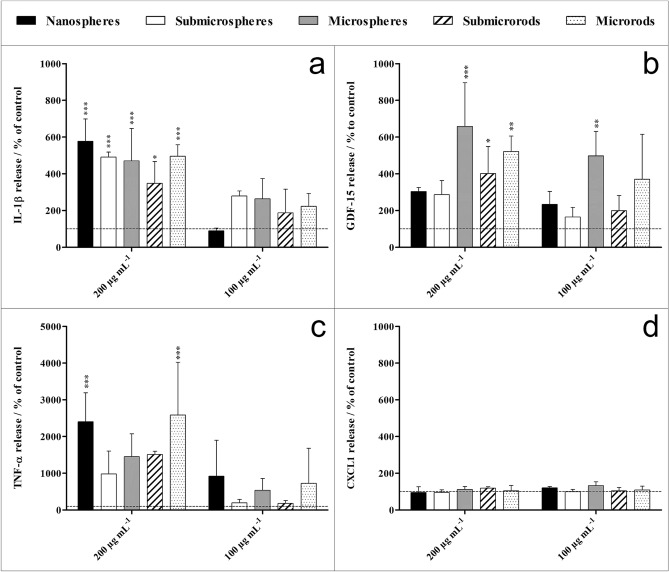
Health risks from particles are a priority challenge to health protection at work. Despite the ubiquitous exposure to a wide range of particles and the many years of research in this field, there are fundamental unresolved questions regarding the prevention of particle-related respiratory diseases. Here, the highly relevant particulate material silicon dioxide was analyzed with emphasis on defined size and shape. Silica particles were prepared with different size and shape: Spheres (NS nanospheres 60 nm; SMS submicrospheres 230 nm; MS microspheres 430 nm) and rods (SMR submicrorods with d = 125 nm, L = 230 nm; aspect ratio 1:1.8; MR microrods with d = 100 nm, L = 600 nm; aspect ratio 1:6). After an in-depth physicochemical characterization, their effects on NR8383 alveolar macrophages were investigated. The particles were X-ray amorphous, well dispersed, and not agglomerated. Toxic effects were only observed at high concentrations, i.e. ≥ 200 µg mL, with the microparticles showing a stronger significant effect on toxicity (MS≈MR > SMR≈SMS≈NS) than the nanoparticles. Special attention was directed to effects in the subtoxic range (less than 50% cell death compared to untreated cells), i.e. below 100 µg mL where chronic health effects may be expected. All particles were readily taken up by NR8383 cells within a few hours and mainly found associated with endolysosomes. At subtoxic levels, neither particle type induced strongly adverse effects, as probed by viability tests, detection of reactive oxygen species (ROS), protein microarrays, and cytokine release (IL-1β, GDF-15, TNF-α, CXCL1). In the particle-induced cell migration assay (PICMA) with leukocytes (dHL-60 cells) and in cytokine release assays, only small effects were seen. In conclusion, at subtoxic concentrations, where chronic health effects may be expected, neither size and nor shape of the synthesized chemically identical silica particles showed harmful cell-biological effects.
颗粒物带来的健康风险是职业健康防护面临的首要挑战。尽管人们普遍暴露于各种各样的颗粒物中,且该领域已有多年研究,但在预防与颗粒物相关的呼吸道疾病方面仍存在一些基本的未解决问题。在此,我们重点分析了定义明确的尺寸和形状的高度相关颗粒物材料二氧化硅。制备了具有不同尺寸和形状的二氧化硅颗粒:球体(NS纳米球60纳米;SMS亚微米球230纳米;MS微米球430纳米)和棒体(SMR亚微米棒,直径d = 125纳米,长度L = 230纳米;长宽比1:1.8;MR微米棒,直径d = 100纳米,长度L = 600纳米;长宽比1:6)。经过深入的物理化学表征后,研究了它们对NR8383肺泡巨噬细胞的影响。这些颗粒为X射线非晶态,分散良好,未发生团聚。仅在高浓度(即≥200微克/毫升)时观察到毒性作用,其中微米颗粒对毒性的显著影响(MS≈MR > SMR≈SMS≈NS)比纳米颗粒更强。特别关注了亚毒性范围内(与未处理细胞相比细胞死亡少于50%)的影响,即在100微克/毫升以下,此浓度下可能会出现慢性健康影响。所有颗粒在数小时内都很容易被NR8383细胞摄取,并且主要发现与内溶酶体相关。在亚毒性水平下,通过活力测试、活性氧(ROS)检测、蛋白质微阵列和细胞因子释放(IL-1β、GDF-15、TNF-α、CXCL1)检测发现,两种颗粒类型均未诱导强烈的不良反应。在白细胞(dHL-60细胞)的颗粒诱导细胞迁移试验(PICMA)和细胞因子释放试验中,仅观察到微小影响。总之,在可能预期会出现慢性健康影响的亚毒性浓度下,合成的化学性质相同的二氧化硅颗粒的尺寸和形状均未显示出有害的细胞生物学效应。