IUF - Leibniz Research Institute for Environmental Medicine, Düsseldorf, Germany.
Part Fibre Toxicol. 2011 Oct 13;8:31. doi: 10.1186/1743-8977-8-31.
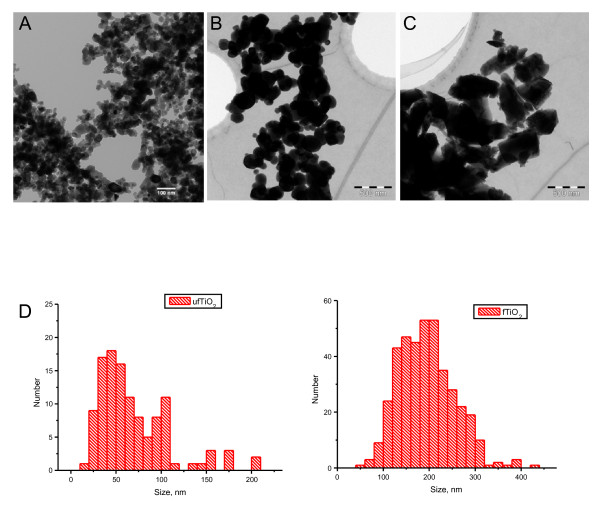
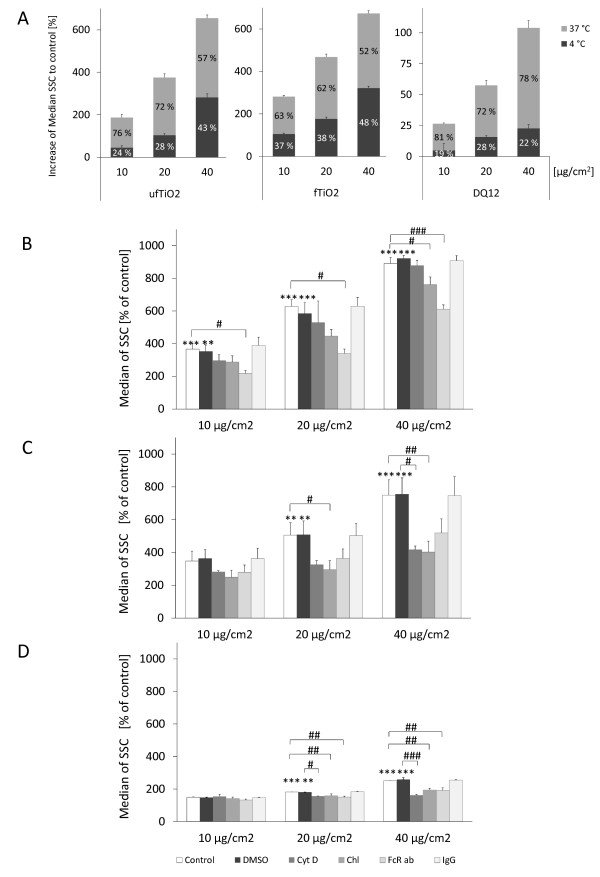
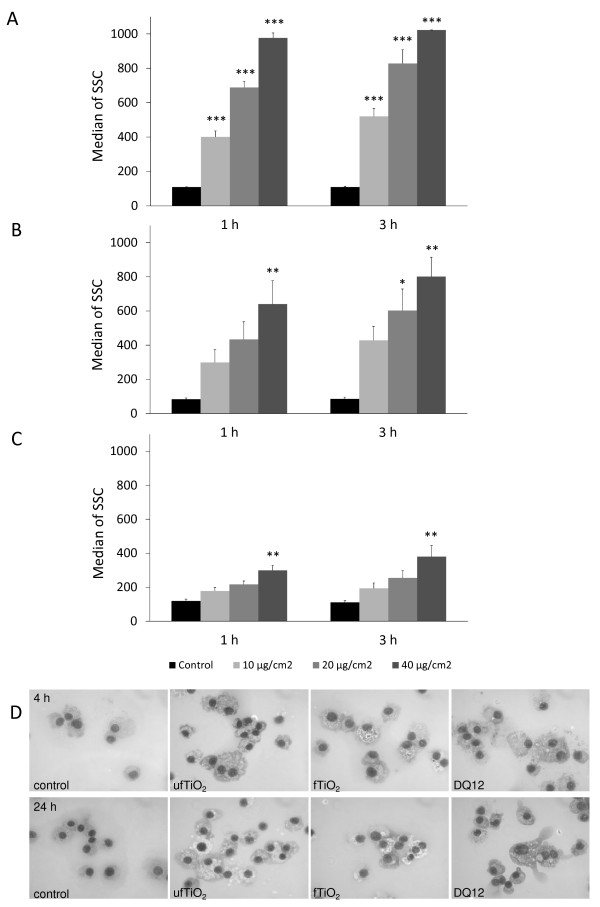
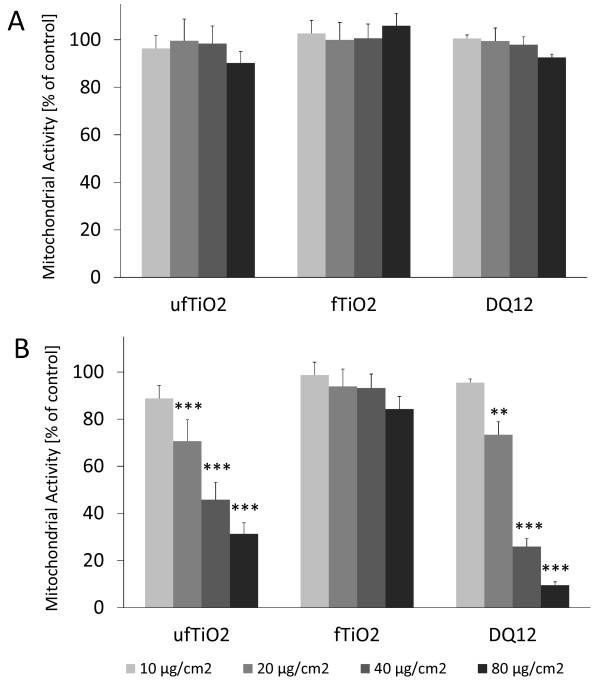
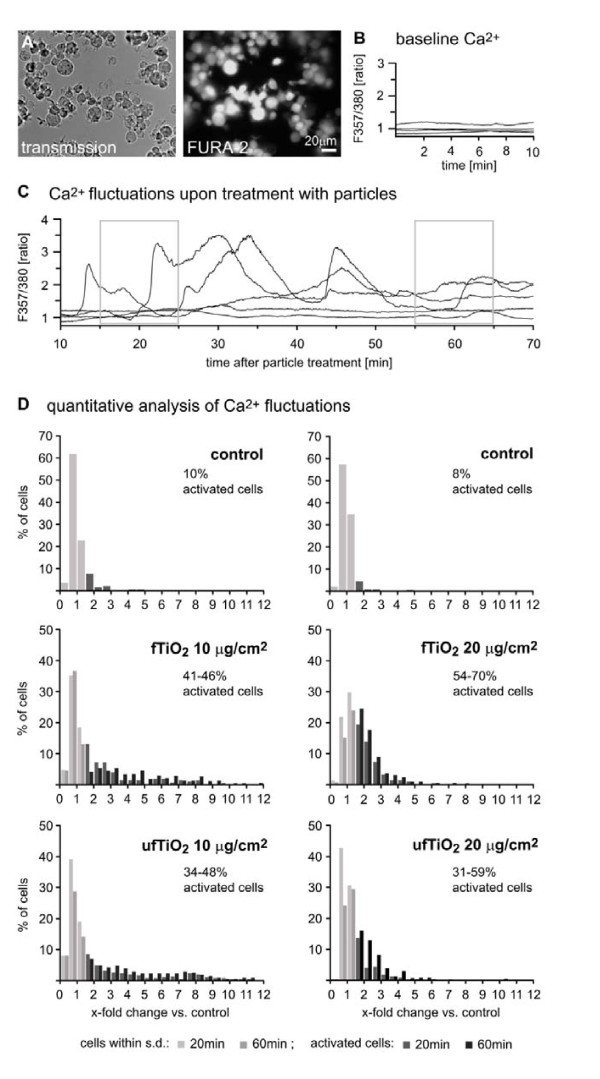
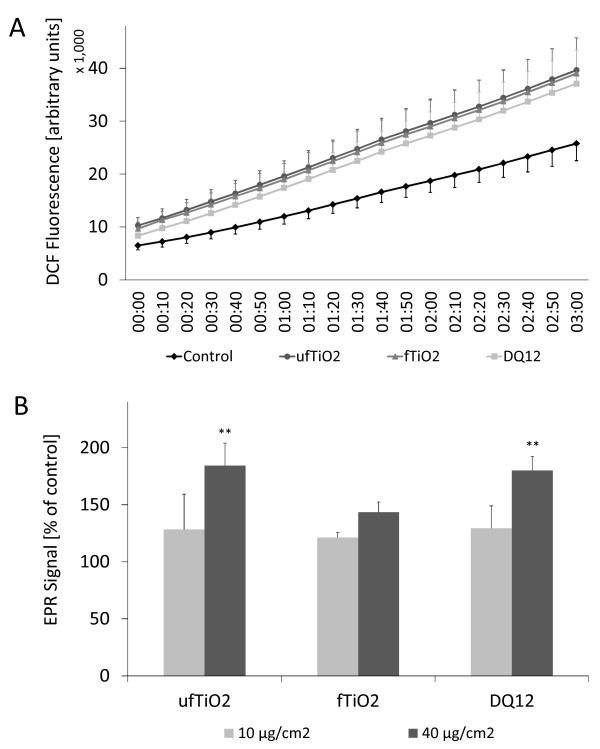
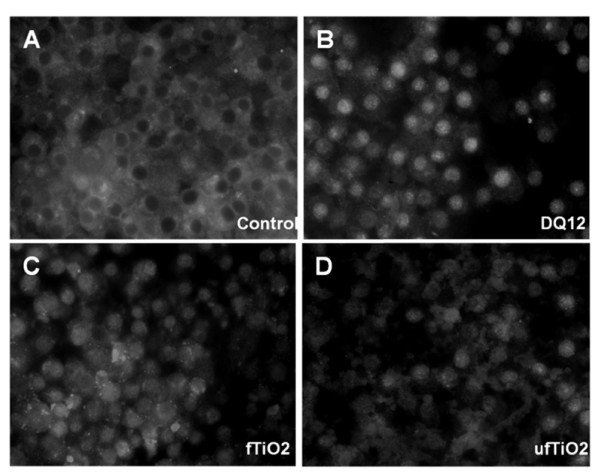
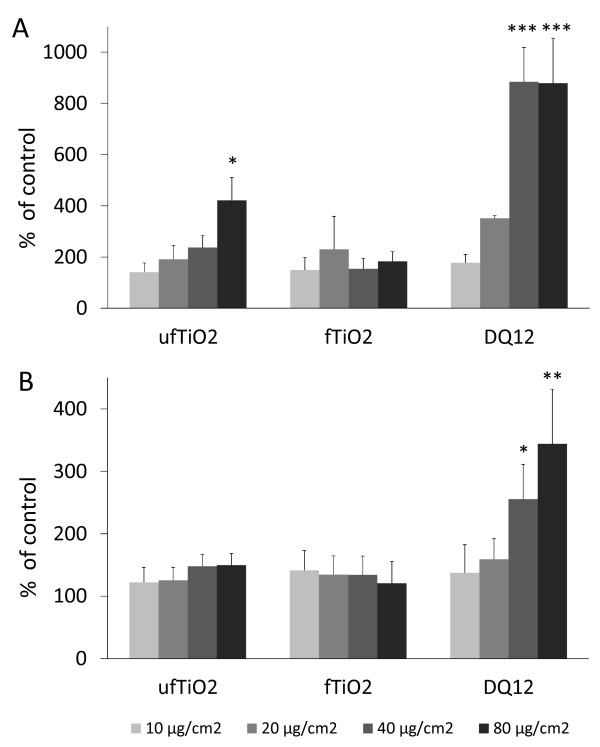
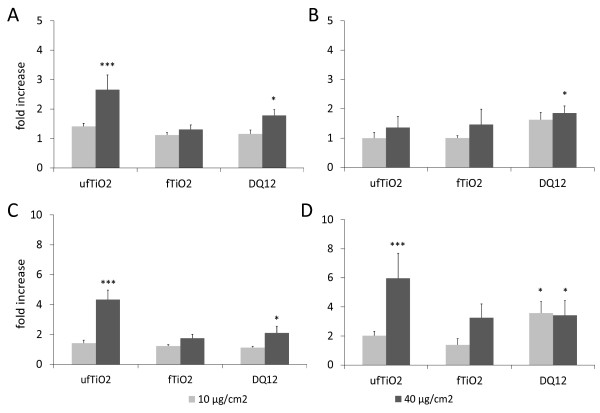
Inhalation of (nano)particles may lead to pulmonary inflammation. However, the precise mechanisms of particle uptake and generation of inflammatory mediators by alveolar macrophages (AM) are still poorly understood. The aim of this study was to investigate the interactions between particles and AM and their associated pro-inflammatory effects in relation to particle size and physico-chemical properties.NR8383 rat lung AM were treated with ultrafine (uf), fine (f) TiO2 or fine crystalline silica (DQ12 quartz). Physico-chemical particle properties were investigated by transmission electron microscopy, elemental analysis and thermogravimetry. Aggregation and agglomeration tendency of the particles were determined in assay-specific suspensions by means of dynamic light scattering.All three particle types were rapidly taken up by AM. DQ12 and ufTiO2 , but not fTiO2 , caused increased extracellular reactive oxygen species (ROS), heme oxygenase 1 (HO-1) mRNA expression and tumor necrosis factor (TNF)-α release. Inducible nitric oxide synthase (iNOS) mRNA expression was increased most strongly by ufTiO2 , while DQ12 exclusively triggered interleukin (IL) 1β release. However, oscillations of intracellular calcium concentration and increased intracellular ROS were observed with all three samples. Uptake inhibition experiments with cytochalasin D, chlorpromazine and a Fcγ receptor II (FcγRII) antibody revealed that the endocytosis of fTiO2 by the macrophages involves actin-dependent phagocytosis and macropinocytosis as well as clathrin-coated pit formation, whereas the uptake of ufTiO2 was dominated by FcγIIR. The uptake of DQ12 was found to be significantly reduced by all three inhibitors. Our findings suggest that the contrasting AM responses to fTiO2 , ufTiO2 and DQ12 relate to differences in the involvement of specific uptake mechanisms.
吸入(纳米)颗粒可能导致肺部炎症。然而,肺泡巨噬细胞(AM)摄取颗粒和产生炎症介质的确切机制仍知之甚少。本研究旨在研究颗粒与 AM 之间的相互作用及其与颗粒大小和物理化学性质相关的促炎作用。用超细(uf)、细(f)TiO2 或细晶二氧化硅(DQ12 石英)处理 NR8383 大鼠肺 AM。通过透射电子显微镜、元素分析和热重分析研究了颗粒的物理化学性质。通过动态光散射在特定于测定的悬浮液中确定了颗粒的聚集和团聚倾向。所有三种颗粒类型都被 AM 迅速摄取。DQ12 和 ufTiO2,但不是 fTiO2,导致细胞外活性氧(ROS)、血红素加氧酶 1(HO-1)mRNA 表达和肿瘤坏死因子(TNF)-α释放增加。ufTiO2 可最强地诱导诱导型一氧化氮合酶(iNOS)mRNA 表达,而 DQ12 仅触发白细胞介素(IL)1β释放。然而,三种样品均观察到细胞内钙浓度的振荡和细胞内 ROS 的增加。用细胞松弛素 D、氯丙嗪和 Fcγ 受体 II(FcγRII)抗体进行的摄取抑制实验表明,巨噬细胞对 fTiO2 的摄取涉及肌动蛋白依赖性吞噬作用和巨胞饮作用以及网格蛋白包被陷窝的形成,而 ufTiO2 的摄取则主要由 FcγIIR 介导。三种抑制剂均可显著降低 DQ12 的摄取。我们的研究结果表明,fTiO2、ufTiO2 和 DQ12 对 AM 的不同反应与特定摄取机制的参与程度不同有关。