Department of Medical Oncology, Kindai University Faculty of Medicine, Osaka-Sayama, Osaka, 589-8511, Japan.
Department of Genome Biology, Kindai University Faculty of Medicine, Osaka-Sayama, Osaka, 589-8511, Japan.
Br J Cancer. 2021 Mar;124(5):914-924. doi: 10.1038/s41416-020-01201-z. Epub 2020 Dec 10.
Cancer-associated fibroblasts (CAFs) in the tumour microenvironment (TME) suppress antitumour immunity, and the tyrosine kinase inhibitor nintedanib has antifibrotic effects.
We performed a preclinical study to evaluate whether nintedanib might enhance antitumour immunity by targeting CAFs and thereby improve the response to immune checkpoint blockade (ICB).
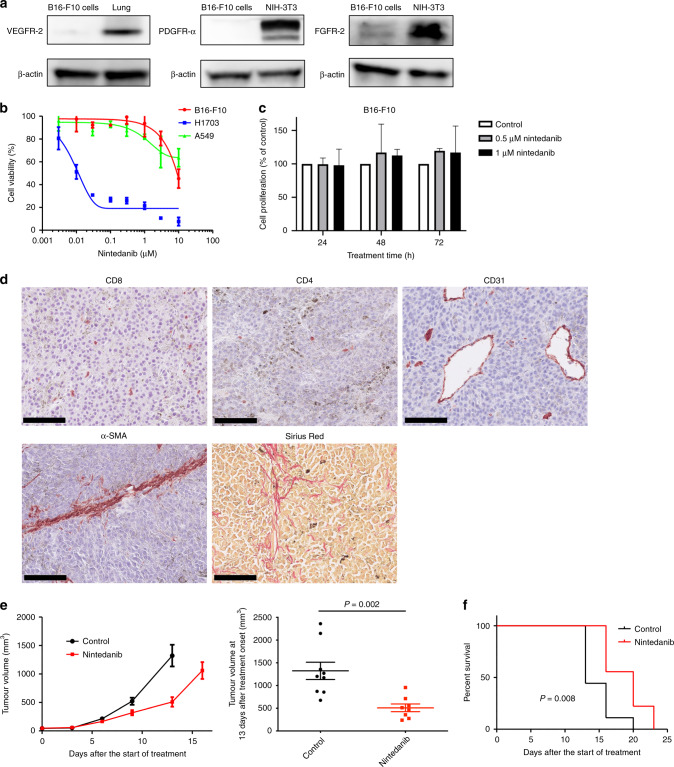
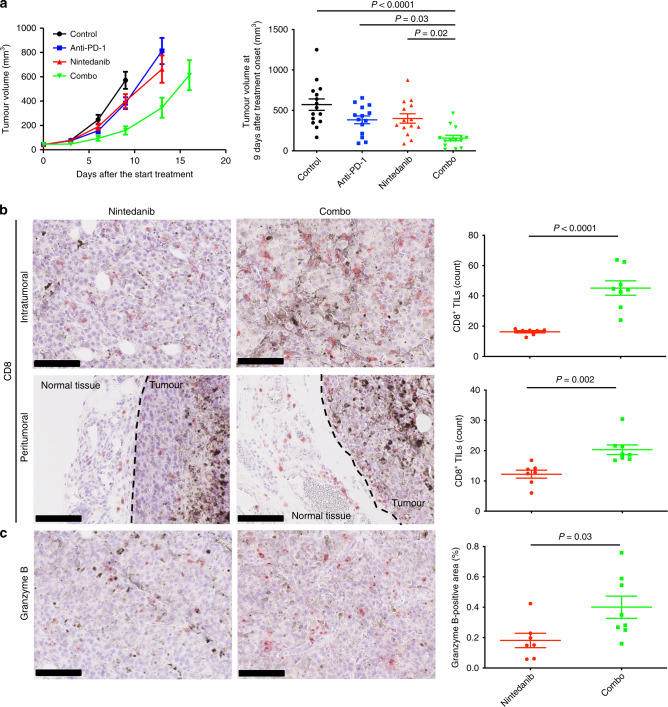
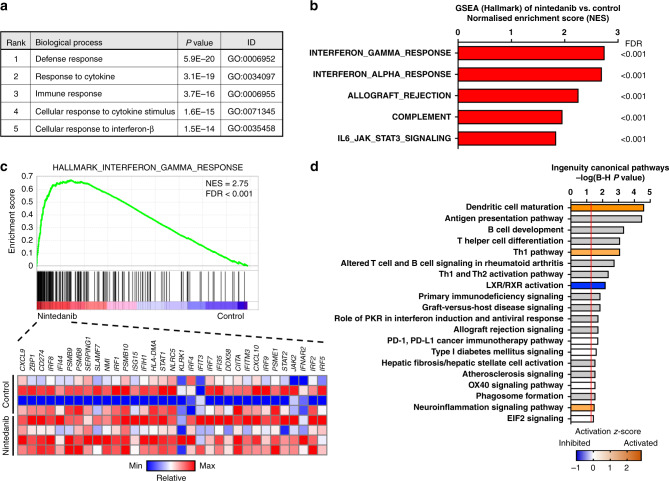
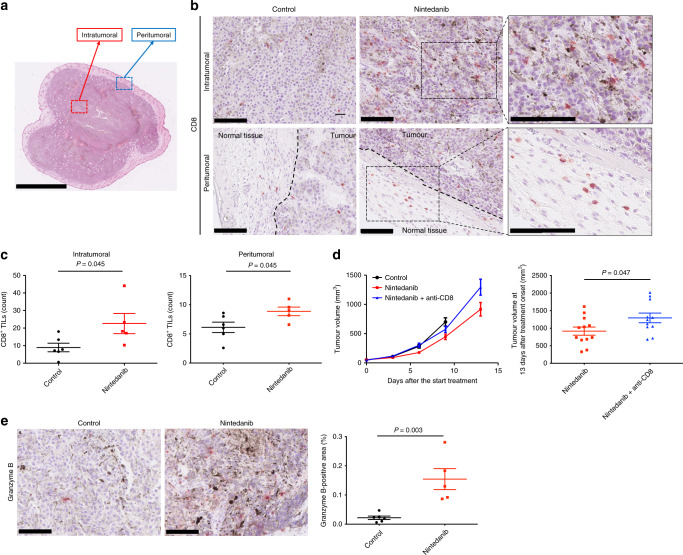
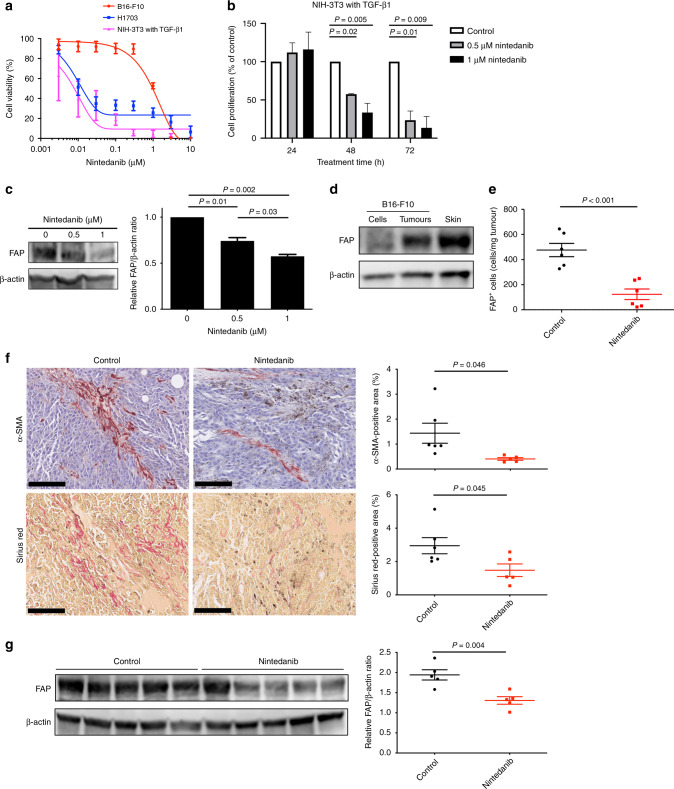
Whereas nintedanib did not suppress the growth of B16-F10 melanoma cells in vitro, it prolonged survival in a syngeneic mouse model of tumour formation by these cells, suggestive of an effect on the TME without direct cytotoxicity. Gene expression profiling indeed showed that nintedanib influenced antitumour immunity and fibrosis. Tumoural infiltration of CD8 T cells and granzyme B production were increased by nintedanib, and its antitumour activity was attenuated by antibody-mediated depletion of these cells, indicating that nintedanib suppressed tumour growth in a CD8 T cell-dependent manner. Moreover, nintedanib inhibited the proliferation and activation of fibroblasts. Finally, the combination of nintedanib with ICB showed enhanced antitumour efficacy in B16-F10 tumour-bearing mice.
Our results suggest that nintedanib targeted CAFs and thereby attenuated the immunosuppressive nature of the TME and promoted the intratumoural accumulation and activation of CD8 T cells, with these effects contributing to enhanced antitumour activity in combination with ICB.
肿瘤微环境(TME)中的癌症相关成纤维细胞(CAFs)抑制抗肿瘤免疫,而酪氨酸激酶抑制剂尼达尼布具有抗纤维化作用。
我们进行了一项临床前研究,以评估尼达尼布是否通过靶向 CAFs 增强抗肿瘤免疫,从而改善免疫检查点阻断(ICB)的反应。
虽然尼达尼布在体外没有抑制 B16-F10 黑色素瘤细胞的生长,但它延长了这些细胞在同种异体小鼠肿瘤形成模型中的存活时间,提示其对 TME 有影响而无直接细胞毒性。基因表达谱分析确实表明,尼达尼布影响抗肿瘤免疫和纤维化。尼达尼布增加了 CD8 T 细胞浸润和颗粒酶 B 的产生,其抗肿瘤活性被这些细胞的抗体耗竭所减弱,表明尼达尼布以 CD8 T 细胞依赖性方式抑制肿瘤生长。此外,尼达尼布抑制成纤维细胞的增殖和激活。最后,尼达尼布与 ICB 的联合使用在 B16-F10 荷瘤小鼠中显示出增强的抗肿瘤疗效。
我们的研究结果表明,尼达尼布靶向 CAFs,从而减弱了 TME 的免疫抑制特性,并促进了 CD8 T 细胞在肿瘤内的积累和激活,这些作用有助于与 ICB 联合增强抗肿瘤活性。