Department of integrated Traditional Chinese Medicine and Western Medicine, Zhongshan Hospital, Fudan University, Shanghai 200032, China.
Department of Traditional Chinese Medicine, Ruijin Hospital, Shanghai Jiaotong University, Shanghai 200025, China.
Cancer Biol Med. 2020 Nov 15;17(4):1002-1013. doi: 10.20892/j.issn.2095-3941.2020.0089. Epub 2020 Dec 15.
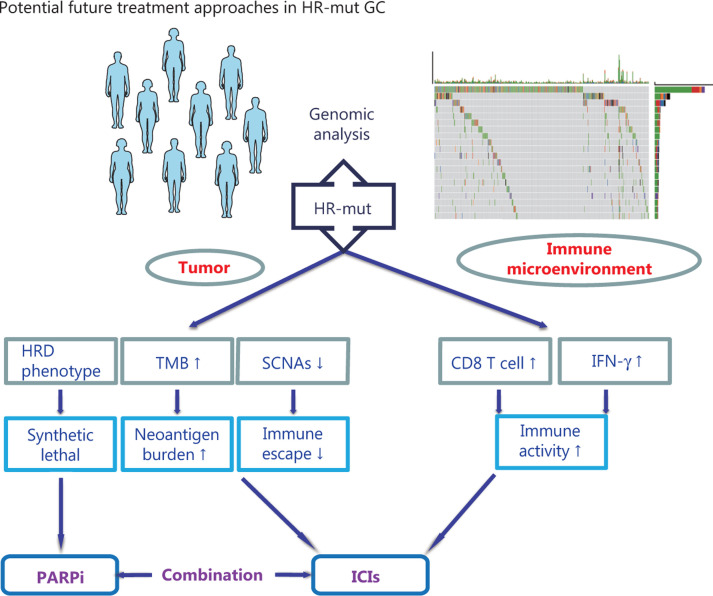
Currently, there is an urgent need to identify immunotherapeutic biomarkers to increase the benefit of immune checkpoint inhibitors (ICIs) for patients with gastric cancer (GC). Homologous recombination deficiency (HRD) can modify the tumor immune microenvironment by increasing the presence of tumor-infiltrating lymphocytes and therefore might serve as a biomarker of immunotherapeutic response. We aimed to analyze the mutational pattern of HR-associated genes in Chinese patients with GC and its relevance to the tumor immune profile and clinical immunotherapeutic response.
A panel of 543 cancer-associated genes was used to analyze genomic profiles in a cohort comprising 484 Chinese patients with GC. Correlations between HR gene mutations and tumor immunity or clinical outcomes were identified bioinformatic analysis using 2 GC genomic datasets (TCGA and MSK-IMPACT).
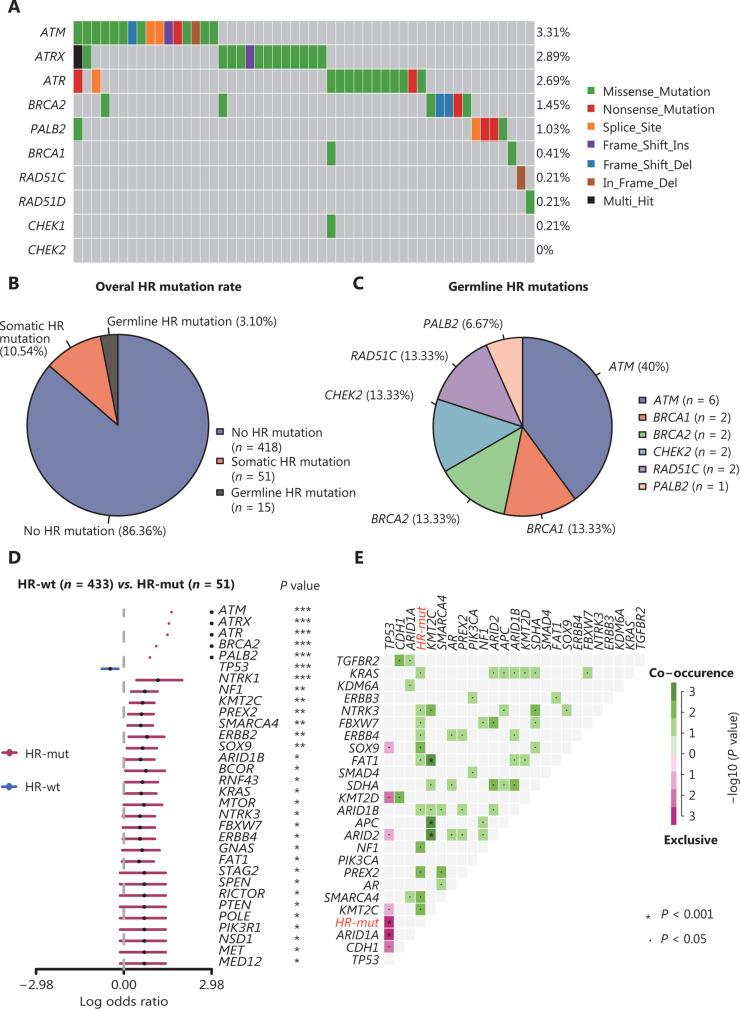
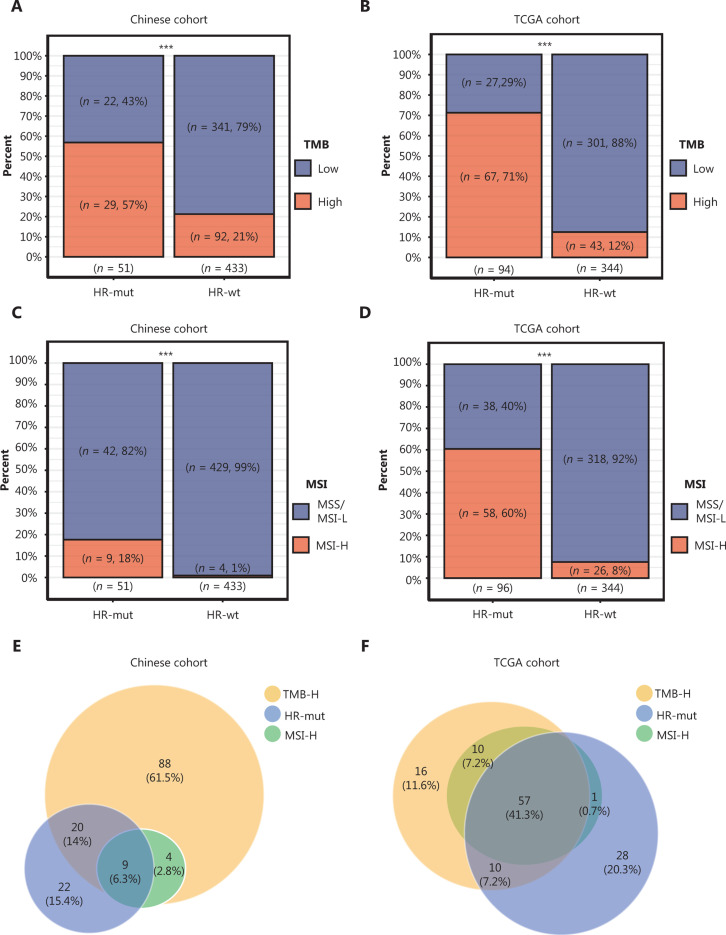
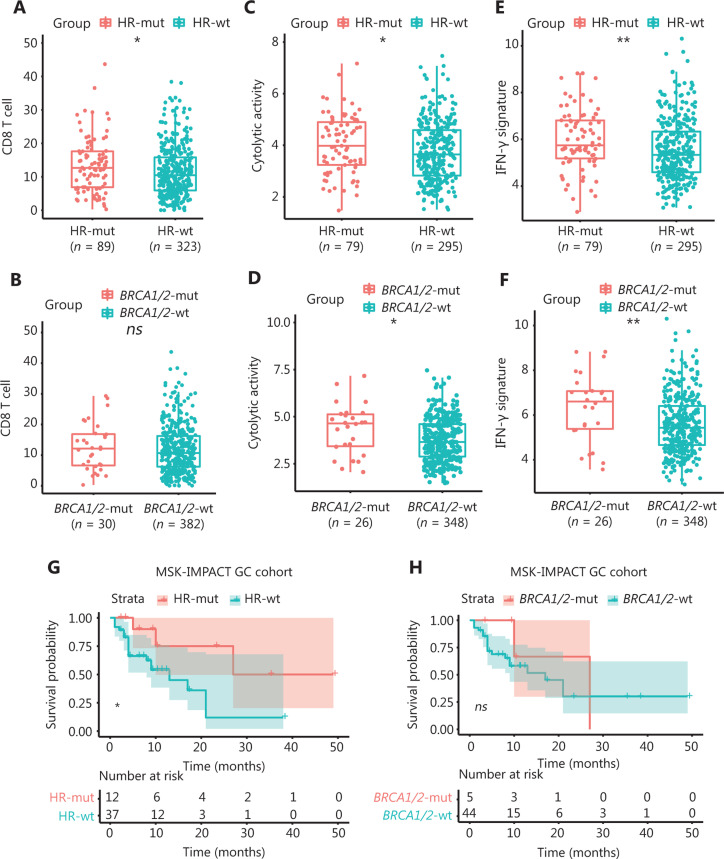
Fifty-one of the 484 (10.54%) patients carried at least one somatic mutation in an HR gene; (16/484, 3.31%) was among the most frequently mutated HR genes in the Chinese cohort. Mutations in HR genes were associated with elevated tumor mutational burden, enhanced immune activity, and microsatellite instability status. In the MSK-IMPACT cohort comprising 49 patients with stomach adenocarcinoma or gastroesophageal junction adenocarcinoma treated with ICIs, patients with HR-mut GC ( = 12) had significantly better overall survival than those with HR-wt GC ( = 37) (log-rank test, < 0.05).
Our data suggest that detection of somatic mutations in HR genes might aid in identifying patients who might benefit from immune checkpoint blockade therapy.
目前迫切需要鉴定免疫治疗生物标志物,以提高免疫检查点抑制剂(ICI)对胃癌(GC)患者的获益。同源重组缺陷(HRD)可通过增加肿瘤浸润淋巴细胞的存在来改变肿瘤免疫微环境,因此可能成为免疫治疗反应的生物标志物。我们旨在分析中国 GC 患者 HR 相关基因的突变模式及其与肿瘤免疫特征和临床免疫治疗反应的相关性。
使用包含 484 例中国 GC 患者的队列分析了 543 个癌症相关基因的基因谱。使用 2 个 GC 基因组数据集(TCGA 和 MSK-IMPACT)进行生物信息学分析,确定 HR 基因突变与肿瘤免疫或临床结局之间的相关性。
在 484 例患者中,有 51 例(10.54%)至少携带一个 HR 基因的体细胞突变;在 HR 基因中, (16/484,3.31%)突变频率最高。HR 基因的突变与肿瘤突变负担增加、免疫活性增强和微卫星不稳定状态相关。在包含 49 例接受 ICI 治疗的胃腺癌或胃食管结合部腺癌患者的 MSK-IMPACT 队列中,HR 突变 GC 患者(=12)的总生存期明显长于 HR 野生型 GC 患者(=37)(对数秩检验,<0.05)。
我们的数据表明,检测 HR 基因的体细胞突变可能有助于识别可能受益于免疫检查点阻断治疗的患者。