Hartmann Konstantin, Brecht Michael
Bernstein Center for Computational Neuroscience Berlin, Humboldt-Universität zu Berlin, Philippstr. 13, Haus 6, 10115 Berlin, Germany.
iScience. 2020 Nov 16;23(12):101804. doi: 10.1016/j.isci.2020.101804. eCollection 2020 Dec 18.
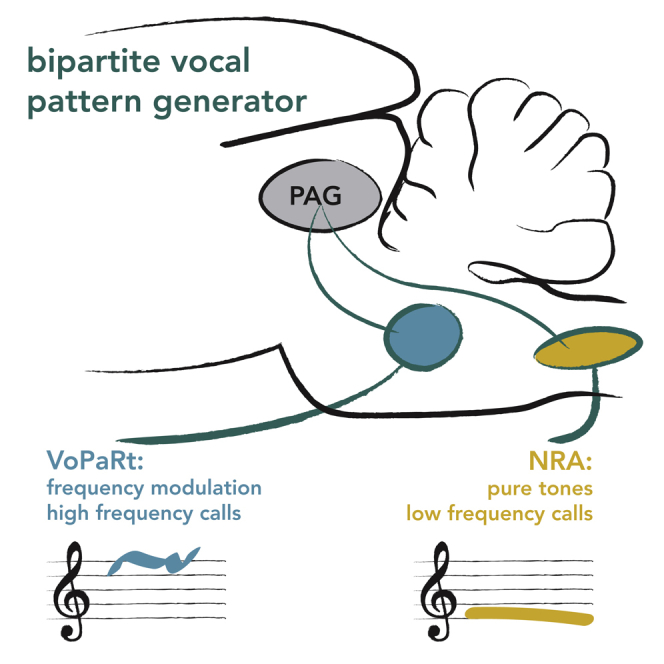
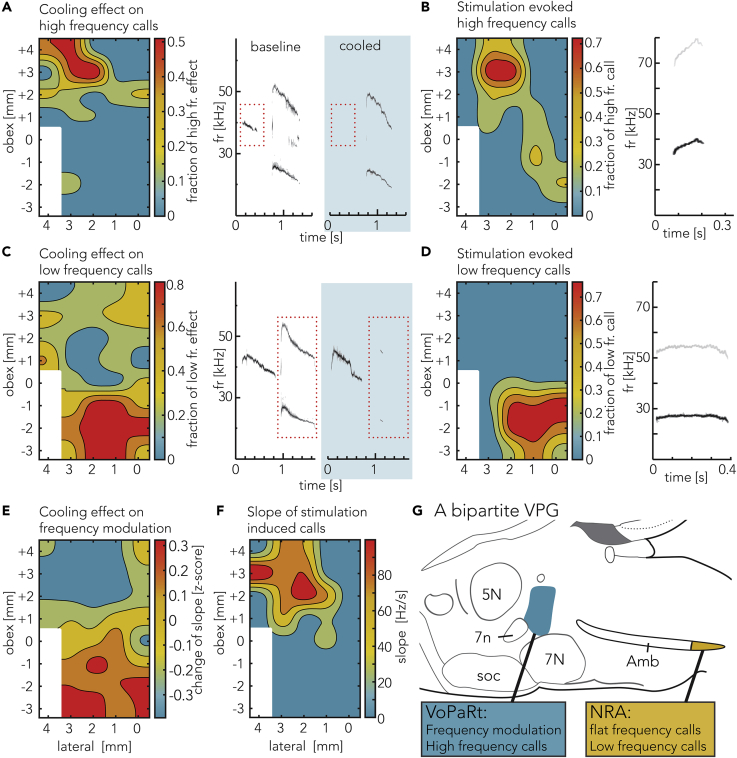
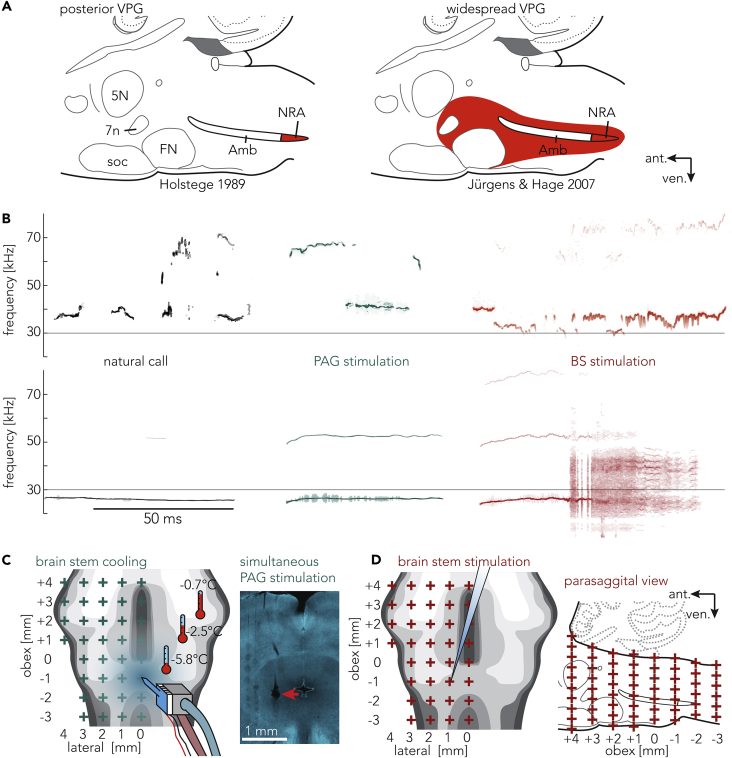
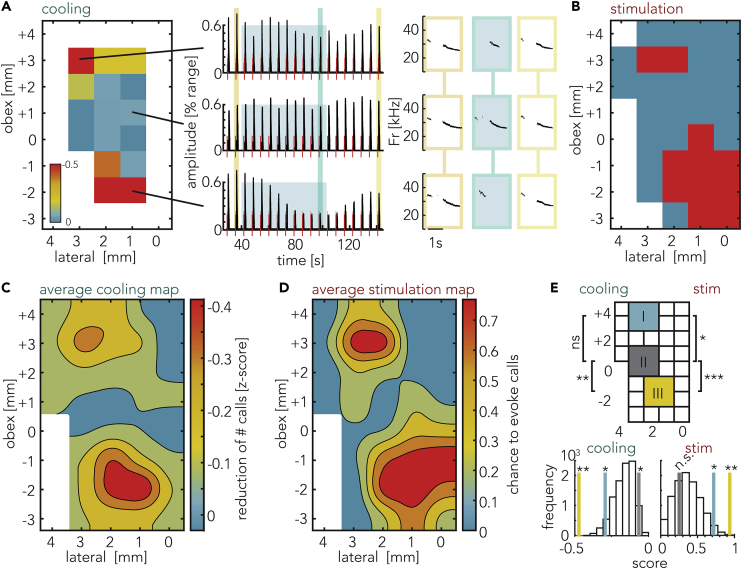
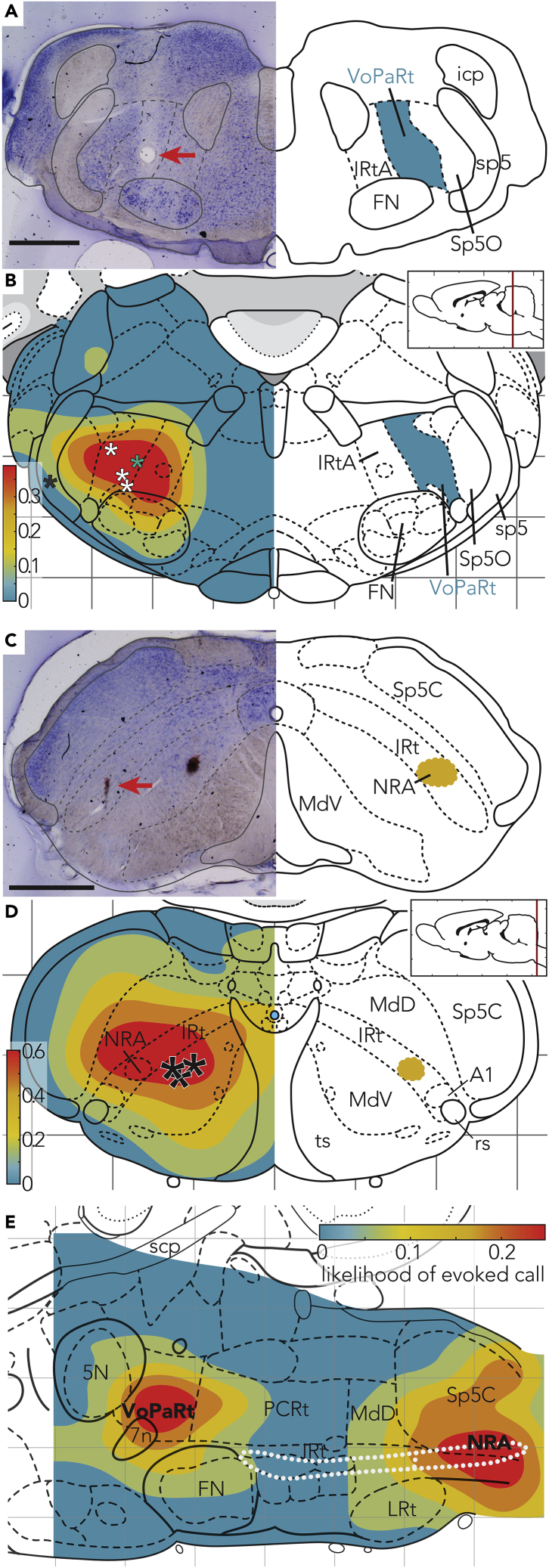
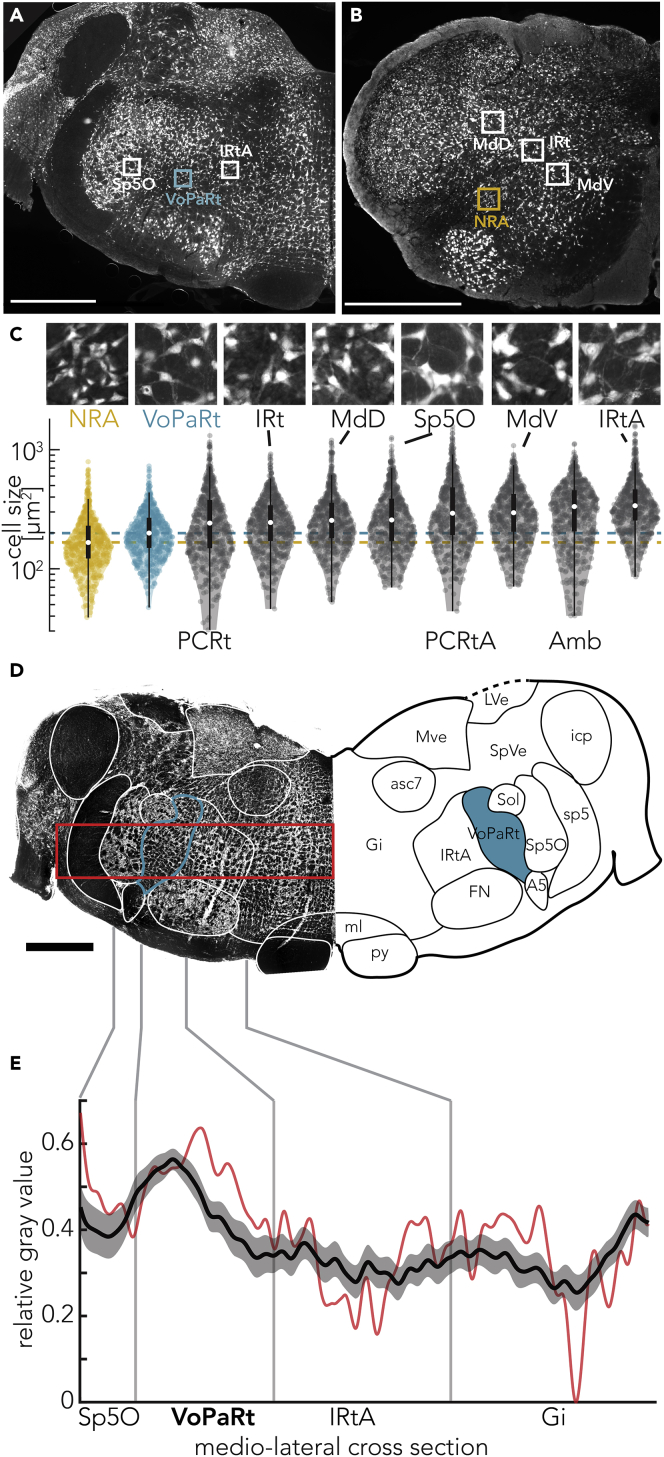
The mammalian vocal pattern generator is situated in the brainstem but its exact structure is debated. We mapped these circuits in rats by cooling and microstimulation. Local cooling disrupted call production above an anterior and a posterior brainstem position. Anterior cooling affected predominantly high-frequency calls, whereas posterior cooling affected low-frequency calls. Electrical microstimulation of the anterior part led to modulated high-frequency calls, whereas microstimulation of the posterior part led to flat, low-frequency calls. At intermediate positions cooling did not affect calls and stimulation did not elicit calls. The anterior region corresponds to a subsection of the parvicellular reticular formation that we term the vocalization parvicellular reticular formation (VoPaRt). The posterior vocalization sites coincide with the nucleus retroambiguus (NRA). VoPaRt and NRA neurons were very small and the VoPaRt was highly myelinated, suggestive of high-speed processing. Our data suggest an anatomically and functionally bipartite vocal pattern generator.
哺乳动物的发声模式发生器位于脑干,但它的确切结构仍存在争议。我们通过冷却和微刺激对大鼠的这些神经回路进行了映射。局部冷却会破坏脑干前部和后部位置上方的叫声产生。前部冷却主要影响高频叫声,而后部冷却影响低频叫声。对前部进行电微刺激会导致高频叫声受到调制,而对后部进行微刺激则会导致单调的低频叫声。在中间位置,冷却不影响叫声,刺激也不会引发叫声。前部区域对应于小细胞网状结构的一个子部分,我们将其称为发声小细胞网状结构(VoPaRt)。后部发声部位与疑后核(NRA)重合。VoPaRt和NRA神经元非常小,且VoPaRt有高度髓鞘化,这表明其具有高速处理能力。我们的数据表明存在一个在解剖学和功能上都由两部分组成的发声模式发生器。