Martina Zafferani, Christina Haddad, Le Luo, Jesse Davila-Calderon, Liang Yuan-Chiu, Christian Shema Mugisha, Monaghan Adeline G, Kennedy Andrew A, Yesselman Joseph D, Gifford Robert R, Tai Andrew W, Kutluay Sebla B, Li Mei-Ling, Brewer Gary, Tolbert Blanton S, Hargrove Amanda E
Chemistry Department, Duke University, 124 Science Drive; Durham, NC USA 27705.
Department of Chemistry, Case Western Reserve University, Cleveland OH 441106.
bioRxiv. 2020 Dec 6:2020.12.05.409821. doi: 10.1101/2020.12.05.409821.
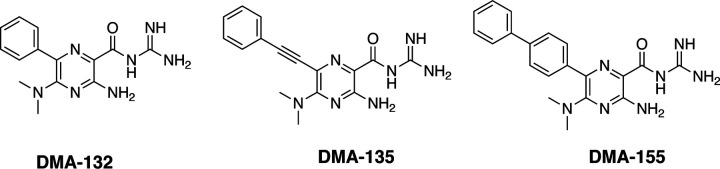
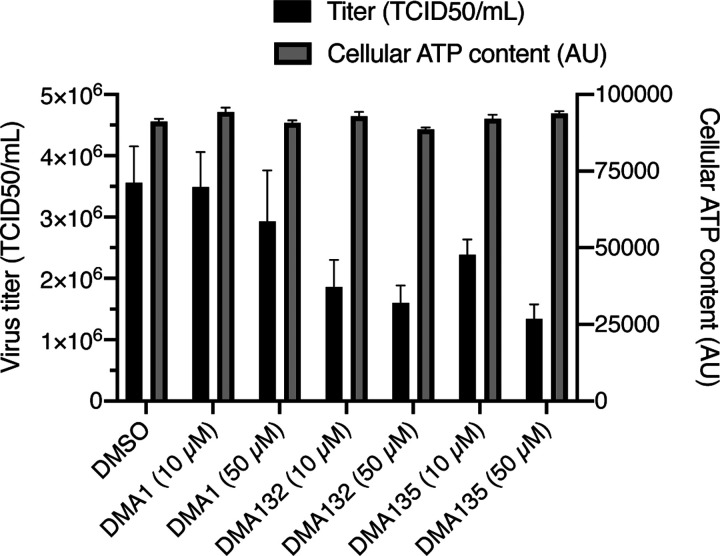
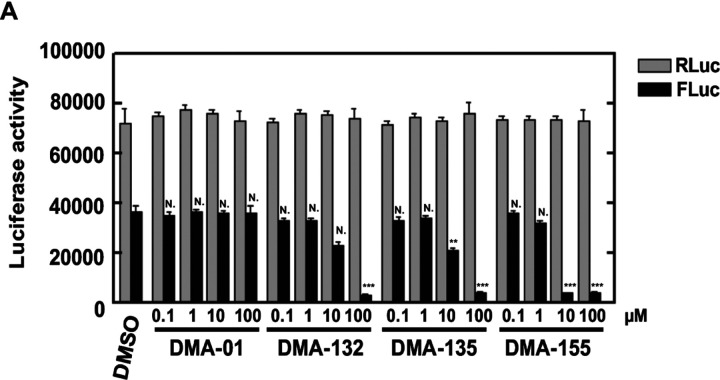
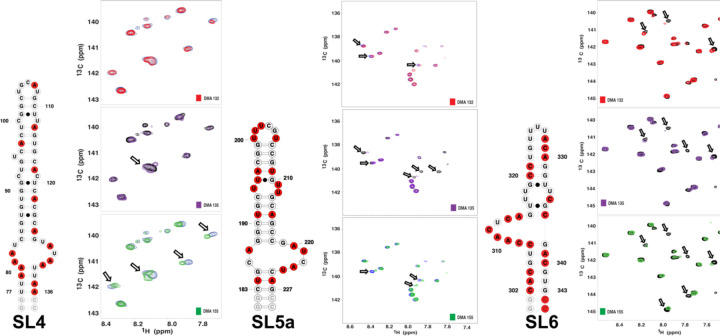
The SARS-CoV-2 pandemic, and the likelihood of future coronavirus pandemics, has rendered our understanding of coronavirus biology more essential than ever. Small molecule chemical probes offer to both reveal novel aspects of virus replication and to serve as leads for antiviral therapeutic development. The RNA-biased amiloride scaffold was recently tuned to target a viral RNA structure critical for translation in enterovirus 71, ultimately uncovering a novel mechanism to modulate positive-sense RNA viral translation and replication. Analysis of CoV RNA genomes reveal many conserved RNA structures in the 5'-UTR and proximal region critical for viral translation and replication, including several containing bulge-like secondary structures suitable for small molecule targeting. Following phylogenetic conservation analysis of this region, we screened an amiloride-based small molecule library against a less virulent human coronavirus, OC43, to identify lead ligands. Amilorides inhibited OC43 replication as seen in viral plaque assays. Select amilorides also potently inhibited replication competent SARS-CoV-2 as evident in the decreased levels of cell free virions in cell culture supernatants of treated cells. Reporter screens confirmed the importance of RNA structures in the 5'-end of the viral genome for small molecule activity. Finally, NMR chemical shift perturbation studies of the first six stem loops of the 5'-end revealed specific amiloride interactions with stem loops 4, 5a, and 6, all of which contain bulge like structures and were predicted to be strongly bound by the lead amilorides in retrospective docking studies. Taken together, the use of multiple orthogonal approaches allowed us to identify the first small molecules aimed at targeting RNA structures within the 5'-UTR and proximal region of the CoV genome. These molecules will serve as chemical probes to further understand CoV RNA biology and can pave the way for the development of specific CoV RNA-targeted antivirals.
严重急性呼吸综合征冠状病毒2(SARS-CoV-2)大流行以及未来冠状病毒大流行的可能性,使我们对冠状病毒生物学的理解比以往任何时候都更加重要。小分子化学探针既能揭示病毒复制的新方面,又能作为抗病毒治疗药物开发的先导。最近对基于RNA的阿米洛利支架进行了调整,以靶向对肠道病毒71型翻译至关重要的病毒RNA结构,最终揭示了一种调节正义RNA病毒翻译和复制的新机制。对冠状病毒RNA基因组的分析揭示了5'-非翻译区(UTR)和近端区域中许多对病毒翻译和复制至关重要的保守RNA结构,包括几个含有适合小分子靶向的凸起样二级结构的结构。在对该区域进行系统发育保守性分析之后,我们针对一种毒性较低的人类冠状病毒OC43筛选了一个基于阿米洛利的小分子文库,以鉴定先导配体。在病毒空斑试验中可以看到,阿米洛利抑制了OC43的复制。在处理过的细胞的细胞培养上清液中,游离病毒粒子水平降低,这表明某些阿米洛利也能有效抑制有复制能力的SARS-CoV-2。报告基因筛选证实了病毒基因组5'-端的RNA结构对小分子活性的重要性。最后,对5'-端前六个茎环的核磁共振化学位移扰动研究揭示了阿米洛利与茎环4、5a和6的特异性相互作用,所有这些茎环都含有凸起样结构,并且在回顾性对接研究中预计会与先导阿米洛利紧密结合。综上所述,使用多种正交方法使我们能够鉴定出首批旨在靶向冠状病毒基因组5'-UTR和近端区域内RNA结构的小分子。这些分子将作为化学探针,以进一步了解冠状病毒RNA生物学,并可为开发针对冠状病毒RNA的特异性抗病毒药物铺平道路。