College of Animal Sciences, Jilin University, Changchun 130062, China.
Biomolecules. 2020 Dec 8;10(12):1645. doi: 10.3390/biom10121645.
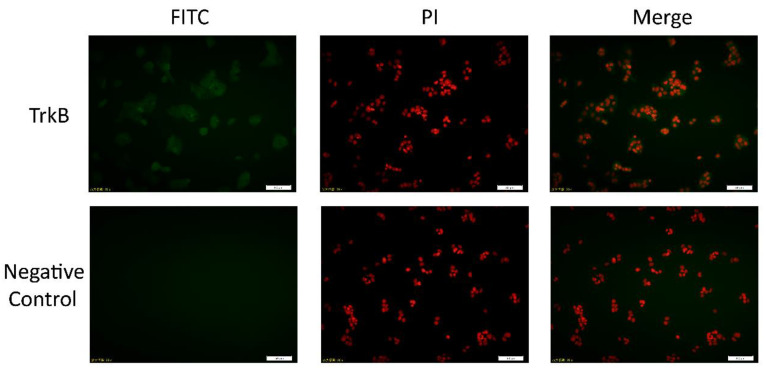
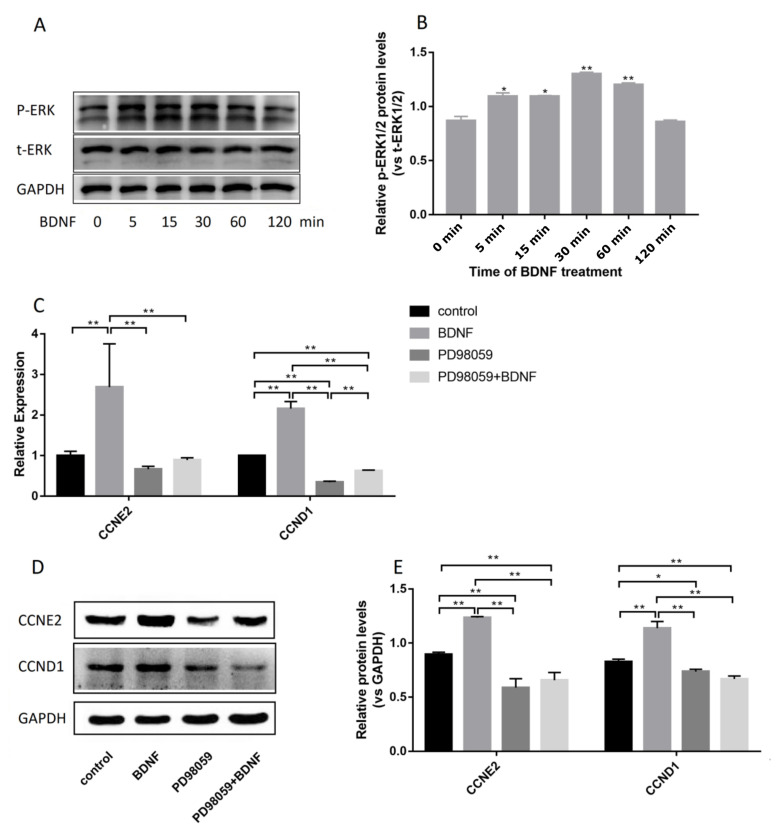
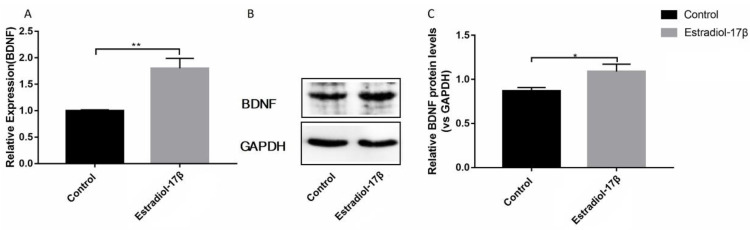
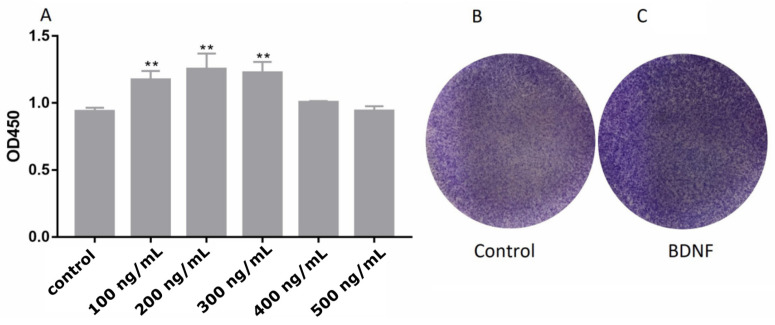
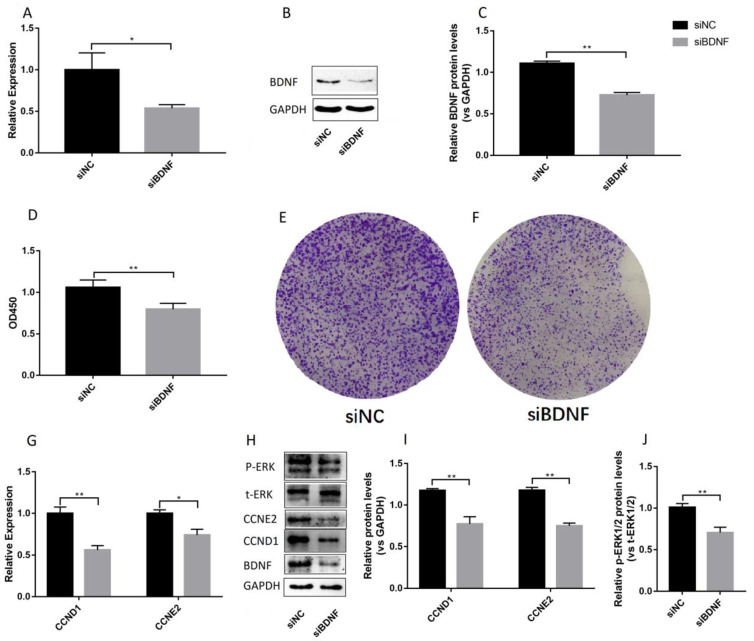
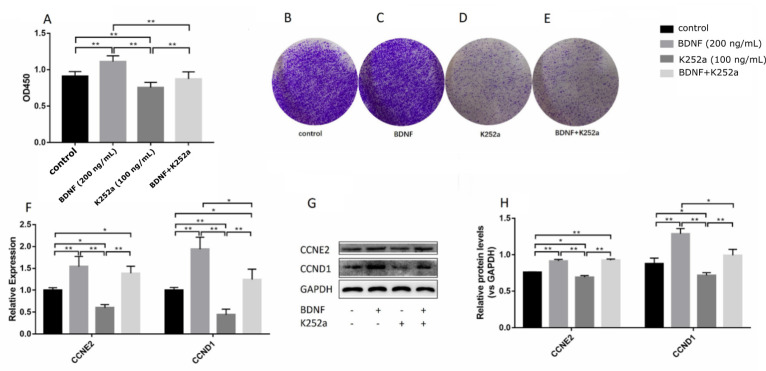
(1) Background: Endometrial regulation is a necessary condition for maintaining normal uterine physiology, which is driven by many growth factors. Growth factors produced in the endometrium are thought to be related to the proliferation of endometrial cells induced by estradiol-17β (E). In this study, we found that E can induce the secretion of brain-derived neurotrophic factor (BDNF) in Ishikawa cells (the cells of an endometrial cell line). Furthermore, Ishikawa cells were used in exploring the regulatory role of BDNF in endometrial cells and to clarify the potential mechanism. (2) Methods: Ishikawa cells were treated with different concentrations of BDNF (100, 200, 300, 400, and 500 ng/mL). The mRNA expression levels of various proliferation-related genes were detected through quantitative reverse transcription polymerase chain reaction, and the expression of various proliferation-related genes was detected by knocking out BDNF or inhibiting the binding of BDNF to its receptor TrkB. The expression levels of various proliferation-related genes were detected by performing Western blotting on the TrkB-ERK1/2 signaling pathway. (3) Results: Exogenous BDNF promoted the growth of the Ishikawa cells, but the knocking down of BDNF or the inhibition of TrkB reduced their growth. Meanwhile, BDNF enhanced cell viability and increased the expression of proliferation-related genes, including cyclin D1 and cyclin E2. More importantly, the BDNF-induced proliferation of the Ishikawa cells involved the ERK1/2 signaling pathway. (4) Conclusions: The stimulating effect of exogenous E on the expression of BDNF in the uterus and the action of BDNF promoted the proliferation of the Ishikawa cells through the TrkB-ERK1/2 signal pathway.
(1)背景:子宫内膜调节是维持正常子宫生理学的必要条件,这是由许多生长因子驱动的。人们认为,子宫内膜中产生的生长因子与雌二醇-17β(E)诱导的子宫内膜细胞增殖有关。在这项研究中,我们发现 E 可以诱导 Ishikawa 细胞(一种子宫内膜细胞系)分泌脑源性神经营养因子(BDNF)。此外,还使用 Ishikawa 细胞来探索 BDNF 在子宫内膜细胞中的调节作用,并阐明潜在的机制。(2)方法:用不同浓度的 BDNF(100、200、300、400 和 500ng/mL)处理 Ishikawa 细胞。通过定量逆转录聚合酶链反应检测各种增殖相关基因的 mRNA 表达水平,并通过敲除 BDNF 或抑制 BDNF 与其受体 TrkB 的结合来检测各种增殖相关基因的表达。通过对 TrkB-ERK1/2 信号通路进行 Western blot 检测各种增殖相关基因的表达水平。(3)结果:外源性 BDNF 促进了 Ishikawa 细胞的生长,但 BDNF 的敲低或 TrkB 的抑制降低了它们的生长。同时,BDNF 增强了细胞活力并增加了增殖相关基因的表达,包括细胞周期蛋白 D1 和细胞周期蛋白 E2。更重要的是,BDNF 诱导的 Ishikawa 细胞增殖涉及 ERK1/2 信号通路。(4)结论:外源性 E 对子宫中 BDNF 表达的刺激作用以及 BDNF 的作用通过 TrkB-ERK1/2 信号通路促进了 Ishikawa 细胞的增殖。