Laboratory of Microbiology, Department of Disease Control, Faculty of Veterinary Medicine, Hokkaido University, Sapporo 060-0818, Japan.
Virology Service, Central Veterinary Laboratory of Kinshasa, Ministry of Fisheries and Livestock, Kinshasa I/Gombe 012, Democratic Republic of the Congo.
Viruses. 2020 Dec 8;12(12):1407. doi: 10.3390/v12121407.
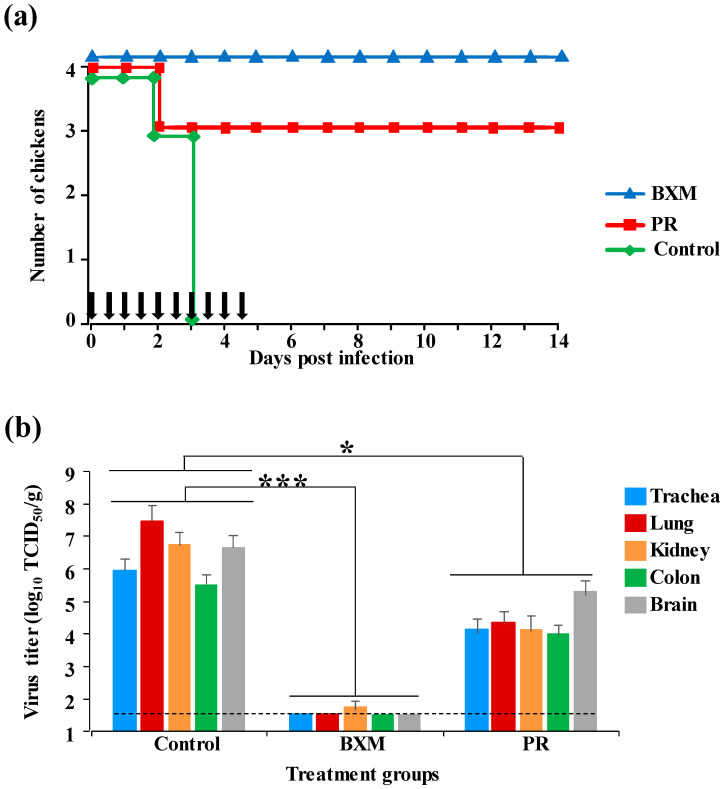
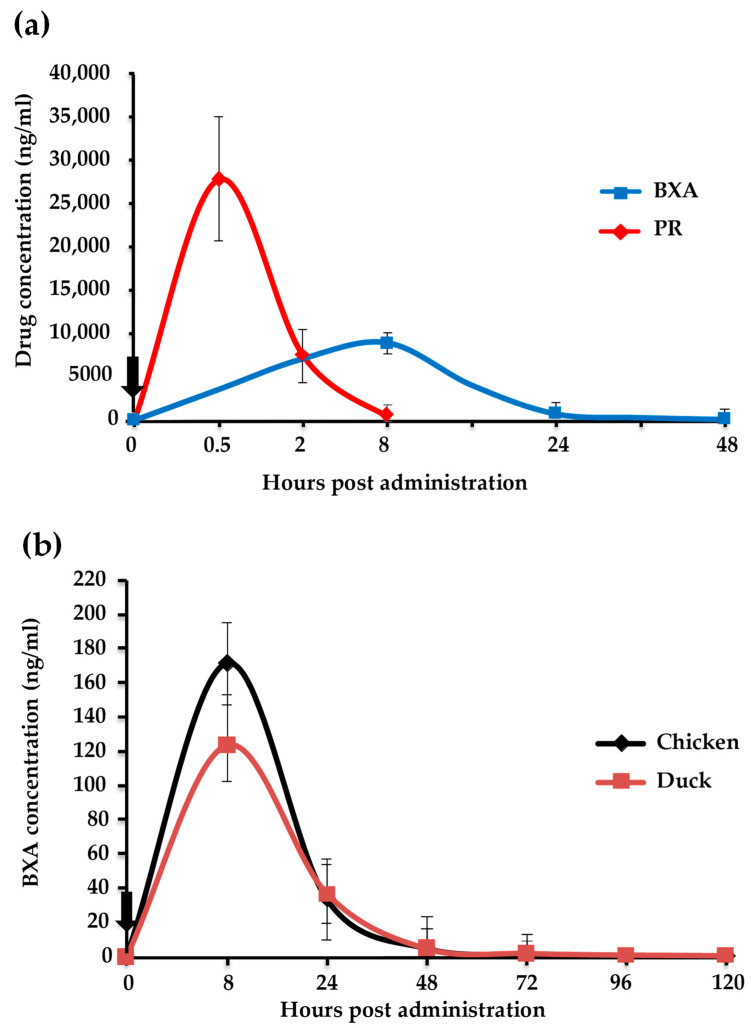
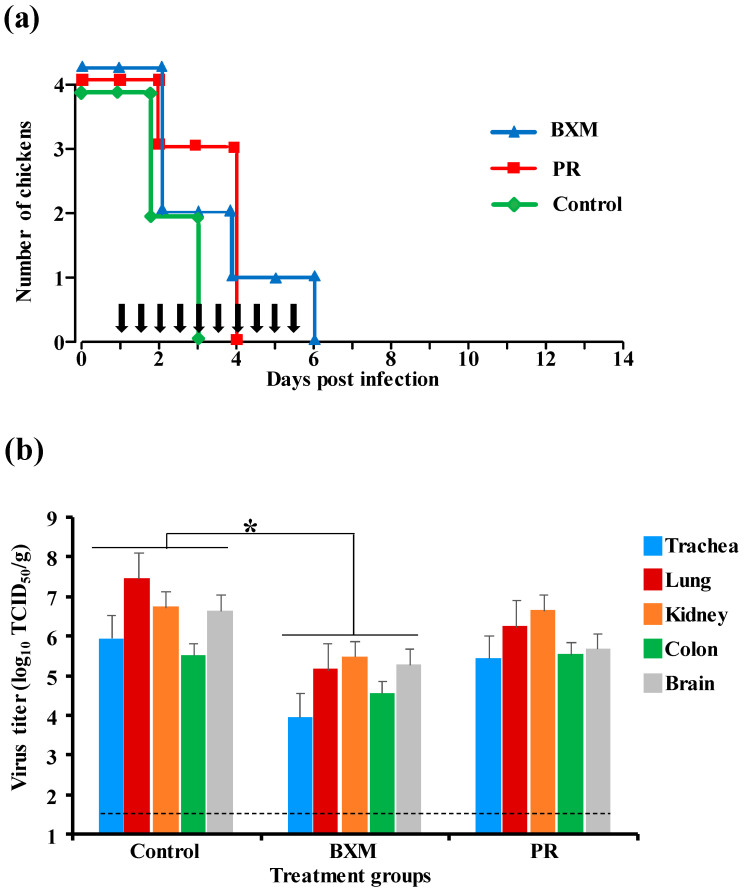
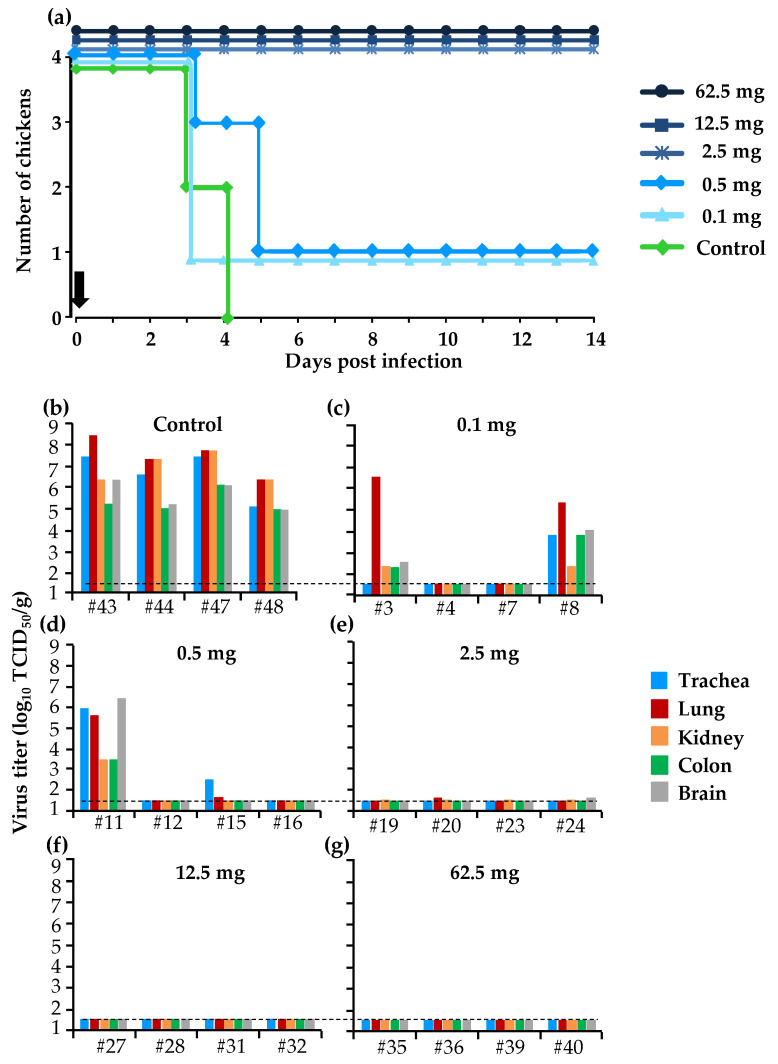
Control measures in the case of high pathogenicity avian influenza (HPAI) outbreaks in poultry include culling, surveillance, and biosecurity; wild birds in captivity may also be culled, although some rare bird species should be rescued for conservation. In this study, two anti-influenza drugs, baloxavir marboxil (BXM) and peramivir (PR), used in humans, were examined in treating HPAI in birds, using chickens as a model. Chickens were infected with H5N6 HPAI virus and were treated immediately or 24 h from challenge with 20 mg/kg BXM or PR twice a day for five days. As per our findings, BXM significantly reduced virus replication in organs and provided full protection to chickens compared with that induced by PR. In the 24-h-delayed treatment, neither drug completely inhibited virus replication nor ensured the survival of infected chickens. A single administration of 2.5 mg/kg of BXM was determined as the minimum dose required to fully protect chickens from HPAI virus; the concentration of baloxavir acid, the active form of BXM, in chicken blood at this dose was sufficient for a 48 h antiviral effect post-administration. Thus, these data can be a starting point for the use of BXM and PR in treating captive wild birds infected with HPAI virus.
高致病性禽流感(HPAI)疫情暴发时,家禽控制措施包括扑杀、监测和生物安全;圈养野鸟也可能被扑杀,尽管一些珍稀鸟类物种应被拯救以进行保护。在这项研究中,使用鸡作为模型,研究了两种在人类中使用的抗流感药物,巴洛沙韦(BXM)和帕拉米韦(PR),用于治疗鸟类的 HPAI。鸡感染 H5N6 HPAI 病毒,感染后立即或挑战后 24 小时用 20mg/kg BXM 或 PR 治疗,每天两次,连续五天。根据我们的研究结果,BXM 可显著降低器官中的病毒复制,与 PR 诱导的相比,可完全保护鸡。在 24 小时延迟治疗中,两种药物均不能完全抑制病毒复制,也不能保证感染鸡的存活。单次给予 2.5mg/kg 的 BXM 被确定为完全保护鸡免受 HPAI 病毒感染的最小剂量;在此剂量下,鸡血液中的巴洛沙韦酸(BXM 的活性形式)浓度足以在给药后 48 小时发挥抗病毒作用。因此,这些数据可以为 BXM 和 PR 治疗感染 HPAI 病毒的圈养野生鸟类提供依据。