Melbourne School of Population and Global Health, University of Melbourne, 207 Bouverie street, Melbourne, 3053, Australia.
BMC Med. 2020 Dec 11;18(1):384. doi: 10.1186/s12916-020-01840-2.
Valid cause of death data are essential for health policy formation. The quality of medical certification of cause of death (MCCOD) by physicians directly affects the utility of cause of death data for public policy and hospital management. Whilst training in correct certification has been provided for physicians and medical students, the impact of training is often unknown. This study was conducted to systematically review and meta-analyse the effectiveness of training interventions to improve the quality of MCCOD.
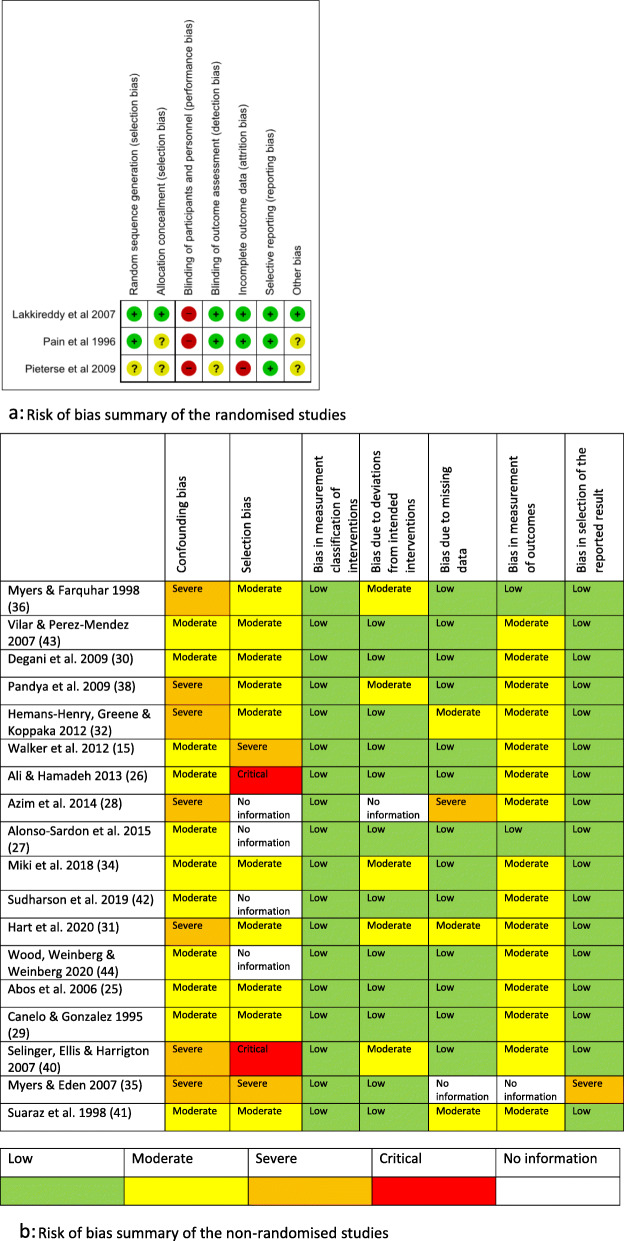
This review was registered in the International Prospective Register of Systematic Reviews (PROSPERO; Registration ID: CRD42020172547) and followed Preferred Reporting Items for Systematic Reviews and Meta-Analyses (PRISMA) guidelines. CENTRAL, Ovid MEDLINE and Ovid EMBASE databases were searched using pre-defined search strategies covering the eligibility criteria. Studies were selected using four screening questions using the Distiller-SR software. Risk of bias assessments were conducted with GRADE recommendations and ROBINS-I criteria for randomised and non-randomised interventions, respectively. Study selection, data extraction and bias assessments were performed independently by two reviewers with a third reviewer to resolve conflicts. Clinical, methodological and statistical heterogeneity assessments were conducted. Meta-analyses were performed with Review Manager 5.4 software using the 'generic inverse variance method' with risk difference as the pooled estimate. A 'summary of findings' table was prepared using the 'GRADEproGDT' online tool. Sensitivity analyses and narrative synthesis of the findings were also performed.
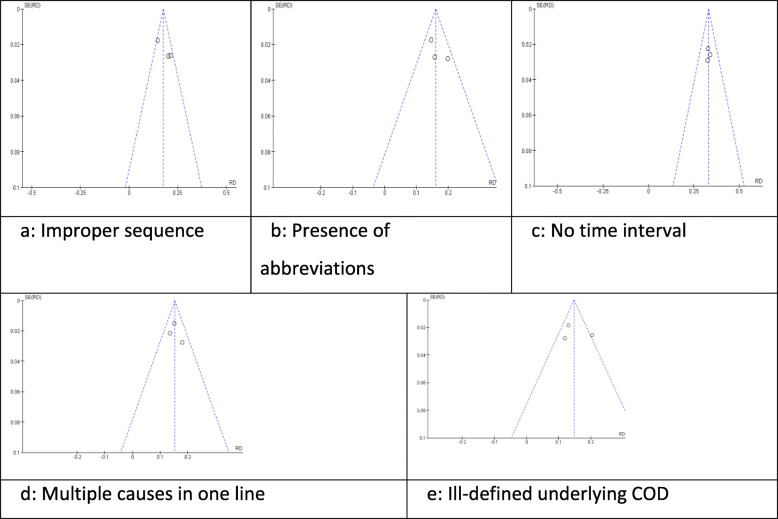
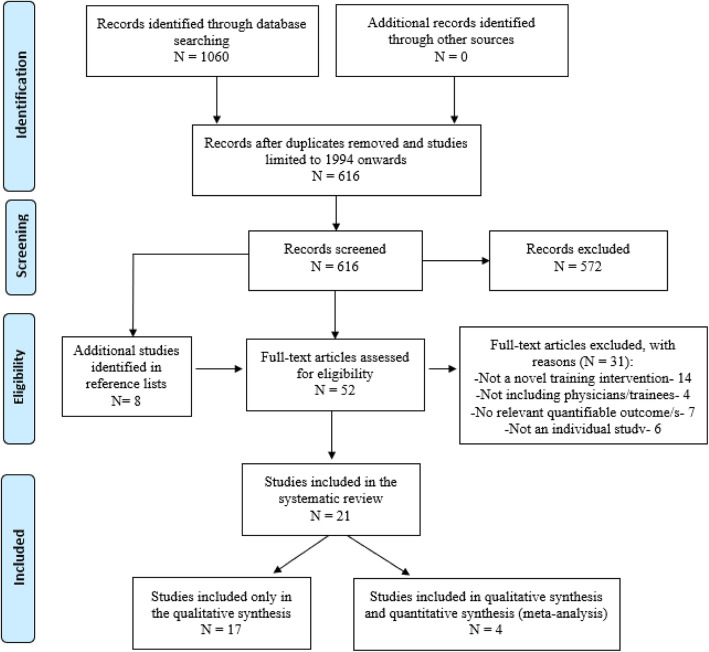
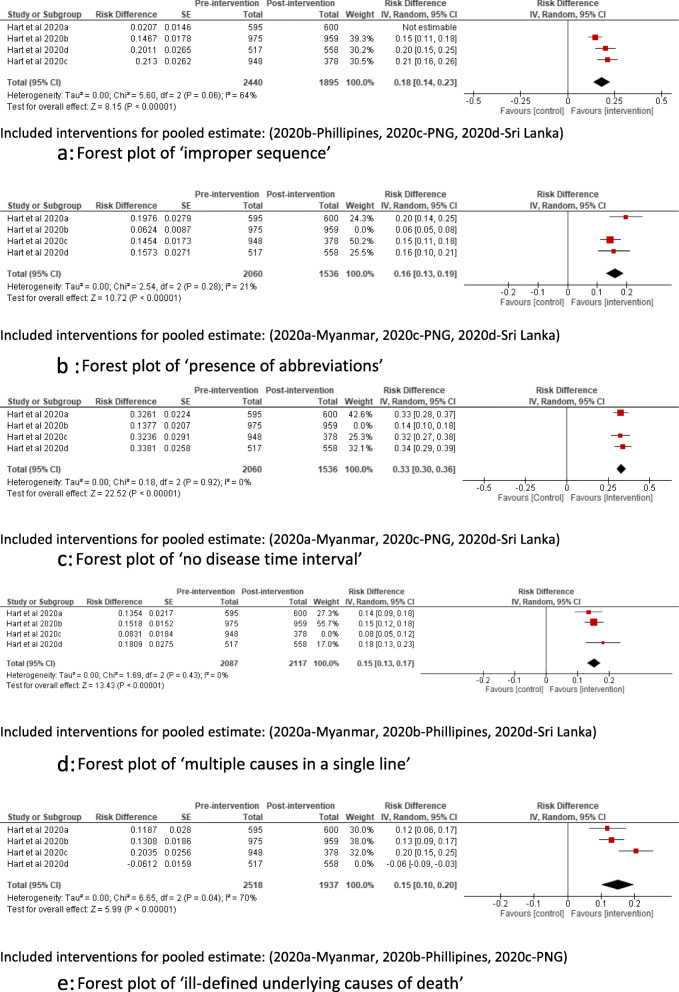
After de-duplication, 616 articles were identified and 21 subsequently selected for synthesis of findings; four underwent meta-analysis. The meta-analyses indicated that selected training interventions significantly reduced error rates among participants, with pooled risk differences of 15-33%. Robustness was identified with the sensitivity analyses. The findings of the narrative synthesis were similarly suggestive of favourable outcomes for both physicians and medical trainees.
Training physicians in correct certification improves the accuracy and policy utility of cause of death data. Investment in MCCOD training activities should be considered as a key component of strategies to improve vital registration systems given the potential of such training to substantially improve the quality of cause of death data.
有效的死因数据对于卫生政策的制定至关重要。医生对死因的医学认证(MCCOD)的质量直接影响死因数据在公共政策和医院管理中的应用。尽管已经为医生和医学生提供了正确认证的培训,但培训的效果往往是未知的。本研究旨在系统地回顾和荟萃分析培训干预措施以提高 MCCOD 质量的有效性。
本综述在国际前瞻性系统评价登记处(PROSPERO;登记号:CRD42020172547)进行,并遵循系统评价和荟萃分析的首选报告项目(PRISMA)指南。使用预定义的搜索策略,涵盖纳入标准,在 CENTRAL、Ovid MEDLINE 和 Ovid EMBASE 数据库中进行搜索。使用 Distiller-SR 软件通过四个筛选问题选择研究。使用 GRADE 建议和 ROBINS-I 标准分别对随机和非随机干预进行风险偏倚评估。两名评审员独立进行研究选择、数据提取和偏倚评估,如有冲突则由第三名评审员解决。进行临床、方法学和统计学异质性评估。使用 Review Manager 5.4 软件,采用“通用倒数方差法”,以风险差作为汇总估计值进行荟萃分析。使用“GRADEproGDT”在线工具准备“研究结果总结”表。还进行了敏感性分析和发现的叙述性综合。
经过去重处理,确定了 616 篇文章,随后有 21 篇文章被纳入研究结果综合分析,其中 4 篇进行了荟萃分析。荟萃分析表明,选定的培训干预措施显著降低了参与者的错误率,汇总的风险差异为 15-33%。敏感性分析确定了稳健性。叙述性综合的结果也同样表明,医生和医学实习生都能从中获得良好的效果。
培训医生正确认证可以提高死因数据的准确性和政策实用性。鉴于此类培训有可能显著提高死因数据的质量,应将 MCCOD 培训活动的投资视为改善生命登记系统的战略的关键组成部分。