Surgery Branch, Center for Cancer Research, National Cancer Institute, National Institutes of Health, Bethesda, MD 20892, USA.
Immunodynamics Group, Center for Cancer Research, National Cancer Institute, National Institutes of Health, Bethesda, MD 20892, USA.
Science. 2020 Dec 11;370(6522):1328-1334. doi: 10.1126/science.abb9847.
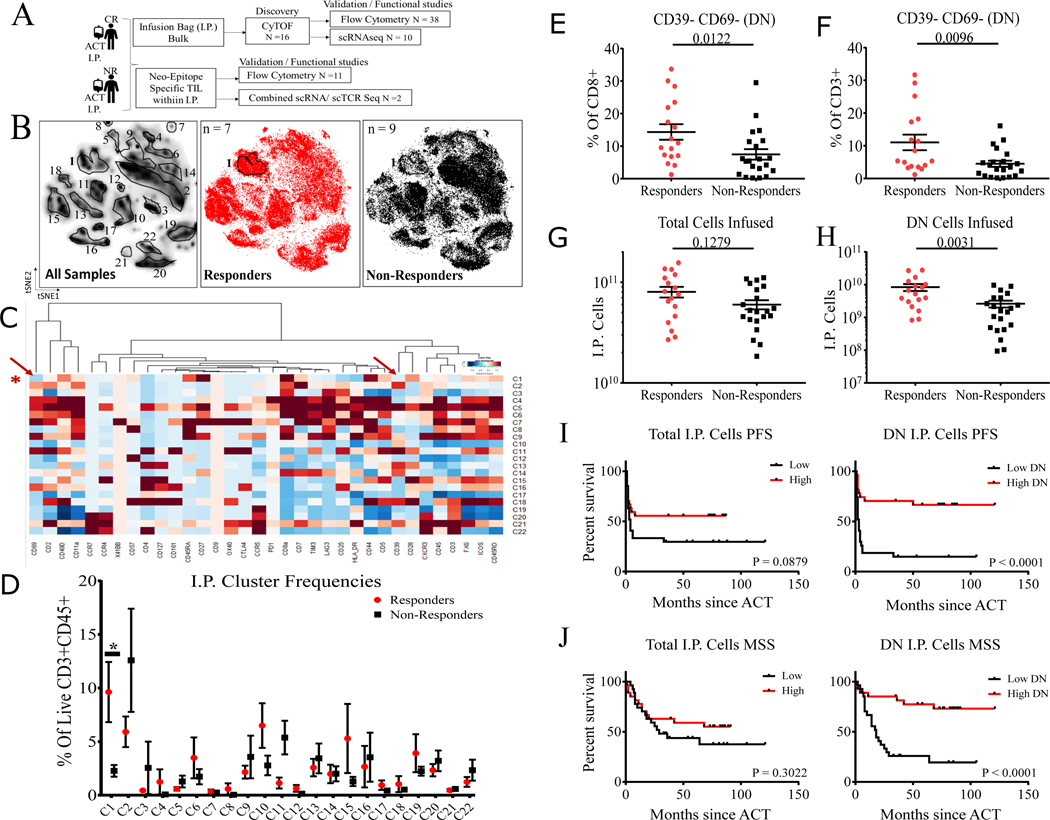
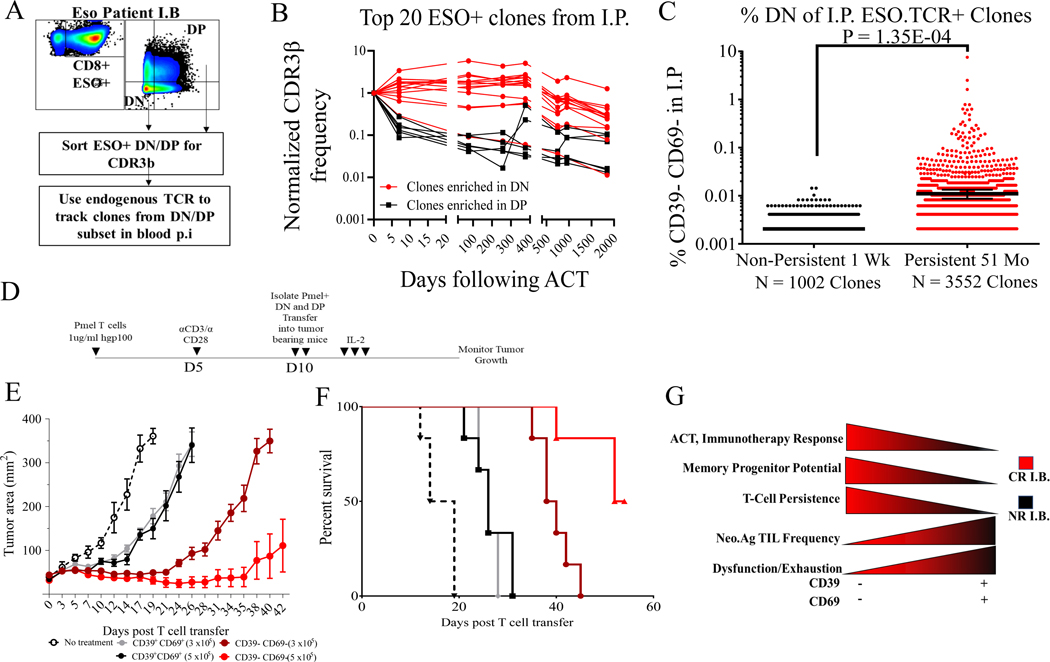
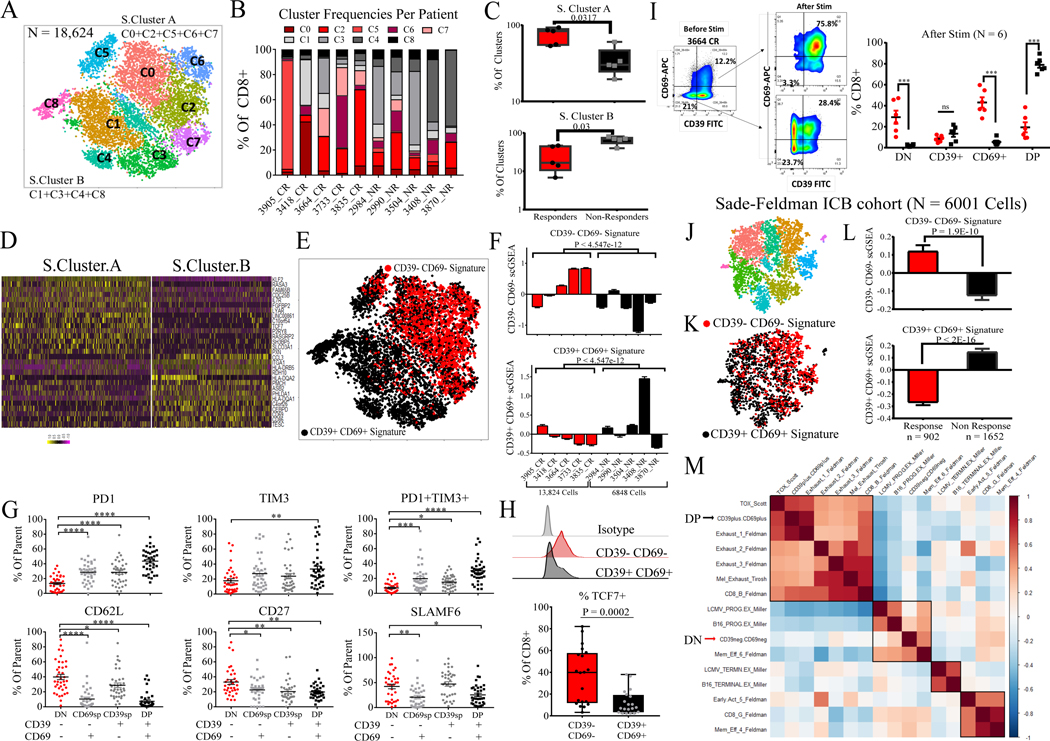
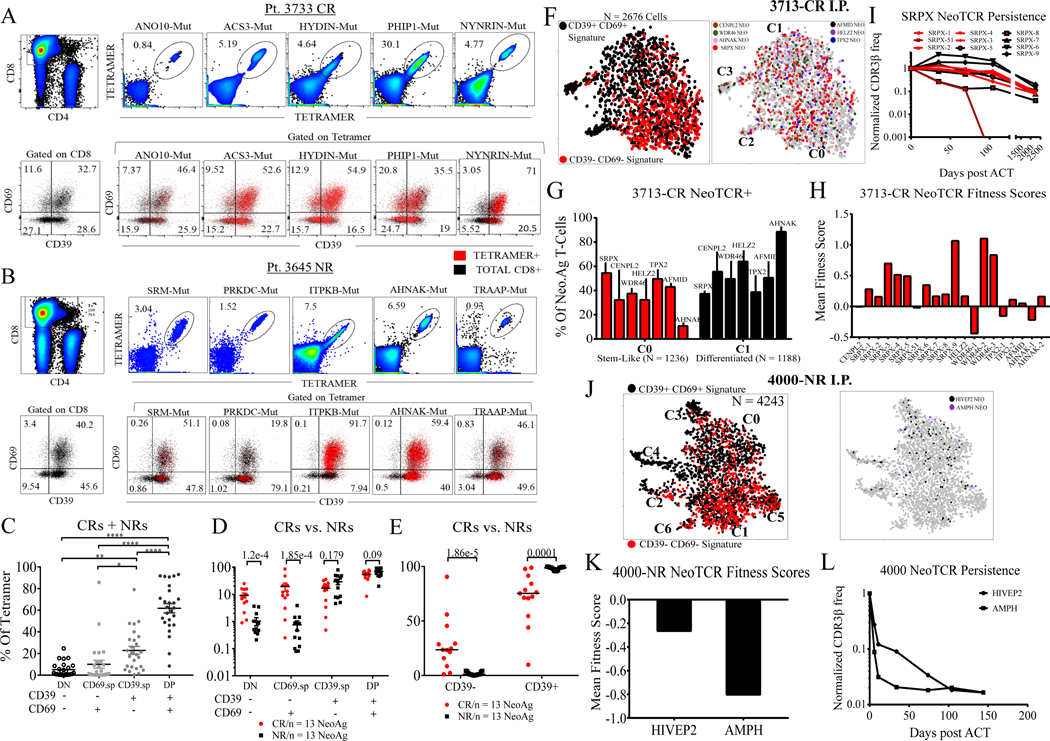
Adoptive T cell therapy (ACT) using ex vivo-expanded autologous tumor-infiltrating lymphocytes (TILs) can mediate complete regression of certain human cancers. The impact of TIL phenotypes on clinical success of TIL-ACT is currently unclear. Using high-dimensional analysis of human ACT products, we identified a memory-progenitor CD39-negative stem-like phenotype (CD39CD69) associated with complete cancer regression and TIL persistence and a terminally differentiated CD39-positive state (CD39CD69) associated with poor TIL persistence. Most antitumor neoantigen-reactive TILs were found in the differentiated CD39 state. However, ACT responders retained a pool of CD39 stem-like neoantigen-specific TILs that was lacking in ACT nonresponders. Tumor-reactive stem-like TILs were capable of self-renewal, expansion, persistence, and superior antitumor response in vivo. These data suggest that TIL subsets mediating ACT response are distinct from TIL subsets enriched for antitumor reactivity.
过继性 T 细胞疗法(ACT)使用体外扩增的自体肿瘤浸润淋巴细胞(TIL)可介导某些人类癌症的完全消退。TIL 表型对 TIL-ACT 临床成功的影响目前尚不清楚。通过对人 ACT 产物的高维分析,我们鉴定出一种与完全癌症消退和 TIL 持久性相关的记忆前体 CD39 阴性干细胞样表型(CD39CD69),以及与 TIL 持久性差相关的终末分化 CD39 阳性状态(CD39CD69)。大多数抗肿瘤新抗原反应性 TIL 存在于分化的 CD39 状态。然而,ACT 应答者保留了缺乏 ACT 无应答者的 CD39 干细胞样新抗原特异性 TIL 池。肿瘤反应性干细胞样 TIL 能够在体内自我更新、扩增、持久存在和产生更好的抗肿瘤反应。这些数据表明,介导 ACT 反应的 TIL 亚群与富集抗肿瘤反应性的 TIL 亚群不同。