Rienäcker Franziska, Van Gerven Pascal W M, Jacobs Heidi I L, Eck Judith, Van Heugten Caroline M, Guerreiro Maria J S
Department of Neuropsychology and Psychopharmacology, Faculty of Psychology and Neuroscience, Maastricht University, Maastricht, Netherlands.
Department of Educational Development and Research, Faculty of Health, Medicine and Life Sciences, School of Health Professions Education (SHE), Maastricht University, Maastricht, Netherlands.
Front Aging Neurosci. 2020 Nov 12;12:498978. doi: 10.3389/fnagi.2020.498978. eCollection 2020.
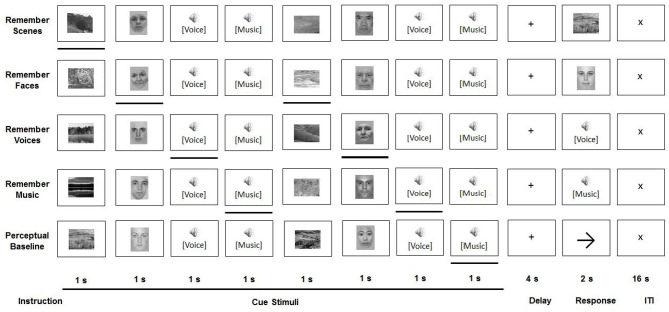
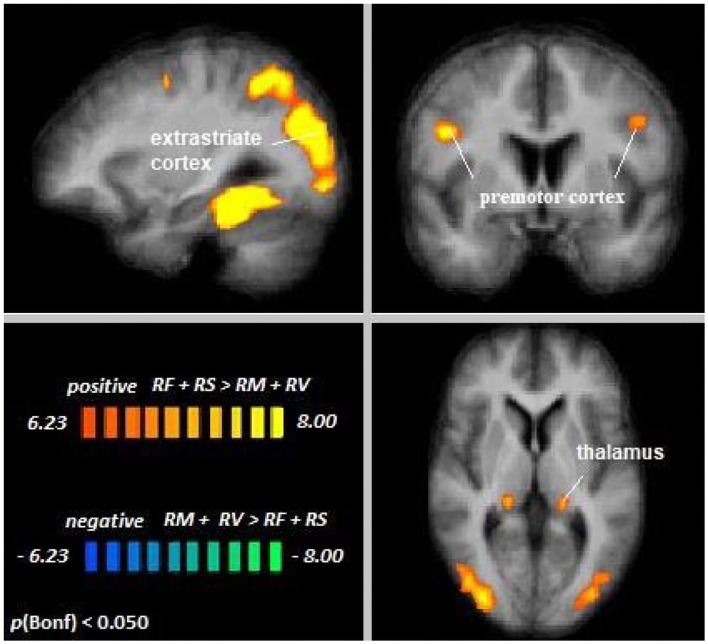
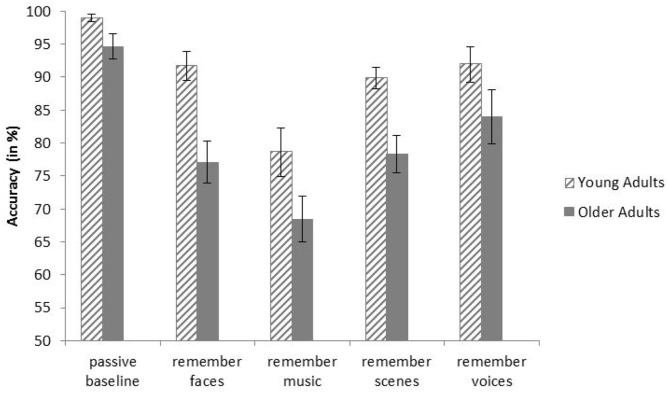
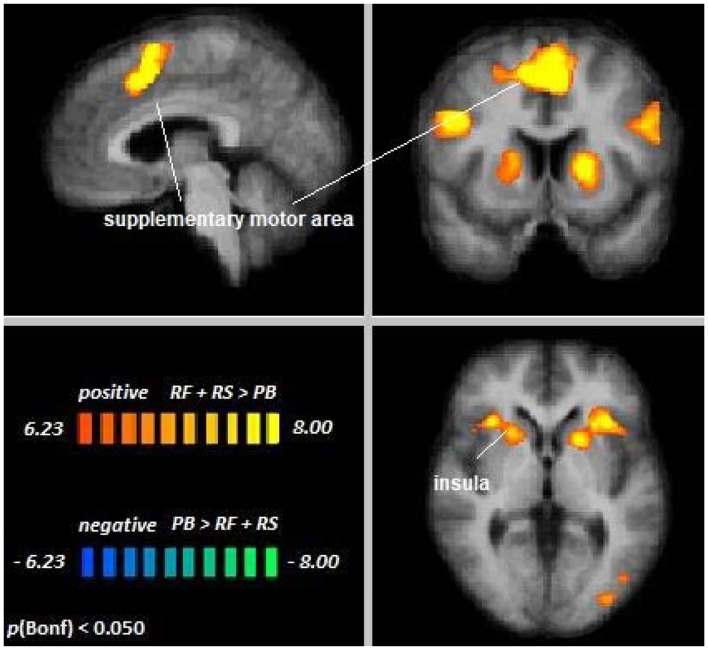
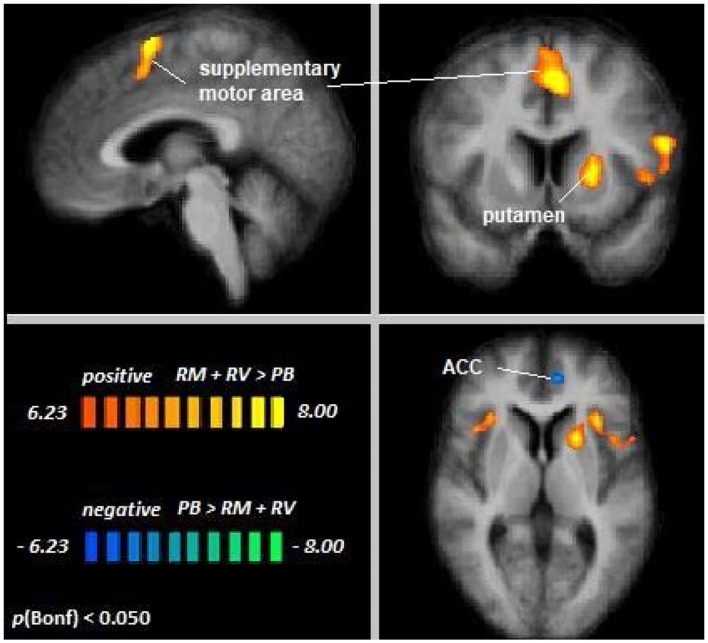
Age-related deficits in selective attention have been demonstrated to depend on the sensory modality through which targets and distractors are presented. Some of these investigations suggest a specific impairment of cross-modal auditory selective attention. For the first time, this study is taking on a whole brain approach while including a passive perception baseline, to investigate the neural underpinnings of selective attention across age groups, and taking the sensory modality of relevant and irrelevant (i.e., distracting) stimuli into account. Sixteen younger (mean age = 23.3 years) and 14 older (mean age = 65.3 years), healthy participants performed a series of delayed match-to-sample tasks, in which participants had to selectively attend to visual stimuli, selectively attend to auditory stimuli, or passively view and hear both types of stimuli, while undergoing 3T fMRI. The imaging analyses showed that areas recruited by cross-modal visual and auditory selective attention in both age groups included parts of the dorsal attention and frontoparietal control networks (i.e., intraparietal sulcus, insula, fusiform gyrus, anterior cingulate, and inferior frontal cortex). Most importantly, activation throughout the brain did not differ across age groups, suggesting intact brain function during cross-modal selective attention in older adults. Moreover, stronger brain activation during cross-modal visual vs. cross-modal auditory selective attention was found in both age groups, which is consistent with earlier accounts of visual dominance. In conclusion, these results do not support the hypothesized age-related deficit of cross-modal auditory selective attention. Instead, they suggest that the underlying neural correlates of cross-modal selective attention are similar in younger and older adults.
与年龄相关的选择性注意缺陷已被证明取决于呈现目标和干扰物的感觉模态。其中一些研究表明跨模态听觉选择性注意存在特定损伤。本研究首次采用全脑方法,同时纳入被动感知基线,以探究不同年龄组选择性注意的神经基础,并考虑相关和不相关(即干扰性)刺激的感觉模态。16名年轻(平均年龄 = 23.3岁)和14名年长(平均年龄 = 65.3岁)的健康参与者进行了一系列延迟匹配样本任务,在此任务中,参与者必须选择性地关注视觉刺激、选择性地关注听觉刺激,或被动地观看和聆听两种类型的刺激,并同时接受3T功能磁共振成像检查(fMRI)。成像分析表明,两个年龄组中跨模态视觉和听觉选择性注意所涉及的区域包括背侧注意和额顶叶控制网络(即顶内沟、脑岛、梭状回、前扣带回和额下回)的部分区域。最重要的是, 全脑激活在不同年龄组之间没有差异,这表明老年人在跨模态选择性注意过程中脑功能完好。此外,两个年龄组在跨模态视觉选择性注意与跨模态听觉选择性注意过程中均发现更强的脑激活,这与早期关于视觉优势的观点一致。总之,这些结果不支持关于跨模态听觉选择性注意存在与年龄相关缺陷的假设。相反,它们表明跨模态选择性注意在年轻人和老年人中的潜在神经关联是相似的。