Department of Clinical Laboratory Science, Faculty of Medical Technology, Teikyo University, Tokyo, Japan.
Department of Thyroid Surgery, Zhujiang Hospital, Southern Medical University, Guangzhou, China.
Front Endocrinol (Lausanne). 2020 Nov 16;11:579648. doi: 10.3389/fendo.2020.579648. eCollection 2020.
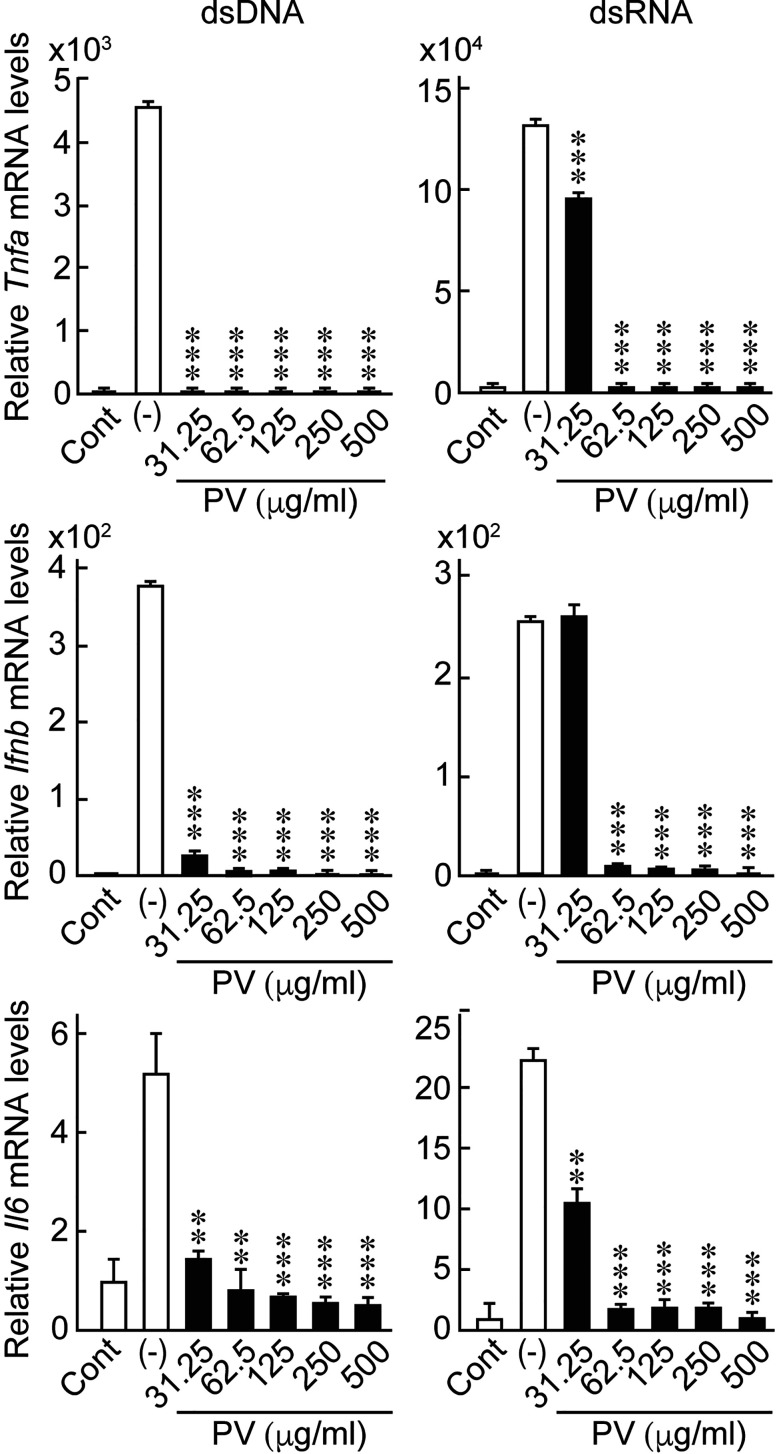
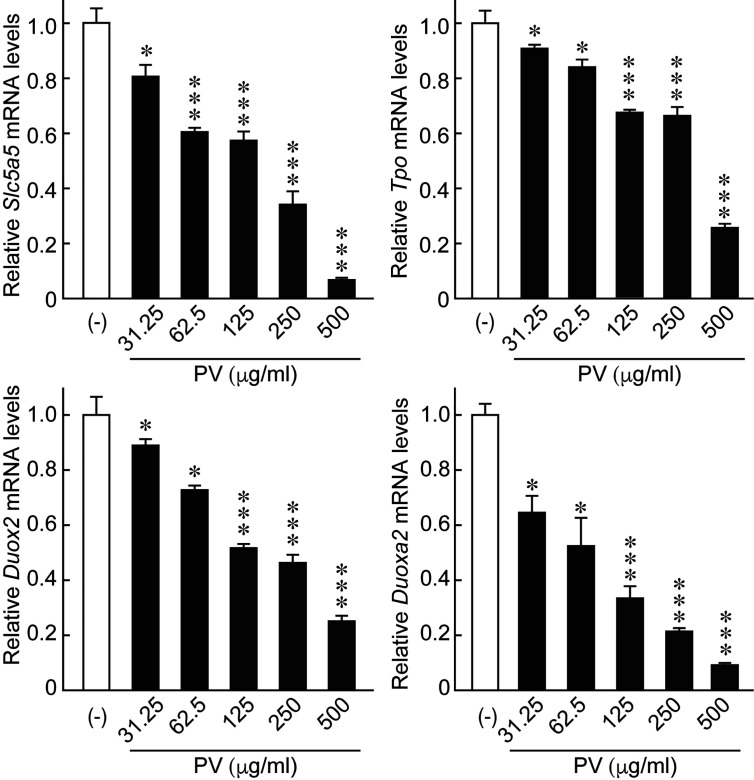
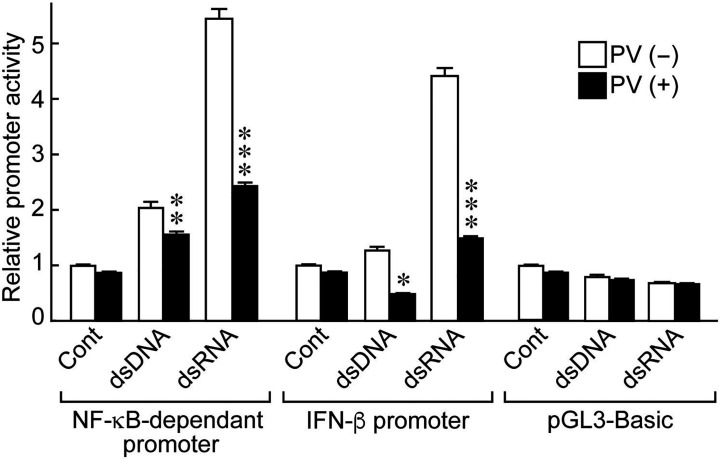
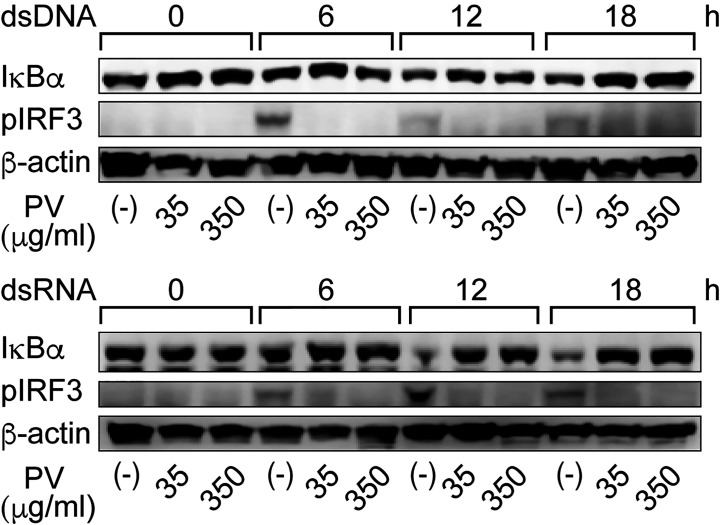
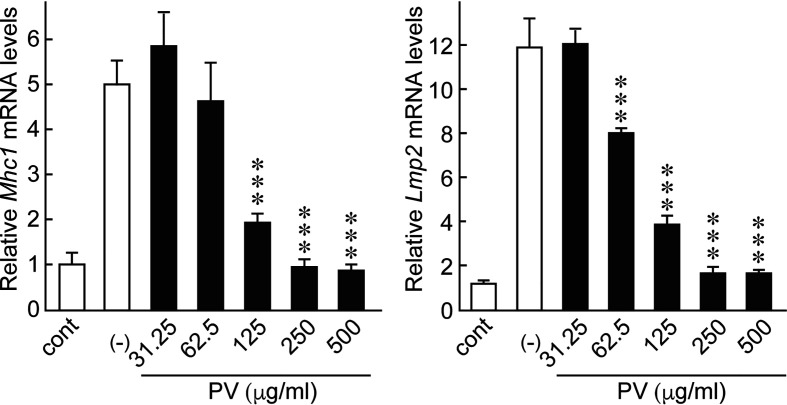
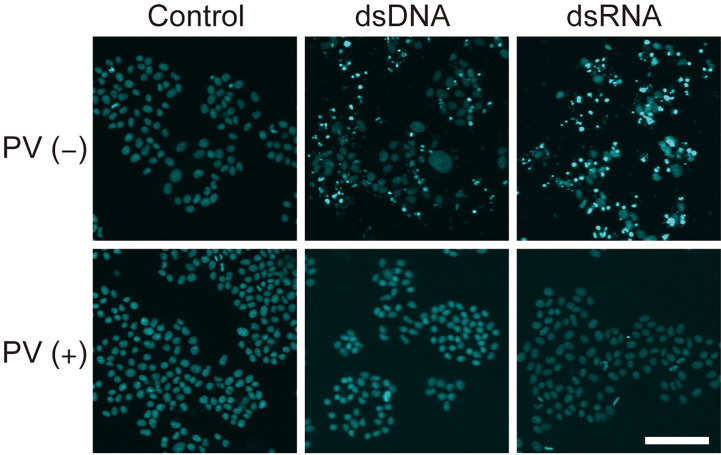
(PV), a perennial herb, has been used to treat thyroid diseases in China for over 2,000 years. In particular, its therapeutic effect has been described for Hashimoto's thyroiditis, including reducing titers autoantibodies against thyroid peroxidase and thyroglobulin of and T helper 17 (Th17) cells. However, the underlying mechanism for how PV exerts such effects has not been investigated. We examined the effects of PV on innate immune activation, which is thought to be one of the triggers for the development of autoimmune diseases, including Hashimoto's thyroiditis. In cultured thyrocytes, PV reduced mRNA levels of inflammatory cytokines that were originally induced as a result of innate immune activation initiated by transfection of double-stranded DNA (dsDNA) or dsRNA. PV suppressed activation of nuclear factor κB (NF-κB) and interferon regulatory factor 3 (IRF3), and suppressed corresponding promoter activation, which were initially activated by dsDNA or dsRNA. PV also suppressed the mRNA levels of molecules responsible for antigen processing and presentation, and PV protected thyrocytes from apoptosis induced by dsDNA and dsRNA. Additionally, PV suppressed the expression of genes involved in iodide uptake and oxidation. Taken together, these results suggest that PV exerts its protective effect on thyrocytes by suppressing both innate and adaptive immune responses and cell death. PV may also protect cells from iodide-associated oxidative injury. This report is among the first to identify the mechanisms to explain PV's beneficial effects in Hashimoto's thyroiditis.
(PV),一种多年生草本植物,在中国已被用于治疗甲状腺疾病超过 2000 年。特别是,其治疗效果已被描述为桥本甲状腺炎,包括降低甲状腺过氧化物酶和甲状腺球蛋白的自身抗体滴度和辅助性 T 细胞 17(Th17)细胞。然而,PV 如何发挥这种作用的潜在机制尚未得到研究。我们研究了 PV 对固有免疫激活的影响,固有免疫激活被认为是包括桥本甲状腺炎在内的自身免疫性疾病发展的一个触发因素。在培养的甲状腺细胞中,PV 降低了原本由双链 DNA(dsDNA)或双链 RNA(dsRNA)引发的固有免疫激活诱导的炎症细胞因子的 mRNA 水平。PV 抑制了核因子 κB(NF-κB)和干扰素调节因子 3(IRF3)的激活,以及相应启动子的激活,这些最初是由 dsDNA 或 dsRNA 激活的。PV 还抑制了负责抗原加工和呈递的分子的 mRNA 水平,并保护甲状腺细胞免受 dsDNA 和 dsRNA 诱导的细胞凋亡。此外,PV 还抑制了碘摄取和氧化相关基因的表达。综上所述,这些结果表明,PV 通过抑制固有免疫和适应性免疫反应以及细胞死亡来发挥对甲状腺细胞的保护作用。PV 还可能保护细胞免受碘相关的氧化损伤。本报告首次确定了 PV 对桥本甲状腺炎有益作用的机制。