Höge Thomas, Strecker Cornelia, Hausler Melanie, Huber Alexandra, Höfer Stefan
Institute of Psychology, University of Innsbruck, Innrain 52, 6020 Innsbruck, Austria.
Department of Medical Psychology, Medical University of Innsbruck, Innsbruck, Austria.
Appl Res Qual Life. 2020 Apr;15(2):463-484. doi: 10.1007/s11482-018-9697-x. Epub 2019 Jan 12.
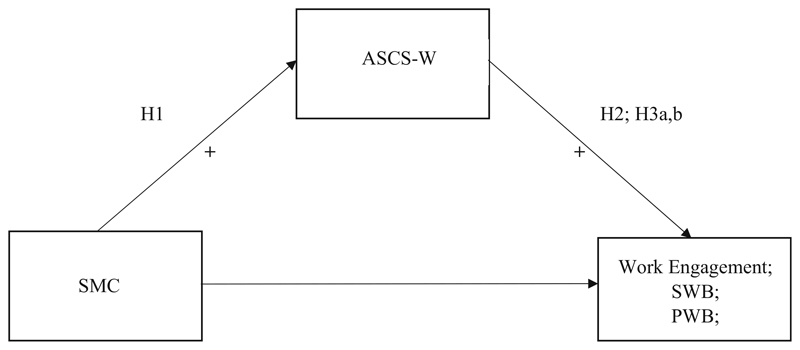
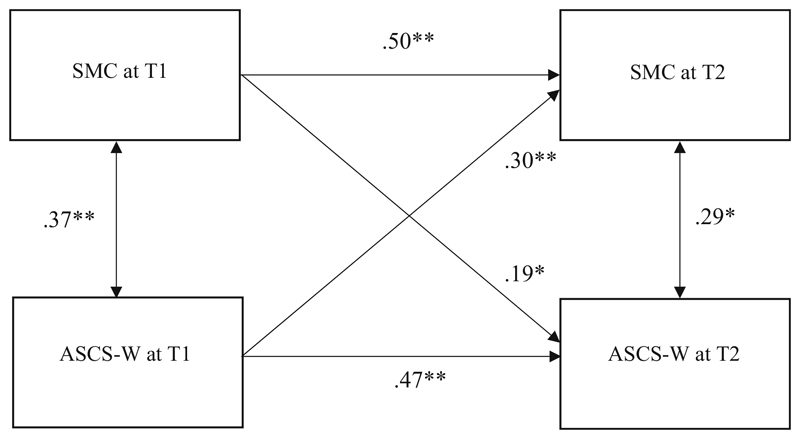
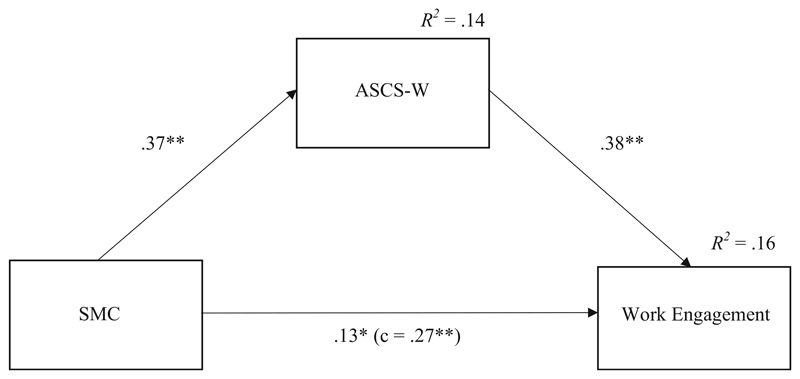
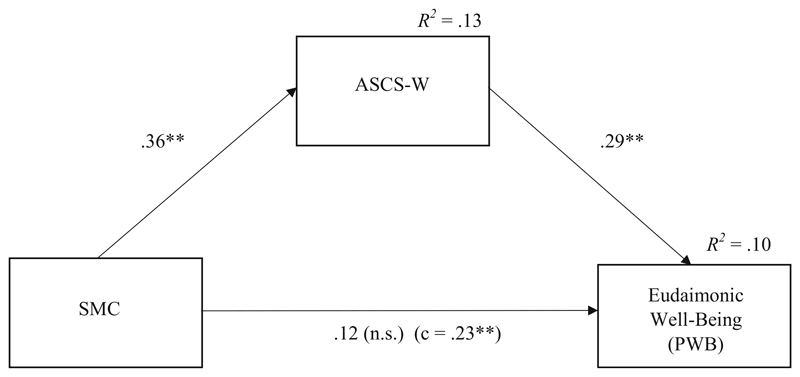
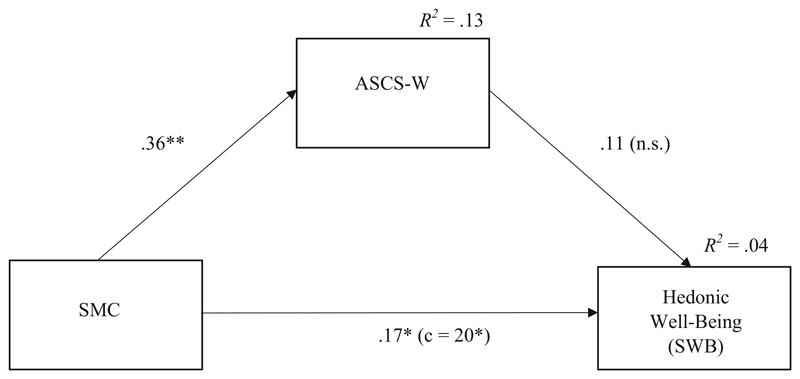
Previous research demonstrated that the applicability of signature character strengths at work is associated with employee well-being. However, there is a lack of research on possible antecedents of the applicability of signature character strengths in the occupational domain. In this study we examined whether the perceived socio-moral climate of medical departments has a positive impact on the applicability of hospital physicians' signature character strengths and whether it relates to work engagement, hedonic subjective well-being (SWB) and eudaimonic psychological well-being (PWB). Based on cross-sectional data of = 165 hospital physicians in Austria, we tested mediation models with perceived socio-moral climate as predictor, applicability of signature character strengths as mediator, and work engagement, SWB and PWB as outcomes. Additionally, we collected longitudinal data (time-lag T1-T2: 6 months) from a sub-sample ( = 69) for testing the relationship between the perceived socio-moral climate and the applicability of signature character strengths over time. The cross-sectional results showed indirect effects of the perceived socio-moral climate on work engagement and eudaimonic well-being via the applicability of signature character strengths at work. Results from a cross-lagged panel analysis suggested an impact of socio-moral climate at T1 on the applicability of signature character strengths 6 months later (T2), but also an even stronger reversed effect of the applicability of signature character strengths at T1 on perceived socio-moral climate at T2.
先前的研究表明,标志性性格优势在工作中的适用性与员工幸福感相关。然而,对于标志性性格优势在职业领域适用性的可能前因,缺乏相关研究。在本研究中,我们考察了医疗部门的感知社会道德氛围是否对医院医生标志性性格优势的适用性产生积极影响,以及它是否与工作投入、享乐主义主观幸福感(SWB)和自我实现心理幸福感(PWB)相关。基于奥地利165名医院医生的横断面数据,我们测试了以感知社会道德氛围为预测变量、标志性性格优势的适用性为中介变量、工作投入、SWB和PWB为结果变量的中介模型。此外,我们从一个子样本(n = 69)收集了纵向数据(时间间隔T1 - T2:6个月),以检验感知社会道德氛围与标志性性格优势适用性随时间的关系。横断面结果显示,感知社会道德氛围通过工作中标志性性格优势的适用性对工作投入和自我实现幸福感产生间接影响。交叉滞后面板分析的结果表明,T1时的社会道德氛围对6个月后的标志性性格优势适用性(T2)有影响,但T1时标志性性格优势的适用性对T2时感知社会道德氛围的反向影响更强。