Zhang Wen, Sviripa Vitaliy M, Xie Yanqi, Yu Tianxin, Haney Meghan G, Blackburn Jessica S, Adeniran Charles A, Zhan Chang-Guo, Watt David S, Liu Chunming
Department of Molecular and Cellular Biochemistry, College of Medicine, University of Kentucky, Lexington, KY 40536-0509, USA.
Lucille Parker Markey Cancer Center, University of Kentucky, Lexington, KY 40536-0093, USA.
iScience. 2020 Nov 13;23(12):101795. doi: 10.1016/j.isci.2020.101795. eCollection 2020 Dec 18.
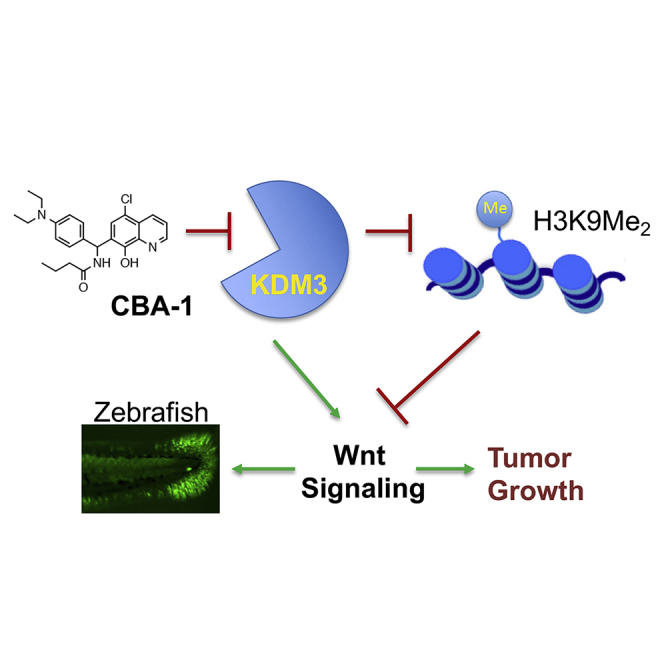
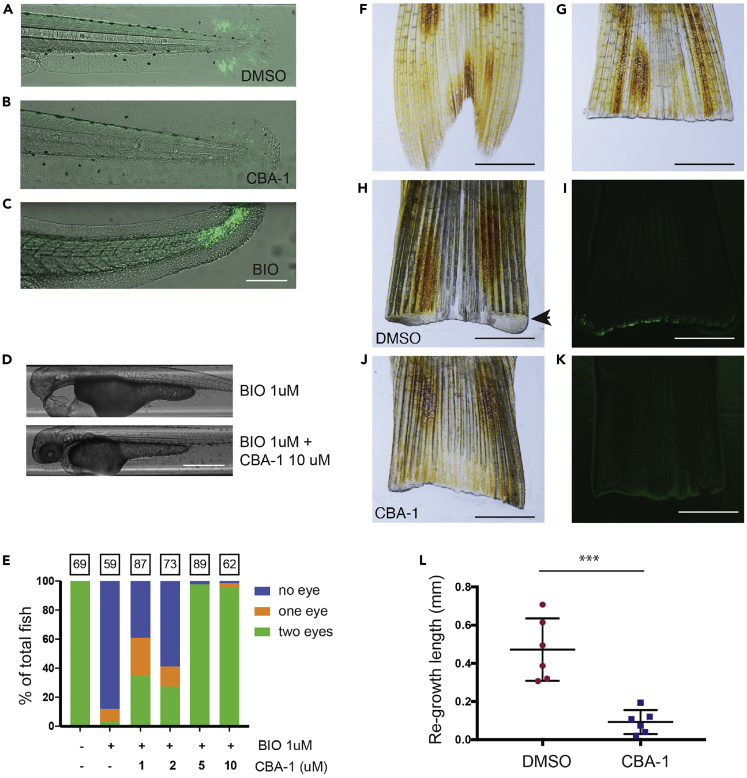
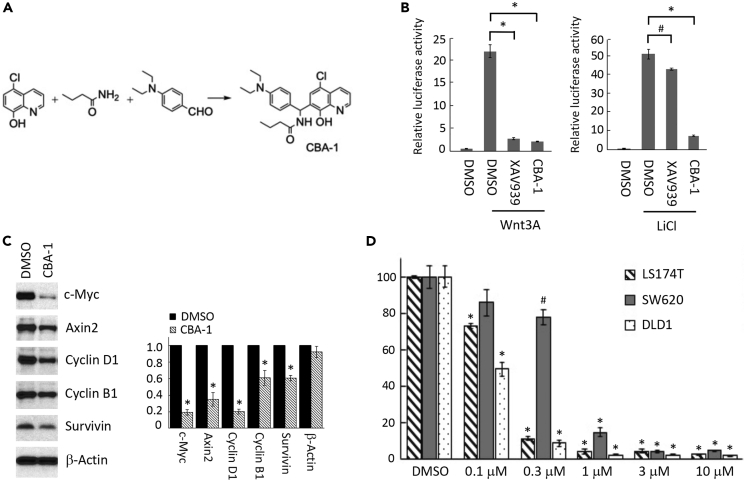
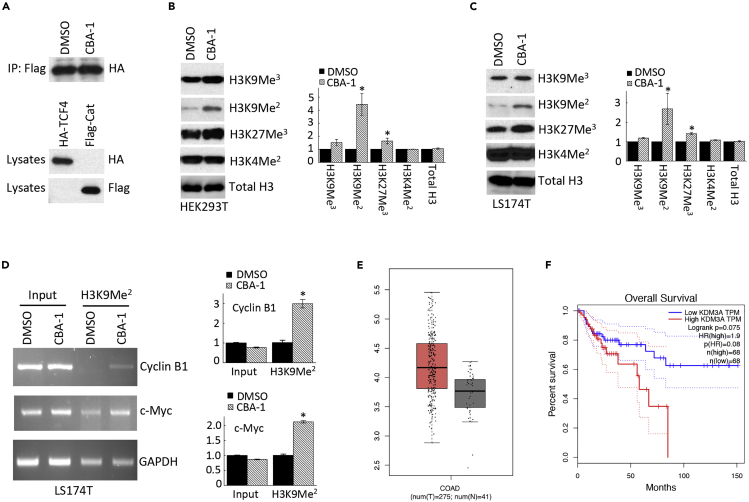
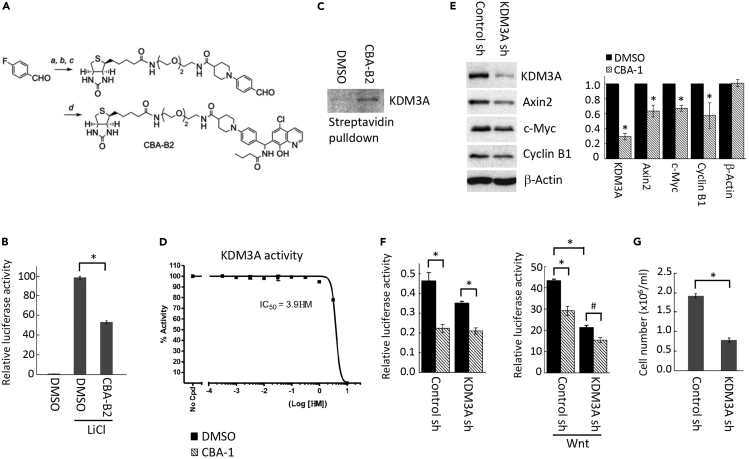
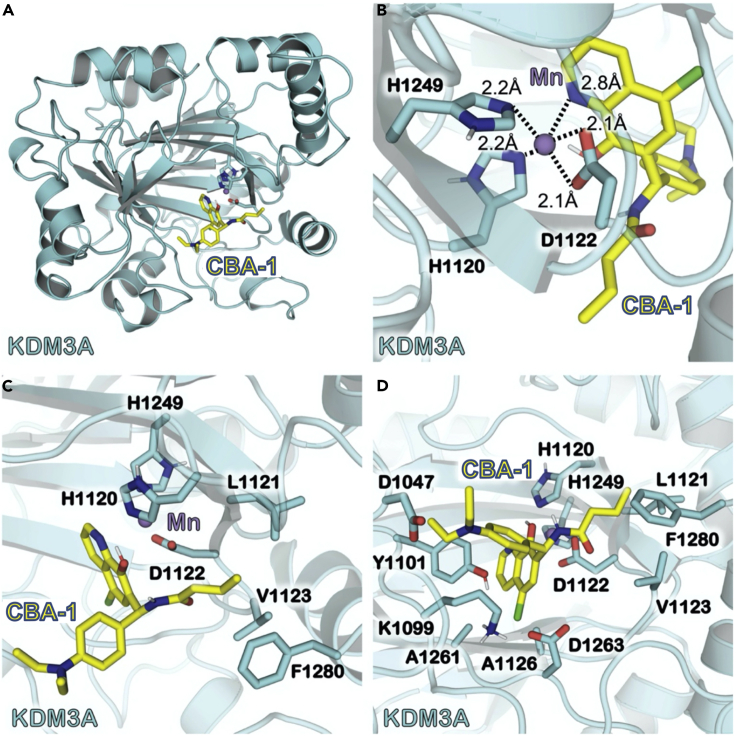
Aberrant activation of Wnt signaling triggered by mutations in either () or (β-catenin) is a hallmark of colorectal cancers (CRC). As part of a program to develop epigenetic regulators for cancer therapy, we developed carboxamide-substituted benzhydryl amines (CBAs) bearing either aryl or heteroaryl groups that selectively targeted histone lysine demethylases (KDMs) and functioned as inhibitors of the Wnt pathway. A biotinylated variant of -((5-chloro-8-hydroxyquinolin-7-yl) (4-(diethylamino)phenyl)-methyl)butyramide (CBA-1) identified KDM3A as a binding partner. KDM3A is a Jumonji (JmjC) domain-containing demethylase that is significantly upregulated in CRC. KDM3A regulates the demethylation of histone H3's lysine 9 (H3K9Me), a repressive marker for transcription. Inhibiting KDM3 increased H3K9Me levels, repressed Wnt target genes, and curtailed CRC cell proliferation. CBA-1 also exhibited inhibition of Wnt signaling in a zebrafish model without displaying toxicity.
由()或β-连环蛋白(β-catenin)突变引发的Wnt信号异常激活是结直肠癌(CRC)的一个标志。作为开发用于癌症治疗的表观遗传调节剂计划的一部分,我们开发了带有芳基或杂芳基的羧酰胺取代的二苯甲基胺(CBA),其选择性靶向组蛋白赖氨酸去甲基化酶(KDM)并作为Wnt通路的抑制剂发挥作用。-((5-氯-8-羟基喹啉-7-基)(4-(二乙氨基)苯基)-甲基)丁酰胺(CBA-1)的生物素化变体将KDM3A鉴定为结合伴侣。KDM3A是一种含Jumonji(JmjC)结构域的去甲基化酶,在CRC中显著上调。KDM3A调节组蛋白H3赖氨酸9(H3K9Me)的去甲基化,H3K9Me是转录的抑制标记。抑制KDM3可增加H3K9Me水平,抑制Wnt靶基因,并减少CRC细胞增殖。CBA-1在斑马鱼模型中也表现出对Wnt信号的抑制作用,且未显示出毒性。