Chen Qian, Zhong Li, Zhou Chao, Feng Yan, Liu Quan-Xing, Zhou Dong, Lu Xiao, Du Guang-Sheng, Jian Dan, Luo Hao, Wang Dong, Zheng Hong, Qiu Yuan
Cancer Center of Daping Hospital, Third Military Medical University (Army Medical University), Chongqing, 400037, China.
State Key Laboratory of Trauma, Burn and Combined Injury, Third Military Medical University (Army Medical University), Chongqing, 400037, China.
Cell Biosci. 2020 Dec 11;10(1):144. doi: 10.1186/s13578-020-00506-z.
Accumulating evidence shows that Parkinson's disease is negatively associated with colon cancer risk, indicating that Parkinson's disease family proteins may be involved in the initiation of colon cancer. Here, we aimed to identify a Parkinson's disease-related gene involved in colon cancer, elucidate the underlying mechanisms, and test whether it can be used as a target for cancer therapy.
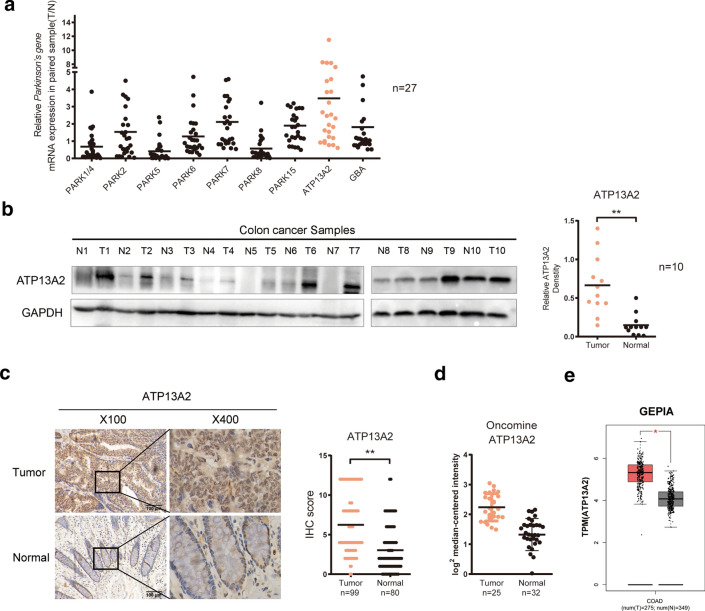
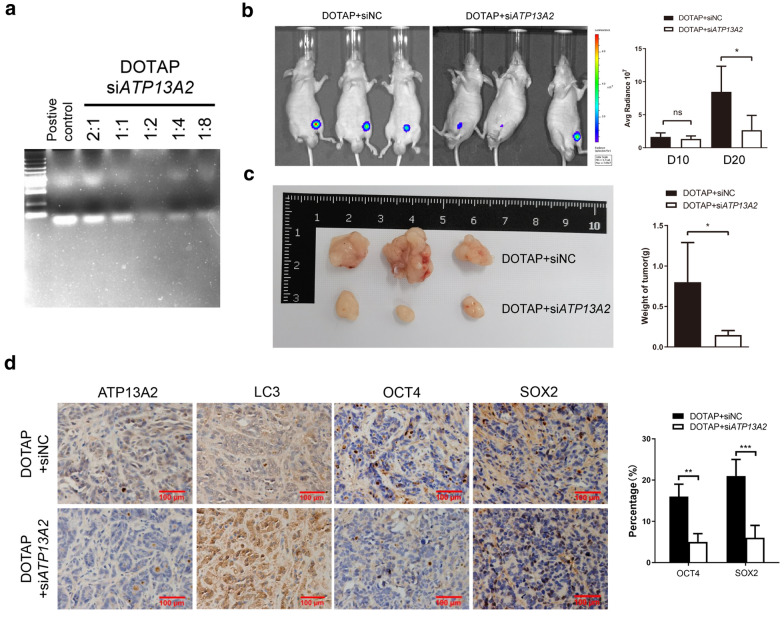
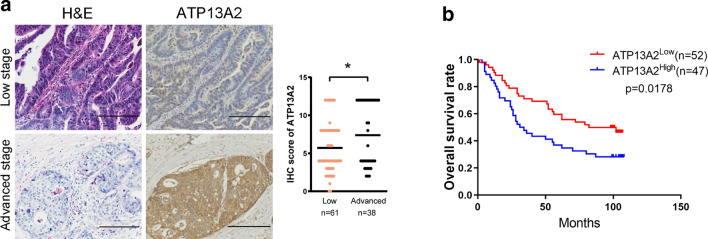
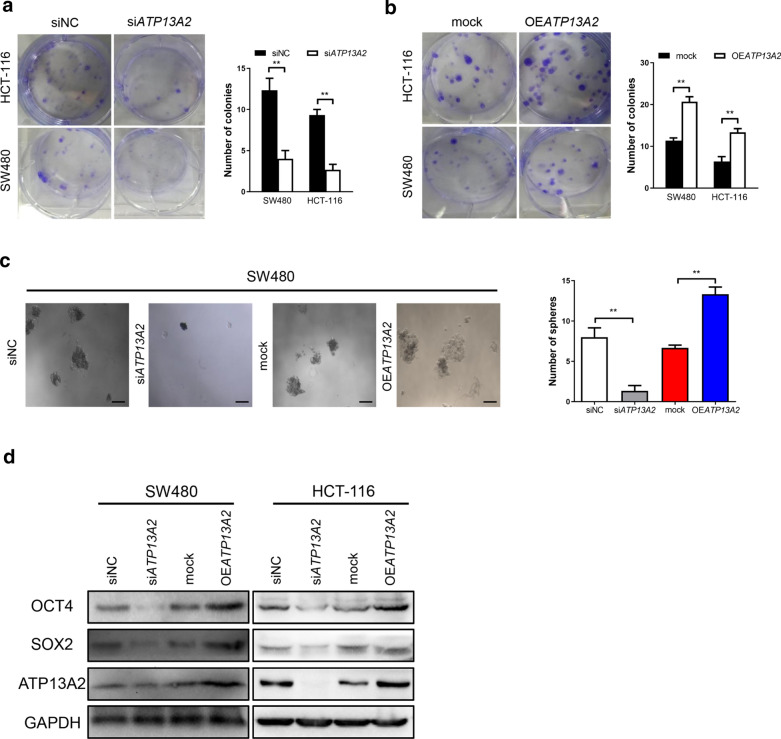
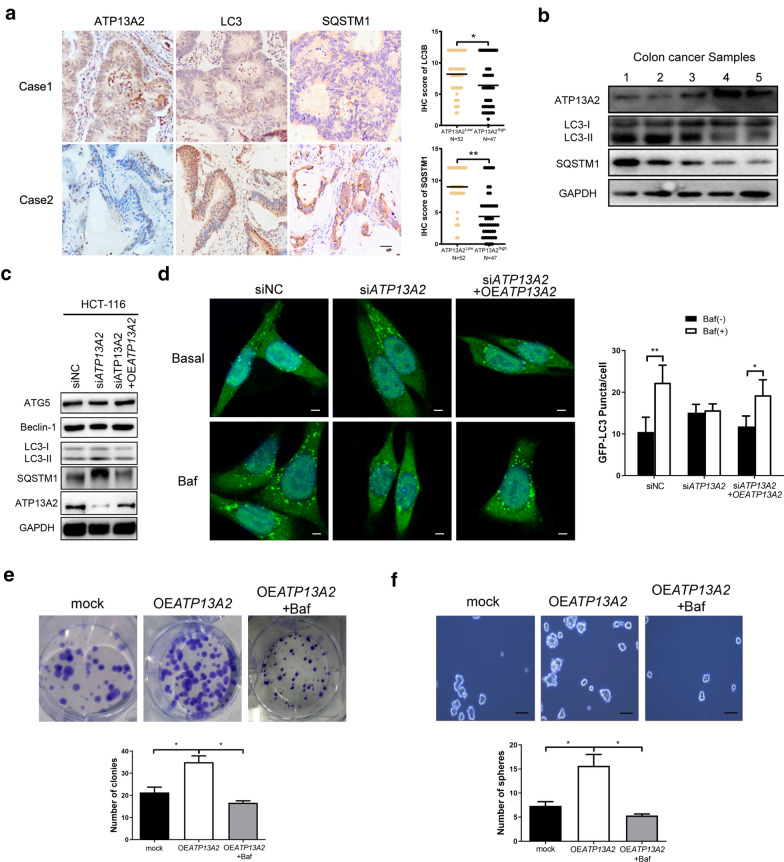
We first screened colon cancer and normal tissues for differential expression of Parkinson's disease-associated genes and identified ATP13A2, which encodes cation-transporting ATPase 13A2, as a putative marker for colon cancer. We next correlated ATP13A2 expression with colon cancer prognosis. We performed a series of ATP13A2 knockdown and overexpression studies in vitro to identify the contribution of ATP13A2 in the stemness and invasive capacity of colon cancer cells. Additionally, autophagy flux assay were determined to explore the mechanism of ATP13A2 induced stemness. Finally, we knocked down ATP13A2 in mice using siRNA to determine whether it can be used as target for colon cancer treatment.
Colon cancer patients with high ATP13A2 expression exhibit shorter overall survival than those with low ATP13A2. Functionally, ATP13A2 acts as a novel stimulator of stem-like traits. Furthermore, knockdown of ATP13A2 in HCT116 resulted in decreased levels of cellular autophagy. Additionally, bafilomycin A1, an autophagy inhibitor, reversed the ATP13A2-induced stemness of colon cancer cells. Lastly treatment with ATP13A2 siRNA reduced the volume of colon cancer xenografts in mice.
The PD-associated gene ATP13A2 is involved in colon cancer stemness through regulation of autophagy. Furthermore, ATP13A2 is a novel prognostic biomarker for colon cancer and is a potential target for colon cancer therapy.
越来越多的证据表明,帕金森病与结肠癌风险呈负相关,这表明帕金森病家族蛋白可能参与结肠癌的发生。在此,我们旨在鉴定一个与结肠癌相关的帕金森病基因,阐明其潜在机制,并测试它是否可作为癌症治疗的靶点。
我们首先筛选结肠癌组织和正常组织中帕金森病相关基因的差异表达,鉴定出编码阳离子转运ATP酶13A2的ATP13A2作为结肠癌的一个潜在标志物。接下来,我们将ATP13A2表达与结肠癌预后相关联。我们在体外进行了一系列ATP13A2敲低和过表达研究,以确定ATP13A2在结肠癌细胞干性和侵袭能力中的作用。此外,还进行了自噬通量测定以探索ATP13A2诱导干性的机制。最后,我们使用小干扰RNA在小鼠体内敲低ATP13A2,以确定它是否可作为结肠癌治疗的靶点。
ATP13A2高表达的结肠癌患者总生存期短于ATP13A2低表达的患者。在功能上,ATP13A2作为一种新的干细胞样特征刺激因子。此外,在HCT116细胞中敲低ATP13A2导致细胞自噬水平降低。此外,自噬抑制剂巴弗洛霉素A1可逆转ATP13A2诱导的结肠癌细胞干性。最后,用ATP13A2小干扰RNA治疗可减小小鼠体内结肠癌异种移植瘤的体积。
帕金森病相关基因ATP13A2通过调节自噬参与结肠癌干性。此外,ATP13A2是结肠癌一种新的预后生物标志物,也是结肠癌治疗的一个潜在靶点。