Cellular and Molecular Therapeutics Branch, National Heart, Lung, and Blood Institute (NHLBI), National Institutes of Health (NIH), Bethesda, MD 20892, USA.
Cellular and Molecular Therapeutics Branch, National Heart, Lung, and Blood Institute (NHLBI), National Institutes of Health (NIH), Bethesda, MD 20892, USA.
Mol Ther. 2021 Apr 7;29(4):1611-1624. doi: 10.1016/j.ymthe.2020.12.010. Epub 2020 Dec 10.
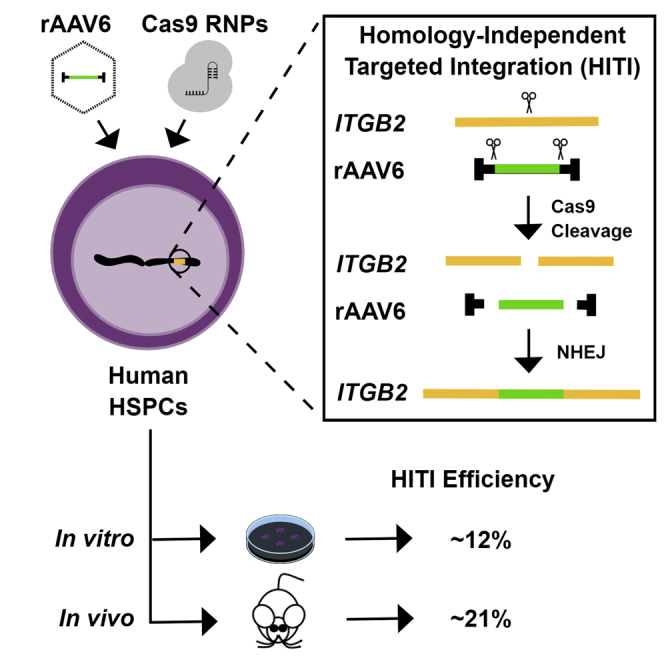
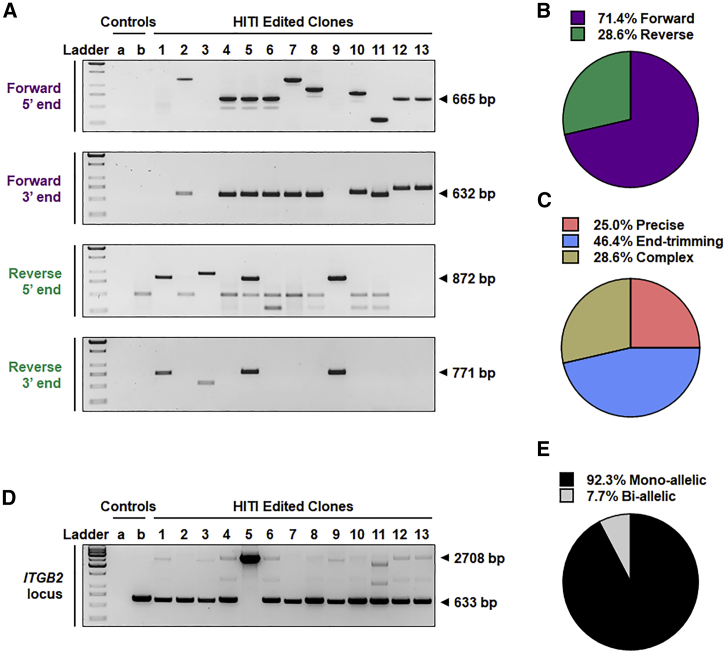
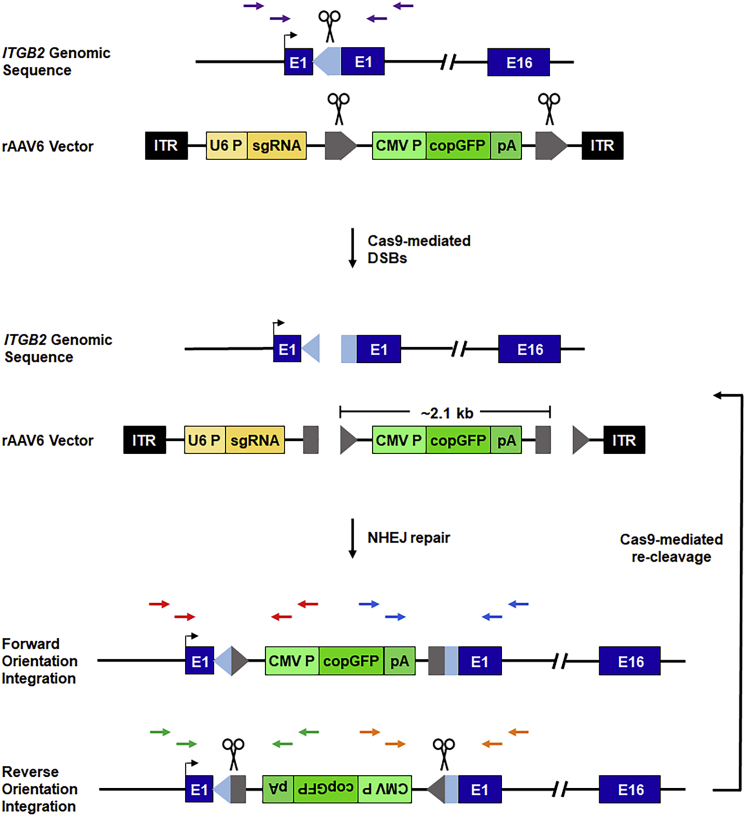
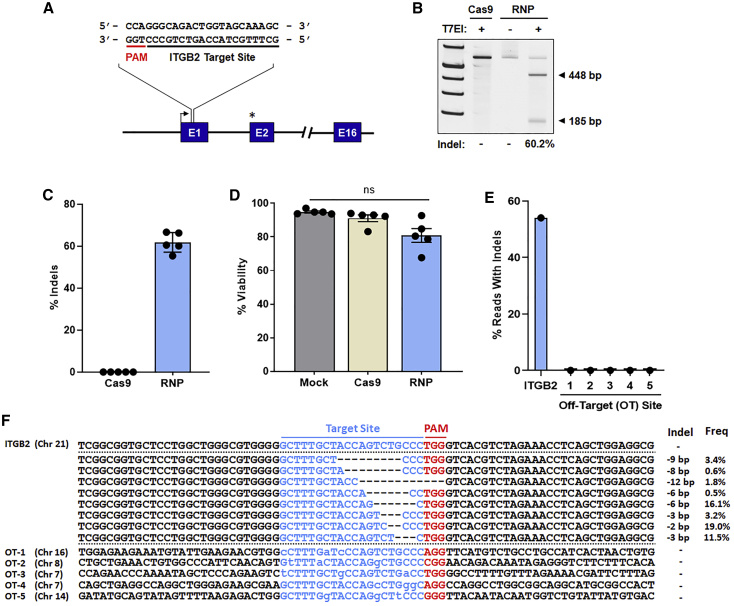
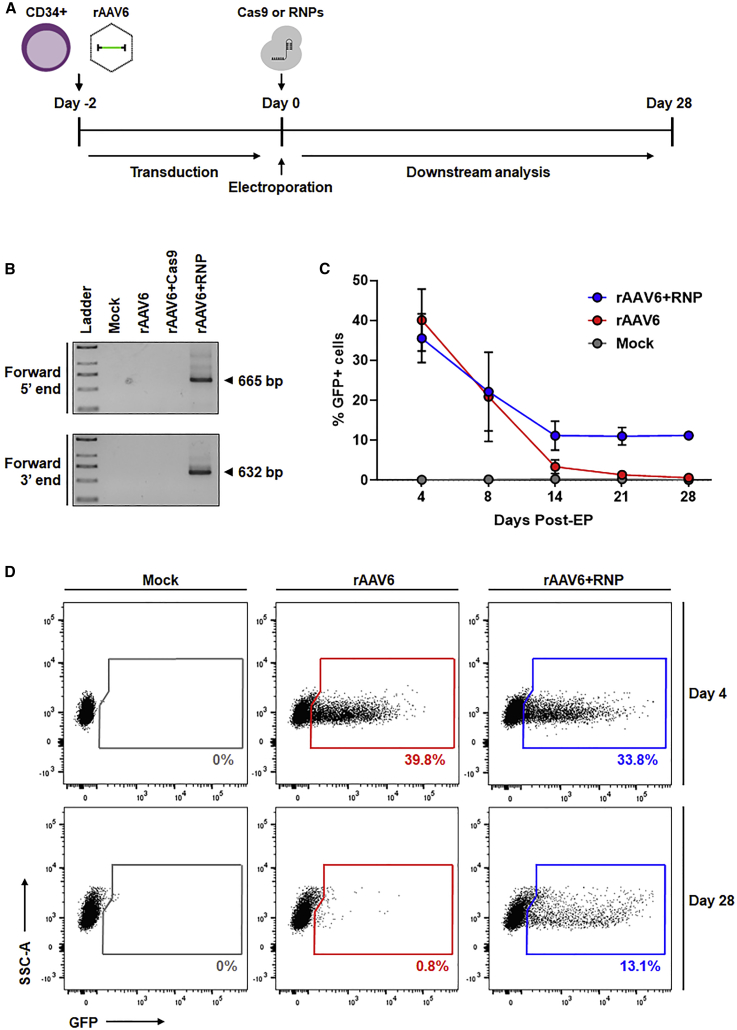
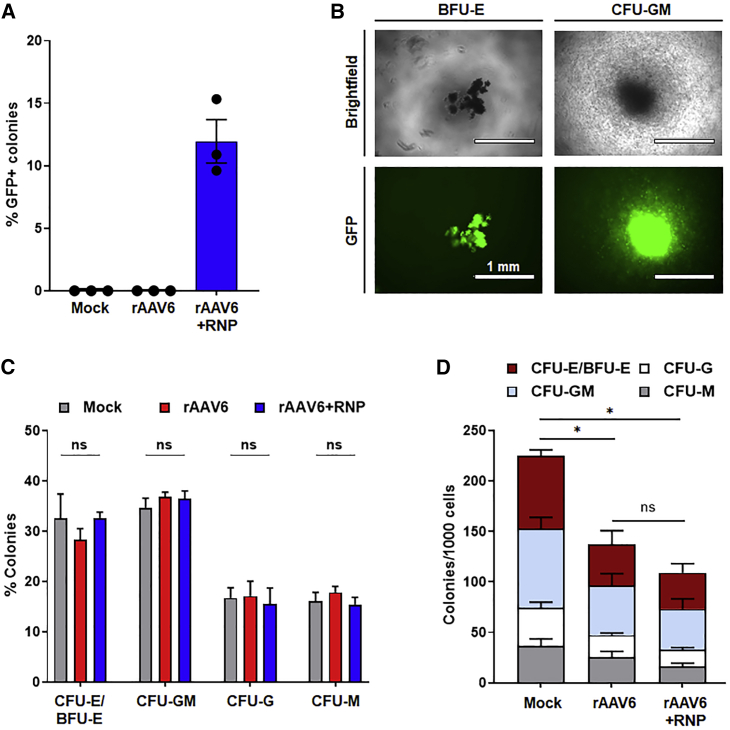
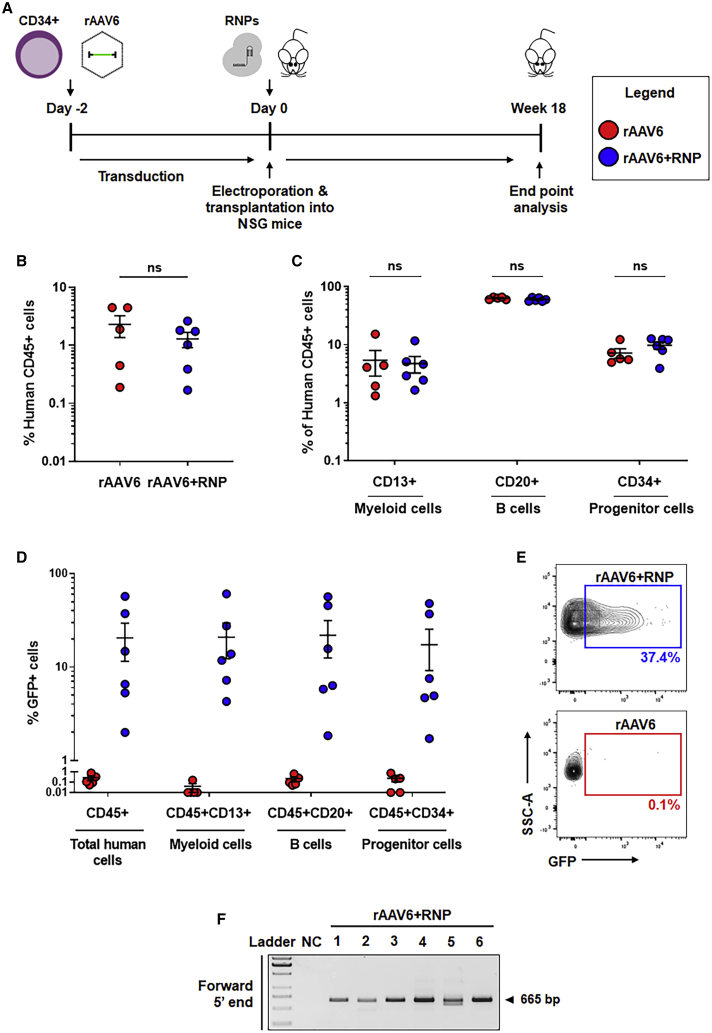
Ex vivo gene correction of hematopoietic stem and progenitor cells (HSPCs) has emerged as a promising therapeutic approach for treatment of inherited human blood disorders. Use of engineered nucleases to target therapeutic transgenes to their endogenous genetic loci addresses many of the limitations associated with viral vector-based gene replacement strategies, such as insertional mutagenesis, variable gene dosage, and ectopic expression. Common methods of nuclease-mediated site-specific integration utilize the homology-directed repair (HDR) pathway. However, these approaches are inefficient in HSPCs, where non-homologous end joining (NHEJ) is the primary DNA repair mechanism. Recently, a novel NHEJ-based approach to CRISPR-Cas9-mediated transgene knockin, known as homology-independent targeted integration (HITI), has demonstrated improved site-specific integration frequencies in non-dividing cells. Here we utilize a HITI-based approach to achieve robust site-specific transgene integration in human mobilized peripheral blood CD34+ HSPCs. As proof of concept, a reporter gene was targeted to a clinically relevant genetic locus using a recombinant adeno-associated virus serotype 6 vector and single guide RNA/Cas9 ribonucleoprotein complexes. We demonstrate high levels of stable HITI-mediated genome editing (∼21%) in repopulating HSPCs after transplantation into immunodeficient mice. Our study demonstrates that HITI-mediated genome editing provides an effective alternative to HDR-based transgene integration in CD34+ HSPCs.
体外基因校正造血干细胞和祖细胞 (HSPCs) 已成为治疗遗传性人类血液疾病的有前途的治疗方法。使用工程化的核酸酶将治疗性转基因靶向其内源遗传基因座,解决了许多与基于病毒载体的基因替换策略相关的限制,例如插入突变、可变基因剂量和异位表达。常见的核酸酶介导的位点特异性整合方法利用同源定向修复 (HDR) 途径。然而,这些方法在 HSPCs 中效率低下,其中非同源末端连接 (NHEJ) 是主要的 DNA 修复机制。最近,一种基于 NHEJ 的 CRISPR-Cas9 介导转基因敲入的新方法,称为非同源依赖性靶向整合 (HITI),已证明在非分裂细胞中提高了位点特异性整合频率。在这里,我们利用基于 HITI 的方法在人类动员外周血 CD34+ HSPCs 中实现了强大的位点特异性转基因整合。作为概念验证,使用重组腺相关病毒血清型 6 载体和单指导 RNA/Cas9 核糖核蛋白复合物将报告基因靶向一个临床相关的遗传基因座。我们证明,在移植到免疫缺陷小鼠后,稳定的 HITI 介导的基因组编辑(约 21%)在重编程 HSPCs 中具有高效性。我们的研究表明,HITI 介导的基因组编辑为 CD34+ HSPCs 中的 HDR 介导的转基因整合提供了有效的替代方法。