Gowell Matthew, Baker Ian, Ansorge Olaf, Husain Masud
Medical Sciences Division, University of Oxford, Oxford, UK
Russell Cairns Unit, Oxford University Hospitals NHS Foundation Trust, Oxford, Oxfordshire, UK.
Pract Neurol. 2020 Dec 11;21(2):149-52. doi: 10.1136/practneurol-2020-002730.
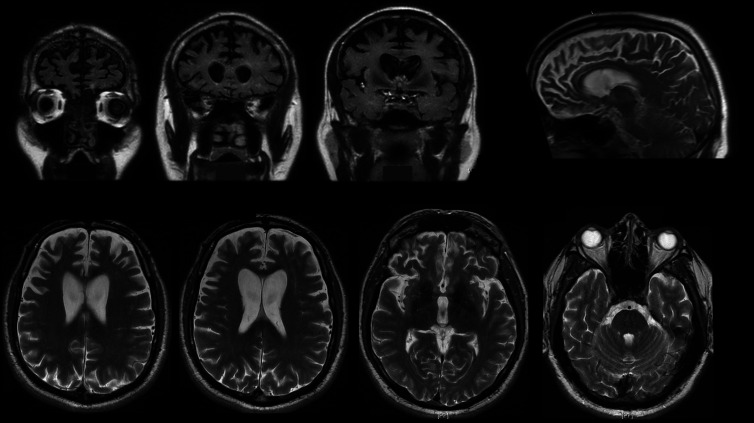
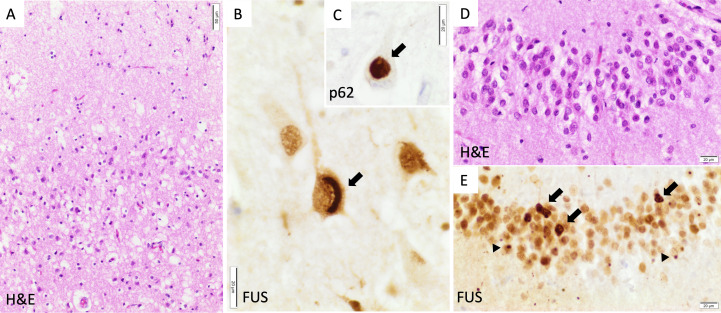
Frontotemporal dementia (FTD) is an uncommon cause of behavioural change in adults under the age of 50. A 44-year-old man presented with progressive neuropsychiatric disturbance characterised by social withdrawal, apathy, loss of empathy, motor stereotypies and hyperorality. Cognitive testing identified severe impairment, including executive dysfunction. MR scan of the brain showed bilateral symmetrical frontal atrophy. There was no relevant family history, and targeted genetic testing for FTD-associated variants in , and genes proved negative. He became more withdrawn with disinhibited behaviour; his condition progressively worsened and he died 6 years later. The pathological diagnosis was frontotemporal lobar degeneration with fused-in-sarcoma (FUS) pathology, a rare sporadic cause of FTD, accounting for only 5%-10% of cases, its characteristic features including very young onset, motor stereotypies and hyperorality.
额颞叶痴呆(FTD)是50岁以下成年人行为改变的罕见原因。一名44岁男性出现进行性神经精神障碍,其特征为社交退缩、冷漠、缺乏同情心、运动刻板行为和口欲亢进。认知测试发现存在严重损害,包括执行功能障碍。脑部磁共振成像(MR)扫描显示双侧对称性额叶萎缩。无相关家族史,针对FTD相关基因、和的靶向基因检测结果为阴性。他变得更加孤僻,行为脱抑制;病情逐渐恶化,6年后死亡。病理诊断为伴有肉瘤融合蛋白(FUS)病理改变的额颞叶变性,这是FTD的一种罕见散发性病因,仅占病例的5%-10%,其特征包括发病年龄非常小、运动刻板行为和口欲亢进。