Bang Jee, Spina Salvatore, Miller Bruce L
Memory and Aging Center, University of California, San Francisco, San Francisco, CA, USA.
Memory and Aging Center, University of California, San Francisco, San Francisco, CA, USA.
Lancet. 2015 Oct 24;386(10004):1672-82. doi: 10.1016/S0140-6736(15)00461-4.
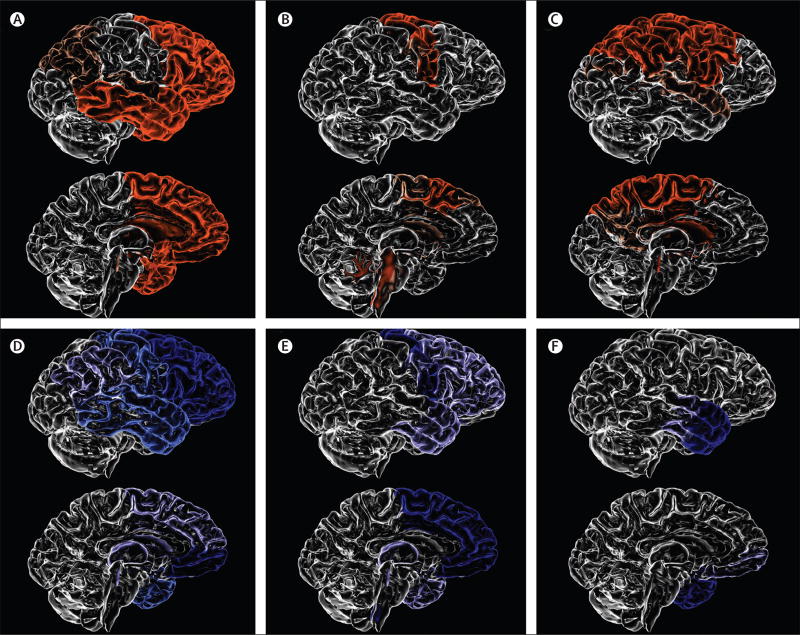
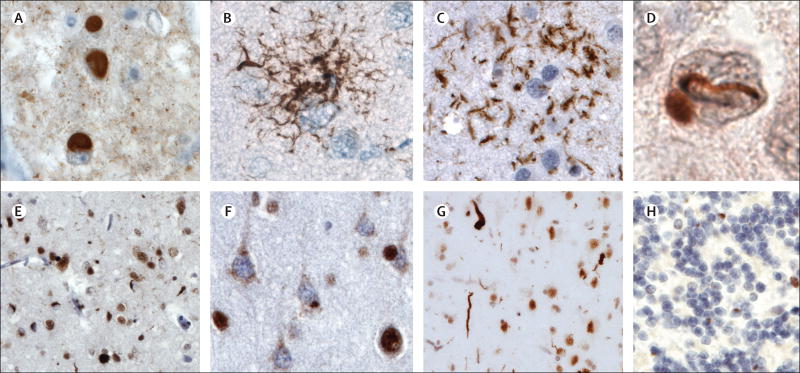
Frontotemporal dementia is an umbrella clinical term that encompasses a group of neurodegenerative diseases characterised by progressive deficits in behaviour, executive function, or language. Frontotemporal dementia is a common type of dementia, particularly in patients younger than 65 years. The disease can mimic many psychiatric disorders because of the prominent behavioural features. Various underlying neuropathological entities lead to the frontotemporal dementia clinical phenotype, all of which are characterised by the selective degeneration of the frontal and temporal cortices. Genetics is an important risk factor for frontotemporal dementia. Advances in clinical, imaging, and molecular characterisation have increased the accuracy of frontotemporal dementia diagnosis, thus allowing for the accurate differentiation of these syndromes from psychiatric disorders. As the understanding of the molecular basis for frontotemporal dementia improves, rational therapies are beginning to emerge.
额颞叶痴呆是一个综合性临床术语,涵盖了一组神经退行性疾病,其特征为行为、执行功能或语言方面的进行性缺陷。额颞叶痴呆是一种常见的痴呆类型,在65岁以下的患者中尤为常见。由于突出的行为特征,该疾病可能会模仿许多精神障碍。各种潜在的神经病理学实体导致了额颞叶痴呆的临床表型,所有这些表型的特征都是额叶和颞叶皮质的选择性退化。遗传学是额颞叶痴呆的一个重要危险因素。临床、影像学和分子特征方面的进展提高了额颞叶痴呆诊断的准确性,从而能够将这些综合征与精神障碍准确区分开来。随着对额颞叶痴呆分子基础的理解不断深入,合理的治疗方法开始出现。