Simmons Kimber M, Michels Aaron W
Pediatric Endocrinology and Diabetes Fellow, Children's Hospital Colorado, Aurora, Colorado, US.
Assistant Professor of Pediatrics & Medicine, Barbara Davis Center for Childhood Diabetes, University of Colorado, Denver, US.
US Endocrinol. 2015;11(1):10-6. doi: 10.17925/use.2015.11.1.10. Epub 2015 Apr 24.
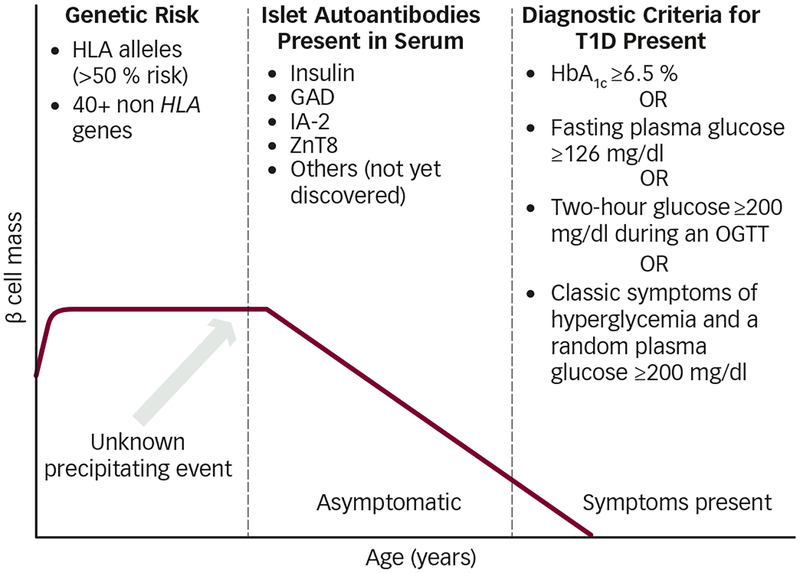
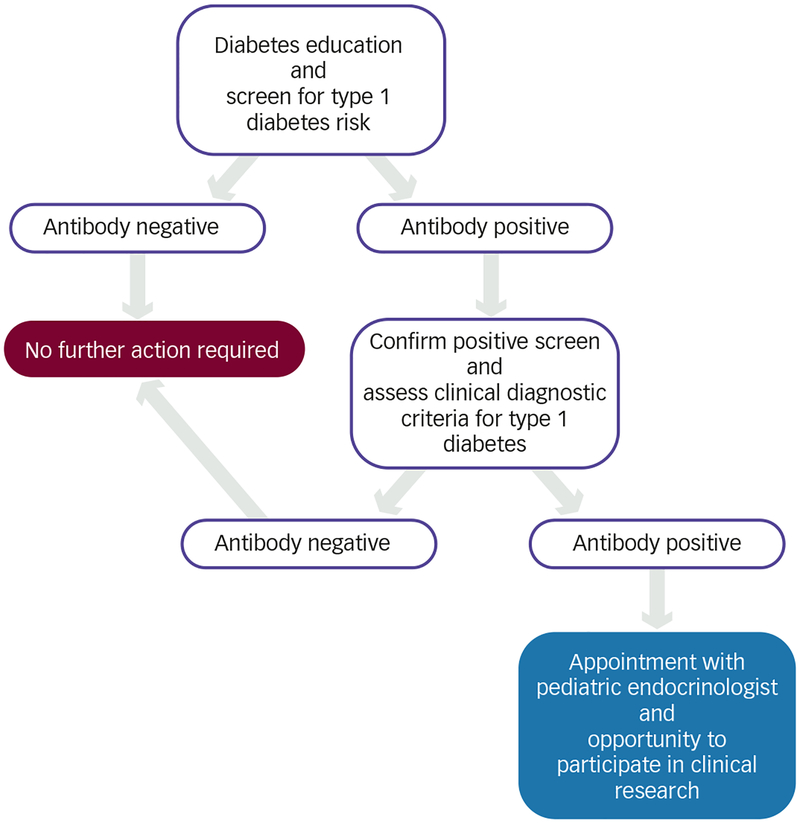
Type 1 diabetes (T1D) is a chronic autoimmune disease characterized by destruction of insulin-producing β cells in the pancreas. The incidence of T1D is increasing dramatically, and the prevalence has doubled in the last 2 decades, further increasing the morbidity and mortality associated with the disease. T1D is now predictable with the measurement of antibodies directed against β cell proteins. Islet autoantibodies (IAs) are detectable from the peripheral blood months to years before clinical diagnosis. With the presence of two or more antibodies, the risk for developing T1D is nearly 100 % given enough time. Targeted screening for T1D risk has been carried out in first-degree relatives and those with a significant genetic risk. However, more than 85 % of individuals who are diagnosed with T1D do not have a family history. In light of the predictability of T1D and recent advances in IA measurement, general population screening is on the horizon. We provide an overview of the history of general population screening and discuss the rationale for and arguments against screening the general population for T1D risk.
1型糖尿病(T1D)是一种慢性自身免疫性疾病,其特征是胰腺中产生胰岛素的β细胞被破坏。T1D的发病率正在急剧上升,在过去20年中患病率翻了一番,进一步增加了与该疾病相关的发病率和死亡率。现在,通过检测针对β细胞蛋白的抗体可以预测T1D。在临床诊断前数月至数年,胰岛自身抗体(IAs)可在外周血中检测到。如果存在两种或更多种抗体,假以时日,患T1D的风险几乎为100%。已经对一级亲属和具有显著遗传风险的人群进行了T1D风险的靶向筛查。然而,超过85%被诊断为T1D的个体没有家族病史。鉴于T1D的可预测性以及IAs检测的最新进展,对普通人群进行筛查已指日可待。我们概述了普通人群筛查的历史,并讨论了对普通人群进行T1D风险筛查的理由和反对意见。