Zhang Qian, Chen Yongfeng, Hu Shi-Qi, Pu Yu-Mei, Zhang Kai, Wang Yu-Xin
Department of Oral and Maxillofacial Surgery, Nanjing Stomatological Hospital, Medical School of Nanjing University, Nanjing, China.
Department of Stomatology, The First Affiliated Hospital of Bengbu Medical College, Bengbu, China.
Ann Transl Med. 2020 Nov;8(22):1492. doi: 10.21037/atm-20-6338.
The human papillomavirus (HPV) is emerging as an important risk factor in head and neck squamous cell carcinoma (HNSCC) patients. This has been observed particularly in the case of HPV16. The HPV16+ HNSCC subtype has distinct pathological, clinical, molecular, and prognostic characteristics. This study aimed to identify potential microRNAs (miRNAs) and their roles in HPV16+ HNSCC progression.
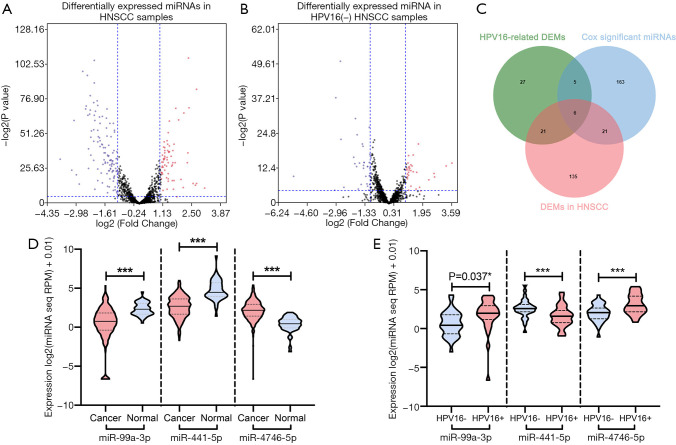
miRNA, mRNA and the clinical data of 519 HNSCC and 44 HNSCC-negative samples were obtained from The Cancer Genome Atlas (TCGA) database. Differentially expressed miRNAs (DEMs) in HPV16-related HNSCC tissues with prognostic value were selected. DEM levels were assessed based on clinicopathological parameters and overall survival (OS). Target genes were also predicted and functional analysis based on Gene Set Enrichment Analysis (GSEA) were then performed.
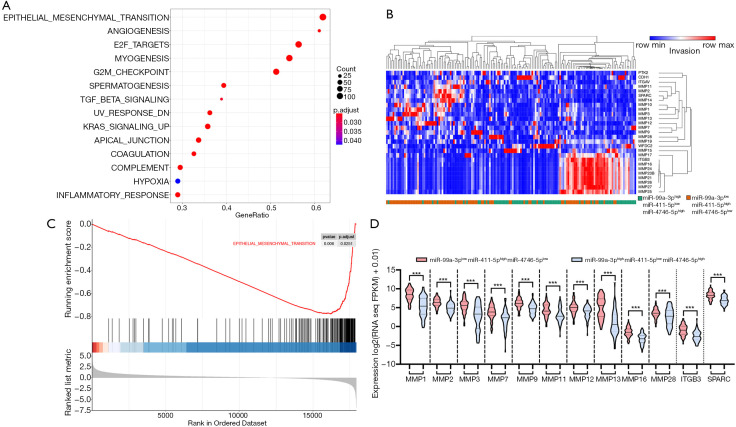
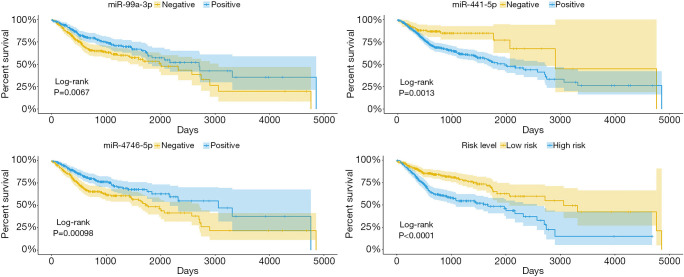
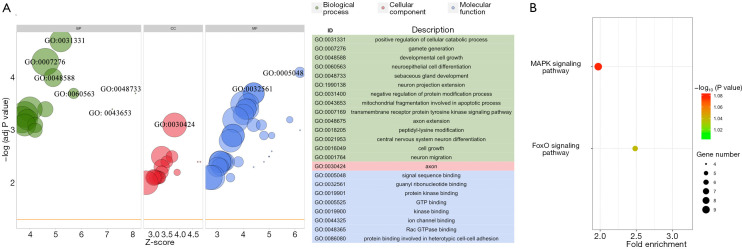
In HPV16+ HNSCC tissues, miR-99a-3p and miR-4746-5p were significantly upregulated. In contrast, miR-411-5p was shown to be downregulated. miR-99a-3pmiR-411-5pmiR-4746-5p expression could estimate improved OS and low frequent perineural invasion (PNI). Predicted target genes were enriched in cell growth, neuroepithelial cell differentiation, MAPK and FoxO signaling pathways. Epithelial mesenchymal transition (EMT) gene set and invasion related genes were downregulated in miR-99a-3pmiR-411-5pmiR-4746-5p HNSCC patients.
miR-99a-3p, miR-411-5p and miR-4746-5p might participate in HPV16+ HNSCC progression through EMT related pathways and affect prognosis.
人乳头瘤病毒(HPV)正成为头颈部鳞状细胞癌(HNSCC)患者的一个重要风险因素。这在HPV16的病例中尤为明显。HPV16阳性的HNSCC亚型具有独特的病理、临床、分子和预后特征。本研究旨在鉴定潜在的微小RNA(miRNA)及其在HPV16阳性HNSCC进展中的作用。
从癌症基因组图谱(TCGA)数据库中获取了519例HNSCC和44例HNSCC阴性样本的miRNA、mRNA及临床数据。筛选出在HPV16相关HNSCC组织中具有预后价值的差异表达miRNA(DEM)。基于临床病理参数和总生存期(OS)评估DEM水平。还对靶基因进行了预测,并基于基因集富集分析(GSEA)进行了功能分析。
在HPV16阳性的HNSCC组织中,miR-99a-3p和miR-4746-5p显著上调。相比之下,miR-411-5p被证明下调。miR-99a-3p、miR-411-5p、miR-4746-5p的表达可预测更好的OS和较低的神经周浸润(PNI)频率。预测的靶基因富集于细胞生长、神经上皮细胞分化、MAPK和FoxO信号通路。在miR-99a-3p、miR-411-5p、miR-4746-5p的HNSCC患者中,上皮间质转化(EMT)基因集和侵袭相关基因下调。
miR-99a-3p、miR-411-5p和miR-4746-5p可能通过与EMT相关的途径参与HPV16阳性HNSCC的进展并影响预后。