Javed Asad, Milhem Mohammed
Department of Internal Medicine, Division of Hematology and Oncology, University of Iowa, Iowa City, IA 52242, USA.
Holden Comprehensive Cancer Center, University of Iowa, Iowa City, IA 52242, USA.
Cancers (Basel). 2020 Dec 9;12(12):3694. doi: 10.3390/cancers12123694.
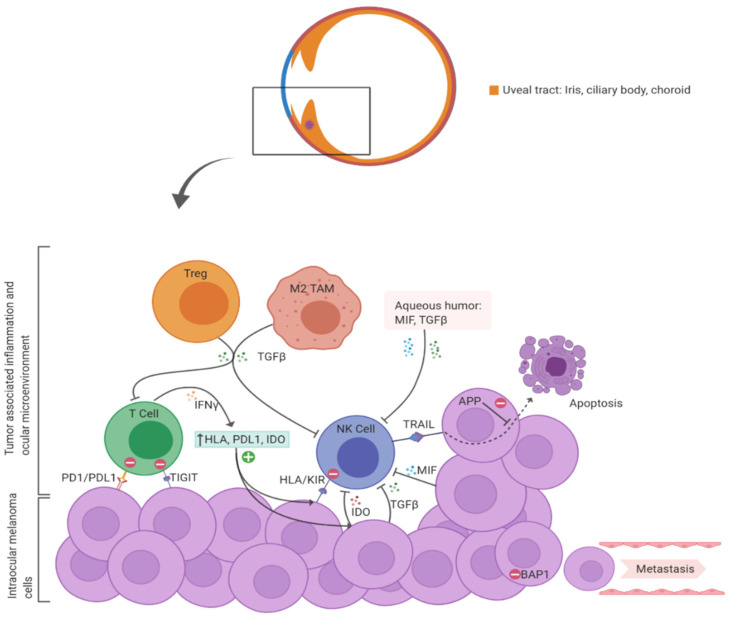
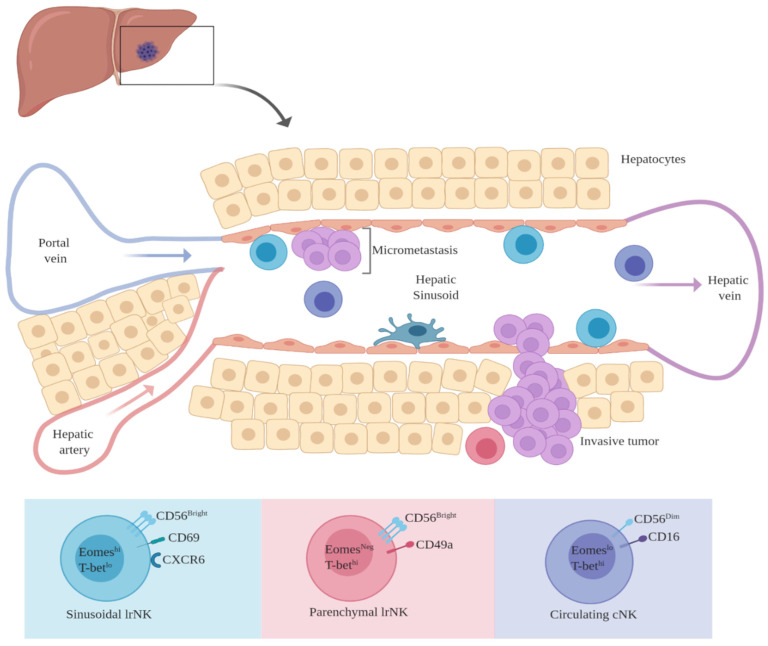
Uveal melanoma has a high mortality rate following metastasis to the liver. Despite advances in systemic immune therapy, treatment of metastatic uveal melanoma (MUM) has failed to achieve long term durable responses. Barriers to success with immune therapy include the immune regulatory nature of uveal melanoma as well as the immune tolerant environment of the liver. To adequately harness the anti-tumor potential of the immune system, non-T cell-based approaches need to be explored. Natural Killer (NK) cells possess potent ability to target tumor cells via innate and adaptive responses. In this review, we discuss evidence that highlights the role of NK cell surveillance and targeting of uveal melanoma. We also discuss the repertoire of intra-hepatic NK cells. The human liver has a vast and diverse lymphoid population and NK cells comprise 50% of the hepatic lymphocytes. Hepatic NK cells share a common niche with uveal melanoma micro-metastasis within the liver sinusoids. It is, therefore, crucial to understand and investigate the role of intra-hepatic NK cells in the control or progression of MUM.
葡萄膜黑色素瘤转移至肝脏后死亡率很高。尽管全身免疫治疗取得了进展,但转移性葡萄膜黑色素瘤(MUM)的治疗仍未能实现长期持久缓解。免疫治疗成功的障碍包括葡萄膜黑色素瘤的免疫调节特性以及肝脏的免疫耐受环境。为了充分发挥免疫系统的抗肿瘤潜力,需要探索基于非T细胞的方法。自然杀伤(NK)细胞具有通过先天性和适应性反应靶向肿瘤细胞的强大能力。在本综述中,我们讨论了突出NK细胞监测和靶向葡萄膜黑色素瘤作用的证据。我们还讨论了肝内NK细胞的组成。人类肝脏有大量多样的淋巴细胞群体,NK细胞占肝淋巴细胞的50%。肝内NK细胞与肝血窦内葡萄膜黑色素瘤微转移共享一个共同的微环境。因此,了解和研究肝内NK细胞在MUM控制或进展中的作用至关重要。