Marine Ecology, GEOMAR Helmholtz Centre for Ocean Research, Düsternbrooker Weg 20, 24105, Kiel, Germany.
Christian-Albrechts University of Kiel, Düsternbrooker Weg 20, 24105, Kiel, Germany.
Sci Rep. 2020 Dec 14;10(1):21934. doi: 10.1038/s41598-020-78667-7.
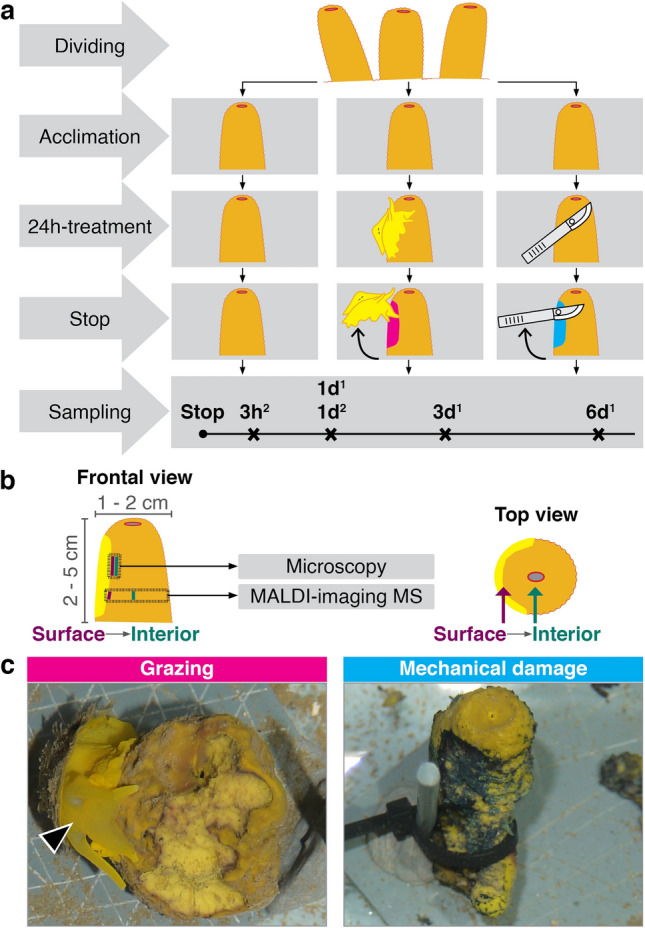
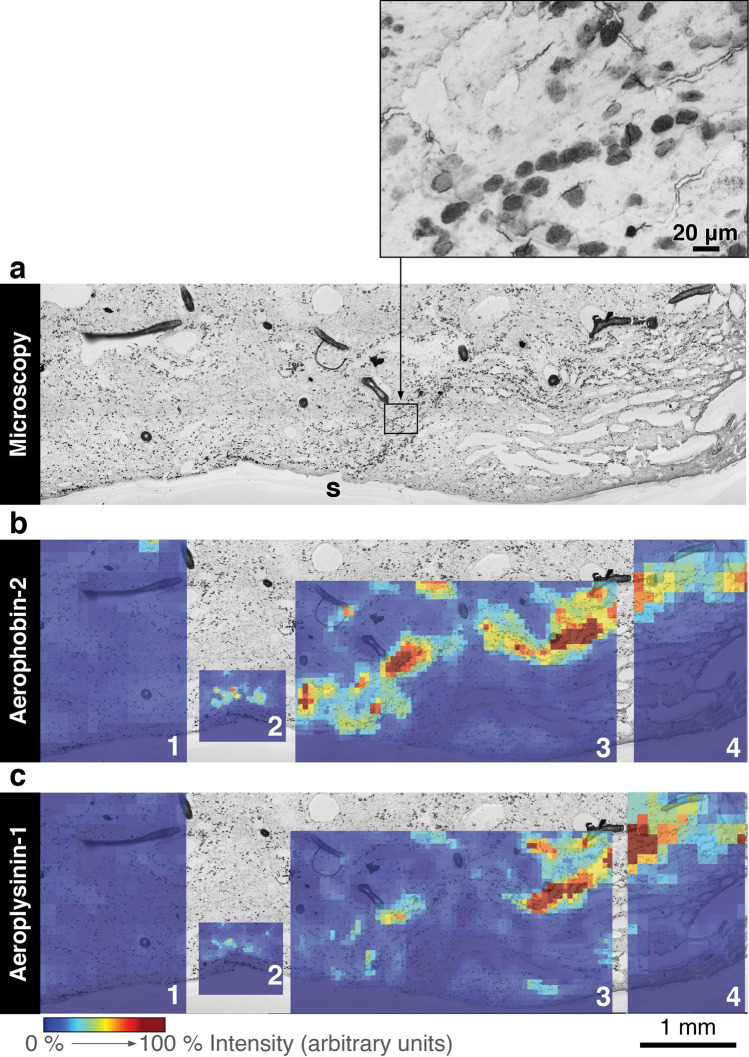
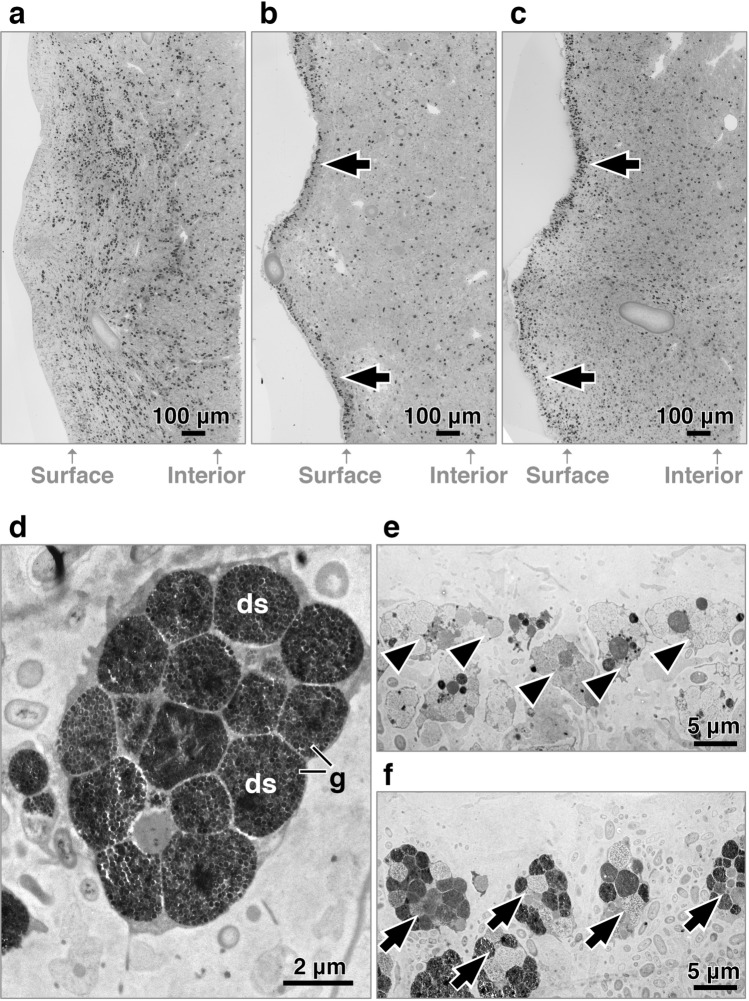
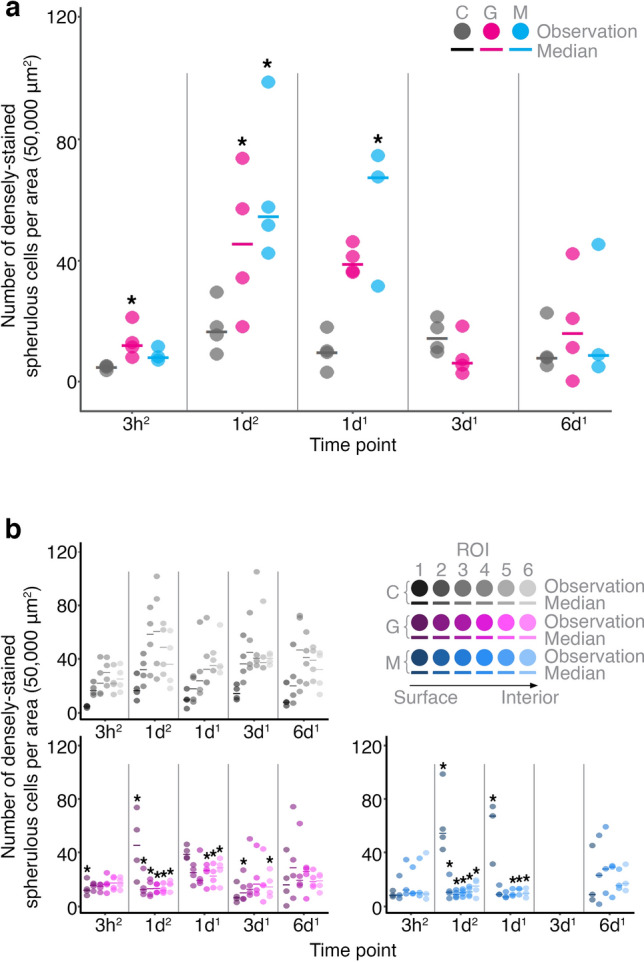
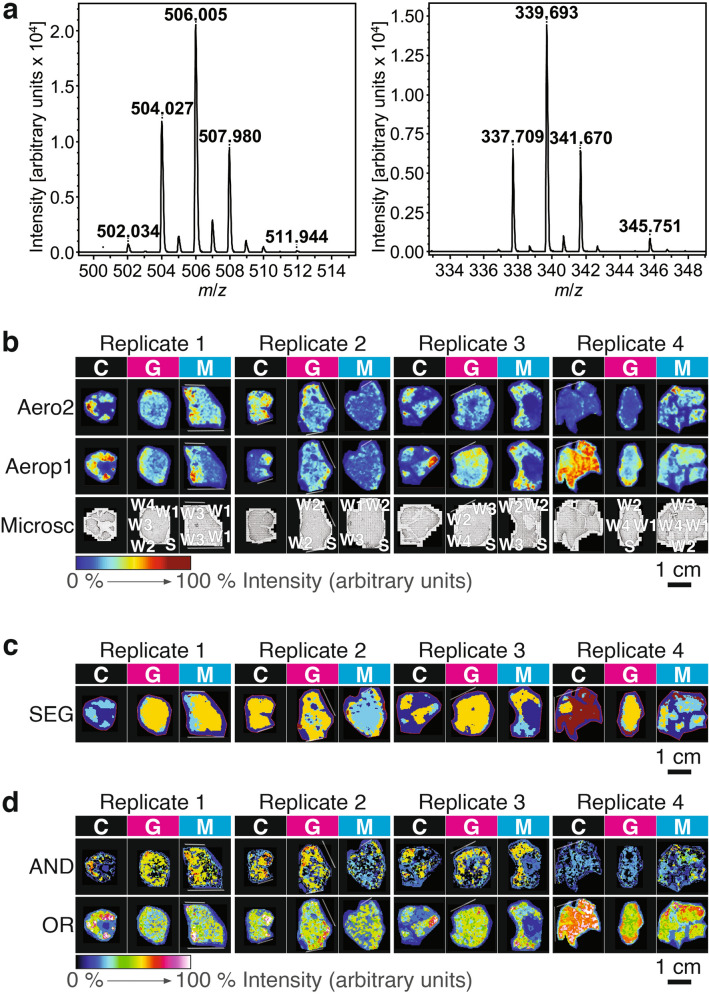
Sponges thrive in marine benthic communities due to their specific and diverse chemical arsenal against predators and competitors. Yet, some animals specifically overcome these defences and use sponges as food and home. Most research on sponge chemical ecology has characterised crude extracts and investigated defences against generalist predators like fish. Consequently, we know little about chemical dynamics in the tissue and responses to specialist grazers. Here, we studied the response of the sponge Aplysina aerophoba to grazing by the opisthobranch Tylodina perversa, in comparison to mechanical damage, at the cellular (via microscopy) and chemical level (via matrix-assisted laser desorption/ionization imaging mass spectrometry, MALDI-imaging MS). We characterised the distribution of two major brominated alkaloids in A. aerophoba, aerophobin-2 and aeroplysinin-1, and identified a generalised wounding response that was similar in both wounding treatments: (i) brominated compound-carrying cells (spherulous cells) accumulated at the wound and (ii) secondary metabolites reallocated to the sponge surface. Upon mechanical damage, the wound turned dark due to oxidised compounds, causing T. perversa deterrence. During grazing, T. perversa's way of feeding prevented oxidation. Thus, the sponge has not evolved a specific response to this specialist predator, but rather relies on rapid regeneration and flexible allocation of constitutive defences.
海绵在海洋底栖生物群落中茁壮成长,因为它们具有针对捕食者和竞争者的特定而多样的化学武器库。然而,有些动物专门克服了这些防御机制,将海绵作为食物和栖息地。大多数关于海绵化学生态学的研究都对粗提取物进行了特征描述,并研究了针对鱼类等一般捕食者的防御机制。因此,我们对组织中的化学动态以及对专门食草动物的反应知之甚少。在这里,我们研究了海绵 Aplysina aerophoba 对腹足类食草动物 Tylodina perversa 的摄食反应,与机械损伤相比,在细胞水平(通过显微镜)和化学水平(通过基质辅助激光解吸/电离成像质谱,MALDI-imaging MS)进行了研究。我们对 Aplysina aerophoba 中两种主要的溴化生物碱 aerophobin-2 和 aeroplysinin-1 的分布进行了描述,并确定了一种普遍的创伤反应,两种创伤处理方式均存在这种反应:(i)含溴化合物的细胞(球形细胞)在伤口处聚集;(ii)次生代谢物重新分配到海绵表面。在机械损伤后,由于氧化化合物的存在,伤口会变暗,从而阻止了 T. perversa 的摄食。在摄食过程中,T. perversa 的摄食方式阻止了氧化作用。因此,海绵并没有针对这种专门的捕食者进化出特定的反应,而是依赖于快速的再生和灵活的组成防御机制的分配。