Rosario Fredrick J, Powell Theresa L, Gupta Madhulika B, Cox Laura, Jansson Thomas
Division of Reproductive Sciences, Department of Obstetrics and Gynecology, University of Colorado Anschutz Medical Campus, Aurora, CO, United States.
Section of Neonatology, Department of Pediatrics, University of Colorado Anschutz Medical Campus, Aurora, CO, United States.
Front Cell Dev Biol. 2020 Nov 26;8:583801. doi: 10.3389/fcell.2020.583801. eCollection 2020.
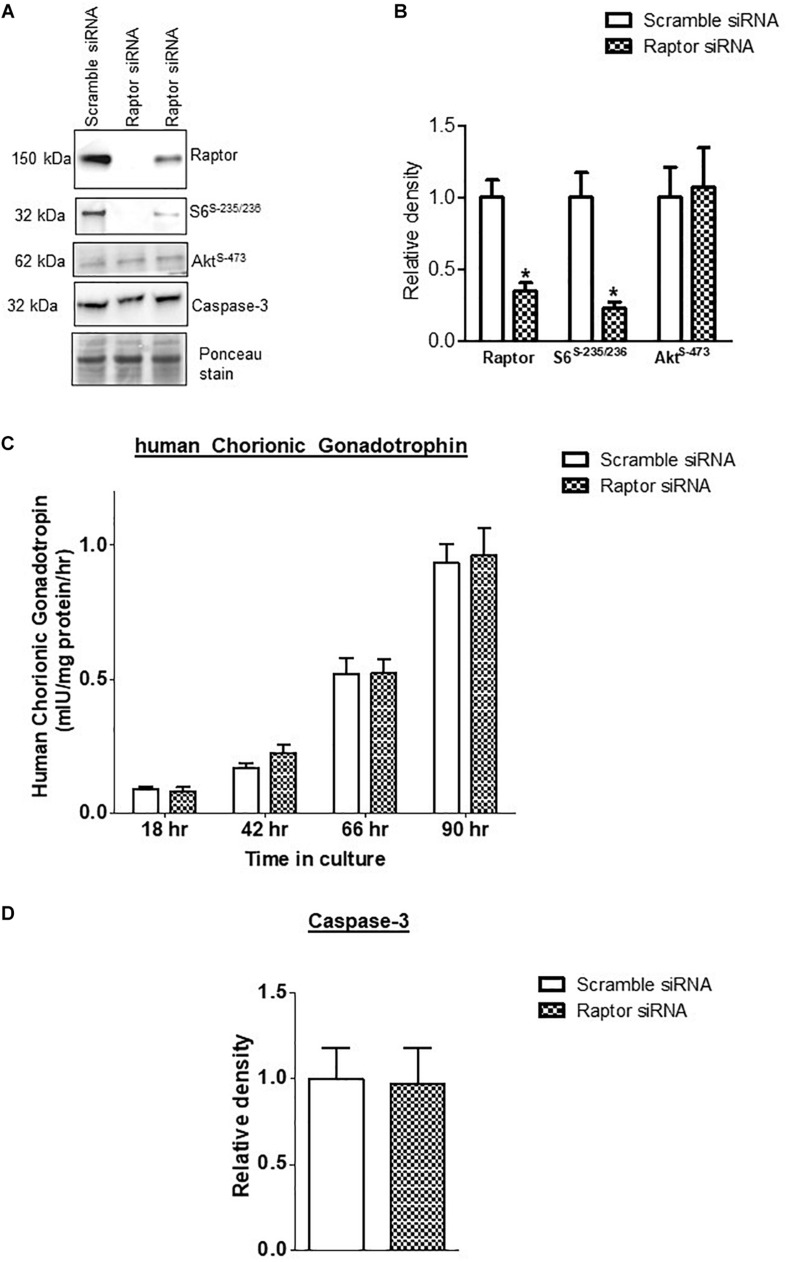
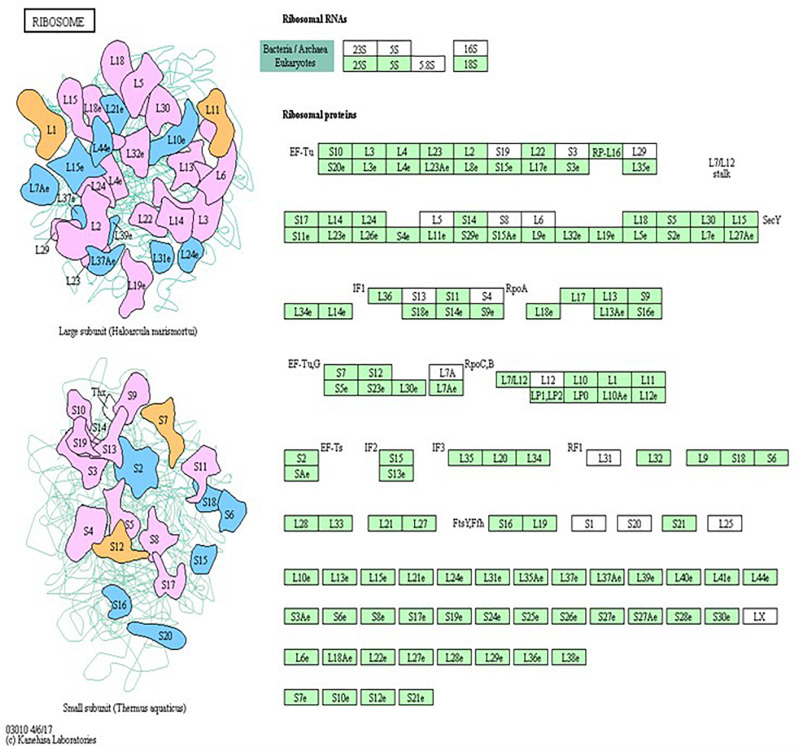
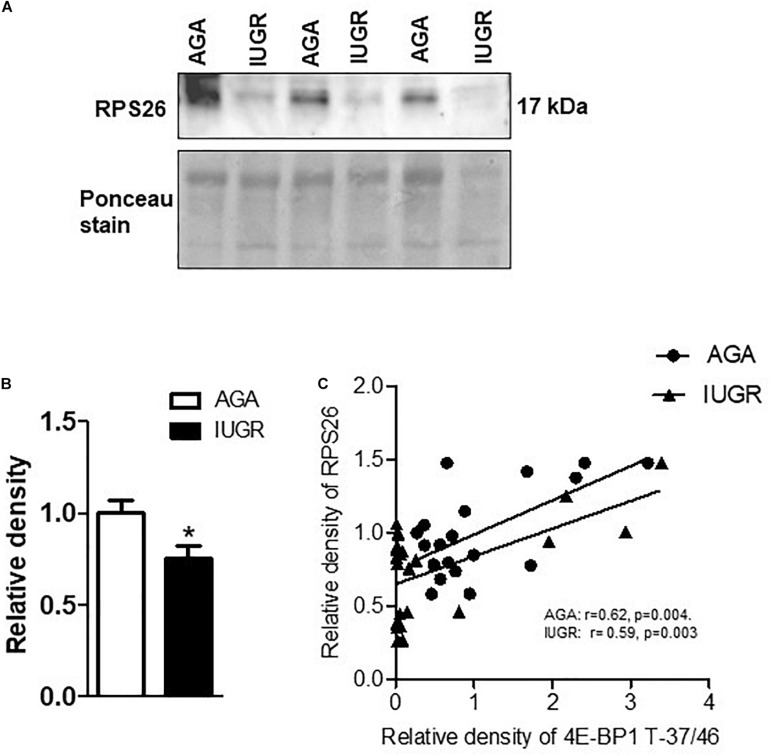
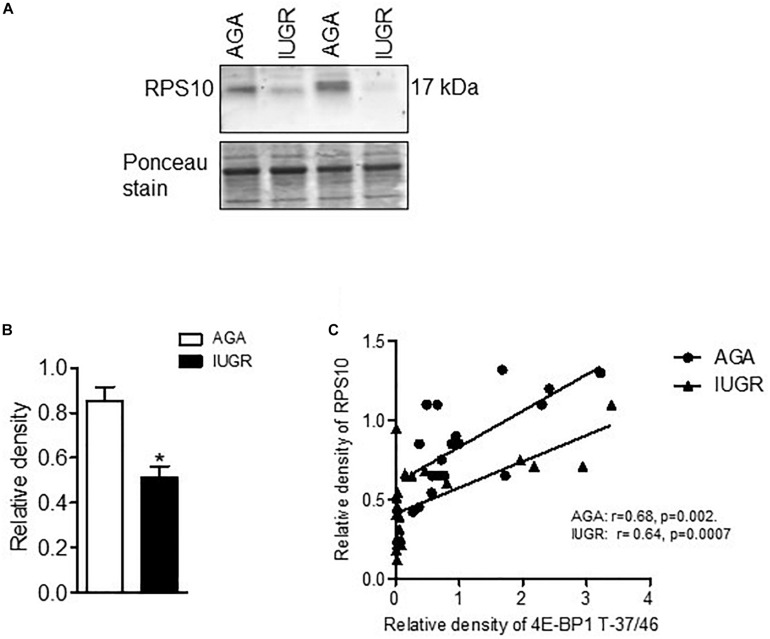
Mechanistic Target of Rapamycin Complex 1 (mTORC1) serves as positive regulator of placental nutrient transport and mitochondrial respiration. The role of mTORC1 signaling in modulating other placental functions is largely unexplored. We used gene array following silencing of raptor to identify genes regulated by mTORC1 in primary human trophoblast (PHT) cells. Seven hundred and thirty-nine genes were differentially expressed; 487 genes were down-regulated and 252 up-regulated. Bioinformatic analyses demonstrated that inhibition of mTORC1 resulted in decreased expression of genes encoding ribosomal proteins in the 60S and 40S ribosome subunits. Furthermore, down-regulated genes were functionally enriched in genes involved in eIF2, sirtuin and mTOR signaling, mitochondrial function, and glutamine and zinc transport. Stress response genes were enriched among up-regulated genes following mTORC1 inhibition. The protein expression of ribosomal proteins RPL26 (RPL26) and Ribosomal Protein S10 (RPS10) was decreased and positively correlated to mTORC1 signaling and System A amino acid transport in human placentas collected from pregnancies complicated by intrauterine growth restriction (IUGR). In conclusion, mTORC1 signaling regulates the expression of trophoblast genes involved in ribosome and protein synthesis, mitochondrial function, lipid metabolism, nutrient transport, and angiogenesis, representing novel links between mTOR signaling and multiple placental functions critical for normal fetal growth and development.
雷帕霉素复合物1的机制性靶点(mTORC1)作为胎盘营养物质转运和线粒体呼吸的正调控因子。mTORC1信号在调节胎盘其他功能中的作用在很大程度上尚未得到探索。我们在沉默猛禽蛋白后使用基因芯片来鉴定原代人滋养层(PHT)细胞中受mTORC1调控的基因。739个基因表达存在差异;487个基因下调,252个基因上调。生物信息学分析表明,抑制mTORC1导致60S和40S核糖体亚基中编码核糖体蛋白的基因表达降低。此外,下调的基因在参与真核起始因子2(eIF2)、沉默调节蛋白和mTOR信号、线粒体功能以及谷氨酰胺和锌转运的基因中功能富集。mTORC1抑制后,应激反应基因在上调基因中富集。在因宫内生长受限(IUGR)而收集的人胎盘中,核糖体蛋白RPL26(RPL26)和核糖体蛋白S10(RPS10)的蛋白表达降低,且与mTORC1信号和A系统氨基酸转运呈正相关。总之,mTORC1信号调节参与核糖体和蛋白质合成、线粒体功能、脂质代谢、营养物质转运及血管生成的滋养层基因的表达,这代表了mTOR信号与对正常胎儿生长发育至关重要的多种胎盘功能之间的新联系。