de Wit Jan, van der Kraan Alicia, Theeuwes Joep
Department of Communication and Cognition, Tilburg Center for Cognition and Communication, Tilburg School of Humanities and Digital Sciences, Tilburg University, Tilburg, Netherlands.
Front Psychol. 2020 Nov 20;11:586975. doi: 10.3389/fpsyg.2020.586975. eCollection 2020.
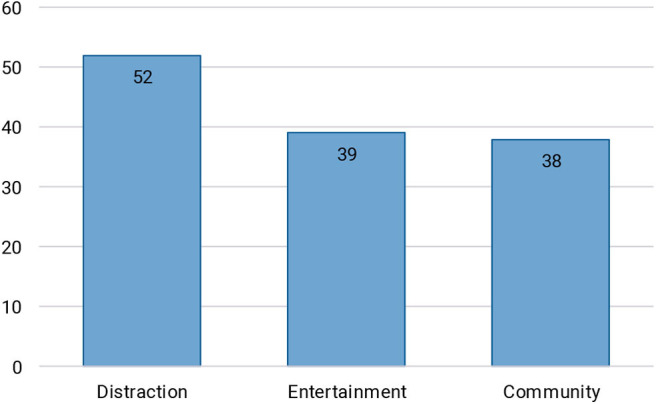
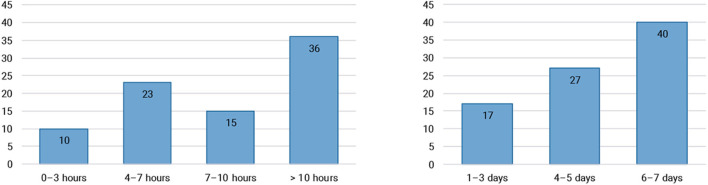
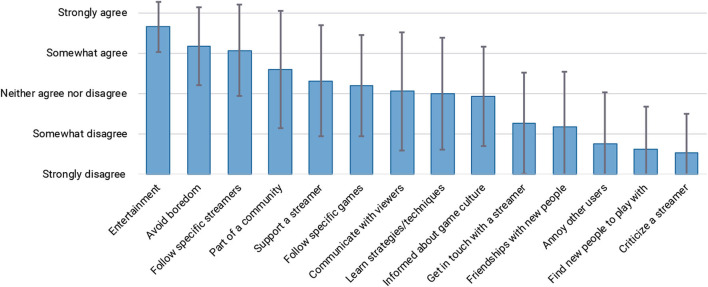
Live streaming platforms such as Twitch that facilitate participatory online communities have become an integral part of game culture. Users of these platforms are predominantly teenagers and young adults, who increasingly spend time socializing online rather than offline. This shift to online behavior can be a double-edged sword when coping with difficult periods in life such as relationship issues, the death of a loved one, or job loss. On the one hand, platforms such as Twitch offer pleasure, distraction, and relatedness with others to help with coping, and the increased sense of anonymity and control could stimulate self-disclosure. However, the prevalence of trolling and memes may also discourage people from opening up, and relationships that are built online-especially those with microcelebrity streamers-could be perceived as more meaningful than they actually are. To create a deeper understanding of Twitch as a new media platform embedded in game culture, and how users perceive its potential as a coping mechanism, we have conducted a first exploration by means of a survey. The questions focused on general Twitch behavior, the difficult period in life, and the role of Twitch during this period. It was distributed online among people who considered themselves active Twitch users, and who had gone through a difficult period. Eighty-four participants completed the entire survey. The majority of participants indicated that Twitch helped them cope, and that it became a larger part of their lives during the difficult period compared to regular viewing. Recurring themes were the entertainment, distraction, and sense of community Twitch offers. Viewing behavior during difficult periods appears to remain largely the same in terms of the streamers that are watched, although time spent viewing increases, and there is a change toward more time spent actively watching rather than having the stream on in the background. With this work, we aim to create a deeper understanding of Twitch as a platform, and its importance for gamers that are going through difficult periods in life.
像Twitch这样促进参与式在线社区的直播平台已成为游戏文化不可或缺的一部分。这些平台的用户主要是青少年和年轻人,他们越来越多地在网上社交而非线下社交。在应对生活中的困难时期,如人际关系问题、亲人去世或失业时,这种向在线行为的转变可能是一把双刃剑。一方面,像Twitch这样的平台提供乐趣、消遣以及与他人的联系,以帮助应对困难,而增强的匿名感和掌控感可能会刺激自我表露。然而,网络喷子和梗图的盛行也可能阻碍人们敞开心扉,而且在网上建立的关系——尤其是与小有名气的主播的关系——可能被认为比实际情况更有意义。为了更深入地理解Twitch作为嵌入游戏文化的新媒体平台,以及用户如何看待其作为一种应对机制的潜力,我们通过一项调查进行了首次探索。问题集中在Twitch的一般行为、生活中的困难时期以及Twitch在此期间的作用。该调查在那些认为自己是活跃的Twitch用户且经历过困难时期的人群中在线分发。84名参与者完成了整个调查。大多数参与者表示Twitch帮助他们应对困难,并且在困难时期它在他们生活中的占比相较于正常观看时更大。反复出现的主题是Twitch提供的娱乐、消遣和社区感。在困难时期观看直播的行为在观看的主播方面似乎基本保持不变,尽管观看时间增加了,并且出现了向更多时间主动观看而非让直播在后台播放的转变。通过这项工作,我们旨在更深入地理解Twitch作为一个平台,以及它对正经历生活困难时期的游戏玩家的重要性。