Department of Pathobiochemistry, Graduate School of Medicine, Osaka City University, Osaka, Japan.
Division of Mathematical Science, Department of Systems Innovation, Graduate School of Engineering Science, Osaka University, Osaka, Japan.
Front Immunol. 2020 Nov 23;11:601926. doi: 10.3389/fimmu.2020.601926. eCollection 2020.
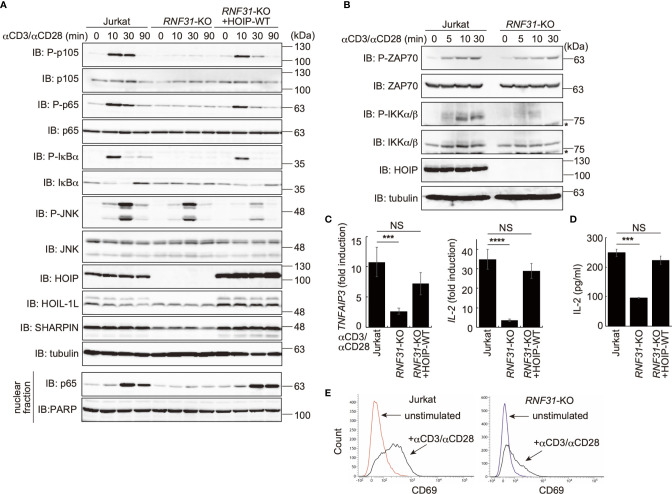
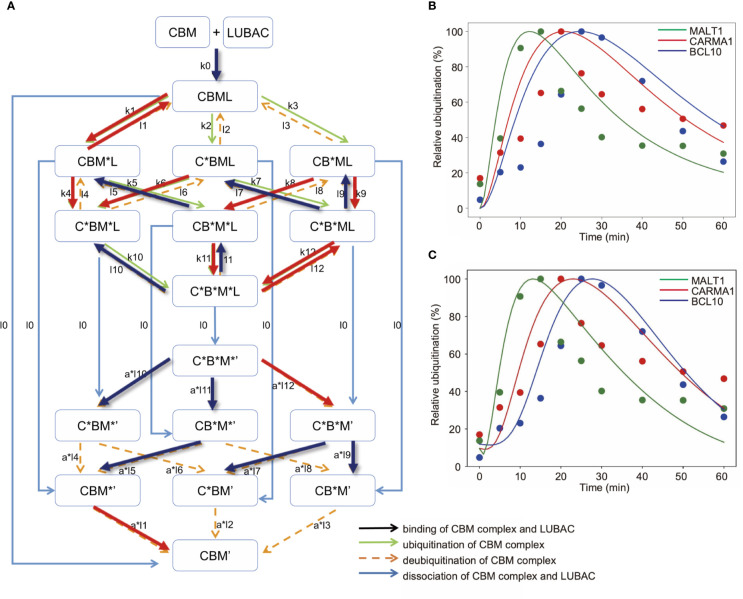
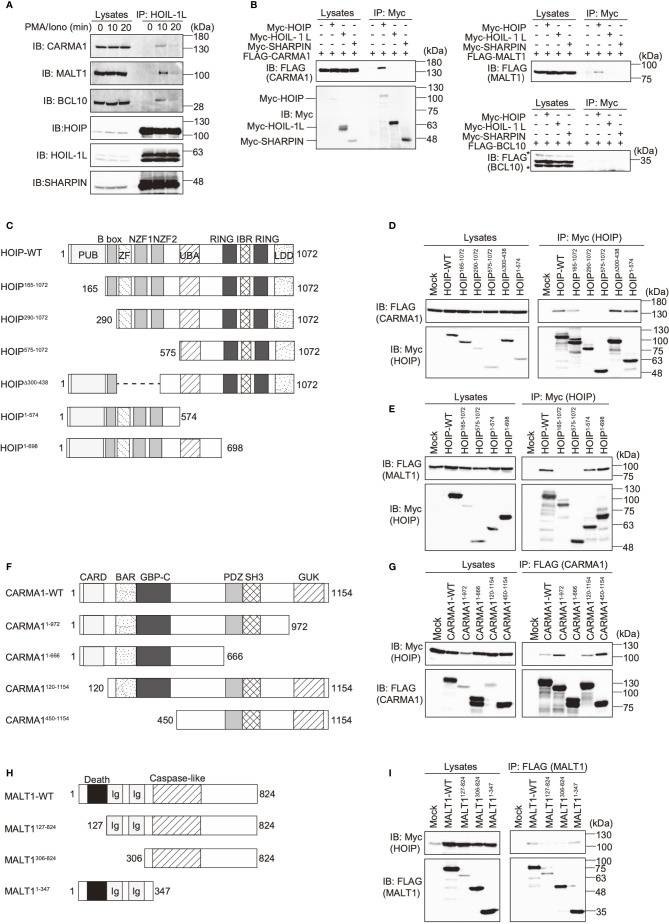
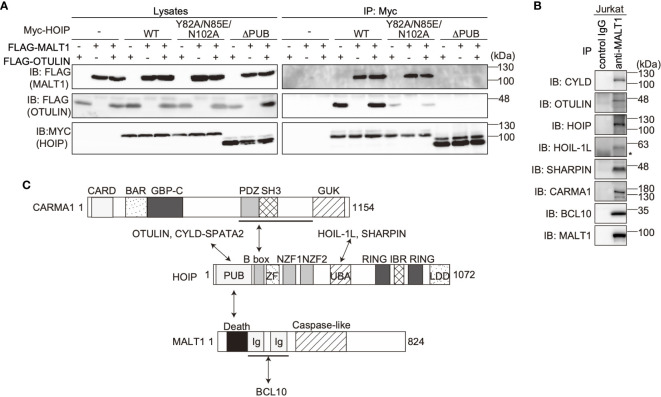
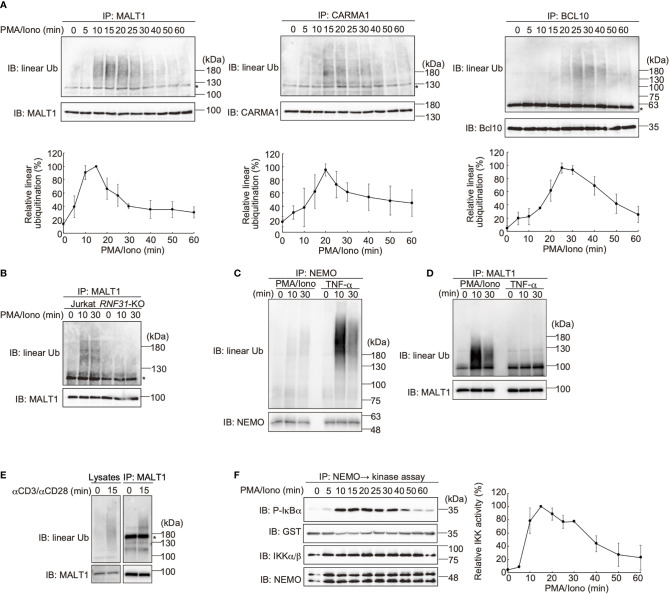
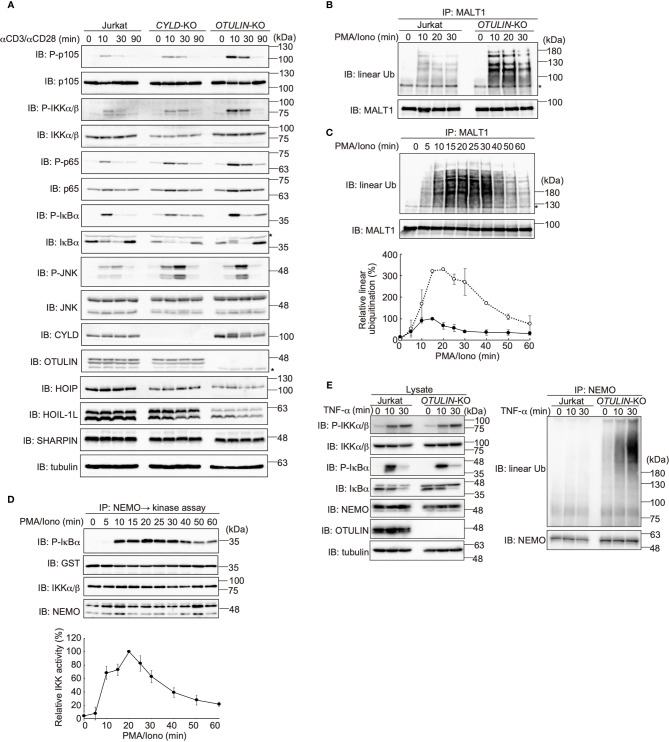
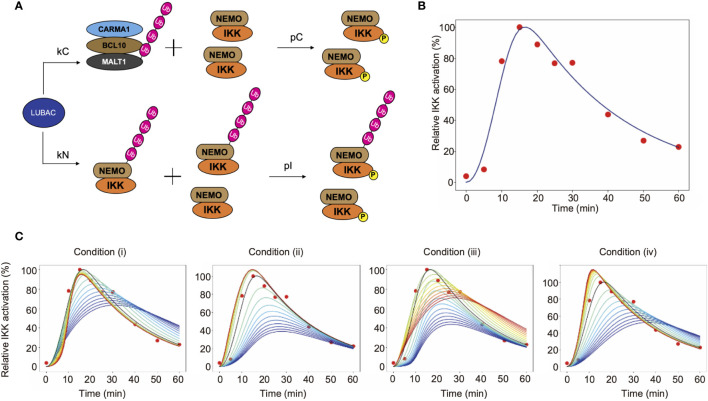
The LUBAC ubiquitin ligase complex, composed of the HOIP, HOIL-1L, and SHARPIN subunits, stimulates the canonical nuclear factor-κB (NF-κB) activation pathways through its Met1-linked linear ubiquitination activity. Here we performed cellular and mathematical modeling analyses of the LUBAC involvement in the T cell receptor (TCR)-mediated NF-κB activation pathway, using the Jurkat human T cell line. LUBAC is indispensable for TCR-induced NF-κB and T cell activation, and transiently associates with and linearly ubiquitinates the CARMA1-BCL10-MALT1 (CBM) complex, through the catalytic HOIP subunit. In contrast, the linear ubiquitination of NEMO, a substrate of the TNF-α-induced canonical NF-κB activation pathway, was limited during the TCR pathway. Among deubiquitinases, OTULIN, but not CYLD, plays a major role in downregulating LUBAC-mediated TCR signaling. Mathematical modeling indicated that linear ubiquitination of the CBM complex accelerates the activation of IκB kinase (IKK), as compared with the activity induced by linear ubiquitination of NEMO alone. Moreover, simulations of the sequential linear ubiquitination of the CBM complex suggested that the allosteric regulation of linear (de)ubiquitination of CBM subunits is controlled by the ubiquitin-linkage lengths. These results indicated that, unlike the TNF-α-induced NF-κB activation pathway, the TCR-mediated NF-κB activation in T lymphocytes has a characteristic mechanism to induce LUBAC-mediated NF-κB activation.
LUBAC 泛素连接酶复合物由 HOIP、HOIL-1L 和 SHARPIN 亚基组成,通过其 Met1 连接的线性泛素化活性刺激经典核因子-κB(NF-κB)激活途径。在这里,我们使用 Jurkat 人 T 细胞系对 LUBAC 参与 T 细胞受体(TCR)介导的 NF-κB 激活途径进行了细胞和数学建模分析。LUBAC 对于 TCR 诱导的 NF-κB 和 T 细胞激活是必不可少的,并且通过催化 HOIP 亚基瞬时与 CARMA1-BCL10-MALT1(CBM)复合物结合并对其进行线性泛素化。相比之下,TNF-α 诱导的经典 NF-κB 激活途径中的 NEMO 的线性泛素化在 TCR 途径中受到限制。在去泛素化酶中,OTULIN 而不是 CYLD 在下调 LUBAC 介导的 TCR 信号中起主要作用。数学建模表明,与单独的 NEMO 线性泛素化诱导的 IκB 激酶(IKK)激活相比,CBM 复合物的线性泛素化加速了 IKK 的激活。此外,对 CBM 复合物的顺序线性泛素化的模拟表明,CBM 亚基的线性(去)泛素化的变构调节受泛素连接长度的控制。这些结果表明,与 TNF-α 诱导的 NF-κB 激活途径不同,T 淋巴细胞中的 TCR 介导的 NF-κB 激活具有诱导 LUBAC 介导的 NF-κB 激活的特征机制。