Shanmugaraj Balamurugan, Rattanapisit Kaewta, Manopwisedjaroen Suwimon, Thitithanyanont Arunee, Phoolcharoen Waranyoo
Research Unit for Plant-produced Pharmaceuticals, Chulalongkorn University, Bangkok, Thailand.
Department of Pharmacognosy and Pharmaceutical Botany, Faculty of Pharmaceutical Sciences, Chulalongkorn University, Bangkok, Thailand.
Front Plant Sci. 2020 Nov 27;11:589995. doi: 10.3389/fpls.2020.589995. eCollection 2020.
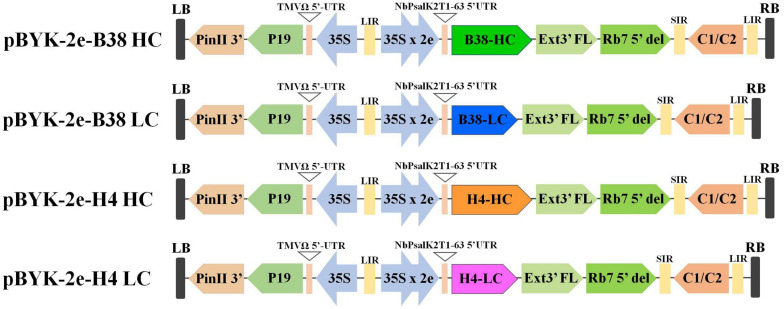
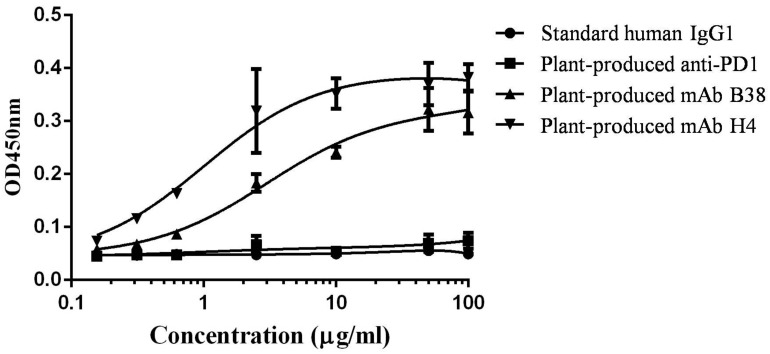
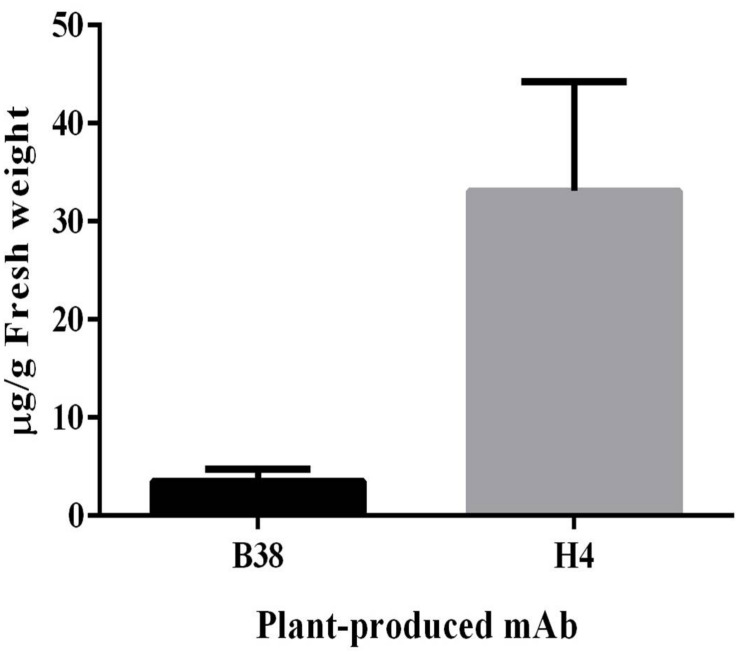
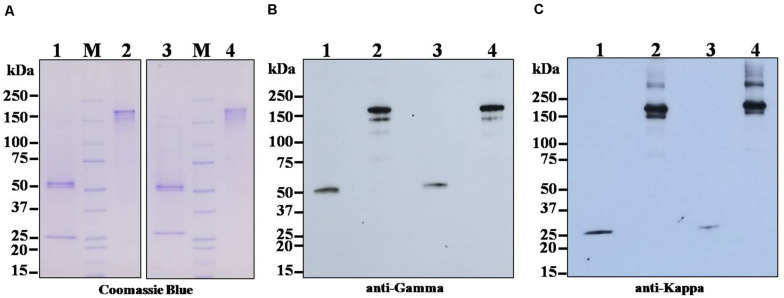
The ongoing coronavirus disease 2019 (COVID-19) outbreak caused by novel zoonotic severe acute respiratory syndrome coronavirus 2 (SARS-CoV-2) was initially reported in Wuhan city, Hubei Province of China, in late December 2019. The rapid global spread of the virus calls for the urgent development of vaccines or therapeutics for human applications to combat the coronavirus infection. Monoclonal antibodies (mAbs) have been utilized as effective therapeutics for treating various infectious diseases. In the present study, we evaluated the feasibility of plant expression system for the rapid production of recently identified therapeutically suitable human anti-SARS-CoV-2 mAbs B38 and H4. Transient co-expression of heavy-chain and light-chain sequences of both the antibodies by using plant expression geminiviral vector resulted in rapid accumulation of assembled mAbs in leaves within 4 days post-infiltration. Furthermore, both the mAbs were purified from the plant crude extracts with single-step protein A affinity column chromatography. The expression level of mAb B38 and H4 was estimated to be 4 and 35 μg/g leaf fresh weight, respectively. Both plant-produced mAbs demonstrated specific binding to receptor binding domain (RBD) of SARS-CoV-2 and exhibited efficient virus neutralization activity . To the best of our knowledge, this is the first report of functional anti-SARS-CoV-2 mAbs produced in plants, which demonstrates the ability of using a plant expression system as a suitable platform for the production of effective, safe, and affordable SARS-CoV-2 mAbs to fight against the spread of this highly infectious pathogen.
由新型人畜共患严重急性呼吸综合征冠状病毒2(SARS-CoV-2)引起的2019冠状病毒病(COVID-19)疫情于2019年12月下旬首次在中国湖北省武汉市报告。该病毒在全球迅速传播,这就迫切需要开发用于人类的疫苗或治疗方法来对抗冠状病毒感染。单克隆抗体(mAb)已被用作治疗各种传染病的有效疗法。在本研究中,我们评估了植物表达系统快速生产最近鉴定出的治疗性适宜的人抗SARS-CoV-2单克隆抗体B38和H4的可行性。通过使用植物表达双生病毒载体瞬时共表达两种抗体的重链和轻链序列,导致组装好的单克隆抗体在浸润后4天内在叶片中快速积累。此外,两种单克隆抗体都通过单步蛋白A亲和柱色谱从植物粗提物中纯化出来。单克隆抗体B38和H4的表达水平估计分别为4和35μg/g叶片鲜重。两种植物产生的单克隆抗体都表现出与SARS-CoV-2受体结合域(RBD)的特异性结合,并表现出有效的病毒中和活性。据我们所知,这是关于在植物中产生功能性抗SARS-CoV-2单克隆抗体的首次报道,这证明了使用植物表达系统作为生产有效、安全且经济实惠的抗SARS-CoV-2单克隆抗体以对抗这种高传染性病原体传播的合适平台的能力。