• 文献检索
  • 文档翻译
  • 深度研究
  • 学术资讯
  • Suppr Zotero 插件Zotero 插件
  • 邀请有礼
  • 套餐&价格
  • 历史记录
应用&插件
Suppr Zotero 插件Zotero 插件浏览器插件Mac 客户端Windows 客户端微信小程序
定价
高级版会员购买积分包购买API积分包
服务
文献检索文档翻译深度研究API 文档MCP 服务
关于我们
关于 Suppr公司介绍联系我们用户协议隐私条款
关注我们

Suppr 超能文献

核心技术专利:CN118964589B侵权必究
粤ICP备2023148730 号-1Suppr @ 2026

文献检索

告别复杂PubMed语法,用中文像聊天一样搜索,搜遍4000万医学文献。AI智能推荐,让科研检索更轻松。

立即免费搜索

文件翻译

保留排版,准确专业,支持PDF/Word/PPT等文件格式,支持 12+语言互译。

免费翻译文档

深度研究

AI帮你快速写综述,25分钟生成高质量综述,智能提取关键信息,辅助科研写作。

立即免费体验

改变生物学家对花朵颜色的看法——颜色是一种感知而非性状。

Changing How Biologists View Flowers-Color as a Perception Not a Trait.

作者信息

Garcia Jair E, Phillips Ryan D, Peter Craig I, Dyer Adrian G

机构信息

Bio-Inspired Digital Sensing Laboratory (BIDS Lab), School of Media and Communication, RMIT University, Melbourne, VIC, Australia.

Department of Ecology, Environment and Evolution, La Trobe University, Bundoora, VIC, Australia.

出版信息

Front Plant Sci. 2020 Nov 19;11:601700. doi: 10.3389/fpls.2020.601700. eCollection 2020.

DOI:10.3389/fpls.2020.601700
PMID:33329670
原文链接:https://pmc.ncbi.nlm.nih.gov/articles/PMC7710862/
Abstract

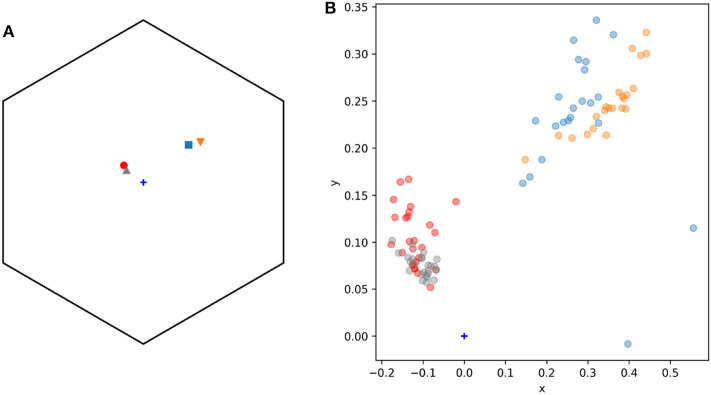
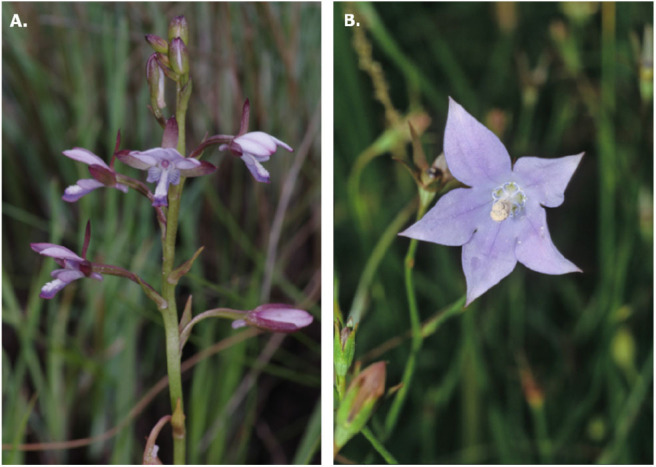
Studying flower color evolution can be challenging as it may require several different areas of expertise, ranging from botany and ecology through to understanding color sensing of insects and thus how they perceive flower signals. Whilst studies often view plant-pollinator interactions from the plant's perspective, there is growing evidence from psychophysics studies that pollinators have their own complex decision making processes depending on their perception of color, viewing conditions and individual experience. Mimicry of rewarding flowers by orchids is a fascinating system for studying the pollinator decision making process, as rewarding model flowering plants and mimics can be clearly characterized. Here, we focus on a system where the rewardless orchid mimics the floral color of (Campanulaceae) to attract its pollinator species, a halictid bee. Using recently developed psychophysics principles, we explore whether the color perception of an insect observer encountering variable model and mimic flower color signals can help explain why species with non-rewarding flowers can exist in nature. Our approach involves the use of color discrimination functions rather than relying on discrimination thresholds, and the use of statistical distributions to model intraspecific color variations. Results show that whilst an experienced insect observer can frequently make accurate discriminations between mimic and rewarding flowers, intraspecific signal variability leads to overlap in the perceived color, which will frequently confuse an inexperienced pollinator. This new perspective provides an improved way to incorporate pollinator decision making into the complex field of plant-pollinator interactions.

摘要

研究花色进化可能具有挑战性,因为这可能需要多个不同领域的专业知识,从植物学和生态学到理解昆虫的颜色感知,进而了解它们如何感知花朵信号。虽然研究通常从植物的角度看待植物与传粉者的相互作用,但越来越多的心理物理学研究证据表明,传粉者有自己复杂的决策过程,这取决于它们对颜色、观察条件和个体经验的感知。兰花对有回报花朵的拟态是研究传粉者决策过程的一个迷人系统,因为有回报的模式开花植物和拟态植物可以被清晰地识别出来。在这里,我们关注一个系统,即无回报的兰花模仿风铃草科植物的花色以吸引其传粉者物种,一种隧蜂。利用最近发展的心理物理学原理,我们探究遇到可变的模式和拟态花朵颜色信号的昆虫观察者的颜色感知是否有助于解释为什么没有回报的花朵物种能够在自然界中存在。我们的方法包括使用颜色辨别函数而不是依赖辨别阈值,以及使用统计分布来模拟种内颜色变化。结果表明,虽然经验丰富的昆虫观察者通常能够准确地区分拟态花和有回报的花,但种内信号变异性导致感知颜色出现重叠,这常常会使缺乏经验的传粉者感到困惑。这种新观点为将传粉者决策纳入植物与传粉者相互作用这一复杂领域提供了一种更好的方法。
https://cdn.ncbi.nlm.nih.gov/pmc/blobs/f0ce/7710862/21be08175bc0/fpls-11-601700-g0006.jpg
https://cdn.ncbi.nlm.nih.gov/pmc/blobs/f0ce/7710862/389ffe6ad49e/fpls-11-601700-g0001.jpg
https://cdn.ncbi.nlm.nih.gov/pmc/blobs/f0ce/7710862/db76be102401/fpls-11-601700-g0002.jpg
https://cdn.ncbi.nlm.nih.gov/pmc/blobs/f0ce/7710862/88bd407b9168/fpls-11-601700-g0003.jpg
https://cdn.ncbi.nlm.nih.gov/pmc/blobs/f0ce/7710862/6558cccb1694/fpls-11-601700-g0004.jpg
https://cdn.ncbi.nlm.nih.gov/pmc/blobs/f0ce/7710862/d72ed127a37c/fpls-11-601700-g0005.jpg
https://cdn.ncbi.nlm.nih.gov/pmc/blobs/f0ce/7710862/21be08175bc0/fpls-11-601700-g0006.jpg
https://cdn.ncbi.nlm.nih.gov/pmc/blobs/f0ce/7710862/389ffe6ad49e/fpls-11-601700-g0001.jpg
https://cdn.ncbi.nlm.nih.gov/pmc/blobs/f0ce/7710862/db76be102401/fpls-11-601700-g0002.jpg
https://cdn.ncbi.nlm.nih.gov/pmc/blobs/f0ce/7710862/88bd407b9168/fpls-11-601700-g0003.jpg
https://cdn.ncbi.nlm.nih.gov/pmc/blobs/f0ce/7710862/6558cccb1694/fpls-11-601700-g0004.jpg
https://cdn.ncbi.nlm.nih.gov/pmc/blobs/f0ce/7710862/d72ed127a37c/fpls-11-601700-g0005.jpg
https://cdn.ncbi.nlm.nih.gov/pmc/blobs/f0ce/7710862/21be08175bc0/fpls-11-601700-g0006.jpg

相似文献

1
Changing How Biologists View Flowers-Color as a Perception Not a Trait.改变生物学家对花朵颜色的看法——颜色是一种感知而非性状。
Front Plant Sci. 2020 Nov 19;11:601700. doi: 10.3389/fpls.2020.601700. eCollection 2020.
2
Mimics and magnets: the importance of color and ecological facilitation in floral deception.拟态与磁体:颜色及生态促进作用在花朵欺骗中的重要性
Ecology. 2008 Jun;89(6):1583-95. doi: 10.1890/07-1098.1.
3
Orchid pollination by sexual deception: pollinator perspectives.兰花的性欺骗授粉:传粉者视角。
Biol Rev Camb Philos Soc. 2011 Feb;86(1):33-75. doi: 10.1111/j.1469-185X.2010.00134.x.
4
Mechanisms and evolution of deceptive pollination in orchids.兰花欺骗性传粉的机制与进化
Biol Rev Camb Philos Soc. 2006 May;81(2):219-35. doi: 10.1017/S1464793105006986.
5
Why are there so many bee-orchid species? Adaptive radiation by intra-specific competition for mnesic pollinators.为什么会有这么多的蜜蜂兰物种?通过对记忆性传粉者的种内竞争实现的适应性辐射。
Biol Rev Camb Philos Soc. 2020 Dec;95(6):1630-1663. doi: 10.1111/brv.12633. Epub 2020 Sep 21.
6
The potential for floral mimicry in rewardless orchids: an experimental study.无花蜜兰花的拟花现象潜力:一项实验研究。
Proc Biol Sci. 2002 Jul 7;269(1498):1389-95. doi: 10.1098/rspb.2002.2018.
7
What pollinators see does not match what they smell: Absence of color-fragrance association in the deceptive orchid Ionopsis utricularioides.传粉者所见与所闻并不匹配:欺骗性兰花兜兰属中不存在颜色-香味关联。
Phytochemistry. 2021 Feb;182:112591. doi: 10.1016/j.phytochem.2020.112591. Epub 2020 Dec 14.
8
Effects of distance from models on the fitness of floral mimics.与模型的距离对花类拟态植物适合度的影响。
Plant Biol (Stuttg). 2017 May;19(3):438-443. doi: 10.1111/plb.12555. Epub 2017 Feb 26.
9
Do pollinators influence the assembly of flower colours within plant communities?传粉媒介是否会影响植物群落内花色的组合?
Oecologia. 2011 Jun;166(2):543-53. doi: 10.1007/s00442-010-1879-7. Epub 2010 Dec 19.
10
Pollinators show flower colour preferences but flowers with similar colours do not attract similar pollinators.传粉者表现出对花朵颜色的偏好,但颜色相似的花朵并不会吸引相似的传粉者。
Ann Bot. 2016 Aug;118(2):249-57. doi: 10.1093/aob/mcw103. Epub 2016 Jun 20.

引用本文的文献

1
Intraspecific floral colour variation in three species.三个物种的种内花色变异
Plant Divers. 2023 Apr 3;46(2):274-279. doi: 10.1016/j.pld.2023.03.011. eCollection 2024 Mar.
2
Analysing biological colour patterns from digital images: An introduction to the current toolbox.从数字图像分析生物颜色模式:当前工具箱介绍
Ecol Evol. 2024 Mar 18;14(3):e11045. doi: 10.1002/ece3.11045. eCollection 2024 Mar.
3
Flower colour and size-signals vary with altitude and resulting climate on the tropical-subtropical islands of Taiwan.

本文引用的文献

1
Different mechanisms underlie implicit visual statistical learning in honey bees and humans.不同的机制导致了蜜蜂和人类的内隐视觉统计学习。
Proc Natl Acad Sci U S A. 2020 Oct 13;117(41):25923-25934. doi: 10.1073/pnas.1919387117. Epub 2020 Sep 28.
2
Wild hummingbirds discriminate nonspectral colors.野生蜂鸟能辨别非光谱色。
Proc Natl Acad Sci U S A. 2020 Jun 30;117(26):15112-15122. doi: 10.1073/pnas.1919377117. Epub 2020 Jun 15.
3
Macroecological patterns in flower colour are shaped by both biotic and abiotic factors.
在台湾热带-亚热带岛屿上,花朵颜色和大小信号会随着海拔高度以及由此产生的气候而变化。
Front Plant Sci. 2024 Feb 1;15:1304849. doi: 10.3389/fpls.2024.1304849. eCollection 2024.
4
(Dilleniaceae) pollen heteromorphy and presentation, and implications for pollination by bats.(第伦桃科)花粉异型性与呈现方式及其对蝙蝠传粉的影响
Ecol Evol. 2024 Feb 9;14(2):e10997. doi: 10.1002/ece3.10997. eCollection 2024 Feb.
5
Caution with colour calculations: spectral purity is a poor descriptor of flower colour visibility.注意色彩计算:光谱纯度是描述花色可见度的一个较差指标。
Ann Bot. 2022 Jul 19;130(1):1-9. doi: 10.1093/aob/mcac069.
6
Motion: enhancing signals and concealing cues.动议:增强信号,隐藏线索。
Biol Open. 2021 Aug 15;10(8). doi: 10.1242/bio.058762. Epub 2021 Aug 20.
7
Flower Color Evolution and the Evidence of Pollinator-Mediated Selection.花色进化与传粉者介导的选择证据
Front Plant Sci. 2021 Jul 26;12:617851. doi: 10.3389/fpls.2021.617851. eCollection 2021.
8
False colour photography reveals the complexity of flower signalling. A Commentary on: 'A bee's eye view of remarkable floral colour patterns in the Southwest Australian biodiversity hotspot revealed by false colour photography'.假色摄影揭示了花信号的复杂性。评注:“假色摄影揭示了澳大利亚西南部生物多样性热点地区显著的花卉颜色模式——蜜蜂眼中的奇观”。
Ann Bot. 2021 Nov 9;128(7):i-ii. doi: 10.1093/aob/mcab076.
9
Why Variation in Flower Color May Help Reproductive Success in the Endangered Australian Orchid .为何花色变异可能有助于濒危澳大利亚兰花的繁殖成功。
Front Plant Sci. 2021 Feb 9;12:599874. doi: 10.3389/fpls.2021.599874. eCollection 2021.
花色的宏观生态模式是由生物和非生物因素共同塑造的。
New Phytol. 2020 Dec;228(6):1972-1985. doi: 10.1111/nph.16737. Epub 2020 Jul 21.
4
A cognitive analysis of deceptive pollination: associative mechanisms underlying pollinators' choices in non-rewarding colour polymorphic scenarios.欺骗性传粉的认知分析:非奖励性颜色多态场景中传粉者选择的联想机制。
Sci Rep. 2020 Jun 11;10(1):9476. doi: 10.1038/s41598-020-66356-4.
5
Noisy communities and signal detection: why do foragers visit rewardless flowers?嘈杂的环境与信号检测:觅食者为何会光顾无回报的花朵?
Philos Trans R Soc Lond B Biol Sci. 2020 Jul 6;375(1802):20190486. doi: 10.1098/rstb.2019.0486. Epub 2020 May 18.
6
Niche Perspectives on Plant-Pollinator Interactions.植物-传粉者相互作用的生态位视角。
Trends Plant Sci. 2020 Aug;25(8):779-793. doi: 10.1016/j.tplants.2020.03.009. Epub 2020 May 5.
7
Psychophysics of the hoverfly: categorical or continuous color discrimination?食蚜蝇的心理物理学:类别还是连续颜色辨别?
Curr Zool. 2019 Aug;65(4):483-492. doi: 10.1093/cz/zoz008. Epub 2019 Mar 15.
8
Honeybees prefer novel insect-pollinated flower shapes over bird-pollinated flower shapes.蜜蜂更喜欢新的虫媒花形状,而不是鸟媒花形状。
Curr Zool. 2019 Aug;65(4):457-465. doi: 10.1093/cz/zoy095. Epub 2018 Dec 13.
9
Floral colour structure in two Australian herbaceous communities: it depends on who is looking.澳大利亚两种草本植物群落的花部结构:这取决于观察对象。
Ann Bot. 2019 Sep 24;124(2):221-232. doi: 10.1093/aob/mcz043.
10
Masquerading as pea plants: behavioural and morphological evidence for mimicry of multiple models in an Australian orchid.伪装成豌豆植株:澳大利亚兰花中多种模型模仿的行为和形态证据。
Ann Bot. 2018 Nov 30;122(6):1061-1073. doi: 10.1093/aob/mcy166.