Narducci Maria Lucia, Cellini Francesco, Placidi Lorenzo, Boldrini Luca, Perna Francesco, Bencardino Gianluigi, Pinnacchio Gaetano, Bertolini Roberta, Cannelli Giorgio, Frascino Vincenzo, Tagliaferri Luca, Chiesa Silvia, Mattiucci Gian Carlo, Balducci Mario, Gambacorta Maria Antonietta, Rossi Marco, Indovina Luca, Pelargonio Gemma, Valentini Vincenzo, Crea Filippo
Dipartimento di Scienze Cardiovascolari, Fondazione Policlinico Universitario A. Gemelli IRCCS, Rome, Italy.
Dipartimento di Diagnostica per Immagini, Radioterapia Oncologica ed Ematologia, UOC di Radioterapia Oncologica, Fondazione Policlinico Universitario A. Gemelli IRCCS, Rome, Italy.
Front Cardiovasc Med. 2020 Nov 23;7:565471. doi: 10.3389/fcvm.2020.565471. eCollection 2020.
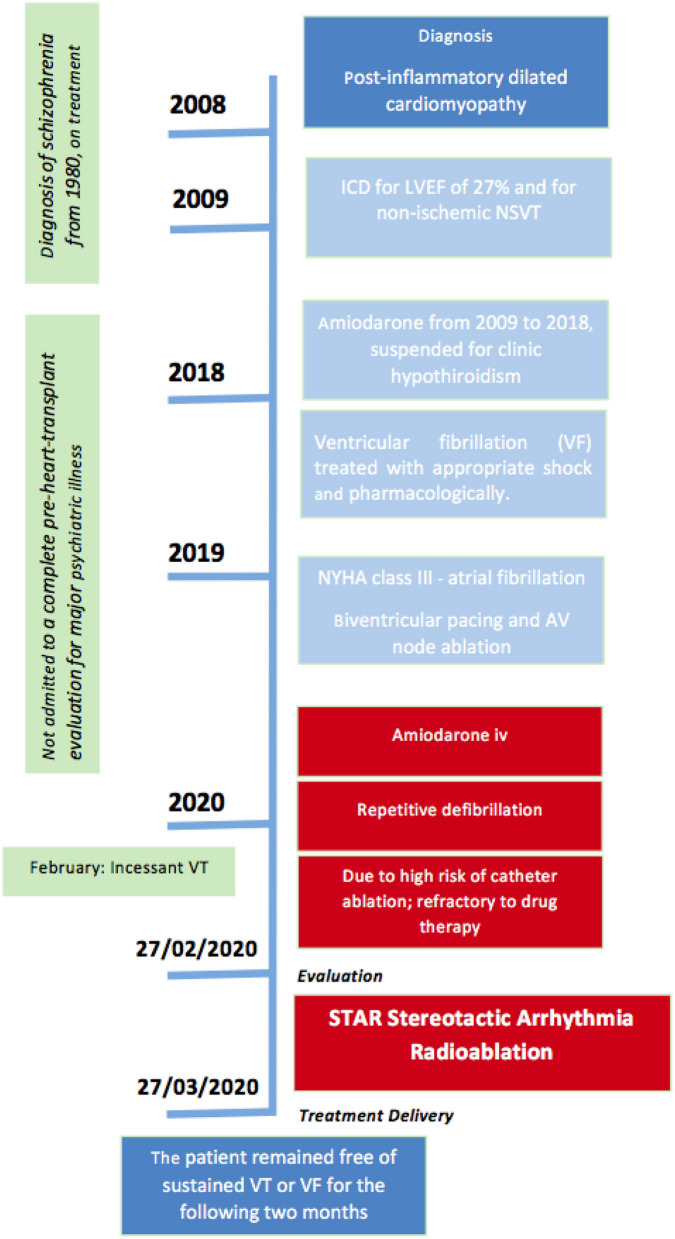
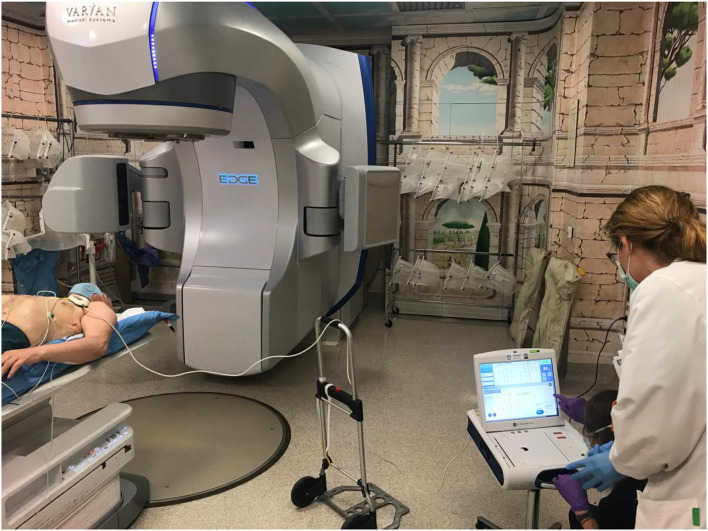
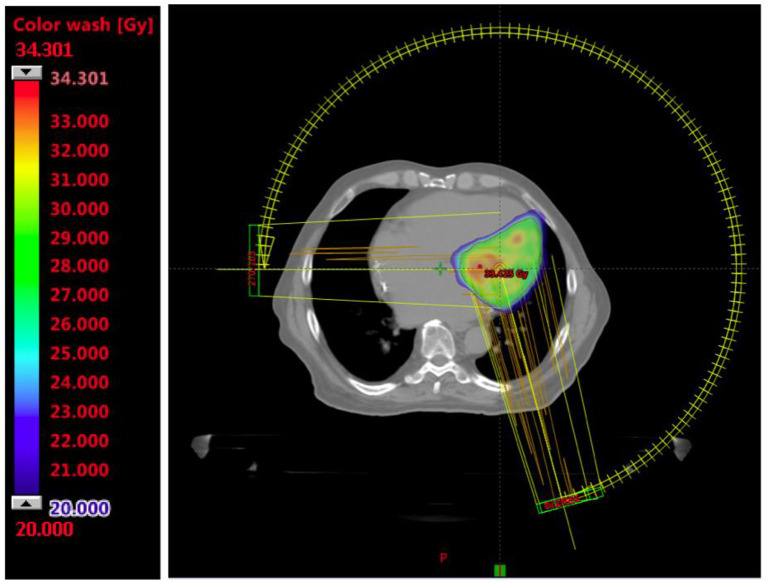
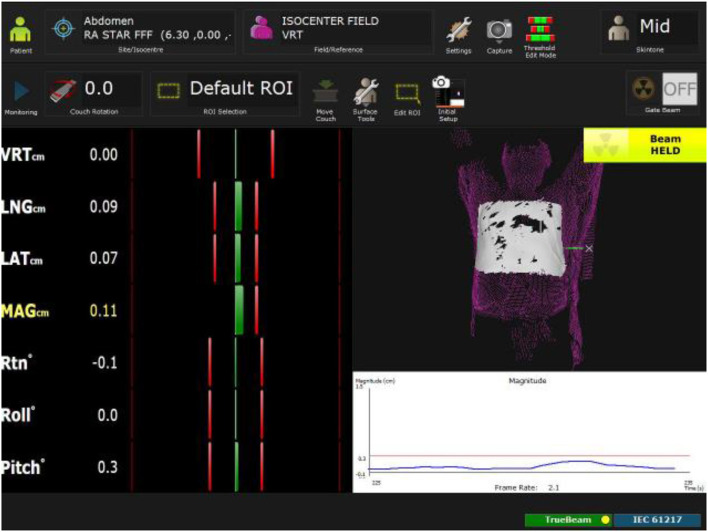
Although catheter ablation is the current gold standard treatment for refractory ventricular arrhythmias, sometimes its efficacy is not optimal and it's associated with high risks of procedural complication and death. Stereotactic arrhythmia radioablation (STAR) is increasingly being adopted for such clinical presentation, considering its efficacy and safety. We do report our experience managing a case of high volume of left ventricle for refractory ventricular tachycardia in advanced heart failure patient, by delivering a single fraction of STAR through an highly personalization of dose delivery applying repeated inter- and continuous intra-fraction image guidance. According to the literature reports, we recommend considering increasing as much as possible the personalization features and safety technical procedure as long as that is not significantly affecting the STAR duration. Moreover, the duration in itself shouldn't be the main parameter, but balanced into the frame of possibly obtainable outcome improvement. At best of our knowledge, this is the first report applying such specific technology onto this clinical setting. Future studies will clarify these issues.
尽管导管消融是目前治疗难治性室性心律失常的金标准,但有时其疗效并不理想,且与手术并发症和死亡的高风险相关。考虑到立体定向心律失常射频消融术(STAR)的疗效和安全性,它越来越多地被应用于此类临床情况。我们确实报告了我们治疗一名晚期心力衰竭患者难治性室性心动过速伴大量左心室的病例经验,通过应用重复的分次间和分次内图像引导进行高度个性化的剂量递送,单次给予STAR。根据文献报道,我们建议尽可能增加个性化特征和安全技术程序,只要这不会显著影响STAR的持续时间。此外,持续时间本身不应是主要参数,而应在可能获得的结果改善的框架内进行权衡。据我们所知,这是首次将这种特定技术应用于这种临床情况的报告。未来的研究将阐明这些问题。