Department of Medicine, University of Toledo, Toledo, Ohio, United States of America.
Marshall Institute for Interdisciplinary Research, Marshall University, Huntington, West Virginia, United States of America.
PLoS One. 2020 Dec 17;15(12):e0244065. doi: 10.1371/journal.pone.0244065. eCollection 2020.
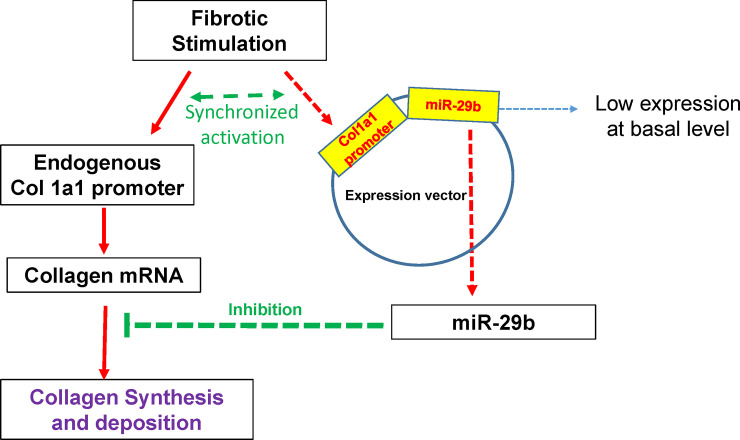
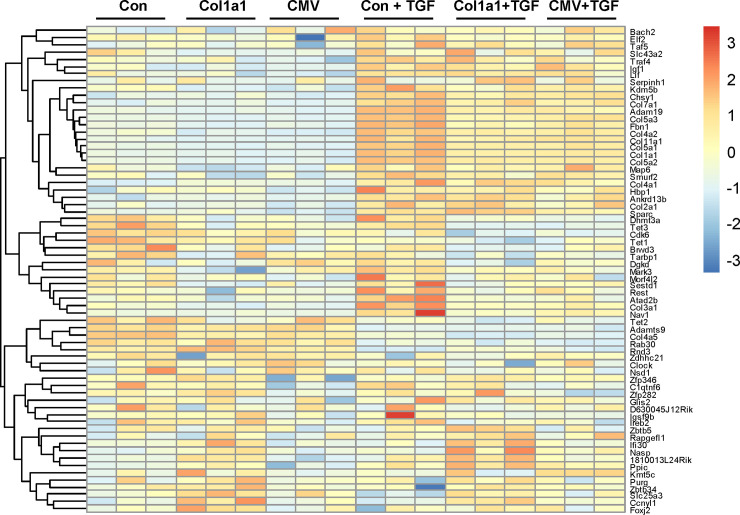
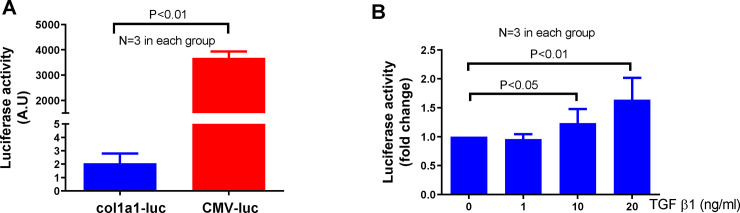
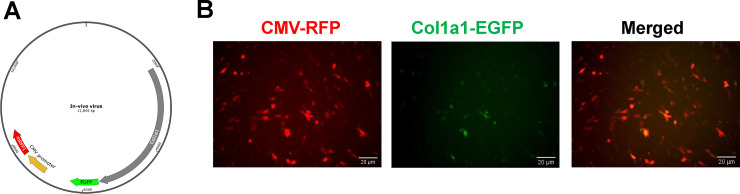
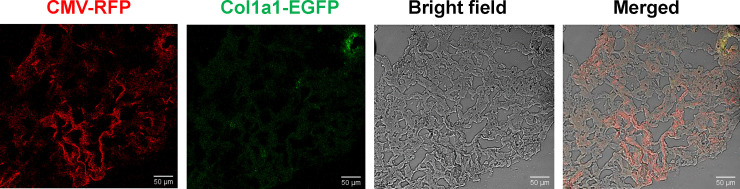
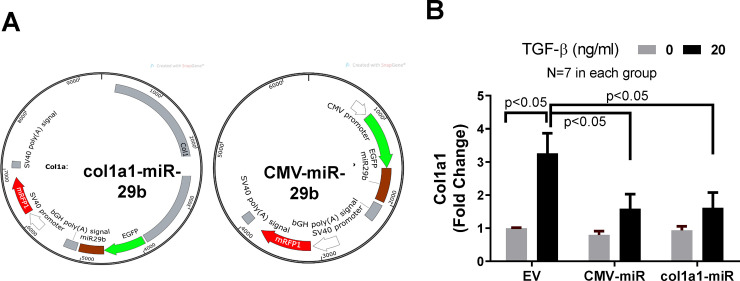
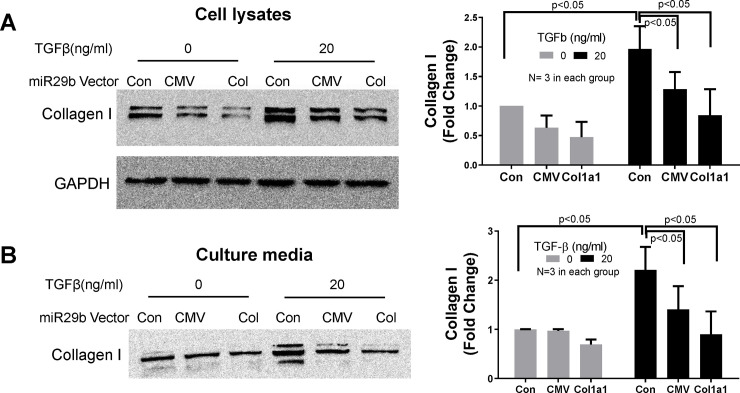
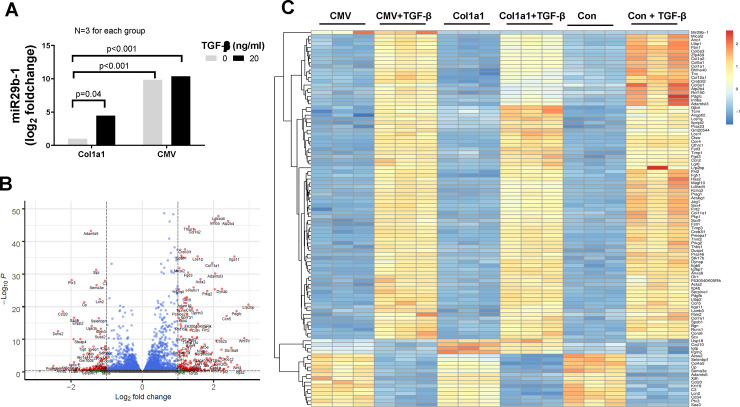
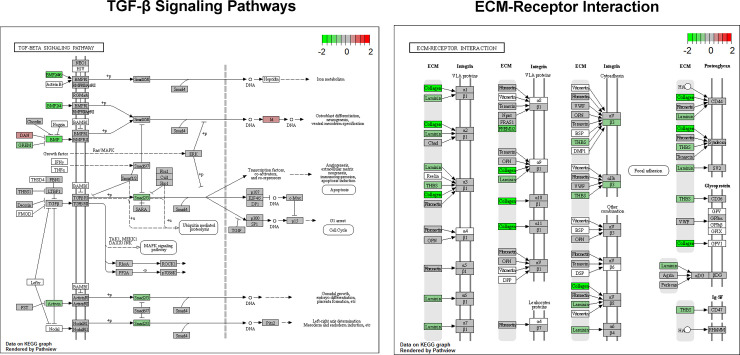
Tissue fibrosis is a significant health issue associated with organ dysfunction and failure. Increased deposition of collagen and other extracellular matrix (ECM) proteins in the interstitial area is a major process in tissue fibrosis. The microRNA-29 (miR-29) family has been demonstrated as anti-fibrotic microRNAs. Our recent work showed that dysregulation of miR-29 contributes to the formation of cardiac fibrosis in animal models of uremic cardiomyopathy, whereas replenishing miR-29 attenuated cardiac fibrosis in these animals. However, excessive overexpression of miR-29 is a concern because microRNAs usually have multiple targets, which could result in unknown and unexpected side effect. In the current study, we constructed a novel Col1a1-miR-29b vector using collagen 1a1 (Col1a1) promoter, which can strategically express miR-29b-3p (miR-29b) in response to increased collagen synthesis and reach a dynamic balance between collagen and miR-29b. Our experimental results showed that in mouse embryonic fibroblasts (MEF cells) transfected with Col1a1-miR-29b vector, the miR-29b expression is about 1000 times less than that in cells transfected with CMV-miR-29b vector, which uses cytomegalovirus (CMV) as a promoter for miR-29b expression. Moreover, TGF-β treatment increased the miR-29b expression by about 20 times in cells transfected with Col1a1-miR-29b, suggesting a dynamic response to fibrotic stimulation. Western blot using cell lysates and culture media demonstrated that transfection of Col1a1-miR-29b vector significantly reduced TGF-β induced collagen synthesis and secretion, and the effect was as effective as the CMV-miR-29b vector. Using RNA-sequencing analysis, we found that 249 genes were significantly altered (180 upregulated and 69 downregulated, at least 2-fold change and adjusted p-value <0.05) after TGF-β treatment in MEF cells transfected with empty vector. The Kyoto Encyclopedia of Genes and Genomes (KEGG) pathway analysis using GAGE R-package showed that the top 5 upregulated pathways after TGF-β treatment were mostly fibrosis-related, including focal adhesion, ECM reaction, and TGF-β signaling pathways. As expected, transfection of Col1a1-miR-29b or CMV-miR-29b vector partially reversed the activation of these pathways. We also analyzed the expression pattern of the top 100 miR-29b targeting genes in these cells using the RNA-sequencing data. We identified that miR-29b targeted a broad spectrum of ECM genes, but the inhibition effect is mostly moderate. In summary, our work demonstrated that the Col1a1-miR-29b vector can be used as a dynamic regulator of collagen and other ECM protein expression in response to fibrotic stimulation, which could potentially reduce unnecessary side effect due to excessive miR-29b levels while remaining an effective potential therapeutic approach for fibrosis.
组织纤维化是与器官功能障碍和衰竭相关的重大健康问题。细胞外基质(ECM)中胶原蛋白和其他 ECM 蛋白的沉积增加是组织纤维化的主要过程。微小 RNA-29(miR-29)家族已被证明是抗纤维化的微小 RNA。我们最近的工作表明,miR-29 的失调导致尿毒症心肌病动物模型中心脏纤维化的形成,而补充 miR-29 可减轻这些动物的心脏纤维化。然而,miR-29 的过度表达是一个问题,因为微小 RNA 通常有多个靶标,这可能导致未知的和意外的副作用。在目前的研究中,我们使用胶原蛋白 1a1(Col1a1)启动子构建了一种新型的 Col1a1-miR-29b 载体,该载体可以在胶原合成增加时策略性地表达 miR-29b-3p(miR-29b),并在胶原和 miR-29b 之间达到动态平衡。我们的实验结果表明,在转染 Col1a1-miR-29b 载体的小鼠胚胎成纤维细胞(MEF 细胞)中,miR-29b 的表达量比转染 CMV-miR-29b 载体的细胞低约 1000 倍,后者使用巨细胞病毒(CMV)作为 miR-29b 表达的启动子。此外,在转染 Col1a1-miR-29b 的细胞中,TGF-β 处理使 miR-29b 的表达增加了约 20 倍,这表明对纤维化刺激有动态反应。使用细胞裂解物和培养上清液进行的 Western blot 表明,转染 Col1a1-miR-29b 载体可显著降低 TGF-β诱导的胶原合成和分泌,其效果与 CMV-miR-29b 载体一样有效。通过 RNA 测序分析,我们发现转染空载体的 MEF 细胞在 TGF-β 处理后有 249 个基因发生了显著改变(至少 2 倍变化,调整后的 p 值 <0.05,180 个上调,69 个下调)。使用 GAGE R 包的京都基因与基因组百科全书(KEGG)通路分析显示,TGF-β 处理后前 5 个上调的通路大多与纤维化有关,包括焦点黏附、细胞外基质反应和 TGF-β 信号通路。正如预期的那样,转染 Col1a1-miR-29b 或 CMV-miR-29b 载体部分逆转了这些通路的激活。我们还使用 RNA 测序数据分析了这些细胞中前 100 个 miR-29b 靶基因的表达模式。我们发现 miR-29b 靶向广泛的 ECM 基因,但抑制作用大多是中等程度的。总之,我们的工作表明,Col1a1-miR-29b 载体可作为胶原和其他 ECM 蛋白表达的动态调节剂,以响应纤维化刺激,这可能会因 miR-29b 水平过高而减少不必要的副作用,同时仍然是一种有效的纤维化治疗方法。